Your new post is loading...
Covid-19 presented employers with a simple choice: find ways for workers to do their jobs safely, or shut down. At least some have chosen a third option, of dispensing with humans altogether. Among the many breathless headlines prompted by the pandemic are those warning of a new wave of job-destroying automation. The pace of automation in some parts of the economy, like factory floors and warehouses, is almost certain to accelerate. Yet on the whole, robot-induced mass unemployment should remain near the bottom of workers’ lists of worries. The world has only recently recovered from a bout of robophobia. In the early 2010s advances in robotics and artificial intelligence (ai), described ominously in countless papers and books, seemed to portend a wave of job destruction. High unemployment after the global financial crisis of 2007-09 added to fears of a job scarcity. Fretting about robots in a downturn is not entirely irrational: firms appear to do most of their job-slashing during slumps. Nir Jaimovich of the University of Zurich and Henry Siu of the University of British Columbia argue that labour-market recoveries have grown weaker in recent decades as a result. Worries can be overdone, though. By the end of the decade unemployment had dropped like a stone and driverless vehicles were struggling to turn left. The earlier panic seemed a touch hysterical.
When the novel coronavirus (SARS-CoV-2) emerged in late 2019 and began its spread around the world, the global innovation community mobilized quickly to initiate the development of a vaccine for COVID-19, the disease it causes. Hundreds of individuals and institutions—in academia, biotechnology, government, and pharmaceuticals—embarked on one of the most consequential scientific endeavors in living memory. Funding poured in from governments, multilateral agencies, not-for-profit institutions, and the private sector. Regulators showed uncanny speed in working with innovators. Now, months later, more than 250 vaccine candidates are being pursued globally, with 30 already in clinical studies and another 25 or so poised to enter human trials in 2020. As the novel coronavirus continues to spread (with roughly 1.5 million new cases of COVID-19 globally each week) and the pursuit of a vaccine intensifies, debate has grown among corporate leaders, economists, public-policy makers, and scientific experts—and even in our own living rooms. Will we have a COVID-19 vaccine? If so, when? And how much value can it provide to society?
In an episode of “The Phil Silvers Show”, a 1950s tv comedy, Ernie Bilko (played by Silvers) discovers that his fellow army sergeants have fleeced a new recruit in a poker game. His plan to get the money back involves leasing a shop. “It’s just an empty store,” he insists. The others fear they are missing out. “When the smartest operator in the whole United States army suddenly decides to rent a store, we don’t ask no questions,” says one. “We just want to be cut in.” An empty vessel can accommodate all manner of dreams. This trait helps explain the growing allure of the “special purpose acquisition company” (spac), a shell company listed on the stock exchange with a view to merging it with a real business. Ventures such as Virgin Galactic, in space tourism, and Nikola, in electric vehicles, have become listed companies by this route. Silicon Valley’s dream factory spies a way to sidestep the trials of an initial public offering (ipo). Bill Ackman, a shrewd hedge-fund manager, has just raised a $4bn mega-spac. He is looking for a unicorn to make a home in his empty store. The view in Silicon Valley is that an ipo is a rotten process. There is typically a fixed fee, of up to 7% of the sum raised. And the value of the company is lowballed, say tech types, to allow for a satisfying first-day “pop” in the share price. Yet cost is not the only bugbear—and, perhaps, not even the main one. What entrepreneurs and their venture-capital backers hate about the ipo is the loss of control. They are used to being big shots in Silicon Valley. They do not like deferring to Wall Street types at all.
Regulator relaxes restrictions to permit shareholder payout ratios of no more than 50%. Australia has eased restrictions on banks and insurers over paying shareholder dividends this year as part of efforts to support the economy during the coronavirus pandemic. However, the prudential regulator Apra told lenders on Wednesday to keep dividend payout ratios below 50 per cent to bolster “capital resilience” during the health crisis, which has forced banks to defer A$236bn ($169bn) in loans. [...] Tim Roche, an analyst at Fitch Ratings, said Apra’s relaxation was an acknowledgment of the role payments to shareholders played in supporting the economy. “A lot of shareholders rely on dividends as a cash flow stream in Australia and I think there is a reluctance to cut off that stream entirely,” he said. Shareholder registries show that retail investors hold about half of the bank shares in Australia. A lot of shareholders rely on dividends as a cash flow stream in Australia. [...] Since Covid-19 spread to Australia in February, banks have deferred A$236bn in customer loans — including almost half a million mortgages — for six months. Lenders have indicated they will provide some customers with a four-month extension beyond that, which means the full balance sheet impact will not be known until 2021.
Brookfield has renegotiated a $6.4bn credit facility, offering sweeping concessions to banks that have lent money to its property arm after the coronavirus prompted many retailers to stop paying rent. The revised terms impose restrictions on the dividends that can be paid by Brookfield Property Reit, which is one of America’s biggest operators of shopping centres and has suffered heavy economic damage from the pandemic. Creditors led by Wells Fargo are requiring other parts of Brookfield to commit to lend at least $250m to the pandemic-hit real estate investment trust, in exchange for waiving contractual clauses that would have allowed them to demand their money back immediately if certain financial conditions, or “covenants”, were not met. The legal manoeuvring, disclosed in a regulatory filing on Wednesday, underscores how mass defaults on property leases and other commitments are radiating through markets, transmitting losses to lenders, bondholders and holders of other financial assets. Shares in Brookfield Property Reit, which trades under the ticker BPYU, have fallen one-third since the beginning of the year, reflecting investors’ uncertainty about whether — and how quickly — landlords can recover from a pandemic-induced crisis in the retail industry. Brookfield collected just one-fifth of rents owed by retail tenants in April, its executives said earlier this year.
Sustainability is fast becoming a core investment focus. Here’s what the industry can learn from the most successful climate impact funds. Globally, climate change has dominated the public space in the past couple of years. A vast increase in climate change articles in the last two years, emerging ‘climate idols’ such as Greta Thunberg and climate-related pop culture (e.g., flygskam being FT’s Word of 2019) have been just some of the indicators of this megatrend. This has propped up a strong investor demand. To wit, 84 percent of millennials invest with a focus on environmental, social and governance (ESG) impact as their central goal as compared to less than 50 percent for baby boomers. Climate is now regarded as the top theme in impact investing. Given that an estimated US$68 trillion will be passed down from baby boomers over the next 30 years, with up to 80 percent of investment goals being reconsidered in the process, a significant flow of investment towards impact – specifically, climate change – is expected. Similarly, the supply side has also seen growth, although still mainly in ‘pockets’ and with limited regulation around it. There has been an emergence of green bonds, green-project finance and ESG-agnostic investments in public assets. Large PE/VC funds (LeapFrog, KKR’s Global Impact Fund, TPG’s Rise Fund, Bain Capital’s Double Impact to name a few) have also come to the forefront.
Active equity mutual funds are well known to have underperformed passive benchmarks net of fees. Even so, the active management industry continues to manage tens of trillions of dollars. The puzzling coexistence of a large underperforming active management industry and an accessible passive management industry raises an important question: why are investors willing to tolerate this underperformance? One popular hypothesis is that active funds outperform in market downturns, when investors value performance the most. The COVID-19 crisis is particularly suitable for testing this hypothesis, for two reasons. First, investors surely want to hedge against such an unprecedented output contraction and unemployment surge. Second, large price dislocations during this crisis provide opportunities for active managers to perform well. For example, the S&P 500 experienced its steepest descent in living memory, losing 34% of its value in the five weeks between February 19 and March 23 before bouncing back by over 30% in the following five weeks through the end of April.
The increasing use of financial technologies (FinTech) by market participants has fostered a discussion among public authorities on the use of similar technologies for regulatory (RegTech) and supervisory (SupTech) purposes. Innovative technologies could also be applied to crisis resolution: the use of one or more resolution tools by a public authority to manage the failure of banks and financial firms in an orderly way. However, the features and market dynamics of resolution differ from those of RegTech and SupTech: There is little market incentive for the private sector to foster innovation in the area of crisis resolution. That is mainly due to two reasons: First, crisis management is the duty of public authorities, and second, financial firms have little incentive to plan for crisis. Our paper “ResTech: Innovative Technologies for Crisis Resolution,”defines the concept and the scope of resolution technology (ResTech). ResTech is the application of innovative technologies: i) to support the work of resolution authorities in developing resolution plans and in resolving banks and financial firms and ii) to allow financial firms to achieve regulatory compliance and better risk management in an effective and automated manner.
While the obstacles women face in moving up the organizational hierarchy (captured in the popular metaphor of the “glass ceiling”) have been well studied, much less attention has been paid to understanding the circumstances women face after they reach senior managerial positions. This omission is notable because senior managers are in a different category from other employees: They tend to have substantial work histories and social and industry networks that could largely shield them from gender bias. Yet, it may be precisely in the context of leadership and authority that gender bias might be most evident. We examine gender differences in managerial job mobility by focusing on senior managers displaced (almost 90 percent) when their firms are acquired. This setting allows us to compare labor market outcomes for similarly-ranked male and female managers, from the same target firms and within the same functional area, who are displaced under similar circumstances. Our results point to a significant (implicit) “gender penalty” for women in terms of managerial job mobility but also indicate contexts in which the penalty may be alleviated and even reversed. Women make up about 48 percent of the American workforce, but their representation decreases considerably as one moves up the corporate ladder.
This paper reports the findings of a recent survey of 1019 individuals to learn about their commitment to and perceived value from personal and organizational higher purpose, and examines the implications of the findings for corporate governance and the stated corporate goal of shareholder value maximization.We found that personal higher purpose promotes personal well-being, including greater happiness and lower stress from COVID-19, and this effect was stronger when the purpose statement was written down. This notwithstanding, while many individuals stated that they have a personal higher purpose, very few had a written statement of purpose. The incidence of written higher purpose statements is higher among organizations than among individuals. Employees of organizations with higher purpose statements were happier and prouder of their organizations. Two of the findings have potentially important implications for corporate governance: (i) The effects we documented were stronger when the purpose statement was written down and tied to society, employees, and customers, rather than shareholders; and (ii) employees trusted their leaders to make better business decisions when they endorsed the social value of the corporate higher purpose.
Chefs-d’œuvre d’artistes contemporains, atrium de 10 000 pieds carrés, terrasse-jardin, terrain de volleyball de plage, terrain de soccer, centre de conditionnement physique. La description que faisait Aldo de son siège social avait tout pour faire rêver les employés. Mais le détaillant insolvable a dû se résoudre à déménager. Appelé « campus », le siège social d’Aldo était l’un des plus spectaculaires de Montréal. Sur son site web, l’entreprise consacrait d’ailleurs une page à cet espace de 300 000 pieds carrés « entouré d’un superbe espace vert » et comprenant des « installations récréatives ». Tout y semblait mis en œuvre pour favoriser le bonheur des 1150 employés. « Le design reflète parfaitement la culture florissante du Groupe Aldo. Le bois naturel, le métal traité, la vitre givrée, le cuir et le béton se conjuguent à merveille pour créer un environnement de travail moderne où la nature se combine avec la fonction afin de libérer l’énergie créative dans toutes les facettes de l’entreprise », peut-on encore y lire. Un jardin communautaire avait été aménagé sur le terrain et le fondateur de l’entreprise, Aldo Bensadoun, y avait fait planter une cinquantaine d’espèces d’arbres, selon un reportage de Métro en 2016. Le bail a été résilié. Et un autre a été signé dans un immeuble « plus petit et moins dispendieux », a indiqué à La Presse le contrôleur, Martin Rosenthal, chez Ernst & Young. Le déménagement a déjà eu lieu et le moment était propice, explique M. Rosenthal, puisque la grande majorité des 800 employés est en télétravail.
The Securities and Exchange Commission adopted new rule amendments and an interpretation concerning the proxy advisory industry on July 22. According to the Commission’s three-member majority, the changes are “to ensure that clients of proxy voting advice businesses have reasonable and timely access to more transparent, accurate and complete information on which to make voting decisions.” Critics of the rule, such as Commissioner (and lone dissenter) Allison Herren Lee, see the measures as “unwarranted, unwanted, and unworkable.” [...] In order to qualify for the exemptions, proxy advisors must provide specified conflicts-of-interest disclosures. Advisors also must have adopted written policies and procedures to provide that subject companies have access to proxy advisor reports at the time they are issued to clients. The policies and procedures must also require that proxy advisor clients are made aware of any written responses to the advice by companies. The rule includes nonexclusive safe harbors applicable to advisors. [...] The SEC did not include the most contentious provision of the proposal package in its final rules. The Commission did not require proxy advisors to provide subject companies with an opportunity to pre-review draft reports or to deliver final reports to subject companies at least two days before advisors were to send the materials to clients. Critics had argued that this requirement could have delayed the delivery of proxy advice to clients for up to two weeks, and could have adversely impacted the independence of the advisor. [...] The proxy advisor rulemaking marks a key step in a long-run regulatory battle. Rule proponents see the rules as a measured response to a significant problem of interest conflicts and erroneous reporting, while critics see the action as a solution in search of a problem. The rulemaking will not be the final word, however. Advisory firms will likely challenge the Commission’s actions in court, making both constitutional and administrative procedure arguments.
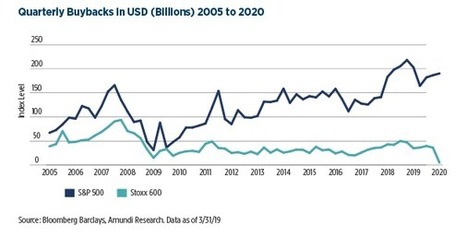
[...] The robust recycling of the capital within the US economy can lead to innovation and growth that avoids the “trapped capital” syndrome of Europe and Japan. A higher level of profitability has enabled US companies to dedicate more capital to share repurchases (or buybacks). A key advantage of share repurchases is that they enable the recycling of capital throughout the economy, so capital may end up in the most innovative hands and not trapped inside of less efficient, more mature companies. We believe buybacks optimize capital allocation for companies unable to invest at a higher rate of return than their cost of capital, particularly when agency costs exist between corporate management and investors. While perhaps controversial to some, we disagree with those who argue that buybacks are shortsighted and lead to less innovation and investment, suppress job growth and exacerbate income equality. While the aftermath of the pandemic and subsequent recession will certainly lower activity, we expect share repurchase programs in the US will rise to their previous levels when conditions normalize. We agree companies should not assume irresponsible amounts of leverage to buy back stock. However, in reality, the aggregate amount of buybacks represents a small percentage of total capital returned to investors. Given the likely challenges associated with assuming additional leverage and corporate models that may shift to more commoditized, lower return businesses in the aftermath of the pandemic, we expect that the recycling of high-return capital to innovation and secular growth will simply sustain itself. While we acknowledge that companies with large buyback programs have tended to invest less in innovation, our findings suggest the US economy has done an efficient job of recycling the proceeds from share repurchases through venture capital and private equity firms. [...] Share repurchases have steadily increased in the US over the last 20 years and the gap in buybacks between the US and Europe has widened in the last 10 years, both in nominal and relative terms. In Europe, barely 20% of Stoxx 600 corporations have executed share buybacks versus more than 80% of its S&P 500 peers.
|
Several months into the pandemic, The Conference Board surveyed more than 1,300 CEOs and C-suite executives globally in June of 2020 and asked them to evaluate what they see as the most significant long-term impacts of the global pandemic on their organizations, business, and society. Among the survey findings: respondents say a return to pre-COVID-19 pandemic revenue levels is at least a year or more down the road—though most tend to be more optimistic about recovery within their own organizations than for the economy as a whole.
Both formal and informal institutions affect economic behavior in important ways, as economist Douglass C. North explained in his 1993 Nobel Prize lecture. Formal institutions include laws and regulations, and informal institutions include culture and norms. In a recent study, we explore the effect of social capital, an informal institution, on corporate innovation. Social capital consists essentially of the shared values and social networks that create trust, enhance cooperation, and facilitate transactions within a given community. In a newly accepted paper at Journal of Corporate Finance, we provide evidence that social capital can also facilitate contracting for innovation within a firm.
A surprise third-party public revelation that a company or one of its senior executives or employees behaved in an unethical or unacceptable manner in the past is news that no board wants to hear. Trust and confidence, the bedrock assets of any organization that take years to build, can be badly shaken at moments like this, and how boards handle the issue determines the quality of the outcome. The dilemma boards face is that the event they must deal with often occurred at a time when none of the current directors or management were present. In addition, applying subjective judgment, in the absence of guidance from past practice in dealing with previously acceptable behaviours viewed under present-day governance norms, and current laws and regulations, is problematic. Emerging best practices, policies and processes:
(A) Taking immediate ownership and responsibility to address this type of event is paramount. Not necessarily acknowledging the allegations to be right or wrong but clearly signalling “all claims are taken seriously and the board’s disclosure process will be timely and truthful.” That is a message that helps to maintain trust that the board will deliberate taking all stakeholders interests into consideration.
(B) Disciplined governance steps need to be taken to deal with these matters. Ad hoc, or reactionary measures are not helpful and emotion needs to be dialled down in the boardroom to maximize the clearest thinking. Despite the pressure to be seen to be taking decisive action quickly, the better but harder approach embraces a reflective, iterative and thoughtful process. The chair’s role in setting the overall tone and approach is critical.
(C) The values of the company and its ethics policy tend to form the best guiding principles of how the board makes decisions or navigates its way through these types of issues.
(D) Early in the process, engagement of outside expertise should be considered. Management may be conflicted and/or the extra help can add to the efficiency of the company’s response process.
Having talented and courageous directors on board with a seasoned chair are essential ingredients for success. It is too late to look for these types of individuals once events like this unfold. (E) Diversity of thought on boards (including gender, race and age), helps to mitigate group-think or not reasonably testing the board’s decision against a broader stakeholder constituency.
Kodak shares have surged 1,481 per cent this week in heavy trading as the Trump administration offered the former photography industry leader a financial lifeline to make ingredients in drugs used to fight coronavirus. The company’s valuation jumped from $92m to $1.5bn as it shares rose from $2.10 at Friday’s close to $33.20 on Wednesday. The stock was halted more than a dozen times within the first two hours of trading on Wednesday, a day after it more than tripled in value. The pace of trading far surpassed anything seen since the company returned to the New York Stock Exchange after its emergence from bankruptcy in 2013. Kodak, which is based in Rochester, New York, and the US International Development Finance Corporation, announced on Tuesday that the company had secured a $765m loan to produce drug ingredients under the Defense Production Act. [...] The company, once at the forefront of technological development and a bedrock of the upstate New York economy, has tried to shift its business model before. In 2018, it latched on to the popularity of the blockchain and cryptocurrencies, lending its familiar brand name to KodakCoin — a tool to help photographers secure payment for digital image rights. That move sent its shares briefly soaring in value.
Diversity officers across corporate America are under pressure to solve complicated, important and deeply sensitive issues related to race — all while trying to consult employees and help their C-suite manage any blunders of the past. How do companies improve the diversity at the top? How do companies ensure executives aren’t using bias when promoting individuals? How do managers create an inclusive environment for all people of color? These are the type of questions diversity officers are addressing at major firms, and time is ticking for action. “Often as a CDO [Chief Diversity Officer], you really have seven jobs in one. You’re PR, most recently a pandemic specialist. My number one job has been ‘counselor in chief,’ not only for our agencies in our networks, but certainly my fellow colleagues in diversity, equity and inclusion,” said Tiffany Warren, chief diversity officer at Omnicom Group, in an interview CNBC. Compiling data from 12 salary reports, Glassdoor found that the average salary for chief diversity officers is $127,239, which is less than the average pay of individuals who hold positions in the C-suite. “I think in general, chief diversity officers are underpaid mainly because it’s looked at as overhead and it’s not looked at as a strategic position,” Warren said.
[...] Companies should pay particular attention to the following considerations as they prepare their second quarter disclosures:
(A) SEC guidance. Companies should follow the SEC’s guidance from March, April and June 2020 and the recommendations of the SEC Chief Accountant.
(B) Forward-looking statement warnings. As companies provide more forward-looking information, they should review their forward looking statement safe harbor language to ensure that it is updated and appropriately tailored to reflect changing circumstances.
(C) Risk factors. Companies should regularly update their risk factors as more COVID-19 related risks emerge. Companies should be mindful not to describe a risk as an event that may happen, if it has already materialized.
(D) MD&A. Companies should ensure that their MD&A describes the impact of COVID-19 on the company’s results, as well as any “known trends and uncertainties” of which management may be aware but that are not yet reflected in the company’s results. To this end, companies should focus on the drafting of the MD&A overview and the list of factors impacting its business.
(E) Liquidity. Companies should carefully review the liquidity section of their MD&A, especially if new sources of financing have been accessed, new uses of cash are necessary or changes in capital expenditures have occurred or are expected.
(F) Disclosure and internal controls. Companies must assess their disclosure and internal controls as working arrangements continue to evolve. Material changes to internal controls made during a quarter must be disclosed in the Form 10-Q.
(G) Earnings release information. Companies should ensure that all material information contained in their earnings release is also included in the corresponding 10-Q filing.
(H) Guidance. Companies that withdrew guidance due to the current economic uncertainty but are thinking about reinstating it must be especially cautious in this fluid environment. In particular, if companies reinstate guidance, they should be clear about the assumptions that underlie their new guidance.
With so much going on in connection with COVID-19 and its impact, it would be easy to overlook the rest of the SEC’s agenda. And it’s a lengthy one. The new Spring Regulatory Flexibility Act Agenda was published at the end of June, so it’s time to look at what’s on deck for the SEC in the coming year or so. (That reference to “on deck” may be the only sports anyone gets this year….) SEC Chair Jay Clayton has repeatedly made clear his intent to make the RegFlex Agenda more realistic, streamlining it to show what the SEC actually expects to take up in the subsequent period. (Clayton has previously said that the short-term agenda signifies rulemakings that the SEC actually planned to pursue in the following 12 months. See this PubCo post and this PubCo post.) The SEC’s Spring 2020 short-term and long-term agendas reflect the Chair’s priorities as of March 31, when the agenda was compiled. What stands out here are the matters that have, somewhat surprisingly, moved up onto the final-rule-stage agenda—think universal proxy—from perpetual residence on the long-term (i.e., the maybe never) agenda. [...] Pay Versus Performance—Another oldie but goodie, these rules were also proposed in 2015 to implement Section 953(a) of Dodd-Frank, which required companies to disclose executive pay for performance. The proposal would amend Reg S-K Section 402 to add Section (v), which would require tabular disclosure of compensation “actually paid” to the principal executive officer and an average of the compensation actually paid to the other named executive officers for a phased-in five-year period. The new section would also require companies to describe, in narrative or graphic form or both, the relationship of the compensation actually paid to the company’s financial performance as reflected in its TSR and to describe the relationship of the company’s TSR to the TSR of a peer group. (See this PubCo post.)
[...] Overview of Signficant Change: (A) Emergency Bylaws:
Adoption. DGCL §110, which had been enacted in the wake of the 1962 Cuban Missile Crisis, empowered a board of directors to adopt bylaws during “any emergency resulting from an attack on, invasion or occupation by foreign military forces of, or disaster, catastrophe, war or other armed conflict, revolution or insurrection, or rioting or civil commotion in, the United States or a locality … or the immediate threat of any of the foregoing; or any malfunction or outage of the electrical or telephone service to the Secretary of State’s office, or weather or other condition in or about a locality in which the Secretary of State conducts its business….” The Amendments expand the circumstances where a board of directors can implement emergency bylaws to include “an epidemic or pandemic, and a declaration of a national emergency by the United States government.” The revised statute no longer requires that the catastrophe prevent a quorum of the board from convening a meeting. Emergency bylaws may now be adopted by the normal voting procedures of the board or, if a quorum cannot be readily convened for a meeting, by a majority of the directors present.
We investigate whether acquisition experience of executive and non-executive directors is priced in their remuneration. We find that acquisition experience generates a contractual premium, and the relative size of this premium is higher for non-executive directors than for executives.Only a director’s track record related to past successful acquisitions is priced. Acquisition experience at the individual director is not remunerated if this type of experience is already abundantly present in the firm through the firm’s past acquisition record or via the experience of the other board members. We verify the results by examining potential endogeneity concerns, by analyzing a broad set of different views on acquisition experience (such as industry-specific, broad or international experience, experience on a target’s board), and by ruling out alternative explanations (such as a director’s general skills level or reputation).
Institutional investors played a crucial role in the COVID-19 market crash. U.S. stocks with higher institutional ownership -- in particular, those held more by active, short-term, and domestic institutions -- performed worse.An analysis of changes in holdings through the first quarter of 2020 reveals that mutual funds, investment advisors, and pension funds favored stocks with strong financials (low debt and high cash), whereas hedge funds sold stocks indiscriminately. None of these institutional investor groups appear to have actively tilted their portfolios toward firms with better environmental and social performance. Data from a large discount brokerage indicate that retail investors acted as liquidity providers. Overall, the results suggest that when a tail risk realizes, institutional investors express a preference for “hard”’ measures of firm resilience.
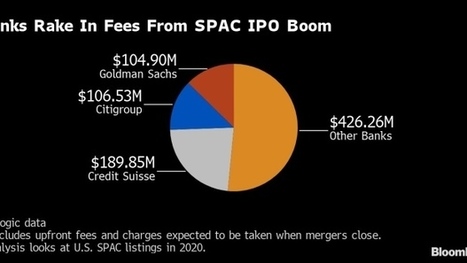
Investors caught up in the frenzy of the stock market’s wild rebound this year have a new favorite spot for their money: pools of cash that hunt for acquisitions. Some will pocket huge gains and others will be saddled with deep losses from these so-called blank check companies, but one group -- Wall Street’s top banks -- is coming out a winner. Three of them -- Citigroup Inc., Credit Suisse Group AG, and Goldman Sachs Group Inc. -- now account for nearly half of underwriting revenue, meaning they stand to generate, according to Dealogic, at least $400 million in fees from blank check companies that have listed this year. That’s a record amount of cash from a market that at one time barely generated anything for the largest firms. [...] It’s a notable transformation for SPACs, which were once an obscure part of the market tainted by association with penny-stock scandals. [...] The products’ popularity has been pushed by yield-hungry investors, who see SPACs as safe bets that could offer better returns than Treasuries. The money earns interest until a deal is struck. If a manager can’t find a deal in a certain time or investors don’t like the planned merger, they can get their money back. If a merger is successful, then investors can share in those gains. Banks typically take a 2% cut of money raised from selling shares in a public listing. Once a SPAC completes a merger, the firms are then given 3.5% of initial public offering proceeds. And they can earn extra fees for every service provided along the way, for example by raising more funding for a merger or helping to find a company to purchase. [...] SPACs account for nearly 40% of the IPO market this year up from only 1.1% a decade ago, according to Dealogic data.
Canada’s largest banks have joined a U.S.-led group developing a common technical standard to share customer data as the financial-services industry inches toward embracing open banking. Thirty-one Canadian financial-services companies, including most major banks, have joined the Financial Data Exchange (FDX), launching a Canadian chapter of the non-profit group that already counts major American banks such as JPMorgan Chase & Co., Bank of America Corp. and Wells Fargo & Co. as members. Since 2018, Canada’s federal government has been studying the merits of open banking, a concept that allows consumers to more easily share their banking data with different institutions, promising access to better financial services in return. Open banking is more advanced in other countries such as Britain and Australia, which have taken different approaches to setting the necessary standards for data-sharing and security. The FDX is the industry’s most co-ordinated effort to get banks and other financial-services providers to coalesce around a common standard. And it is also an effort to ensure the banking industry sets that standard, rather than having governments or regulators impose it. The cornerstone of the FDX is its proprietary API, or application programming interface, which governs the way financial institutions connect to share sensitive data. [...] Millions of Canadians already use financial-technology services built on the principles of open banking, but many of those services require customers to share their passwords so companies can use a technique called “screenscraping” to gather their data. A lack of clear regulation of the sector has raised concerns about security and privacy, and prompted calls to craft a safer, more effective open-banking ecosystem.
|