Your new post is loading...

|
Scooped by
HAS-veille
July 3, 2023 2:36 AM
|
This systematic review and meta-analysis compares incidence rates of diabetes and diabetic ketoacidosis among children and adolescents before and during the COVID-19 pandemic.
|
|
Scooped by
HAS-veille
June 5, 2023 1:32 AM
|
An abstract is unavailable.
|
|
Scooped by
HAS-veille
May 2, 2023 8:30 AM
|
In children aged 5–11 years, mRNA vaccines are moderately effective against infections
with the omicron variant, but probably protect well against COVID-19 hospitalisations.
Vaccines were reactogenic but probably safe. Findings of this systematic review can
serve as a basis for public health policy and individual decision making on COVID-19
vaccination in children aged 5–11 years.
|
|
Scooped by
HAS-veille
April 3, 2023 9:10 AM
|
Extended intervals between the first and second doses of mRNA Covid-19 vaccines may reduce the risk of myocarditis in children and adolescents. However, vaccine effectiveness after this extension remains unclear. To examine this potential variable effectiveness, we conducted a population-based nested case-control study of children and adolescents aged 5–17 years who had received two doses of BNT162b2 in Hong Kong. From January 1 to August 15, 2022, 5396 Covid-19 cases and 202 Covid-19 related hospitalizations were identified and matched with 21,577 and 808 controls, respectively. For vaccine recipients with extended intervals [≥28 days, adjusted odds ratio 0.718, 95% Confidence Interval: 0.619, 0.833] there was a 29.2%-reduced risk of Covid-19 infection compared to those with regular intervals (21–27 days). If the threshold was set at eight weeks, the risk reduction was estimated at 43.5% (aOR 0.565, 95% CI: 0.456, 0.700). In conclusion, longer dosing intervals for children and adolescents should be considered. Extending the interval between doses of mRNA Covid-19 vaccines has been linked with a reduced risk of myocarditis in children and adolescents, but impacts on vaccine effectiveness are not known. Here, the authors perform a nested case-control study using data from Hong Kong and find evidence of reduced risk of infection following a longer dosing interval.
|
|
Scooped by
HAS-veille
February 9, 2023 5:11 AM
|
|
|
Scooped by
HAS-veille
January 31, 2023 1:31 AM
|
This cross-sectional study evaluates whether COVID-19 is among the top 10 causes of death in children and young people aged 0 to 19 years in the US.
|
|
Scooped by
HAS-veille
January 13, 2023 1:24 AM
|
This report describes similar early safety findings from the Vaccine Adverse Event Reporting System for bivalent booster vaccination in children aged 5–11 years as the monovalent booster vaccination.
|
|
Scooped by
HAS-veille
January 9, 2023 1:16 AM
|
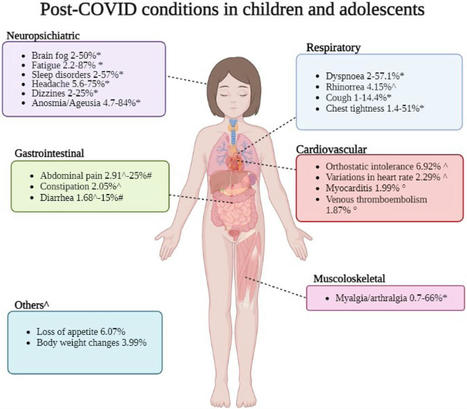
ptoms over time. Chronic conditions and obesity were risk factors, and adolescents were at a greater risk for lon
|
|
Scooped by
HAS-veille
December 15, 2022 4:55 AM
|
This cross-sectional study estimates BNT162b2 vaccine effectiveness against SARS-CoV-2 infection among children aged 5 to 11 years during Delta and Omicron variant–predominant periods, by prior SARS-CoV-2 infection status and Omicron sublineage.
|
|
Scooped by
HAS-veille
November 30, 2022 1:47 AM
|
Post-COVID syndrome remains poorly studied in children and adolescents. Here, we aimed to investigate the prevalence and risk factors of pediatric post-COVID in a population-based sample, stratifying by serological status. Children from the SEROCoV-KIDS cohort study (State of Geneva, Switzerland), aged 6 months to 17 years, were tested for anti-SARS-CoV-2 N antibodies (December 2021-February 2022) and parents filled in a questionnaire on persistent symptoms in their children (lasting over 12 weeks) compatible with post-COVID. Of 1034 children tested, 570 (55.1%) were seropositive. The sex- and age-adjusted prevalence of persistent symptoms among seropositive children was 9.1% (95%CI: 6.7;11.8) and 5.0% (95%CI: 3.0;7.1) among seronegatives, with an adjusted prevalence difference (ΔaPrev) of 4.1% (95%CI: 1.1;7.3). Stratifying per age group, only adolescents displayed a substantial risk of having post-COVID symptoms (ΔaPrev = 8.3%, 95%CI: 3.5;13.5). Identified risk factors for post-COVID syndrome were older age, having a lower socioeconomic status and suffering from chronic health conditions, especially asthma. Our findings show that a significant proportion of seropositive children, particularly adolescents, experienced persistent COVID symptoms. While there is a need for further investigations, growing evidence of pediatric post-COVID urges early screening and primary care management. The post-acute impacts of COVID-19 in children and adolescents are not well understood. In this population-based study in Geneva, the authors find evidence of COVID-19-related symptom persistence beyond 12 weeks in adolescents, and identify chronic conditions and lower socioeconomic status as risk factors.
|
|
Scooped by
HAS-veille
November 21, 2022 5:43 AM
|
Background: To date, more than 628 million confirmed SARS-CoV-2 infections were recorded globally. Highest incidences were usually observed in school-aged child
|
|
Scooped by
HAS-veille
November 16, 2022 10:53 AM
|
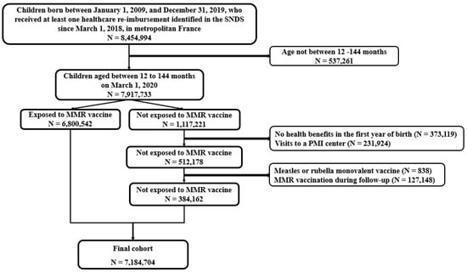
Cross-protection from previous live attenuated vaccines is proposed to explain the low impact of COVID-19 on children. This study aimed to evaluate the effect of live attenuated MMR vaccines on the risk of being hospitalized for COVID-19 in children. An exposed (MMR vaccine)–non-exposed cohort study was conducted using the nationwide French National Health Data System (SNDS). We included children born between 1 January 2009 and 31 December 2019. Exposure was defined as a claim of at least one dose of MMR vaccine since birth. Hospitalization for COVID-19 was defined using main diagnostic ICD10 codes. Non-conditional logistic regression was used to calculate the adjusted odds ratios (aORs) of the association between MMR exposure and hospitalization for COVID-19, controlling for socio-demographic and socio-economic factors, co-morbidities, and general health. In total, 6,800,542 (median age 6 IQR [3–8] years) children exposed to a MMR vaccine and 384,162 (6 [3–9] years) not exposed were followed up with for 18 months. Among them, 873 exposed to the MMR vaccine and 38 who were not exposed were hospitalized for COVID-19. In a multi-variate analysis, the exposure of children to MMR vaccination was not associated with a decreased risk of COVID-19 hospitalization versus non-exposure (aOR (95%CI) = 1.09 [0.81–1.48]). A stratified analysis by age showed an aOR = 1.03 [0.64–1.66] for children aged 1–4, an aOR = 1.38 [0.82–2.31] for those aged 5–9, and an aOR = 1.11 [0.54–2.29] for those aged 10–12. Our study suggests that the live attenuated MMR vaccine does not protect children against COVID-19 hospitalization.
|
|
Scooped by
HAS-veille
November 7, 2022 2:57 AM
|
An abstract is unavailable.
|
|
|
Scooped by
HAS-veille
June 27, 2023 3:08 AM
|
In this Personal View, we discuss current knowledge on SARS-CoV-2 RNA or antigen persistence
in children infected with SARS-CoV-2. Based on the evidence that the virus can persist
in adults, we have done a literature review and analysed studies that looked for SARS-CoV-2
RNA or antigens in children undergoing autopsy, biopsy, or surgery for either death
from COVID-19 or multisystem inflammatory syndrome, or assessments for long COVID-19
or other conditions. Our analysis suggests that in children, independent from disease
severity, SARS-CoV-2 can spread systemically and persist for weeks to months.
|
|
Scooped by
HAS-veille
May 8, 2023 8:24 AM
|
Background
Meta-analyses and single-site studies have established that children are less infectious than adults within a household when positive for ancestral SARS-CoV-2. In addition, children appear less susceptible to infection when exposed to ancestral SARS-CoV-2 within a household. The emergence of SARS-CoV-2 variants of concern (VOC) has been associated with an increased number of paediatric infections worldwide. However, the role of children in the household transmission of VOC, relative to the ancestral virus, remains unclear.
Aim
We aimed to evaluate children's role in household transmission of SARS-CoV-2 VOC.
Methods
We perform a meta-analysis of the role of children in household transmission of both ancestral SARS-CoV-2 and SARS-CoV-2 VOC.
Results
Unlike with the ancestral virus, children infected with VOC spread SARS-CoV-2 to an equivalent number of household contacts as infected adults and were equally as likely to acquire SARS-CoV-2 VOC from an infected family member. Interestingly, the same was observed when unvaccinated children exposed to VOC were compared with unvaccinated adults exposed to VOC.
Conclusions
These data suggest that the emergence of VOC was associated with a fundamental shift in the epidemiology of SARS-CoV-2. It is unlikely that this is solely the result of age-dependent differences in vaccination during the VOC period and may instead reflect virus evolution over the course of the pandemic.
|
|
Scooped by
HAS-veille
April 5, 2023 3:19 AM
|
Learn more from the National Academies of Sciences, Engineering, and Medicine
|
|
Scooped by
HAS-veille
March 23, 2023 5:44 AM
|
SARS-CoV-2 Variants and MIS-C Multisystem inflammatory syndrome in children has been less severe with each subsequent SARS-CoV-2 variant. However, critical illness in hospitalized patients wit
|
|
Scooped by
HAS-veille
February 3, 2023 1:23 AM
|
|
|
Scooped by
HAS-veille
January 18, 2023 9:04 AM
|
|
|
Scooped by
HAS-veille
January 12, 2023 6:16 AM
|
|
|
Scooped by
HAS-veille
December 21, 2022 3:52 AM
|
Multisystem inflammatory syndrome in children (MIS-C) is a rare and severe condition that follows benign COVID-19. We report autosomal recessive deficiencies of OAS1, OAS2, or RNASEL in five unrelated children with MIS-C. The cytosolic dsRNA-sensing OAS
|
|
Scooped by
HAS-veille
December 1, 2022 10:45 AM
|
|
|
Scooped by
HAS-veille
November 28, 2022 2:02 AM
|
The COVID-19 course and immunity differ in children and adults. We analyzed immune response dynamics in 28 families up to 12 months after mild or asymptomatic infection. Unlike adults, the initial response is plasmablast-driven in children. Four months after infection, children show an enhanced specific antibody response and lower but detectable spike 1 protein (S1)-specific B and T cell responses than their parents. While specific antibodies decline, neutralizing antibody activity and breadth increase in both groups. The frequencies of S1-specific B and T cell responses remain stable. However, in children, one year after infection, an increase in the S1-specific IgA class switch and the expression of CD27 on S1-specific B cells and T cell maturation are observed. These results, together with the enhanced neutralizing potential and breadth of the specific antibodies, suggest a progressive maturation of the S1-specific immune response. Hence, the immune response in children persists over 12 months but dynamically changes in quality, with progressive neutralizing, breadth, and memory maturation. This implies a benefit for booster vaccination in children to consolidate memory formation. Severity of SARS-CoV-2 infection is different in adults and children which involves the immune response. Here using a parent and children cohort with 4 month and 12 month sampling times, the authors show enhanced levels and increased breadth of anti-spike antibody level over time but reduced specific T cell and B cell numbers in children.
|
|
Scooped by
HAS-veille
November 17, 2022 7:25 AM
|
Vaccination contre la COVID-19 au moyen de vaccins à ARNm pour les enfants à partir de 6 mois en Belgique
|
|
Scooped by
HAS-veille
November 14, 2022 5:10 AM
|
In a matched cohort study from Germany, including more than 157,000 individuals with COVID-19, Dr. Martin Roessler and colleagues investigate post COVID-19 associated morbidity in children, adolescents, and adults.
|


 Scoop.it!