Your new post is loading...

|
Scooped by
Dr. Susan Bainbridge
June 4, 2012 1:31 PM
|
It’s seems amost every article I read to do with technology enhanced learning has some reference to Connectivism.
|
|
Scooped by
Dr. Susan Bainbridge
June 4, 2012 1:26 PM
|
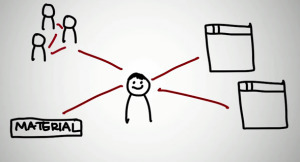
Connectivism as a pedagogical theory is typically thought of in terms of networks – the making and traversing of connections.
|
|
Scooped by
Dr. Susan Bainbridge
June 2, 2012 5:06 PM
|
Connectivism for EFL Teachers: A Theory of Learning For A Digital Age: Thomas Baker: Amazon.com: Kindle Store
|
|
Scooped by
Dr. Susan Bainbridge
June 2, 2012 2:00 PM
|
Open to individual educators from across the UK HE, FE, and community and skills sectors, the MOOC will aim: to increase the uptake of OERs through embedding the use of curriculum design tools, practices and approaches in individual practice and design team culture; to empower practitioners to become change agents in their local contexts; and to produce a collection of CC-licensed OER resources for wider use after the MOOC ends.
|
|
Scooped by
Dr. Susan Bainbridge
June 1, 2012 8:39 AM
|
Dr. Orey (2011), defines the Social Learning Theory as a method of learning in which students are actively engaged in constructing artifacts and conversing with others (Laureate education, 2011). Whereas, Johnson, Johnson, & Holubec (1986) Defined Cooperative learning as, “working together to attain group goals that cannot be obtained by working alone or competitively.
|
|
Scooped by
Dr. Susan Bainbridge
May 31, 2012 10:05 AM
|
We can debate whether disruptive innovation will ever come to healthcare. Recent developments in higher education, however, potentially portend profound change coming.
|
|
Scooped by
Dr. Susan Bainbridge
May 30, 2012 4:36 AM
|
Massive Open Online Courses (MOOCs) are online learning events that can take place synchronously and asynchronously for months. Participants assemble to hear, see, and participate in backchannel communication during live lectures.
|
|
Scooped by
Dr. Susan Bainbridge
May 29, 2012 11:06 AM
|
“Welcome to the college education revolution. Big breakthroughs happen when what is suddenly possible meets what is desperately necessary” Thomas Friedman, NYT Mr. Friedman is right ...
|
|
Scooped by
Dr. Susan Bainbridge
May 28, 2012 4:13 PM
|
I am still grappling with the connections between (or within, or “beyond”?) concepts..
|
|
Scooped by
Dr. Susan Bainbridge
May 27, 2012 10:12 AM
|
The term ‘massive open online course’, or MOOC (coined by Dave Cormier and Bryan Alexander) describes courses that take place online; are open in the sense that participation is typically free of charge and learning materials can be modified, reused and distributed to others; and reach massive communities – of tens of thousands – of learners.
|
|
Scooped by
Dr. Susan Bainbridge
May 25, 2012 2:05 PM
|
Think about what is said about scalability, format, and tradition in terms of your work in meeting and conference planning as what they talk about impacts both logistics and program. If listening to the podcast results in a discussion, all the better, but this posting is meant to be educational and to encourage professionals to learn more about MOOCs and experiment.
|
|
Scooped by
Dr. Susan Bainbridge
May 24, 2012 9:10 AM
|
|
|
Scooped by
Dr. Susan Bainbridge
May 23, 2012 11:23 PM
|
Education revolution, these are buzz words that prompted me to think about what it means, and the implications on Higher Education, K-12, and even corporate education and training. The recent bloss...
|
|
|
Scooped by
Dr. Susan Bainbridge
June 4, 2012 1:30 PM
|
One of the readings I explored this week was a chapter entitled “Cooperative Learning” from the book Using Technology with Classroom Instruction that Works (Pitler, Hubbell, Kuhn & Malenosk...
|
|
Scooped by
Dr. Susan Bainbridge
June 4, 2012 1:24 PM
|
If you’re even casually aware of what is happening in higher education, you’ve likely heard of massive open online courses (MOOCs). They have been covered by NY Times, Chronicle of Higher Education, TV programs, newspapers, and a mess or blogs. While MOOCs have been around since at least 2008, the landscape has changed dramatically over the past 10 months.
|
|
Scooped by
Dr. Susan Bainbridge
June 2, 2012 5:05 PM
|
David Hume's philosophy of morality is distinct from most approaches in that it does not postulate some set of principles or criteria for moral behaviour.
|
|
Scooped by
Dr. Susan Bainbridge
June 2, 2012 1:50 PM
|
Education is the means of propagating knowledge from one generation to the next. Education has grown exponentially, both in terms of its own food-powered/make-work employment base, and, in terms of the numbers of these humans receiving it. Sadly, for the most part, education methods and results have not improved.
|
|
Scooped by
Dr. Susan Bainbridge
May 31, 2012 3:32 PM
|
|
|
Scooped by
Dr. Susan Bainbridge
May 30, 2012 1:26 PM
|
Undoubtedly there are big changes in education going on many of which catalysed by Open Education. It seems that the current hype around MOOCs reflects a big disappointment with many of the traditi...
|
|
Scooped by
Dr. Susan Bainbridge
May 30, 2012 4:35 AM
|
Having explored a “learning theory” that George Siemens (2005; 2006a) and Stephen Downes (2005; 2007) developed for a networked and digital world called connectivism. Fascinating and extensive conversations in the blogosphere and in educational journals debate whether connectivism is a new learning theory or whether it is merely a digital extension of constructivism. Siemens and Downes initially received increasing attention in the blogosphere in 2005 when they discussed their ideas concerning distributed knowledge.
|
|
Scooped by
Dr. Susan Bainbridge
May 28, 2012 4:51 PM
|
Wireless is certainly the new norm for devices these days, but in considering that trend, there's certainly something that's being lost along the way.
|
|
Scooped by
Dr. Susan Bainbridge
May 27, 2012 4:07 PM
|
George Siemens, who leads Athabasca University’s Technology Enhanced Knowledge Research Institute, makes the case for why colleges should experiment with inviting tens of thousands of students to participate in their courses free online. The model poses challenges to traditional education models, but will it work for teaching Chaucer?
|
|
Scooped by
Dr. Susan Bainbridge
May 27, 2012 6:49 AM
|
So what is the role of the teacher? What has it looked like and how is it changing? Let’s consider some of these questions. What has the role of the teacher? What's the use of having a teacher?
|
|
Scooped by
Dr. Susan Bainbridge
May 24, 2012 4:28 PM
|
Technology Is Changing The Way We Learn: In Brendan Lea's 11 September 2011 post, "Connectivism: Questioning the...
|
|
Scooped by
Dr. Susan Bainbridge
May 24, 2012 6:34 AM
|
Prakash Nair opines, "… the classroom has been obsolete for several decades. That’s not just my opinion. It’s established science". A bold statement. One that much of current research and writing supports. A reference to some here would have made this piece a little more powerful, however. Another quote stood out for me: "…the erroneous assumption that efficient delivery of content is the same as effective learning".
|


 Scoop.it!