


Resistance among teachers to changing their instruction poses a serious challenge to Common Core implementation.

 Your new post is loading...
 Scoop.it!
Resistance among teachers to changing their instruction poses a serious challenge to Common Core implementation.

No comment yet.
Sign up to comment
Scoop.it!

Early math skills are an equal predictor to literacy skills of school success, argue Deborah Stipek, Alan Schoenfeld, and Deanna Gomby. Everyone knows that children who are not reading at grade level by 3rd grade are fated to struggle academically throughout school. Concerns about early literacy skills are justified because reading skills at kindergarten entry predict later academic achievement. "early math concepts, such as knowledge of numbers and ordinality, were the most powerful predictors of later learning." We have a long way to go. Vanderbilt University education professor Dale Farran reports in her recent study of preschool classrooms that math was intentionally taught by teachers only 2.5 percent of the day. Increasing the amount of time children spend engaged in instruction involving math conversation from 2 percent to only 4 percent led to significant math gains. Young children will take advantage of the opportunities we give them to develop their understanding of math. The time is right for increasing our attention to early math. The K-12 common-core standards offer a clear and nearly universal target for the math skills U.S. children will need to master in the beginning elementary grades. We need pre-K standards that are aligned with the common core, and having 50 states do that work independently is inefficient. Teacher Training In Math Needed Teacher training is needed to help early-childhood educators understand that learning is not a zero-sum game: Meaningful math activities in the context of play can foster crucial aspects of children's development. Few early-childhood educators are prepared to teach math. For young children to have access to meaningful opportunities to learn math, new requirements for preschool teachers will need to be developed. Requirements should include opportunities to learn what is known about young children's development related to mathematics, as well as strategies for assessing children's understanding and teaching math to young children. Increasing preservice requirements related to teaching math to young children will necessitate expanded offerings in institutions that provide preservice training. States should review the curriculum and training opportunities offered by two- and four-year colleges to ensure that students learn to teach mathematics effectively to young children. To support current preschool teachers, early-childhood programs should build internal capacity, such as by hiring coaches with expertise in teaching math to young children, or investing in the development of expertise in a teacher who can serve as a mentor to other teachers.
Scoop.it!
The Common Core has announced that it will be developing curriculum maps for history and geography.
Scoop.it!
Core Commons is designed by the Education Commission of the States (ECS) to serve as a resource to states, policymakers and the public on the implementation of the Common Core State Standards. ECS tracks state progress on the development and implementation of common core strategies and policies. In addition, ECS explores the critical issues states encounter as they move to full implementation. Please submit highlights from your state and we will include them on our site.
Scoop.it!

KTVA CBS 11 | Anchorage, Alaska Last week the school board voted to implement the Common Core State Standards which are the most rigorous in the nation. ANCHORAGE - The Anchorage School District (ASD) is raising the academic bar for students. Last week the school board voted to implement the Common Core State Standards which are the most rigorous in the nation. Alaska is one of only five states that does not use the Common Core, but the board decided it wanted Anchorage students to be able to compete at the national level.
Scoop.it!

All districts in West Virginia must adjust their English and math curricula by 2014. While all transitions must be in line with the CCSS, Cordeiro said individual counties can decide how they will implement the changes.
Scoop.it!

Dr. Steven Lynn who is the Dean of the Honors College at the University of South Carolina presents a list of 10 reasons why students need more literature. I agree. However, where does it say that an increased emphasis on informational text means less reading of literature?
Scoop.it!

The principal of Public School 186 in Bensonhurst roams the halls of her large school constantly, giving feedback and cheering on students and teachers as they work hard to do well on test scores, but she says she wants them to have fun in school,...
Scoop.it!

Rick Hess goes back to the future to speculate on the possible downfalls that could plague the Common Core State Standards. "The "we're-in-a-hurry" hubris" may prove to be the downfall of the Standards not the Standards themselves.
Scoop.it!
On Thursday, March 15, Common Core hosted a panel discussion titled “Truant from School: History, Science, and Art”. Among the topics discussed were the results of Common Core’s national survey of public school teachers titled “Learning Less“. Common Core also announced that we will be creating CCSS-based curriculum maps in history and geography.
Scoop.it!

pictured is Lucy Calkins On Saturday (3/24/12), at the 82nd Saturday Reunion held at the Teachers College at Columbia University in NYC, Calkins stood before a packed house of elementary and middle school teachers in the Nave at the Riverside Church to deliver her closing session, “Walking Courageously Forward in Today’s Common Core World: Literacy Instruction, School Reform and Visions of Tomorrow”. Caulkins, the Founding Director of the Reading and Writing Project LLC and the Teachers College Reading and Writing Project as well as the Robinson Professor in Children’s Literature at Teachers College where she co-directs the Literacy Specialist Program, advocates for teachers to embrace the Common Core to be a “a co-constructor of the future of instruction and curriculum, and indeed, of public education across America.” Caulkins writes, “As challenging as it must have been to write and finesse the adoption of the Common Core State Standards, that accomplishment is nothing compared to the work of teaching in ways that bring all students to these ambitious expectations.The goal is clear.The pathway is not.” Her advice to read the CCSS as “gold” comes from her ongoing commitment to improving education coupled with her experience with students and the teachers she supervises.
Scoop.it!

High school students today are reading books intended for children with reading levels far below those appropriate for teens, according to a recent report.

's comment March 28, 2012 10:37 PM
I read this article last week & it just got my dander up...another seeming attempt at "teacher bashing", in my opinion. I hope that the readers of the HP article will read the full text-including the actual list of top books read by high schoolers-NONE of which are developmentally appropriate for 5th graders! Interest is a much more powerful indicator of what students will read than lexile...especially when they are reading for pleasure.
Scoop.it!

Under the Common Core State Standards teacher will address fewer standards in more depth. In addition, students must use high-order thinking, argumentative writing, and application to real-world situations. Frequent checks for understanding must become a normal part of instruction in every classroom every day.-Mel Riddile "As teachers we create conditions for our students to learn. As we plan it is critical to create opportunities that keep students engaged in the learning process. The outcome of this process is to determine if students have reached our learning targets. In order to know if students have learned the concept(s) taught, formative assessment data should be collected to check for our students’ understanding. These can be short preplanned activities that serve as a closure to a specific lesson. The data collected will help develop the your next steps."
|
Scoop.it!
In partnership with the American Federation of Teachers, one of the lowest-performing rural school districts in West Virginia aims to improve results and emulate the success of the Harlem Children's Zone Initiative in New York City.
Scoop.it!

How will the Common Core Standards change writing in mathematics? Here are a few ways you can incorporate writing into daily math activities! I require my students to:
to explain how they got to their solution to a problem. Now, under the Common Core State Standards, I need to change my requirements to:
Under the new standards, the math world will collide with the language arts world successfully. We can meet this challenge of the “new standards” and embrace the change it will bring to the math classroom.
Scoop.it!

Download te Hunger Games curriculum, which is aligned with the Common Core State Standards. Who says there will be less literature?
Scoop.it!

If we start in kindergarten asking students to explain their thinking in math, how will that change what we’re doing in math class? CCSS will force students to justify their reasoning, to do public speaking, practice oral communication skills Marzano challenges us to move from the information age to the interaction age
Scoop.it!

High Expectations While I agree that the Common Core State Standards demand more of children and that analytical skills must be developed thoughtfully, young children can grapple with such texts. Explicit Instruction Students should receive explicit and systematic instruction in the reading-foundation skills in order to develop automaticity. This was exactly what the National Reading Panel found, and the finding is well supported by research. Automaticity and Fluency students who lack automaticity and fluent reading ability have a harder time focusing on meaning. Vocabulary Tier 2 words (as studied by Isabel L. Beck at the University of Pittsburgh) are not just academic words, but also vocabulary common to much of children's literature. By addressing academic language early, we can attempt to overcome the socioeconomic and language discrepancies noted in Todd R. Risley and Betty Hart's book Meaningful Differences in Everyday Experience of Young American Children (1995). -- Linda Diamond
Scoop.it!
The West Virginia Department of Education is mandating changes to kindergarten through 12th grade math, English and language arts curriculums in cooperation with the new Common Core State Standards curriculum.
Scoop.it!

We wanted to engage in a project that would dig into RTT and get a better sense of what exactly was happening within the states that won the grants. What was going well? What was going wrong? What early lessons could be drawn for future federal education initiatives? To answer these questions, we enlisted a team of researchers to investigate each state’s RTT efforts. We spoke to key stakeholders as well as examined research and implementation documents.
Scoop.it!
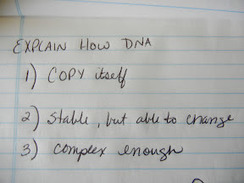
The common core standards include a writing component for all educators of all grades, which can cause some mild anxiety among teachers who do not generally include writing as part of their instruction. Though some science teachers may require a research paper for their class, many high school science teachers do not include this in their curriculum, and I do not think that it is the intent of the core standards to push for term papers in every course.
Scoop.it!

In the past week, the cyber conversation about the Common Core State Standards’ call for increased reading of nonfiction texts in English Language Arts has intensified.
Scoop.it!

Successful transition to the Common Core hinges on the amount of support that schools will receive from states (if any) and quality professional development opportunities. One trend that bothers me and many others is the fact that many stakeholder groups that do not have a vested interest in student achievement are raking in the cash while schools struggle to adapt to these changes. As long as this issue and others discussed above persist resentment for this initiative will continue to grow.
|






