ALKEBULAN INDIGENOUS
19.8K views | +2 today
ALKEBULAN INDIGENOUS
ALKEBULAN INDIGENOUS is a division of KROTOASA RESEARCH INTENSIVE INSTITUTE (KRII), which refers to all Alkebulan communities and Diaspora Slave Descendants who lost their claims to land through colonialism and slavery, also communities with deep historical indigenous ties to the lands, natural resourses and environment, who maintain unique cultures, traditional practices and self-governance,. Alkebulan is considered the oldest and indigenous name for the continent of Africa, translating to "Mother of Mankind" or "Garden of Eden". Used by ancient Moors, Nubians, and Ethiopians, it predates the European-imposed name "Africa" and represents a push to reclaim pre-colonial African identity and history.
Alkebulan Indigeon also points to the rich diversity of Africa's original inhabitants, whose traditional lives and rights are central to understanding the continent's complex history and ongoing social dynamics. These are groups of people native to a specific region, people who lived here before colonist arrived.

Indigenous People like the San and Khoekhoe population both carrying mtDNA +100 000 years in Southern Africa are recognised indigenous peoples by the United Nations and UNDRIP., These two groups chose different lifestyles as hunters and herders but after colonialsm many Khoekhoe populations became hunters due to dispossesion and Genoicide by European and Bantu Settlers. Bantu Settlers was named by the Khoekhoe people as "Xhosas" and adopting the cultures and rituals of the KhoeKhoe population, Bantu's are distinct from the majority African populations who migrated and lost their historic continuity of their culture, tribes, indigenous livestyles, territories and surrounding natural resources.

Political Participation: Indigenous People lack political representation and participation, economic marginlization and poverty, lack of access to social services, discrimination, and protection of rights.

Alkebulan's marginalization in global politics and economics stems from a mix of historical legacies of colonialism, global politics and global economic structures that favor commodity exports, leading to asymmetrical trade, capital flight, and limited industrialization. Key factors include dependence on external powers, poor infrastructure, illicit financial flows, and structural disadvantages within global trade rules, despite rich resources.

Alkebulan's revolution of sweeping transformation, primarily the anti-colonial independence movements (Decolonisation of Africa 1950 -1970s), the anti-colonial restistance, the political revolution, the economic and social revolutions, the labour revolutions with key drivers and goals of self-determination by ending foreign control and achieving political independence and economic independence by moving from exporting raw materials to manufacturing in areas where extraction taking place.
Your new post is loading...
Scooped by KRII-KROTOASA RESEARCH-INTENSIVE INSTITUTE
January 26, 2025 4:40 AM
Scoop.it!

Indigenous Land: History of the Lost Civilization of Mapungubwe


Located in South Africa's Limpopo Province, Mapungubwe National Park is a Big Five game reserve. Considered the most influential and important Iron Age site in South Africa, Mapungubwe National Park was once the home of a prevailing and powerful African kingdom and is considered the precursor to Great Zimbabwe.

Exploring the Ruins of an Ancient and Powerful Kingdom

Considered the most influential and important Iron Age site in South Africa, Mapungubwe National Park in the Limpopo Province was once the home of a prevailing and powerful African kingdom. A visit to thishistorical site will leave one with a unique insight into the social, cultural and political structures prevalent in the society, a society that, way before its time, was trading gold and ivory with China and India and is regarded as being one of the most complex societies in southern Africa at the time.

The Lost Race of People

The two most significant sites on the reserve are K2 and Mapungubwe Hill. These sites are considered to be neighbouring villages. Sadly, the identities of the people who once lived at both K2 and Mapungubwe remain a mystery as they lived before the time of written record and there are no known oral traditions recorded further than a thousand years back.

K2 is located 1 kilometre (0.62 miles) from Mapungubwe Hill. The people living in the village are known to have been subsistence farmers, surviving by planting crops and raising cattle. The most noteworthy feature of K2 is the large refuse site. From this site archaeologists have been able to determine that a number of generations lived in the area over a period of 200 years and that they ate a vast and nutritious diet and were skilled craftsmen; producing a variety of artefacts including thousands of large glass beads, tools, jewellery and small figurines.

Prosperous Times Come to an End

Between AD 900- 1300 Mapungubwe Hill acted as the royal headquarters of this flourishing community of over 5000 people living and working in the valleys below while their 'sacred' leader lived in isolation from them.

Today, visitors to South Africa's Mapungubwe National Park can climb one of two very narrow and steep paths to the top of Mapungubwe Hill - a sandstone hill in the shape of an oval, with sheer perpendicular cliffs that lead to a 300 metre plateau, known as the 'place of jackals' and look across the virtually intact remains of the palace sites and the settlement area dependent upon them.

There are over 400 archaeological sites found in the Mapungubwe area, some of which date back to 1 million years BP and show signs from the Earlier, Middle, and Later Stone Ages as well as the Iron Ages. The main concentration of sites is centred around the Limpopo-Shashe confluence which lies right on the borders of South Africa, Botswana and Zimbabwe.

The kingdom was particularly powerful due to the strong culture of gold and ivory trade that prospered along the east coast of Africa. It is suggested that the prosperity of the kingdom came to an end due to climate changes and as a result, crop failure.

Towards the end of the kingdom's prosperity from AD1290 - 1450 this trade moved north-eastwards to become the founding baseline of what would become Great Zimbabwe. Centuries later, the arrival of the white ivory hunters in the late 18th century and the Dutch settlers in the late 1830's saw much conflict between the different local and foreign communities.

From Archaeological Dig to World Heritage Site

The site first gained recognition in 1933 when The Illustrated London News printed an article announcing the extraordinary discovery of a grave containing a mass of gold-work including the now famous Mapungubwe gold rhinoceros. In 1922 the area was declared a botanical reserve and was then given South African National Park status in 1995 and later World Heritage status in 2003.

While the Mapungubwe historical site was only rediscovered in 1932. It was kept closed to the public until September 2004 when it was officially opened as Mapungubwe National Park.

Mapungubwe National Park

Visit this Limpopo nature reserve in South Africa and discover the wonders of Mapungubwe National Park for history, wildlife and scenic beau...more

Mapungubwe National Park Travel Guide

A travel guide to exploring the Mapungubwe National Park in Limpopo with tips on what to do, how to get there, and what not to miss while st...more
  •  
No comment yet.
Scooped by KRII-KROTOASA RESEARCH-INTENSIVE INSTITUTE
January 26, 2025 4:35 AM
Scoop.it!

Indigenous Land: History of iSimangaliso Wetland Park, South Africa

Indigenous Land: History of iSimangaliso Wetland Park, South Africa | ALKEBULAN INDIGENOUS | Scoop.it


Proclaimed South Africa's first World Heritage Site in 1999, the iSimangaliso Wetland Park in KwaZulu Natal has a long and rich history of exploration and discovery that dates back as far as the Later Stone Age.

Orientating Yourself in the iSimangaliso Wetland Park

Stretching up the northern reaches of KwaZulu Natal from the Msunduzi River for 332 000 hectares, toward the border with Mozambique, the iSimangaliso Wetland Park is one of the country's largest conservation areas, and is a considered a highlight for any trip to South Africa.

The reserve is long and narrow, especially towards the north with a band of vegetated sand dunes running parallel to the coast, for the length of the reserve, separating the interior from the ocean. Lake St Lucia, (actually an estuary for the Hluhluwe River and others) which is 80 kilometres (50 miles) long and up to 23 kilometres (14.2 miles) wide dominates the south of the reserve the rest of the landscape being mostly flat.

In the north South Africa's largest freshwater lake, Lake Sibaya and four smaller interlinked lakes are found near Kosi Bay. The wilderness reserve's eastern boundary is formed by the Indian Ocean and the marine protected area extends outwards from the coastline, protecting both land and sea flora and fauna. The town of St Lucia is incorporated into the wilderness park and is located at the south of the reserve, 26 kilometres (16 miles) from Mtubatuba.

The History of the iSimangaliso Wetland Park

The area has been used and inhabited by man for many years. Historical evidence, including decorative pierced seashells, dating back to the Later Stone Age has been found in Border Cave in the Lebombo Mountains, west of Kosi Bay. There are also Iron Age sites located at Enkwazini, east of Lake St Lucia that date back to 290AD.

The first south-migrating Bantu people arrived in the area around 1440, impacting the landscape greatly through livestock grazing, hunting and bush clearance. Discoveries of trade beads suggest that Arab traders visited the region as early as 1250 and Vasco Da Gama and his crew are said to have been the first European settlers on the coastline when they landed here in December 1497.

The Dutch landed in the area in 1670 and the British followed years later in 1822. The year 1853 saw the first ventures inland with a ship to Lake St Lucia as far as 50 kilometres (31 miles) up the Mkuze River. These explorers were all later followed by hunters, ivory traders and missionaries.

The initial reserve, which was much smaller than the current day expanse, was first established in 1895, making the Hluhluwe-iMfolozi region the oldest conservation area in South Africa. The park was proclaimed South Africa's first World Heritage Site in 1999 during an unveiling ceremony where Nelson Mandela was the guest of honour. Previously known as the St Lucia Wetlands, the reserve was renamed iSimangaliso, which means 'miracle and wonder' in 2010.

iSimangaliso Wetland Park

A World Heritage Site, iSimangaliso Wetland Park (the former Greater St. Lucia Wetlands Park) incorporates an astonishing variety of habitat...more

Wildlife of the iSimangaliso Wetland Park

Proclaimed South Africa's first World Heritage Site, the exceptionally beautiful iSimangaliso Wetland Park is renowned for its diverse wildl...more
  •  
No comment yet.
Scooped by KRII-KROTOASA RESEARCH-INTENSIVE INSTITUTE
January 26, 2025 4:29 AM
Scoop.it!

Indigenous Land: The Bloody History of Addo Elephant National Park


The Addo Elephant National Park has a long and bloody past, as it was once the location for many clashes between tribes and colonisers as well as the site of excessive hunting of wildlife.

The Heritage of One of South Africa's Top Safari Parks

The overall size of Addo Elephant National Park is 686 000 hectares, which encompasses 164 000 hectares of land and a 120 000 hectare marine reserve. Stretching from past the shoreline near to Kenton-on-Sea in the east to the dry Karoo in the north-west, Addo Elephant National Park centres on the Zuurberg Mountains and has altitudes that range from sea level all the way up to 1 000 metres above sea level. The Sundays River runs along the south-western boundary eventually reaching the sea at Algoa Bay.

Earliest Inhabitants

The earliest visitors to the game reserve area arrived about 5 000 years ago, but it was only 1 000 years later that man decided to settle and live in the region. Between 2 000 - 1 500 years ago there is evidence that more and more Khoekhoen (Khoi Khoi) people arrived and settled in the area, many of whom died however during an outbreak of smallpox that hit the area in the early 1 700s.

Around the same period nomadic Xhosa tribes were also entering the area, many of whom settled in the North and along the Wit River. There were many clashes between the nomadic Xhosa and the settled Khoekhoen (KhoiKhoi) as they tried to secure their space and claim the land.

The Colonials Arrive

The 1740s saw the arrival of the Boer people to the area in search of Ivory and trading opportunities and by the 1750s they too had decided to settle in the area and start to farm. Clashes between the various inhabitant escalated until the early 1811 when 1 000 Boer soldiers drove over 20 000 Xhosa and the Khoe (Khoi) out of the area to beyond the Great Fish River.

Elephants in the Region Were Hunted Almost to Extinction

Throughout all of the fighting and arrival of settlers, hunters continued to poach the Elephant and other game animals in the area and eventually by the early 1900s there were only a few small populations of Elephants left. A ruling passed in 1919 by Major PJ Pretorious ordering that all of the remaining Elephants in the area were to be exterminated, saw 114 for these graceful animals shot in just over a year.

By 1931 only 11 Elephants remained and a National Park was proclaimed in an effort to protect these wild animals, however the enclosure keeping the animals in the area was inadequate and the animals were lost one by one, until 1954 when an Elephant-proof fence was finally erected. Today there are over 450 elephant found in the game reserve and the population is flourishing.

Addo Elephant National Park

Addo Elephant National Park is situated in the dense valley of the Sundays River region. This Eastern Cape game park offers a memorable wild...more

Addo Elephant National Park Travel Guide

The Eastern Cape's leading national park; the Addo Elephant National Park, is a malaria free, Big Five game reserve known for its' large Ele...more
  •  
No comment yet.
Scooped by KRII-KROTOASA RESEARCH-INTENSIVE INSTITUTE
January 26, 2025 4:22 AM
Scoop.it!

Indigenous Land: Drakensberg – A History of Rock Art and Bloodshed


South Africa's uKhahlamba-Drakensberg National Park has been inhabited by mankind since the Middle Stone Age and boasts a number of historically significant sites with a number of examples of San Rock art.

History of South Africa's Most Dramatic Landscape

KwaZulu Natal's Drakensberg National Park is dominated by the jagged peaks of the mighty Drakensberg mountain range. One of South Africa's 8 World Heritage Sites, the Drakensberg National Park covers 250 000 hectares, starting in the north of the province at Cathedral Peak and curving southwards, clinging to the Lesotho border, all the way to Bushman's Nek.

Known by the Zulu's as uKhahlamba which means 'Barrier of Spears' in Zulu and as Drakensberg or Dragon Mountain by the Dutch settlers, KwaZulu Natal's Drakensberg mountains are one of South Africa's most dramatic and beautiful natural landscapes.

Ancient San Rock Art Galleries

It is clear by the abundant artefacts found in the park that human beings have been living in the Drakensberg region since the Middle Stone Age, however; it is the ample examples of San rock art that have been best documented. Visitors to the National Park can take guided walks up to one of the many caves or rock over-hangs to view examples of these Later Stone Age people's art.

Some of the artwork dates back to over 1 500 years ago while other examples are 'newer' depicting ox-wagons and men with rifles and cattle that have been dated back to around 800 years ago. The largest collection of these paintings is in the Ndedema Gorge that has around 4 000 paintings alone.

The 35 000 to 40 000 examples of bushmen art found in and amongst the caves of the national park tell the story of the San bushmen living peacefully and in harmony with their environment. Sadly the arrival of the Nguni cattle farmers and in later years, the white settlers saw this tranquil co-existence being destroyed as the new white inhabitants hunted the wild game in the area and reduced the San's food resources.

The San Fled the Settlers

As was to be expected, tension increased when the San people began to use their new neighbour's cattle for food. Angered by the loss of their cattle, the white settlers began to view the San as vermin and shot at them, as they did other hunters in the area such as Baboons and Leopards. The San were thus forced up across the mountains and into Lesotho. Many of the San's escape routes where then blasted with dynamite to prevent them from returning to the area.

Several military operations were started with the expressed objective of destroying the entire San race. As the violence continued the British colonial authorities set up a belt of black tribal reserves or 'native locations' in the foothills of the mountains to act as a buffer against the San.

The last known rebellion by the San people in the area occurred in the early 1870s and was curbed by the British, forcing the remaining San people to flee to the Giant's Castle area.

Maloti Drakensberg Park

The spectacular uKhahlamba Drakensberg Park in KwaZulu-Natal, South Africa, now known as Maloti Drakensberg Park is located just two hours f...more

Drakensberg National Park Travel Guide

Considered one of South Africa's most dramatic landscapes, the massive Drakensberg mountain range covers over 250 000 hectares of KwaZulu-Na...more
  •  
No comment yet.
Scooped by KRII-KROTOASA RESEARCH-INTENSIVE INSTITUTE
January 26, 2025 3:15 AM
Scoop.it!

Indigenous Land: History of South African Nature Reserves


Just like South Africa itself, nature reserves around the country also have a fascinating history. Read all about how these parks came into existence.

History and geology buffs will find the history of these iconic South African nature reserves and national parks fascinating - from the geological formation of the land to the first human settlers to the proclamation of a nature reserve.


Cederberg Wilderness Area History and Wildlife

Rich in historical San art, the Cederberg Wilderness Area offers spectacular scenery, a wide diversity of plant species and an extensive net...more

Drakensberg – A History of Rock Art and Bloodshed

South Africa's uKhahlamba-Drakensberg National Park has been inhabited by mankind since the Middle Stone Age and boasts a number of historic...more

History of iSimangaliso Wetland Park

Proclaimed South Africa's first World Heritage Site in 1999, the iSimangaliso Wetland Park in KwaZulu Natal has a long and rich history of e...more

History of Pilanesberg Game Reserve

Considered to be one of the most ambitious game reserve projects in the world, the Pilanesberg Game Reserve is home to at least 86 species o...more

History of the Garden Route National Park

The Garden Route National Park covers 157 000 hectares of land and is known for its spectacular mountain scenery and a wide diversity of lan...more

History of the Lost Civilization of Mapungubwe

Located in South Africa's Limpopo Province, Mapungubwe National Park is a Big Five game reserve. Considered the most influential and importa...more

History and Wildlife of the West Coast National Park

The West Coast National Park is home to one of the finest coastal wetlands in the country, and is renowned for its magnificent spring flower...more

Pilanesberg National Park - Operation Genesis

From 1979, more than 6,000 animals of various species were moved into quarantine enclosures to acclimatise before being released into Pilane...more

The Bloody History of Addo Elephant National Park

The Addo Elephant National Park has a long and bloody past, as it was once the location for many clashes between tribes and colonisers...more

To Extinction and Back - The Quagga

A groundbreaking project to bring the Quagga back from extinction is proving highly successful in a number of nature reserves in the Western...more
    •  
No comment yet.
Scooped by KRII-KROTOASA RESEARCH-INTENSIVE INSTITUTE
January 26, 2025 3:12 AM
Scoop.it!

Indigenous Land: Camping in South African Nature Reserves


Everything you need to know about camping in South African nature reserves. Tips, information and camping travel advice.

South Africa is excellent for camping because of the wide variety of habitats. There are a variety of places to camp, from the highlands in Eastern Cape Province to the sand-covered landscape in Northern Cape, to the grasslands and valleys enclosing Kruger National Park.

There is something here for everyone, whether you're searching for adventure or just a peaceful place to unwind and appreciate nature. South African nature reserves and national parks are excellent starting points for exploration and provide countless possibilities to see wildlife.

Also, don't overlook the gorgeous beaches, which are a wonderful way to cool off after a strenuous day of bicycling or hiking. Camping in South Africa will undoubtedly be a memorable experience that you won't soon forget.

5 of the Best Camping Spots in South Africa

Choose a camping holiday and reboot your connection with nature. Find inspiration and peace in surroundings that 'speak' to you. Camping spo...more

Camping Activities for Children

Camping in South Africa is a wonderful experience with children; their natural curiosity about the world means that even simple games and ac...more

Camping Safety - Advice to Ignore at your Peril

Camping in South Africa is a great way to de-stress and reconnect with nature, but it can be dangerous if you are unprepared and things go w...more

Eco-Friendly Camping

Done in the correct manner with respect for the environment, camping in South Africa is a great eco-friendly activity....more

Tips for Camping with Children in South Africa

Camping can be a wonderful way to introduce children to the beauty of South Africa national parks and nature reserves. They key to a good ca...more
  •  
No comment yet.
Scooped by KRII-KROTOASA RESEARCH-INTENSIVE INSTITUTE
January 26, 2025 3:08 AM
Scoop.it!

Indigenous Land: South African Nature Reserves Near Towns


Use this helpful guide to find out which South African Nature Reserve is closest to your home town. See distances and information for planning your holiday.


Nature Reserves near Cape Town

Find the distances of various nature reserves near Cape Town for your South African self-drive holiday. Come experience the scenic splendour...more

Nature Reserves near Johannesburg

Find the distances of various nature reserves near Johannesburg and in surrounding areas. Enjoy adventure on a self-drive holiday...more

Nature Reserves near Durban

Find the distances of selected nature reserves near Durban for your South African self-drive holiday. Come experience the scenic splendour...more

Nature Reserves near Port Elizabeth

Find the distances of nature reserves near Port Elizabeth for your South African self-drive family trip. Come experience the adventure of a ...more

Nature Reserves near Upington

Find the closest Northern Cape nature reserves near Upington, for your South African self-drive holiday. Pack the whole family and explore t...more

Nature Reserves near Bloemfontein

Find the distances of selected nature reserves near Bloemfontein for your South African self-drive holiday. Get back to nature and enjoy the...more

Nature Reserves near Nelspruit

Find the closest nature reserves near Nelspruit for your South African self-drive holiday. South African nature reserves offer adventure, re...more

Nature Reserves near Polokwane

Find the distances of various nature reserves near Polokwane for your South African self-drive trip. Come experience the beauty and stunning...more
    •  
No comment yet.
Scooped by KRII-KROTOASA RESEARCH-INTENSIVE INSTITUTE
January 26, 2025 3:04 AM
Scoop.it!

Indigenous Land: North West Province Nature Reserves in South Africa


North West Province Nature Reserves in South Africa offer a range of accommodation options, activities in nature, wildlife and beautiful scenery.

Pilanesberg National Park is a family-friendly malaria-free national park in the North West province of South Africa that boasts Big 5 game wildlife.

It is also just a 10-minute drive from Bakubung Gate to Sun City Resort so you can combine all the glitz and entertainment of Sun City Resort with an authentic wildlife safari in Pilanesberg.


Pilanesberg National Park

Malaria-free Pilanesberg National Park, adjacent to Sun City Resort, is situated in a long extinct volcano. Spot Big Five in one of the larg...more
    •  
No comment yet.
Scooped by KRII-KROTOASA RESEARCH-INTENSIVE INSTITUTE
January 26, 2025 3:02 AM
Scoop.it!

Indigenous Land: Mpumalanga Nature Reserves in South Africa


Mpumalanga Nature Reserves in South Africa offer a range of accommodation options, activities in nature, wildlife and beautiful scenery.

Nkomazi Game Reserve in Badplaas offers guided game drives and safari walks as well as fly fishing in the Komati River.

If you are looking to reconnect to nature and relish spectacular scenery then a trip to Blyde River Canyon Reserve is a must!

This nature reserve in Mpumalanga boasts natural wonders including Bourke's Luck Potholes, the Three Rondavels, Pinnacle Rock and God's Window. You would be hard-pressed to find a better backdrop for a selfie!


Blyde River Canyon Nature Reserve

Blyde River Canyon Nature Reserve in Mpumalanga, South Africa forms part of the Greater Drakensberg escarpment and features on the scenic Pa...more

Nkomazi Game Reserve

Nkomazi Game Reserve offers tented lodge accommodation that hits the sweet spot between authenticity and comfort, south-west of the Kruger N...more
    •  
No comment yet.
Scooped by KRII-KROTOASA RESEARCH-INTENSIVE INSTITUTE
January 26, 2025 2:56 AM
Scoop.it!

Indigenous Land: Kwazulu-Natal Nature Reserves in South Africa


A selection of Kwazulu-Natal Nature Reserves in South Africa offering a range of accommodation options, activities in nature, wildlife and beautiful scenery.

Game reserves and national parks in KwaZulu-Natal provide an unrivalled combination of breathtaking scenery, abundant wildlife, and exhilarating recreational activities.

Not only can you go on exciting game drives and wildlife safaris but in the warm waters of iSimangaliso Wetland Park, there are fantastic opportunities for boating and snorkelling among the variety of unique marine life.

From luxury accommodation in private KwaZulu-Natal game reserves to affordable self-catering accommodation in KwaZulu-Natal national parks- there is something to suit every taste and budget.


Babanango Game Reserve

Babanango Game Reserve in the heart of Zululand is waiting to be explored! Just 3 hours drive from Durban, this scenic Big 5 nature reserve ...more

Pongola Game Reserve

Pongola Game Reserve in KwaZulu-Natal is unique in that it offers great water based activities for relaxing adventures whilst game viewing...more

Kosi Bay Nature Reserve

The Kosi Bay Nature Reserve forms part of the iSimangaliso Wetland Park, it contains a system of estuarine lakes that offer excellent diving...more

Imfolozi Game Reserve

Imfolozi Game Reserve, KwaZulu-Natal is adjacent to the Hluhluwe Game Reserve and together they form one of South Africa's oldest and larges...more

Ndumo Game Reserve

Ndumo Game Reserve in Maputaland, KwaZulu-Natal, South Africa, is a rewarding area to view wildlife with its wetlands and pans, thick bush, ...more

Ithala Game Reserve

Ithala Game Reserve in KwaZulu-Natal, South Africa, is situated in the rugged, mountainous northern region which is home to a spectacular...more

Giants Castle Nature Reserve

Giant's Castle Nature Reserve is known for its magnificent San rock art, fabulous hiking and invigorating climate. This KwaZulu-Natal nature...more

Royal Natal National Park

Royal Natal National Park is renowned for its spectacular scenery and fabulous mountain trails which explore the heart of this KwaZulu-Natal...more

Sodwana Bay National Park

Welcome to unspoiled coastal beauty at its best! Set within the iSimangaliso Wetland Park, the Sodwana Bay National Park in South Africa...more

Tala Game Reserve

Tala Private Game Reserve is a malaria-free wildlife sanctuary located in the hills of a peaceful farming community, close to the bustling c...more

Maloti Drakensberg Park

The spectacular uKhahlamba Drakensberg Park in KwaZulu-Natal, South Africa, now known as Maloti Drakensberg Park is located just two hours f...more

iSimangaliso Wetland Park

A World Heritage Site, iSimangaliso Wetland Park (the former Greater St. Lucia Wetlands Park) incorporates an astonishing variety of habitat...more

Thanda Safari Private Game Reserve

Thanda Safari Private Game Reserve on the Elephant Coast in KwaZulu-Natal, South Africa, strives to transcend the expected luxury of a 5-sta...more

Thula Thula Private Game Reserve

The exclusive Thula Thula Private Game Reserve in KwaZulu-Natal, South Africa, continues to impress guests year after year with its abundant...more

Bonamanzi Game Reserve

There is no place that offers so complete an African experience as Zululand, so come and experience it for yourself at Bonamanzi Game Reserv...more

Falaza Game Park and Spa

Falaza Game Park and Spa, a KwaZulu-Natal Game Reserve near Durban in South Africa, offers Rhino tracking, relaxing spa treatments...more

Hluhluwe Game Reserve

For Big Five game viewing in extremely scenic surroundings, Hluhluwe Game Reserve is hard to match. This KwaZulu-Natal game reserve north of...more

Pakamisa Private Game Reserve

Pakamisa Lodge enjoys a remote and lofty position in northern Zululand, South Africa. This malaria-free KwaZulu-Natal game reservein South A...more

Nambiti Plains Private Game Reserve

Big Five safaris, magnificent sunsets and the magic of the Drakensberg, all this and more can be found at Nambiti Plains Private Game Reserv...more

Mkhuze Game Reserve

Visit Mkhuze Game Reserve for game viewing and birding in beautiful and diverse landscapes. See Rhino and Elephant in this KwaZulu-Natal nat...more

Cape Vidal

Cape Vidal offers a superb location between Lake St Lucia with its resident wildlife and the tidal delights of the Indian Ocean. This KwaZul...more

Midmar Dam and Nature Reserve

Relax in the great outdoors with your family and friends at Midmar Dam. This KwZulu-Natal nature reserve has water sport facilities and a ga...more
    •  
No comment yet.
Scooped by KRII-KROTOASA RESEARCH-INTENSIVE INSTITUTE
January 26, 2025 2:50 AM
Scoop.it!

Indigenous Land: Eastern Cape Nature Reserves in South Africa


A selection of Eastern Cape Nature Reserves in South Africa offering a range of accommodation options, activities in nature, wildlife and beautiful scenery.

Eastern Cape Nature Reserves and National Parks offer an amazing malaria-free safari experience for the whole family. 

The most well known and largest national park in the Eastern Cape is Addo Elephant National Park - home to 600 elephants as well as buffalo, lion, leopard, zebra, antelope, Spotted hyenas, warthogs and many more creatures great and small.

There are many private Eastern Cape game reserves that offer luxury accommodation paired with guided game drives tracking Big Five wildlife. Have a look at our recommendations below or contact one of our Destination Specialists for expert advice.


Addo Elephant National Park

Addo Elephant National Park is situated in the dense valley of the Sundays River region. This Eastern Cape game park offers a memorable wild...more

Amakhala Game Reserve

Amakhala Game Reserve near Port Elizabeth in the malaria-free Eastern Cape, is easily accessible for Big Five safaris....more

Camdeboo National Park

Experience the magic of Camdeboo National Park, tucked away in the Eastern Cape Province of South Africa and deep in the heartland of the se...more

Inkwenkwezi Private Game Reserve

Inkwenkwezi Private Game Reserve in the malaria-free Eastern Cape, South Africa, offers wildlife safaris, game drives, hiking, quad biking, ...more

Kariega Game Reserve

Kariega Game Reserve is home to the Big Five. This malaria-free Eastern Cape Game Reserve in South Africa is also just 15 minutes from the I...more

Kwandwe Private Game Reserve

Kwandwe Private Game Reserve near Grahamstown, Eastern Cape, is more than a Big Five safari destination in South Africa - it's a conservatio...more

Lalibela Game Reserve

Lalibela Game Reserve is a malaria-free Eastern Cape game reserve in South Africa with exceptional wildlife habitats creating unforgettable ...more

Mount Camdeboo Private Game Reserve

Experience the heart of the Great Karoo on a personalised safari at Mount Camdeboo Game Reserve in Eastern Cape. This malaria-free game rese...more

Mountain Zebra National Park

Mountain Zebra National Park is a spectacular wilderness gem hidden in the Eastern Cape Province of South Africa, just 12 km from the histor...more

Mpongo Private Game Reserve

Mpongo Private Game Reserve near East London lies in the malaria-free Eastern Cape, South Africa. It is named after the historic Mpongo Rive...more

Oceana Beach and Wildlife Reserve

Oceana Beach and Wildlife Reserve offers you a luxury Malaria-free Eastern Cape Safari in South Africa like no other. It combines both a bea...more

Pumba Private Game Reserve

Pumba is a malaria-free Eastern Cape game reserve in South Africa. It features Big Five game and the mystical White Lion. Two intimate safar...more

Samara Karoo Reserve

Samara Karoo Reserve in the Great Karoo, Eastern Cape, South Africa, provides guests with luxury accommodation in a serene setting, excellen...more

Tsitsikamma National Park

The Tsitsikamma National Park, part of the Garden Route National Park in South Africa, is a place where you can experience the outdoors, stu...more
 
    •  
  •  
South Africa Nature Reserves : Game Reserves and National Parks
No comment yet.
Scooped by KRII-KROTOASA RESEARCH-INTENSIVE INSTITUTE
January 26, 2025 2:18 AM
Scoop.it!

Richtersveld - South Africa Geographic Regions


Richtersveld, South Africa
 
© David Fleminger

The far north-west of the country is very remote and incredibly hot and dry. Classified as succulent Karoo, neatly ranked mountains look pretty barren from a distance. But the truth is very different.


Granted, trees are few, far between and pretty scrubby, but this is one of the most botanically interesting areas with hundreds of species of flowering succulents. And the only standing water is the Orange or Gariep River.


The Ai Ais Richtersveld National Park is one of many National Parks in South Africa but is home to the only true desert in the country. These crystal mountains and granite plains on South Africa's north-west border with Namibia get between 50 and 125mm of rain a year; around half-a-cup.


In contrast, the reserve also incorporates 100 kilometres of the country's biggest river, the Orange (Gariep), which runs like an emerald artery through the thirstlands.

Declared on 20 July 1991, the Richtersveld National Park is a unique model of park management. The park is run as a joint venture between the traditional stock farming community and South African National Parks.


Social upliftment and economic empowerment projects are underway including business training, the establishing of local guesthouses in the area and bringing the dying Nama language back to the school classroom.


So with no shade, virtually no roads and only one, long, linear oasis, the Richtersveld is not exactly an easy place to visit. The best way of seeing it is on an escorted river trip on the Orange River, but you could also do an escorted four-wheel-drive trail. There is a hiking trail but it's not an easy one.

Northern Cape Travel Guide - The Richtersveld

The Richtersveld in South Africa's Northern Cape Province is a place of great diversity in a seemingly barren landscape, and is a must-see f...more

Ai-Ais Richtersveld Transfrontier Park Travel Guide

Straddling the border between South Africa and Namibia, the Ai-Ais Richtersveld Transfrontier Park is rich in plant and animal species that ...more
 
No comment yet.
Scooped by KRII-KROTOASA RESEARCH-INTENSIVE INSTITUTE
January 26, 2025 2:13 AM
Scoop.it!

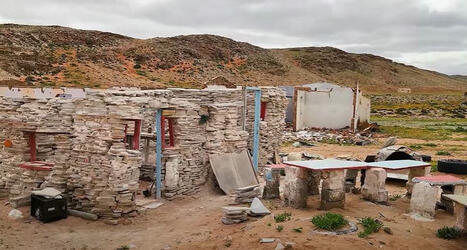
The small settlement of Lekkersing, established in 1926 by Ryk Jasper Cloete, lies 60km north-east of Port Nolloth in the hills of the Richtersveld of South Africa.

The small settlement of Lekkersing, established in 1926 by Ryk Jasper Cloete, lies 60km north-east of Port Nolloth in the hills of the Richtersveld of South Africa. | ALKEBULAN INDIGENOUS | Scoop.it


Lekkersing
 
ID: w136674View large map

Located in South Africa :: Northern Cape (Richtersveld)  :: Lekkersing
Category: Places :: Town Small


The small settlement of Lekkersing, established in 1926 by Ryk Jasper Cloete, lies 60km north-east of Port Nolloth in the hills of the Richtersveld of South Africa. A small fountain in the area bubbled so merrily that the village was named Lekkersing, which means to sing lustily. The Richtersveld is known for the faulted, age-old lava landscape of rugged mountain ranges interspersed by wide plains. Temperatures up to 53°C have been measured in the area The diamond quartzite Stone Mine in Lekkersing was established in 1964 and has produced stone in earthy reds and gold, slabbed and exported world wide. Skurwehoog caves are 30km from Lekkersing on the road to Kuboes. No ablution facilities or drinking water is available there. Kalkfontein is situated halfway between Lekkersing and Eksteensfontein. Many different species of imported caged birds including wild Ostriches, can be seen there. Horse rides can be arranged.


Contact Address :  Municipal offices, Richtersveld, South Africa Contact :  Municipal Offices Tel :  +27(0)27 851 8580
Directions


The town lies, 50 km from Eksteenfontein and 70 km from Kuboes. It can also be accessed from the road (R382) to Port Nolloth.


Destination Information
Travelling Information

No fuel or banking services are available here. Explore the Skurwehoog caves, or the historical quartzite mine, the Lekkersing Stone Mine, or horse riding or donkey cart rides.


Pictures [ add a picture ]
 
Comments [ leave a comment ]

Be the first to leave a comment.

Extras [ add media ]

Be the first to submit a link or media file

Padkos Links [ submit a link ]

Be the first to submit a link


No comment yet.
Scooped by KRII-KROTOASA RESEARCH-INTENSIVE INSTITUTE
January 26, 2025 4:38 AM
Scoop.it!

Indigenous Land: History of Pilanesberg Game Reserve, South Africa


Considered to be one of the most ambitious game reserve projects in the world, the Pilanesberg Game Reserve is home to at least 86 species of African wildlife and offers its visitors a Big Five game viewing experience.

A Brief History of the Pilanesberg Game Reserve

Formed in 1979 under a project known as Operation Gensis in 1979, the Pilanesberg Game Reserve is a wildlife park that spans across 50 000 hectares of land in a semi-circular shape incorporating hills, valleys and broken rock country created from ancient volcanic activity.

An interesting fact is that the Pilanesberg game reserve is in fact not one of South Africa's National Parks, as it is managed by the North West Parks Board and not the national government. The safari park takes its name from the Tswana chief, Pilane.

Interesting Volcanic Landscape

It is considered one of the world's most incredible geological phenomena as it is the site of one of the largest volcanic complexes of its type in the world. The large alkaline rock ring complex was formed during a massive volcanic eruption 1 200 - 1 300 million years ago with the remnants of the explosion still seen today, despite heavy erosion of landscape, in the remnants of lava flow and angular rock fragments called breccia.

The Voortrekkers Arrive

The nature park area has a rich history of occupation and visitors will be able to spot the visible relics of its pre-historical inhabitants in the remains of walls that are scattered across the reserve and date back to the 17th century.

At the foot of the hills evidence of Iron Age Batswana settlements has been found and in the 9th century the area home to the intrepid Afrikaners who lived and farmed in the area at the end of the 'Great Trek'. There are a few scattered graveyards in the area to remind visitors today of the inhabitants of the past. This period also saw the reserve acting as a sanctuary to the rebel Zulu warriors who, while fleeing from the Zulu king; Shaka, passed through the area.

Post Apartheid

During the 1960s the farms that make up the park, were purchased by the South African government and were used as a settlement area for the Bakubung tribe. After Apartheid was abolished, the land was then handed over to the Bophuthatswana people and thus the only remaining private land is now 3 small sections which are all approximately 3 hectares in size as well as the 608 hectare farm owned by Catherina Clark, a daughter of South Africa's 4th Prime Minister; Jan Smuts.

Future Plans

There are currently plans in place to join the Pilanesberg Game Reserve with the North West provinces other major safari park; the Madikwe Game Reserve, which lies on the South Africa/Botswana border in the north of the province.

Pilanesberg Game Reserve Travel Guide

An easy to use travel guide explaining what to do, where to stay and how to get to the Big Five game reserve in South Africa's North West Pr...more

Pilanesberg National Park

Malaria-free Pilanesberg National Park, adjacent to Sun City Resort, is situated in a long extinct volcano. Spot Big Five in one of the larg...more
  •  
No comment yet.
Scooped by KRII-KROTOASA RESEARCH-INTENSIVE INSTITUTE
January 26, 2025 4:32 AM
Scoop.it!

Indigenous Land: South Africa Travel Articles - National Parks of South Africa

Indigenous Land: South Africa Travel Articles - National Parks of South Africa | ALKEBULAN INDIGENOUS | Scoop.it


In the early 1890s, President Paul Kruger became increasingly alarmed by the dwindling herds of buffalo in South Africa's Lowveld and declared his intention for a game reserve for 'nature'.


President Paul Kruger's vision laid the foundations of conservation in South Africa, and by the turn of the century the first game reserves - Pongola, Umfolozi, Hluhluwe and Sabie - had been established.


It took another 30 years, however, until the National Parks Act was passed in parliament and conservation of land in South Africa was entrenched by national law. At the same time Sabie was renamed Kruger in honour of the man who had put the whole process in motion.


If Paul Kruger were around today, I'm sure he would be surprised. There are now 20 major parks in the country, covering an area of nearly two million hectares and representing various ecosystems, formations and cultural landmarks. Their diversity is enormous, ranging from the Knysna National Lakes Area and the wind-battered Cape Peninsula National Park to the arid Karoo and the rocky Golden Gate Highlands National Park.


By far the largest - and most successful - is still Kruger. It covers more than 19,000km2 (roughly the same size as Wales) and is run from Skukuza - a veritable 'city' of scientists in the heart of the old park (there's no talk of sleeping in tents as they did in the old days).


With 3000km of roads, 24 rest camps and a host of excellent picnic sites, walking trails, 4x4 routes, hides and massive dams, you won't find better facilities in a game reserve anywhere in Africa. Every year about a million visitors come to appreciate the tally of 520 bird, 114 reptile and 146 mammal species - and nearly half stay for the night, generating substantial funds for the country's conservation coffers. In 1999 tourism in Kruger generated more than R200 million in turnover, with a net profit of about R10 million.


Currently, South African National Parks has an annual budget of R400 million, of which R50 million is funded by the taxpayer. Staying profitable is central to conservation, and in some areas private operators are being invited to tender for certain non-core operations.


Kruger, like all South Africa's national parks, is fenced. While this means that you can keep the game in and the poachers out, it does create an artificial environment which needs to be carefully controlled. Over the years, South African National Parks (SanParks) staff have become experts in game management and their research has been exported all over Africa and the world. But not all interventions - for example, culling - have proved popular with critics and SanParks has had to look at new methods for dealing with population increases.


One remarkable initiative, which has captured the spirit of the 'new' South Africa, is the creation of fence-free parks where animals can migrate freely over national borders (see story on page 68). The first Transfrontier park, Kgalagadi, was officially opened in early 2000 and included South Africa's Kalahari Gemsbok and Botswana's Gemsbok National Park. The fact that both parks had arid climates, low populations and were previously unfenced made the transition fairly easy. Plans to merge Kruger, Coutada 16 in Mozambique and Gonarezhou in Zimbabwe into a massive 35,000 hectare park called Gaza-Kruger-Gonarezhou Transfrontier Park will be trickier (see story on Mozambique, p66).


Funds from profitable parks - and loans from the World Bank - are being used to expand existing national parks as well. Perhaps the most exciting of these expansion initiatives is the creation of the Greater Addo Elephant National Park near Port Elizabeth. If plans go ahead this will see the existing Addo Elephant National Park expanding from 51,534 hectares to a massive 398,000 hectares that will include Woody Cape Nature Reserve. This combination of bush and beach at the top of the Garden Route is sure to be a hit.

Vaalbos national Park near Kimberley, on the other hand, might be deproclaimed. This 22,000 hectare woodland on the Vaal River was originally proclaimed in 1986 on the assumption that neighbouring properties could be purchased to create a viable 120,000 hectare park. Probably due to Vaalbos' location bang in the middle of prime diamond-mining land, this was not possible. It sounds pretty dismal to hear of a national park being deproclaimed, but you can see the point: the place is very small, underutilised and disrupted by the sounds of heavy machinery.


The criterion for creating national parks is not just to protect animals as Paul Kruger originally proposed. In South Africa today, parks such as Golden Gate Highlands National Park have been proclaimed on account of their scenery, while Cape Agulhas (the newest of the national parks) was proclaimed on account of its unique geographical location at the southernmost tip of Africa. In other instances, such as Knysna National Lake Area and the Cape Peninsula National Park, the park body does not actually own all the land under its control. Both these areas are surrounded by densely populated urban and industrial areas and the park officials provide a much-needed buffer against an onslaught of developers.

The creation of national parks in the past was somewhat blind to the needs of people. In what is now seen as a travesty against human rights, many groups, such as the Riemvasmakers in the Northern Cape, were relocated thousands of kilometres to make way for animals. The new South African Constitution protects people's rights to their land and the Riemvasmakers have now been resettled. Another interesting case is the Makulele people from the Pafuri Area in the Kruger National Park.


Since they were removed in 1968 these people have wanted to become involved in nature conservation and tourism. Now, an area of 25,000 hectares has been returned to the community through a deed of donation which permits them to engage in low impact tourism activities. No mining, farming or permanent residence may take place without the permission of the SanParks.

Since Paul Kruger first urged that 'Nature' be protected, the definition of national parks has broadened considerably. SanPark's current mission is to manage a system of parks that represents the indigenous wildlife, vegetation, landscapes and significant cultural assets of South Africa for the pride and benefit of the nation.


Furthermore, a transformation mission is in place to shift from an established system for managing the natural environment to one which encompasses cultural resources and engages all sections of the community. Judging by accomplishments in recent years, SanParks is doing a pretty good job.

Addo Elephant National Park

Established 1931, to protect remaining 11 Cape elephants; now covers more than 80,000ha in the Eastern Cape, 72km north of Port Elizabeth. Plans afoot to expand to 398,000ha, making Addo South Africa's third biggest and most biodiverse conservation area.


From the gently undulating slopes of the Zuurberg Mountains to valleys and plains largely covered by spekboom. Some coastal scrub, fynbos ('fine bush') and grassland. The land has one of the highest animal carrying capacities of any park in Africa.

Famous for more than 300 Elephants but its 50 mammal species include Mountain Zebra, Buffalo, Hippo and Black Rhino. 185 bird species, including ostrich. Vehicle-based game viewing (day and night), hides, floodlit waterhole, walking, hiking trails and horse-riding. Birdwatching, fishing, sailing, swimming. Family cottages (air-conditioned, self-contained and serviced), chalets, two-bed bungalows, two-bedroomed forest huts, caravan and camping sites. Restaurant, shops, swimming pool.

Agulhas National Park

Proclaimed 1998. 230km east of Cape Town. Plans to purchase a further 7000ha. The southernmost tip of Africa: bleak, rocky coastline and rugged windswept plains where Indian and Atlantic Oceans meet. Variety of wetlands. Rocky beaches. Several unique vegetation types, such as limestone fynbos, supporting about 2000 indigenous plant species (including 110 Red Data Book species).


Over 21,000 resident and migrant sea birds occur here annually. The rich marine and intertidal marine life includes the endangered Cape platanna and the Micro frog. Bird, whale and seal watching. Beaches, water sports (including fishing) and safe sea swimming. Nature trails and 1848 lighthouse (National Monument). Agulhas is a graveyard of shipwrecks. Small hotels and guesthouses in nearby towns of L'Agulhas and Struisbaai. Agulhas Caravan Park has self-catering chalets, shop and restaurant.

Augrabies Falls National Park

Created in August 1996 to protect the waterfall and environs; 46,000ha, located 120km west of Upington on South Africa's border with Namibia. Dominated by 'moonrock' and bold granite domes. The park is traversed by the Orange River and its cataracts. The main waterfall (60m) is best to be viewed October - January. Vegetation sparse, adapted to extremely dry conditions: Camelthorn, Quiver and Namaqua fig trees, aloes, euphorbias and succulents. Gemsbok, eland, giraffe, small antelope, baboons, dassies, squirrels and predators, including leopard and jackal. Well known for reptiles.


The spectacular falls, rafting and canoeing over rapids and along river. Gariep 3-in-1 adventure trail (rowing, hiking and biking), three-day Klipspringer hike and other day hikes and drives. Game viewing, birdwatching, swimming. Fully serviced, air-con, self-catering family cottages and bungalows. Camping site and trail huts, restaurant, shops and three small swimming pools. Self-catering 4x4 bush camp.

Bontebok National Park

Created 1931 to protect Africa's last 22 Bontebok; enlarged and proclaimed national park in 1960. 2786ha near Swellendam, 230km from Cape Town towards the Garden Route. Mainly open and flat country interspersed with rocky ridges below the Langeberg Mountains. Sweet thorn trees dominate but olive, yellowwood and milkwood trees found along river beds. With areas of fynbos and renosterbosveld the park is part of the Cape Floral Kingdom, the smallest but richest of the world's six floral kingdoms.


Bonteboks aside, there are large and small antelope, including red hartebeest and grey rhebok, and several Cape Mountain Zebra. About 200 bird, 28 reptile and ten amphibian species. Game drives (Bontebok ewes calve between September and November). Self-guided walks and nature trails. Swimming and fishing in the Breede River. Flowers, birdwatching, swimming, angling. Wine routes nearby. Serviced self-catering chalavans, camping and caravan sites. Shops. More choice and comfort in nearby Swellendam.

Cape Peninsula National Park

Proclaimed in May 1998. Set within Cape Town metropolitan area; scheduled to become a World Heritage Site. When consolidated, the park will cover 20,000ha, including the (former) Cape of Good Hope, Table Mountain and Silvermine Nature Reserves but excluding the marine component (for now).


Embraces the Cape Peninsula mountains, from Table Bay 60km south to Cape Point. Includes patches of afro-montane forest, mountain fynbos and renosterveld. Part of the Cape Floral Kingdom with 2285 registered plant species (90 endemic), many of which are hardy, low-growing, small-leafed fynbos evergreens. 370 species of protea, 600 different ericas, watsonias, orchids and daisies.


Mammals include baboon, lynx, eland, hartebeest, bontebok and small antelope. Nearly 300 different bird (including ostriches), 32 reptile and 15 amphibian species. Penguin colony at Boulders, near Simonstown. Game viewing, whale and birdwatching, shipwrecks. Numerous guided walks, hiking and climbing trails in the mountains. Beaches, tidal pools, surfing, sailing, snorkelling, fishing and horse-riding. Cape Town offers everything from five-star luxury to basic hostels.

Golden Gate Highlands National Park

11,630ha, located 350km from Johannesburg. Lies between the Rooiberg and Maluti Mountains. Much admired for the multi-hued, sculptured Clarens sandstone cliffs and rock formations. Best known is 'the Golden Gate' a set of twin buttresses named the Gladstone. Its eastern buttress is Brandwag ('the sentinel'). The highlands, dotted with caves and rock shelters, overlook grassed slopes with pockets of indigenous forest and wooded ravines feeding the Little Caledon River.


Wildebeest, zebra, mountain reedbuck, grey rhebok and oribi frequent the slopes. Over 180 bird species - notably Black eagles and other raptors; Bearded vulture and rare Bald ibis. Summer veld flowers - fire and arum lilies, red-hot pokers and watsonias - and over 50 grass species.


Principally a scenic park. Good game-viewing roads, nature and birdwatching walks and horse-riding trails. The two-day, 30km Rhebok Hiking Trail is very popular. Bowls, golf and tennis. Basuto Cultural village. Birdwatching hide with vulture restaurants.

Self-catering chalets, hotel rooms in the two rest camps. Equipped trail huts, camping facilities and an Environmental Education Centre (youth hostel); restaurants, shops and swimming pool. Variety of good hotels, lodges and guesthouses in surrounding towns.


Karoo Established 1979, 500km north of Cape Town. Much of the 75,000ha was previously sheep farming land. The Karoo desert is South Africa's largest ecosystem. The 2000m-high Nuweveld Mountains, their plateaux, and rivers that descend to flat grasslands below, dominate the northern sector. The plains are covered with 'Karoo bush' (dwarf shrubs), dotted with sweet-thorn acacia trees.


48 mammal species, notably Black rhino, various antelope and small predators such as black-backed jackal, caracal and Bat-eared foxes. Burchell's zebra, part of the Quagga breeding project, also occur. 180 bird species including 20 pairs of breeding Black eagles. 38 different reptile, 37 gecko/lizard and five tortoise species. Choral symphonies from the eight frog species and barking geckos.


Night drives, game and birdwatching; the unique 400m Karoo Fossil Braille Trail, the Karoo 4x4 route and the 12km Fonteintjieskloof day trail. The main camp has modern Cape Dutch-style chalets, a restaurant, shop, swimming pool, camping and caravan sites. Nearby Beaufort West has hotels, lodges and guesthouses.

Knysna National Lake Area

The park lies on the south coast along the scenic Garden Route, 70km from George. Permanently open to the sea. Dominated by the craggy Knysna Heads. Below, the Goudveld and Diepwalle Forests of yellowwoods and other big trees (up to 6000 years old) overlook the Knysna lagoon, salt marshes and sandbanks.

Once famous for elephants, but these have gone. Small game - bushbuck, duiker and Vervet monkeys, and a variety of birds, notably the Knysna lourie. Diverse marine life, including the endangered Knysna Seahorse. Excellent walks and hikes (some guided) in the forests, some specifically for birdwatching. Whale watching, fishing, sailing, scuba diving, board-sailing and other water-related activities. No lodgings, but hotels, self-catering lodges and hostels in George and Knysna.

Kruger National Park

Founded 1898 as the Sabi Game Reserve, the park has expanded several times. Covers nearly 20,000km2 (60km x 350km) along the border with Mozambique. 14 different ecosystems include bushveld, savannah grassland, woodlands, wetlands, granite outcrops, major rivers and deep ravines.

Boasts the greatest species diversity of any park in Africa. 146 mammal species including the Big Five - about 9000 elephant, 2000 lion, 1000 leopard, 200 cheetah, 3000 white and 300 black rhino, 25,000 buffalo, 5000 giraffe, 14,000 wildebeest, 30,000 zebra and numerous antelope. 520 bird species including raptors, vultures and ostrich. 230 types of butterfly, 50 different snakes and 62 other reptile types. 2000 plant species (336 trees). Insect and micro-organism species uncountable.


Nearly 3000km of game-viewing roads; hides, waterholes and picnic sites. Seven (two-three day) guided wilderness trails; golf course and airstrip at Skukuza. Three of the world's largest private game reserves touch Kruger's eastern boundary. Eight entrance gates.

Many tree-shaded public rest camps with thatched cottages, chalets, camping sites and comprehensive facilities. Six bushveld camps; nine upmarket, private camps. About 24 exclusive luxury lodges in adjacent private reserves.

Marakele National Park

Marakele ('place of sanctuary' in Tswana) is a newly created, 600km2 park, located in the southern section of the Waterberg Mountains in South Africa's far north. Expansion planned.

Wild, rugged land in the transitional zone between the dry and moist areas of South Africa. Contains striking assortment of chiselled peaks and cliffs of the Kransberg, overlooking elevated acacia savannah plains and three main rivers. 5m-high cycads and tree ferns.


Big Five country, plus tsessebe, roan, sable, hartebeest and other antelope. 800 breeding pairs of the endangered Cape vulture - the world's largest colony. Real African wilderness, remote and difficult to explore. Spectacular scenery.

Night drives and hiking trails planned. Tented camp on the Matlabas River and a rustic bush camp (4x4 essential for both). Surrounding private reserves, such as Welgevonden, offer a handful of lodges.

Mountain Zebra National Park

Founded 1937 to protect the last few Cape Mountain Zebra. Since expanded to 19,000ha. Situated 25km from Cradock in the Eastern Cape. Backed by the large amphitheatre of the Bankberg Mountains (the highest is Spitskop, nearly 2000m), open plains roll down to deep ravines and a wooded river course. Grassy slopes, with Karoo scrub, are dotted with aloes.


About 300 stocky Mountain zebra and 57 other types of mammal, mainly antelope and buffalo. 200 bird species (raptors thrive on the many rock dassies and some of the 45 reptile species). Look out for the large Mountain Tortoise and Monitor Lizards (leguaans). About 40km of game-viewing, scenic roads and short walking routes.

A fully-equipped guesthouse (a National Monument), 18 self-catering cottages, caravan and camping sites with restaurant, small conference centre, shop and pool. Cradock has hotels and guesthouses.

Namaqualand National Park

Proclaimed 1998. A 55,000ha, 50km-wide strip of flowering desert just inland from the Atlantic coast, 500km north of Cape Town. Diamond-studded sandveld flanks the coast. Inland lies broken hardeveld with granite outcrops and sandy alluvial and semi-arid land. The Kamiesberg Mountains are watered by dew from the foggy Atlantic mists.


Boasts the richest bulb flora of any arid region in the world. In spring (August/September) the veld is a white, orange and yellow carpet of Namaqualand daisies and others of the 355 varieties of flowers. Amphibians and reptiles (some endemic) and desert-adapted mammals. Flowers, hiking and birdwatching. In Springbok, accommodation includes lodges, self-catering cottages, farmhouses and traditional Nama huts - all packed during flower season.

Ai-Ais Richtersveld Park

National Park status given in 1991, to protect the plant life (the richest variety of succulents in the world). Local Nama people allowed to live and graze livestock on the reserve's 162,445ha. In north-west South Africa, on the Namibian border.

Bounded on two sides by the great loop of the Orange River. 4x4 country: harsh, rugged, mountainous land; red-earth, bone-dry plains scattered with strange rock formations. The Malmokkie (coastal fog) supports about 700 different plant types - including Quiver Tree / Kokerboom and halfmens ('half man') trees. About a third of the plant species are endemic.

Few mammals can survive but desert-adapted Kudu, Rhebuck, Klipspringer, Baboons, Monkeys, occasional Leopards, smaller carnivore and various rodents occur. 194 bird, 55 mammal, 58 reptile/amphibian and 14 fish species. Botanical oddities and the flowering of desert plants in spring. Birdwatching, walking and overnight hiking trails; swimming and fishing in the Orange River. 20 basic campsites at 5 locations and 1 self-catering cottage in Sendelingsdrift (the park's reception centre).

Tsitsikamma National Park

Tsitsikamma National Park was established 1964 and expanded 1983. It is the oldest marine national park in Africa. A narrow 1km terrestrial, 80km-long strip of land and 5,5km-wide marine tract. One of the largest single unit 'no-take' protected marine areas in the world. Lies between Groot River West (Nature's Valley) and the Groot River East (Oubos) on the Garden Route.

Backed by the Tsitsikamma Mountains, whose cliffs are cut by valleys and deep river gorges. The fertile coastal plain drops 180m to the sea. Mountain slopes covered by fynbos and indigenous forests. Over 80 tree species (notably 40m Outeniqua yellowwoods); floor of ferns and low shrubs.

Small antelope, including the tiny blue duiker; baboons, monkeys, grey mongooses, the Cape clawless otter and honeybadgers. Whales and dolphins seen from shore. More than 200 bird species; Black oystercatchers, Knysna louries and the Narina trogon. Many molluscs and numerous fish species.

Scenery, wildlife and numerous rivers and streams make this South Africa's second most popular park. Hikes include the 48km Otter Trail. Activities include scuba, snorkelling and canoeing. Whales and dolphins come close to shore. Two big rest camps with fully equipped cottages and 'oceanettes', camping and caravan sites, forest huts for hikers, shops, restaurants and swimming pools. Hotels and guesthouses nearby.

Ukhahlamba-Drakensberg Park

230,000ha World Heritage Site along the KwaZulu Natal (KZN)/Lesotho border. Protects a unique domain of Afro-montane/alpine vegetation. 240km north to south and up to 20km wide.

Main feature is the massive basalt-capped escarpment separating the high Lesotho plateau from the low KwaZulu-Natal coastlands. Aptly named ukhahlamba ('barrier of spears') by the local Nguni, it comprises impassable sandstone cliffs, massive spires, rock buttresses and peaks of over 3300m. In the south, the Sani Pass into Lesotho twists hair-raisingly to the highest point reachable by vehicle in the subcontinent. Grass covered hills, divided by forested river ravines, roll seawards.

Over 1500 plant species, 350 endemic. Proteas, fynbos and ferns on the higher slopes; hardy, small alpine plants, grasses and succulents on the high plateau. Yellowwood trees along rivers. Four state forests in the south.

Game relatively scarce: around 12 antelope species, including mountain reedbuck, oribi and klipspringer. Hyraxes everywhere; smaller mammals (otters, mongooses, servals and lynx) seen occasionally. Over 300 varieties of bird; the rare Bearded vulture nests here. 30 different reptiles.

One of the finest places in the world for rock art (over 600 sites). Gentle walks and some of Africa's most rugged and picturesque hiking trails. Mountaineering, horse-riding, mountain-biking, hang-gliding, trout fishing and a vulture restaurant.

Good selection of Parks Board lodges, chalets, mountain huts, campsites and caves. Most self-catering but several have restaurants and shops. Good hotels, private resorts and B&Bs in the foothills.

West Coast National Park

Proclaimed 1985 to protect 25km of Atlantic coastline, the Langebaan lagoon (with its salt marshes, mudflats and rocky shores) and the surrounding Strandveld fynbos and four offshore islands. 32,000ha, 100km north of Cape Town.

The richness of marine invertebrates support a population of about 40,000 wader birds in the summer (migrants from as far away as Greenland and Siberia). More than 250 species of birds include flamingos (from Etosha), cormorants, 25% of the world's Cape gannets and half its Swift tern populations. Inland, Mountain zebra, eland, wildebeest, bontebok, and (occasionally) caracal, wild cat, Bat-eared fox and the Angulate tortoise (an endemic).

Spring wild flowers; lagoon-based water sports (swimming, sailing, snorkelling and fishing). Two-day, 24km Postberg Hiking Trail. Bird, game and whale watching. Some of the world's richest fossil deposits (over 200 species), including 117,000-year-old human footprints. Caravan, hotel and guest house accommodation in Langebaan and Saldana Bay. Chalets and a houseboat for hire in the park. Geelbek environmental centre has self-catering dormitory-style lodgings for school groups.

Wilderness National Park

2600ha core conservation area, surrounded by 10,000ha buffer zone. There are 4 lakes fed by 5 rivers. 28km front along the south coast, with Outeniqua Mountains as a backdrop.

Sandy white beaches break the rocky coastline. Behind, bush-covered sand dunes, fertile wetlands and a tree-covered hinterland. Mainly coastal fynbos; forests contain iron-, black-, yellow-, milk- and cherrywood trees. Reedbeds and sedge support many water bird species. Over 230 types of birds. Small antelope, Bushpig and Tortoises.

Offshore Whales, Cape Fur Seals and Bottlenose Dolphins are regularly spotted. Seven forest walking trails. Water-related activities dominate: swimming, sailing, canoeing, water-skiing and fishing. 2 rest camps offer cottages, camping and caravan sites. Hotels and guesthouses in Knysna, George and other centres.

By David Steel & David Rogers

Copyright © 2002 Travel Africa. All rights reserved. Reproduction in whole or in part without the permission of the author is prohibited.

  •  
No comment yet.
Scooped by KRII-KROTOASA RESEARCH-INTENSIVE INSTITUTE
January 26, 2025 4:26 AM
Scoop.it!

Indigenous Land: History of the Garden Route National Park, South Africa


The Garden Route National Park covers 157 000 hectares of land and is known for its spectacular mountain scenery and a wide diversity of landscapes. A premier tourist destination, visitors to the area and enjoy wonderful scenic walks, bird watching and an array of different flora and fauna.

The History of the Garden Route National Park

The Garden Route National Park includes the former Tsitsikamma and Wilderness National Parks as well as the Knysna Lake area. It also includes most of the area between Wilderness and Storms River on the coast and up to the N9 further inland. The Park is flanked by the Indian Ocean to the south also includes most of the Tsitsikamma, Langkloof and eastern Outentiqua Mountain ranges.

An area so rich in natural beauty and biodiversity, it is unsurprising that human beings have been occupying the area for over 125 000 years and there are a number of important historical sites in the region especially at Nelson Bay, Matjies River, Kangkara and Storms River.

A site of particular interest is Klasies River, where a number of sea caves have been found which contained artefacts including human skeletons and stone tools. The site also has a number of marine remains including shells and bones from Fish, Seals and Penguins and thus it is sometimes referred to as the 'first seafood restaurant'.

The San people arrived in the area around 20 000 years ago and the Khoi about 1 500 - 2 000 years BC. The Europeans arrived in the 17th century and their arrival saw the destruction or end of the San and Khoi culture and economic structure as well as a massive depletion of their populations due to Smallpox.

The first Europeans in the area were hunters, intent on making livelihoods and riches off of the abundant ivory found in the area. The 19th century saw the arrival of more settlers, this time with the intention of exploiting the wood from the copious hardwood trees found in the forests around the area.

In 1964 the Tsitsikamma National Park was proclaimed and the Wilderness and Knysna National Lake Area Parks followed later in 1985 as a precautionary measure to protect the natural beauty of the surroundings.

Garden Route National Park Travel Guide

The astonishingly beautiful Garden Route National Park is one of South Africa's glittering gems. Offering exquisite coastal and mountainous ...more

Wonderful Wildlife of the Garden Route National Park

A popular tourist, the Garden Route National Park is home to a profuse array of mammals, birds, reptiles and marine animals and is a magical...more
  •  
No comment yet.
Scooped by KRII-KROTOASA RESEARCH-INTENSIVE INSTITUTE
January 26, 2025 4:20 AM
Scoop.it!

Indigenous Land: South Africa History & Wildlife of the Cederberg Wilderness Area


Rich in historical San art, the Cederberg Wilderness Area offers spectacular scenery, a wide diversity of plant species and an extensive network of hiking trails and is the ideal location to explore for all nature lovers and outdoor enthusiasts.

See Hundreds of Bushmen Paintings

Home to hundreds of San rock paintings, the Cederberg Wilderness Area is predominantly made up of the Cederberg Mountain range and is situated just 200 kilometres (124 miles) from Cape Town off the N7. The highest peak in the range is the Sneeuberg that rises to a height of 2 027 metres above sea level. The nature reserve is made up of a number of different sectors, the largest sector is the Cederberg sector that covers over 71 000 hectares while the second largest sector is the Matjiesriver sector at 12 000 hectares.

Of the several hundred rock paintings found within the mountains in the area, only a few are well-known and easily accessible and a number of the major sites lie on private land or in the greater conservation area. Over 125 sites are situated in the Bushmans Kloof Wilderness Reserve area and visitors staying at the 5 star luxury private lodge and wellness retreat can take guided tours to the sites to learn about their stories.

The area takes its name from the large stands of indigenous cedar trees that were found in the abundance on the slopes within the reserve and surrounding area. Unfortunately these beautiful trees were harvested to the brink of extinction with over 7 250 trees being felled in 1879 alone to be used as telephone poles between Piketberg and Calvinia. Some of the trees are said to have been over 36 feet wide. Thankfully the area was proclaimed a nature reserve in 1973 and today it is considered a World Heritage Site as it is part of the Cape Floristic Kingdom.

Wildlife of the Cederberg Wilderness Area

The nature reserve is home to 69 different species of mammals including four species of small antelope; Klipspringer, Grey Rhebok and Common Duiker and Cape Grysbok. The area is well-known as a stronghold for Leopards, and while they are seldom seen their calls are regularly heard and their tracks and droppings are often found.

The Cederberg Wilderness Area is not considered a particularly good bird-watching destination, however; there are a number of interesting species to look out for including Black Harriers, Cape Eagle-Owls and Cape Rockjumpers and Cinnamon-breasted Warblers.

Hikers may occasionally come across one of the 17 different species of snake found within the reserve, however these occasional are infrequent and the most regularly seen of the snakes is the Puff Adder and occasionally the Cape Cobra.

Flora of the Cederberg Wilderness Area

The vegetation found on the Cederberg range consists of two major fynbos types, namely Olifants sandstone fynbos which is found along the west-facing slopes and Cederberg sandstone fynbos which is found on the eastern slopes. The lower slopes have a mixture of Proteas and Restios, especially in the areas where there is deeper sand cover. There are over 1 000 plant species all in all within the reserve, all combining to create a beautiful display of truly South African vegetation.

Bushmans Kloof Wilderness Reserve & Retreat

Bushmans Kloof is situated is a malaria free Western Cape nature reserve situated between the Cederberg Mountains and Great Karoo plains...more

Cederberg Wilderness Area Travel Guide

With the Cedarberg Mountains at its core the Cedarberg Wilderness Area is known for its spectacular scenery, and the Western Cape's greatest...more
  •  
No comment yet.
Scooped by KRII-KROTOASA RESEARCH-INTENSIVE INSTITUTE
January 26, 2025 3:13 AM
Scoop.it!

Indigenous Land: Beautiful Natural Areas and Scenery


Learn more about some of the most beautiful natural areas in South Africa. From the majestic Drakensberg to the scenic beauty of the Western Cape.

The landscapes, scenery and geological significance of these South African nature reserves will fascinate lovers of the outdoors.

Diverse and unique - each of these regions offers a wealth of natural beauty and attractions just waiting to be explored.


Ai Ais Richtersveld Transfrontier National Park Landscapes

Stretching across the border from South Africa to Namibia, with the Orange River lazily winding through its centre, the Ai Ais Richtersveld ...more

Bushveld, South Africa

Bushveld is a rather loose term and refers to the areas of mixed woodland between 1 000m and 1 500m above sea level. It is the main vegetati...more

Camdeboo National Park - Orientating Yourself

South Africa's Camdeboo National Park is located in the Eastern Cape Province with the Karoo town of Graaff-Reinet at its centre. Visitors t...more

Cape Town Game Reserves

The Western Cape and Cape Town is home to an abundance of wildlife sanctuaries, nature reserves and national parks....more

Cederberg, South Africa

The Cederberg is a wonderfully rugged mountain range about 200km north of Cape Town. Largely unspoiled, this designated wilderness area is c...more

Drakensberg, KwaZulu Natal, South Africa

The Zulu name for the Drakensberg is 'uKahlamba' - the barrier of spears. It's an appropriate name as this huge wall of basalt just rises up...more

Entering through the Free States Golden Gates

Known for its awe-inspiring scenery, Golden Gate Highlands National Park is located in the Free State Province just east of Clarens. Hikers,...more

Exploring iSimangaliso Wetland Park

Learn about the different areas of the iSimangaliso Wetland Park One of South Africa's World Heritage Sites, the iSimangaliso Wetland Park s...more

Fields of Gold - Namaqua National Park

Located in the Northern Cape near to the boundary of South Africa and Namibia on the N7, the Namaqua National Park is magnificent - each yea...more

Garden Route National Park - Wildflower Wonder

The Garden Route National Park is one of South Africa's most popular tourist destinations and is known for its magnificent coastal and mount...more

Great Birding and Game Viewing at Ithala

With soaring mountain cliffs and deep twisting valleys, Ithala Game Reserve in KwaZulu-Natal is a must-visit safari park for avid bird watch...more

Highveld, South Africa

Much of the interior of South Africa is on a high-lying plateau of over 1 500 metres (5 000ft) above sea level. The predominant vegetation i...more

Karoo, South Africa

The Karoo is a broad, mostly sandy expanse of plains divided between the Little Karoo, nearer the coast and the Great Karoo, which seems to ...more

Lowveld, South Africa

Restricted to broad valleys below 1 000 metres above sea level, the Lowveld is what many people consider to be the 'real' Africa. In this lo...more

Maputaland, South Africa

Maputaland in northern KwaZulu-Natal stretches from iSimangaliso Wetland Park in St Lucia to the diving sites of Sodwana Bay and Kosi Bay an...more

Marakele National Park Landscapes

Marakele National Park is home to an impressive array of African wildlife including the Big 5 of the animal kingdom as well as Wild dog, Spo...more

uMkhuze Game Reserve - Top Birding Destination in South Africa

uMkhuze Game Reserve has a rich and diverse landscape which offers astounding bird-watching opportunities...more

Mountainous Landscapes - The Drakensberg National Park

KwaZulu Natal's most famous landmark, the uKhahlamba Drakensberg National Park is a must-see location when visiting South Africa. Bird-watch...more

Namaqualand Flower Season

The area stretching north and west from Cape Town is an austere landscape with its own, rather minimalist, aesthetic – and it's not much a...more

Place of the Roaring Waters - The Augrabies Falls National Park

Home to one of the world's most spectacular waterfalls, Augrabies Falls National Park is known for its spectacular scenery, and large number...more

Regions of the Drakensberg

Come and explore the highest mountain range in Southern Africa –the Drakensberg Mountain Range. The range stretches over 300km and has man...more

Richtersveld, South Africa

The far north-west of the country is very remote and incredibly hot and dry. Classified as succulent Karoo, neatly ranked mountains look pre...more

Route 62, South Africa

Where it begins and ends depends on just how literal you want to be. The actual R62 runs from Montage to Humansdorp, but the marketing R62 s...more

Table Mountain National Park – A Biological Hotspot

Discover the beauty and splendour of the Table Mountain National Park with its magnificent floral displays, rugged mountainous countryside a...more

The Beautiful Landscapes of the Royal Natal Park

Home to one of the highest waterfalls in the world, KwaZulu Natal's Royal Natal Park is one of the uKhahlamba-Drakensberg's best known featu...more

The Landscape of the Great Fish River

Located in the Eastern Cape, the Great Fish River Nature Reserve takes its name from the Great Fish River that winds its way slowly through ...more

Waterberg, South Africa

The Waterberg is a wild and wonderful area about 3 to 4 hours drive north of Johannesburg. Situated on a high lying plateau, it has rather u...more

Where the Whales are Spotted – De Hoop Nature Reserve

The Magnificent De Hoop Nature Reserve is known for its spectacular Whale watching opportunities between May and October when large numbers ...more

Wilderness. Garden Route, Western Cape, South Africa

This attractive town on the banks of the Touws River Lagoon is an excellent base for a general Garden Route holiday. The Wilderness National...more
    •  
No comment yet.
Scooped by KRII-KROTOASA RESEARCH-INTENSIVE INSTITUTE
January 26, 2025 3:09 AM
Scoop.it!

Indigenous Land: National Parks of South Africa - Wildlife Guide


Read about the varied wildlife that calls the national parks of South Africa their home. Find out which species reside in which area.

Visitors can marvel at these beautiful animals in their natural habitat at any of South Africa's numerous wildlife reserves.

Whether you prefer to get up close and personal with wildlife on a walking safari or see animals from a distance on a game drive, South Africa's well-managed parks offer an outstanding wildlife experience.


Game Viewing in Pilanesberg Game Reserve

Just a short drive from Gauteng's two major cities; Johannesburg and Pretoria, travellers will be able to enjoy a Big Five safari experience...more

Wildlife of Mapungubwe

Mapungubwe National Park is a bird-watcher's paradise and is home to over 456 species of birds as well as the Big Five of the African bush...more

The Wildlife of Hluhluwe-Imfolozi - The Game Reserve that Saved the White Rhino

Famed as the wildlife park that saved the White Rhino from extinction, today Hluhluwe-Imfolozi Game Reserve in KwaZulu Natal is home to a la...more

Mountain Zebra National Park Wildlife

Known for providing excellent viewing of Buffalo and Black Rhino as well as being the nature reserve that saved the Cape Mountain Zebra, the...more

Wildlife of the iSimangaliso Wetland Park

Proclaimed South Africa's first World Heritage Site, the exceptionally beautiful iSimangaliso Wetland Park is renowned for its diverse wildl...more

The Wildlife of Addo Elephant National Park

he landscape and wildlife of Addo Elephant National Park is an abundant and flourishing environment where over 417 species of birds, 95 diff...more

Wonderful Wildlife of the Garden Route National Park

A popular tourist, the Garden Route National Park is home to a profuse array of mammals, birds, reptiles and marine animals and is a magical...more

Wildlife of Mokala National Park

Home to a number of rare and endangered African game species including Black and White Rhino, Tsessebe and Savanna Buffalo, the Mokala Natio...more

Cape Agulhas National Park Wildlife

Located on the southernmost tip of Africa where the Atlantic and the Indian oceans meet, the Cape Agulhas National Park has jagged landscape...more

Kgalagadi Transfrontier Park Wildlife - A Top Safari Destination

Known to offer some of the best African wildlife sightings and bird-watching in South Africa, the Kgalagadi is an arid-area game reserve tha...more

Wildlife of Tankwa National Park

The vast expanse of the semi-arid Tankwa Karoo National Park is located in the Northern Cape Province. A typical Karoo environment, the hars...more

Wildlife of the Bontebok National Park

Bontebok National Park is South Africa's smallest national park, an attractive nature reserve ideal for a short stopover while travelling up...more

Wildlife of the West Coast National Park

The West Coast National Park is famous for its many spring flowers and excellent pelagic birding. However, it is home to many marine species...more

Wildlife of the Baviaanskloof Wilderness Area

The Baviaanskloof Wilderness Area is South Africa's third largest nature reserve and spans an area of 288 087 hectares...more

Exploring Karoo National Park Wildlife

Karoo National Park is home to an interesting variety of birds and mammals, including Black Rhino and Buffalo. The Karoo National Park is lo...more

Wildlife of Kwandwe Private Game Reserve

Kwandwe Private Game Reserve is a 22 000 hectare luxury safari park located in the Eastern Cape Province. The reserve is home to Lion, Leopa...more

Rhino of South Africa

Rhinos are one of South Africa's biggest draw cards as the country is home to the largest remaining population of these ancient animals. Lea...more
    •  
No comment yet.
Scooped by KRII-KROTOASA RESEARCH-INTENSIVE INSTITUTE
January 26, 2025 3:06 AM
Scoop.it!

Indigenous Land: Western Cape Nature Reserves in South Africa

Indigenous Land: Western Cape Nature Reserves in South Africa | ALKEBULAN INDIGENOUS | Scoop.it


Western Cape Nature Reserves in South Africa offer unparalleled scenic beauty. Choose from a selection of accommodations and activities.

From the rain forests of Knysna to the floral kingdom of West Coast National Park, these incredible green spaces offer something unique and beautiful. 

While Table Mountain National Park offers stunningly gorgeous views of Cape Town, the Garden Route National Park gracefully stretches down the Cape's coastline.

These Western Cape nature reserves and national parks are ideal for a romantic break or a family adventure since they provide fantastic hiking trails, whale watching and wildlife safaris.


De Hoop Nature Reserve

The family friendly De Hoop Nature Reserve is ideal if you are embarking on a self-drive holiday along the Garden Route or simply looking fo...more

Kagga Kamma Nature Reserve

Kagga Kamma Nature Reserve in South Africa is situated in the peaceful southern Cederberg Mountains, in an historical area that was once hom...more

Knysna Elephant Park

At Knysna Elephant Park, guests can experience the joy of an Elephant safari in South Africa amongst Garden Route scenery with superb daily ...more

Bushmans Kloof Wilderness Reserve & Retreat

Bushmans Kloof is situated is a malaria free Western Cape nature reserve situated between the Cederberg Mountains and Great Karoo plains...more

Grootbos Private Nature Reserve

Less than 2 hours from Cape Town, Grootbos Private Nature Reserve, Gansbaai is a haven for nature lovers and an exceptional spot in the worl...more

Melozhori Private Game Reserve

Nestled amidst the rugged beauty of South Africa's Western Cape, Melozhori Private Game Reserve is a refuge for wildlife enthusiasts and nat...more

Bontebok National Park

Bontebok National Park in the Western Cape is the smallest in South Africa but has the highest density of rare and endangered bird life, fyn...more

Table Mountain National Park

Table Mountain National Park is a unique and urban Western Cape Nature Reserve stretching from Signal Hill in the city to dramatic Cape Poin...more

Knysna National Lake Area

The exceptionally beautiful tidal lagoon of the Knysna National Lake Area in Garden Route National Park, South Africa is surrounded by pictu...more

Wilderness National Park

Wilderness National Park is situated in the heart of the Garden Route, South Africa. It is a fascinating combination of rivers, lakes, estua...more

Plettenberg Bay Game Reserve

Plettenberg Bay Game Reserve is the ideal holiday destination, this malaria free Game Reserve in Plettenberg Bay adds a new dimension to Gar...more

Agulhas National Park

When you visit Agulhas National Park you'll be at the southern tip of Africa – the Cape of Storms. This beautiful Western Cape Nature Rese...more

West Coast National Park

Just a 1.5-hour drive from the city of Cape Town, the West Coast National Park is a rugged wilderness gem nestled along the West Coast regio...more
    •  
No comment yet.
Scooped by KRII-KROTOASA RESEARCH-INTENSIVE INSTITUTE
January 26, 2025 3:03 AM
Scoop.it!

Indigenous Land: Northern Cape Nature Reserves in South Africa


Northern Cape Nature Reserves in South Africa offer a range of accommodation options, activities in nature, desert-adapted wildlife and beautiful scenery.

From the gently undulating hills of Kgalagadi Transfrontier Park, surrounded by red dunes and large open grasslands alive with wildlife, to the winding Orange River that passes through Augrabies Falls National Park, Northern Cape nature reserves and national parks are filled with adventure!

For a truly exceptional experience, hike through Namaqua National Park or perhaps venture into the limitless lengths of Tankwa Karoo National Park.

If you are looking for a luxury experience, Tswalu Kalahari Reserve is a family-friendly private game reserve in the Kalahari, Northern Cape where you can see black-maned Kalahari lions and adorable meerkats. Activities include rock art sites, hot air ballooning, horse riding, stargazing, game drives and sleep-outs in the Kalahari dunes.

Northern Cape nature reserves will delight nature enthusiasts given the abundance of adventurous and unique things to see and do in each of these spectacular locations.


Augrabies Falls National Park

The enigmatic and alluring Augrabies Falls National Park is situated just west of the town of Upington in the Northern Cape Province of Sout...more

Kgalagadi Transfrontier Park

The arid landscapes with red dunes and blue skies in Kgalagadi Transfrontier Park together with various African wildlife is ideal for game v...more

Mokala National Park

The malaria-free Mokala National Park in Northern Cape lies southwest of the town of Kimberley and offers the perfect outdoor stopover betwe...more

Namaqua National Park

With its beautiful blend of wildlife and wildflowers, Namaqua National Park in the Northern Cape Province, ticks all the right boxes for adv...more

Tankwa Karoo National Park

With the brightest starry skies and rare plant life, this Northern Cape nature reserve in South Africa offers a unique destination for lover...more

Tswalu Kalahari Reserve

Tswalu Kalahari Reserve offers exciting safaris and superb views from foot of the Korannaberg Mountains westward across the grasslands of th...more
    •  
No comment yet.
Scooped by KRII-KROTOASA RESEARCH-INTENSIVE INSTITUTE
January 26, 2025 2:58 AM
Scoop.it!

Indigenous Land: Limpopo Nature Reserves in South Africa


Limpopo Nature Reserves in South Africa offer a range of accommodation options, activities in nature, wildlife and beautiful scenery.

Most game reserves in Limpopo are located in the Greater Kruger Park area, however there are many other Limpopo National Parks and nature reserves located throughout the province.

The malaria-free Welgevonden Game Reserve in the Waterberg is ideal for a romantic safari getaway, while Karongwe Game Reserve has a range of accommodation from luxury to family-friendly lodges.

Mapungubwe National Park is a World Heritage Site and for good reason! Museum tours and tours of Mapungubwe Hill showcase the rich history of this Limpopo National Park.

Whether you are an outdoor adventurer or a safari aficionado - Limpopo Nature Reserves offer something for everyone.


Kapama Private Game Reserve

At Kapama Private Game Reserve in South Africa you can experience the thrill of Big Five wildlife safaris with the comfort of luxury Kapama ...more

Karongwe Private Game Reserve

Karongwe Game Reserve in Limpopo, South Africa, is a Big Five wildlife sanctuary and located between 4 rivers, which provide exceptional hab...more

Marakele National Park

Marakele National Park, a Limpopo Nature Reserve in South Africa, is home to a diverse range of South African wildlife and plant species...more

Mapungubwe National Park

Visit this Limpopo nature reserve in South Africa and discover the wonders of Mapungubwe National Park for history, wildlife and scenic beau...more

Kololo Game Reserve

Kololo Game Reserve in Limpopo, South Africa lies in the heart of the Waterberg biosphere, an untouched malaria-free wilderness just 3 hours...more

Welgevonden Game Reserve

For tranquil splendour deep in the Waterberg, Welgevonden Game Reserve in Limpopo, South Africa offers sought after game viewing and bush ac...more

Moholoholo Nature Reserve and Wildlife Rehabilitation Centre

The Moholoholo Wildlife Rehabilitation Centre cares for and rehabilitates South African wildlife. At Moholoholo guests enjoy a picturesque s...more
    •  
No comment yet.
Scooped by KRII-KROTOASA RESEARCH-INTENSIVE INSTITUTE
January 26, 2025 2:52 AM
Scoop.it!

Indigenous Land: Free State Nature Reserve in South Africa


Free State Nature Reserves in South Africa offer a range of accommodation options, activities in nature, wildlife and beautiful scenery.

The most scenic national park in the Free State is Golden Gate National Park - a sight not to be missed!

This spectacular Free State nature reserve boasts panoramic views of a unique landscape with rolling hills, lush grasslands and sandstone cliffs. The park is rich with wildlife, culture and fossils that can be experienced on guided game drives, hikes, horse riding and cultural tours.

With so much to explore, the Golden Gate Highlands National Park offers a breathtaking window into a world brimming with the wonders of nature.


Golden Gate Highlands National Park

The Golden Gate National Park is a Free State Nature Reserve located in the north eastern part of Free State and derives its name from the b...more
    •  
No comment yet.
Scooped by KRII-KROTOASA RESEARCH-INTENSIVE INSTITUTE
January 26, 2025 2:23 AM
Scoop.it!

Ai Ais Richtersveld Transfrontier Park Accommodation - Northern Cape, South Africa


Straddling the border between South Africa and Namibia, the Ai-Ais Richtersveld Transfrontier Park is rich in plant and animal species that are all carefully adapted to survive in a seemingly barren desert landscape.

A Travel Guide to Ai-Ais Richtersveld Transfrontier Park

Access

The national park is located in the Northern Cape Province, off of the N7, 326 kilometres (202.1 miles) from Springbok. The quickest route to the nature reserve is to travel along the N7, turning off at Steinkopf, approaching via Port Nolloth and Alexander Bay. The final 80 kilometres (49.6 miles) of the journey are on a dirt road. An alternative route, and one that provides a boarder perspective of the park is to travel along the road from Vioolsdrift to Eksteenfontein via Kotzehoop and then on to Sendelings drift.

The roads within the reserve are made up of rough mountain passes and deep sanded river beds and visitors are advised to consider always travelling in convoy. Any visitors travelling alone are asked to sign an agreement to report in to the park reception headquarters when they leave the reserve.

Airport

Cape Town International Airport is the closest international airport to the reserve and is located 841 kilometres (521.42 miles) from the nature park. Windhoek Hosea Kutako International Airport is located 971 kilometres (602 miles) from the national park, straight down the B1 national road.

Highlights

The Ai Ais Richtersveld Transfronteir National Park offers spectacular desert scenery that is rich in diverse arid-area adapted plant life. On the Namibian side of the reserve visitors will be able to visit the Fish River Canyon, a breath-taking gigantic chasm gorged out of the Earth that stretches for 100 kilometres (62 miles) and is 27 kilometres (16.7 miles) wide. The Fish River Canyon is the second largest canyon in the world, the largest canyon in Africa, and is the second most visited tourist attraction in Namibia, after the Etosha National Park.

Activities

The national park offers over 200 kilometres (124 miles) of rough terrain, high clearance vehicle required roads and 4X4 adventure lovers will be in their element exploring the internal road network. There are also a number of Mountain Bike trails available and hikers can explore the reserve on foot, staying in the overnight facilities provided. Guides are available to lead hikers along one of the 2, 3 or 4 day trails. These trails are only accessible between April and September. The 5 day hike through the Fish River Canyon, ending at the Ai Ais hot springs is a highly recommended activity, as is a long soak in the hot springs, found at the Ai Ais camp, afterwards.

Most years between June and October after good rainfall, the reserves landscape is transformed into a world of floral splendour during the flowering season. The area is also home to over 212 species of birds including arid-area specials and birds that have adapted to the dry conditions. The area along the Orange River is a popular location for bird-watchers.

An enjoyable excursion is a trip on the old pont, (last in service in 1988) that has been restored and offers a unique way of crossing the Orange River on the South Africa to Namibian border.

Accommodation

There are a number of Ai-Ais Richtersveld Transfrontier accommodations options available for those wanting to spend a few nights in the national park. At the Sendelings drift headquarters to the reserve one will find 10 fully equipped self-catering units while at the Tatasberg and Gannakouriep Wilderness Camps guests stay in one of the 4 chalets each offers. There are also a number of rustic camping sites at different locations.

The Experience

The harsh landscape found here can be slightly jarring when you first arrive in the nature reserve, but after a few hours one becomes accustomed to the dry sands and arid surroundings and starts to take in the natural beauty of the superb scenery all around you. The Orange River cuts through the centre of the reserve, creating a green oasis that is stark contrast to the surrounding landscape. The area is not a destination of substantial game viewing, however if you spend some time and pay attention to the species that are found here, the experience can be highly rewarding.

Climate

The mountain desert has very low rainfall with annual averages ranging from 45mm to 200 mm, mostly on the high mountain reaches. The west gets more rainfall during the winter months, while the east experiences most of its rainfall in summer. The reserve is known for its extreme temperatures with frost occurring in the cold winter months and summer temperatures occasionally exceeding 50°C (122°F) in the shade. Strong south and south-west also winds frequently blow.

Useful Information

There is extreme heat during the summer months and visitors are advised to always carry sufficient water with them, especially when hiking. The rough terrain and poorly maintained desert roads mean that visitors are advised to always carry a spare tyre with them and where possible always travel in convoy. There are a number of Scorpion species found in the reserve and visitors, especially hikers are advised to always wear closed shoes and to check their shoes prior to putting them on.

Ai Ais Richtersveld Transfrontier National Park Landscapes

Stretching across the border from South Africa to Namibia, with the Orange River lazily winding through its centre, the Ai Ais Richtersveld ...more
No comment yet.
Scooped by KRII-KROTOASA RESEARCH-INTENSIVE INSTITUTE
January 26, 2025 2:16 AM
Scoop.it!

The Richtersveld - Northern Cape Nature Guide

The Richtersveld - Northern Cape Nature Guide | ALKEBULAN INDIGENOUS | Scoop.it


The Richtersveld
Northern Cape Nature Guide
The Richtersveld in South Africa's Northern Cape Province is a place of great diversity in a seemingly barren landscape, and is a must-see for ecologists and nature lovers alike.


Take a landscape from a Martian ideal and garnish it with some of the most outlandish plants, then draw the flow path of a meandering river through the area and place it in a hostile environment with little water - and leave it to adapt.


There is place in the Northern Cape Province of South Africa, on the border with Namibia, where you can be forgiven for thinking you are on the film set of a science fiction movie about a distant planet in our solar system, so unique is the landscape and flora. For it is here, in the Richtersveld, where volcanic mountains rise from the desert landscape in jagged crags of rock, and where sandy plains host a diversity of lichens and other strange vegetation.

Traversed by the Orange River, also known as the Gariep which means Great River in the Nama tongue, the Richertsveld region ranges from just over 50 meters to 1377 meters above sea level and this alone ensures a diversity of living things.

The People and Their Land

The Nama people have lived in the region for generations and today they have been granted patronage of the area through the land claims policy of the present South African government. Very closely tied to their land the Nama have continued on a policy of conservation practises which sees a national park and a community conservation area, now a World Heritage Site, taking up a large portion of the area under their control.

Traditionally a nomadic people the Nama of today still move their livestock with the seasons, the only place in South Africa where pastoral people still practice their livelihoods on communal land. This rotation between the seasons saves the land from over usage and ensures the survival of the plants and livestock.

World Heritage Site

So fascinating and unique, and in relatively pristine shape, is the natural history of the Richtersveld that the community area has been declared a World Heritage Site for it diversity. With three biomes of the arid north, Desert, Succulent Karoo and Fynbos, the Richtersveld is truly a natural wonder that needs protection. The Richtersveld also has more succulent species than anywhere else on earth.

Parts of the region, and in particular the National Park, carry the scars of mining activity but these are in the process of being rehabilitated to their original state to fit in with the conservation ethics of World Heritage status.

Visiting the Richtersveld

The Richtersveld has something for everybody with activities ranging from nature walks to canoeing on the Orange River, with visits to ancient San engravings providing a fascinating insight into the people who once roamed the area. Accommodation facilities are also varied, from rustic camping to rest camps and guest lodges with en-suite facilities.

The Richtersveld is fast becoming a favourite for travellers and ecologists alike and a 'must see' destination. Considered the only Arid Biodiversity Hotspot on earth with its wealth of plants, it should be on the top of all travel destinations.

Ai Ais Richtersveld Transfrontier National Park Landscapes

Stretching across the border from South Africa to Namibia, with the Orange River lazily winding through its centre, the Ai Ais Richtersveld ...more

Ai-Ais Richtersveld Transfrontier Park Travel Guide

Straddling the border between South Africa and Namibia, the Ai-Ais Richtersveld Transfrontier Park is rich in plant and animal species that ...more
  •  


No comment yet.