Coastal Restoration
28.6K views | +12 today
Follow
Coastal Restoration
Coastal management and restoration of our planet's coastlines with a particular focus on California, Louisiana and the Pacific.  Emphasizing wetland restoration, aspects of agriculture in the coastal plain, fisheries, dealing with coastal hazards, and effective governance.
Curated by PIRatE Lab
Your new post is loading...
Scooped by PIRatE Lab
January 29, 2015 1:48 AM
Scoop.it!

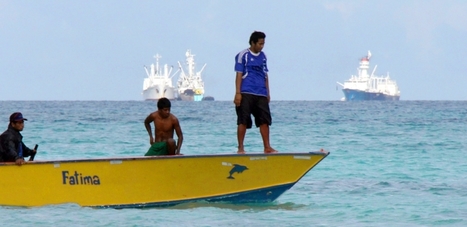
Ex ante evaluation of a possible future FPA and protocol between the EU and Kiribati

Ex ante evaluation of a possible future FPA and protocol between the EU and Kiribati | Coastal Restoration | Scoop.it

This report provides an ex post evaluation for the existing Protocol to the Fisheries Partnership Agreement (FPA) between the European Union (EU) and the Republic of Kiribati. The Protocol concerns the access to Kiribati waters of a maximum of 4 purse seiners and 6 surface longliners flying the flag of any EU Member State for fishing of highly migratory species. The evaluation considers the Protocol in terms of its effectiveness, efficiency, economy, coherence and acceptability. It also provides an ex ante evaluation to support the potential negotiation and implementation of a new Protocol. The current Protocol is applicable for 3 years between 16 September 2012 and 15 September 2015.


The total EU minimum financial contribution considered includes annual payments by the EU of EUR 1 325 000 comprising an annual amount for the access to Kiribati fishing zone of EUR 975 000 (74%) for a reference tonnage of 15 000 tonnes and EUR 350 000 (26%) for the support and implementation of Kiribati’s sectoral policy. EU vessels utilising the agreement contribute to the financial transfers to Kiribati budget with
payments of access fees and other contributions towards management costs of the agreement (e.g. observers remunerations) amounting up to a minimum of EUR 1.7 million.

...


Final report: http://ec.europa.eu/fisheries/documentation/studies/kiribati-2014/doc/evaluations-kiribati_en.pdf


 Fisheries - European Commission


No comment yet.
Scooped by PIRatE Lab
December 19, 2014 4:13 AM
Scoop.it!

West Coast Data Portal

West Coast Data Portal | Coastal Restoration | Scoop.it

The West Coast Governors Alliance on Ocean Health is pleased to announce new data and tools available via the West Coast Ocean Data Portal to assist coastal managers and stakeholders to view and explore geospatial data about marine debris cleanup and prevention efforts in our region’s coastal waterways.

PIRatE Lab's insight:

Lots of good stuff here.  Enjoy exploring!

No comment yet.
Scooped by PIRatE Lab
November 25, 2014 7:23 AM
Scoop.it!

Black seadevil on video for first time: What the mini-monster looks like

Black seadevil on video for first time: What the mini-monster looks like | Coastal Restoration | Scoop.it
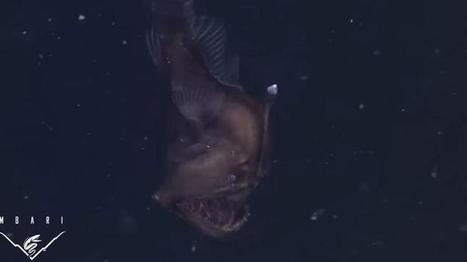
A rare black seadevil was captured for the first time on video in Monterey Canyon earlier this month, and it's a bizarre creature.
PIRatE Lab's insight:

Deepest video recording of a deep sea anglerfish.  Cool video check it out.  She is only ~9 cm total length, but is still cool.

No comment yet.
Scooped by PIRatE Lab
September 25, 2014 1:38 PM
Scoop.it!

Obama just created an ocean reserve twice the size of California

Obama just created an ocean reserve twice the size of California | Coastal Restoration | Scoop.it
It nearly quadruples the amount of US ocean protected from commercial fishing
No comment yet.
Scooped by PIRatE Lab
August 16, 2014 4:05 PM
Scoop.it!

'A Rescue Package for the Ocean' - Global Ocean Commission V1

David Miliband, Co-chair of the Global Ocean Commission, tells the story of the Commission's inquiry into high seas governance and ocean health, and outlines...
PIRatE Lab's insight:

The Global Ocean Commission is an independent organization of senior politicians formed to develop feasible solutions for key issues facing the high seas.  In June they released the results of their 18-month study into the state of the high seas. Their big takeaway: many of the problems facing the high seas are due to a lack of adequate governance, leading to a maritime Wild West with little enforcement of the few existing laws.

As David Miliband, a former British foreign secretary and a co-chair of the commission,told Reuters, "a previously virgin area has been turned into a plundered part of the planet."Even Sigourney Weaver has lent her voice to the cause, urging the UN to "tame the High Seas 'Wild West.'"This illustrated video explains what the commission found, and why they think urgent action is necessary now.
 
The Commission put forth several potential solutions, with a deadline of 5 years. Here’s our quick summary of what they want the world to do:

Develop a UN Sustainable Development Goal for the oceansUpdate the Law of the SeaPhase out fuel subsidies for high seas fishingBan transfers of fish from ship to ship at seaMinimize single-use plasticsCreate an international convention to help monitor and regulate offshore oil and gas explorationCreate an independent global accountability board

Finally, this massive plan includes a *nuclear option*. If the high seas continue to decline 5 years after adopting the plan, the entirety of the high seas (with some exceptions) should become a regenerative zone closed to all industrial fishing.

No comment yet.
Scooped by PIRatE Lab
August 11, 2014 7:12 PM
Scoop.it!

Should We Be Exploring The Oceans Instead Of Space?

Should We Be Exploring The Oceans Instead Of Space? | Coastal Restoration | Scoop.it
For some, the irony is almost too much to bear. While Congress is eager to fund a $2 billion expedition to search for oceans beneath Europa, some 95% of Earth's oceans are unexplored. Given the role of oceans in regulating climate, and their untapped potential for food and health, is it time to rethink our priorities?
PIRatE Lab's insight:

I am never too comfortable when we start saying we need to fund scientific endeavor #2 rather than endeavor #1.  Such things often seem to devolve into a popularity contest with exploration and discovery marginalized in a sea of pandering or self-serving assertions.


But there are certainly some well made points here by Mark Strauss, playing off of the arguments proffered by Michael Conathan a few months back.  Give it a run through.

No comment yet.
Scooped by PIRatE Lab
August 6, 2014 12:55 PM
Scoop.it!

Hawaii braces for Hurricanes Iselle and Julio

Hawaii braces for Hurricanes Iselle and Julio | Coastal Restoration | Scoop.it
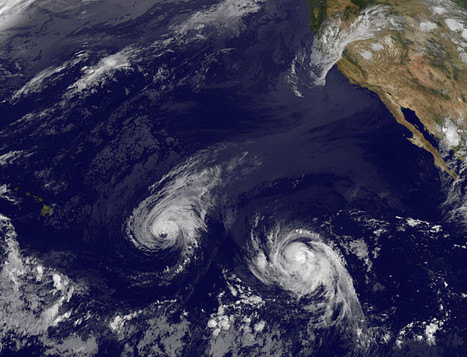
Two hurricanes continued to head toward Hawaii on Wednesday as officials in Hilo announced school closures and warned visitors and residents to prepare for possible heavy rains, strong winds, dangerous swells and flash flooding.
PIRatE Lab's insight:

Here is the post storm update:


http://www.sfgate.com/news/us/article/Hawaii-s-Big-Island-struggles-after-tropical-storm-5679648.php


There has been remarkably little coverage in the Hawaiian press after the first day.  The locals are apparently more interested in the upset in the Governor's race than in the minimal storm impacts.  The only significant impact seems to have been the hiker who died while hiking in a closed park during the initial hours of inclement weather.

No comment yet.
Scooped by PIRatE Lab
July 18, 2014 2:08 AM
Scoop.it!

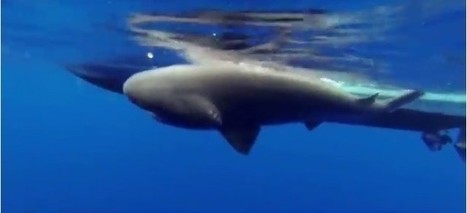
White Shark swims onto Coronation beach, Western Australia

A 4m (13ft) Great White shark came ashore at coronation beach yesterday. Looked like it may have been sick or injured. It would head off shore about 50m then...
PIRatE Lab's insight:

This great white shark that washed ashore on an Australian beach had a large Australian sea lion stuck in its throat.


The 13-plus-foot shark choked and died, according to the Western Australia Department of Fisheries. On Saturday, the shark was seen in distress, thrashing in shallow surf at Australia's Coronation Beach. Beachgoers took this video of the fish and posted it on YouTube, where the footage has gone viral. Two days later, the shark washed up on the same beach.


My colleague Chris Lowe from Cal State Long Beach told the LA Times the mammal in his mouth in and of itself couldn't have killed the shark. "They can't choke to death like humans since an esophageal block doesn't restrict breathing in a shark. It's most likely that the shark was rubbing along the seafloor to dislodge the food and the animal just stranded and couldn't get back to deeper water."


Yes.  Maybe.  But who the heck knows?


No comment yet.
Scooped by PIRatE Lab
July 7, 2014 2:47 PM
Scoop.it!

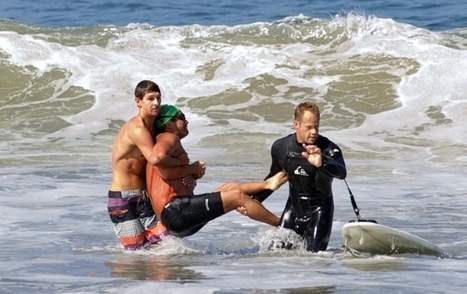
Footage Of The Manhattan Beach Shark Attack, Swimmer 'Thought This Was It'

Footage Of The Manhattan Beach Shark Attack, Swimmer 'Thought This Was It' | Coastal Restoration | Scoop.it
A video of the shark attack that left a swimmer injured yesterday shows the panic that it caused among those at Manhattan Beach enjoying the holiday weekend.
PIRatE Lab's insight:

With increasing encounters with (mostly juvenile) white sharks here in the Southern California Bight, we may be in need of some new policies regarding fishing behaviors on our coastal assess points and piers.  There is an amazing disregard for the potential severity of attracting cartilaginous fishes into areas where large numbers of people recreate in shallow water.  This incident is but the latest.


See also: http://www.latimes.com/local/la-me-shark-attack-20140707-story.html


and


http://ktla.com/2014/07/06/swimmer-attacked-by-shark-in-manhattan-beach-is-in-shock/


and


http://www.latimes.com/local/lanow/la-me-ln-shark-bite-fisherman-interview-20140706-story.html


and


http://www.latimes.com/local/lanow/la-me-ln-fisherman-defends-actions-shark-attack-20140708-story.html


and last, but certainly not least:


http://www.latimes.com/local/lanow/la-me-ln-shark-bites-20140705-story.html


No comment yet.
Scooped by PIRatE Lab
June 18, 2014 3:13 AM
Scoop.it!

The value and the price of creating a Pacific sanctuary

The value and the price of creating a Pacific sanctuary | Coastal Restoration | Scoop.it

President Obama launched a plan to create the world's largest marine preserve by adding to the existing national monument in the Central Pacific. Drilling, fishing and other activities would be off limits. Joshua Reichert of the Pew Charitable Trusts and Juliet Eilperin of The Washington Post join Jeffrey Brown to discuss the impetus and potential opposition for the proposed expansion.

PIRatE Lab's insight:

A good discussion of the decision, process, and overall story of the expansion of this MPA.


This is an example of effective lobbying of Secretary Kerry and John Podesta.  I note with some irony how most Congressional Republicans didn't raise much of a stink when President Bush started this process, but now there seems to be some sort of kerfuffle about this Presidential Action.  In any event, President Obama has simply pushed the Protected Area boundary designation from 50 to 200 nm offshore of the seven small islands than anchor the American territories.

No comment yet.
Scooped by PIRatE Lab
April 5, 2014 1:24 PM
Scoop.it!

Sharks with cameras: See underwater world from their perspective

Sharks with cameras: See underwater world from their perspective | Coastal Restoration | Scoop.it
Scientists have strapped cameras onto free-swimming sharks, capturing a shark’s-eye view of their underwater world.
PIRatE Lab's insight:

More cameras revealing interesting ecology & behavior.

No comment yet.
Scooped by PIRatE Lab
March 15, 2014 11:15 AM
Scoop.it!

Absurd Creature of the Week: Enormous Hermit Crab Tears Through Coconuts, Eats Kittens

Absurd Creature of the Week: Enormous Hermit Crab Tears Through Coconuts, Eats Kittens | Coastal Restoration | Scoop.it
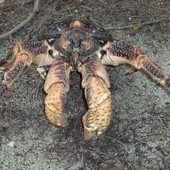
The coconut crab is the largest terrestrial arthropod in the world. Feeding its incredible growth is no small task, so this nine-pound hermit crab eats anything it can get its claws on. It has been observed hunting other crabs, young ...
PIRatE Lab's insight:

You put the lime in the coconut...

No comment yet.
Scooped by PIRatE Lab
March 12, 2014 8:53 AM
Scoop.it!

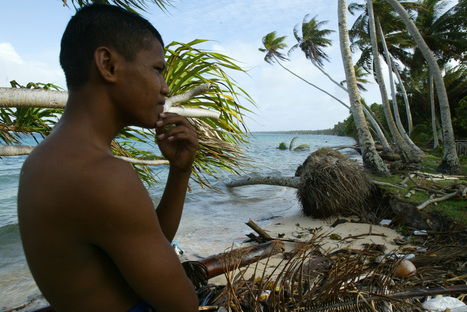
Epic King Tides Offer Glimpse Of Climate Change In Marshall Islands

Epic King Tides Offer Glimpse Of Climate Change In Marshall Islands | Coastal Restoration | Scoop.it
Hundreds of people who had to flee their houses earlier this week as floodwaters tore through Majuro, the capital of the Marshall Islands, are now returning home to pick up the soggy pieces.
No comment yet.
Scooped by PIRatE Lab
December 21, 2014 10:46 AM
Scoop.it!

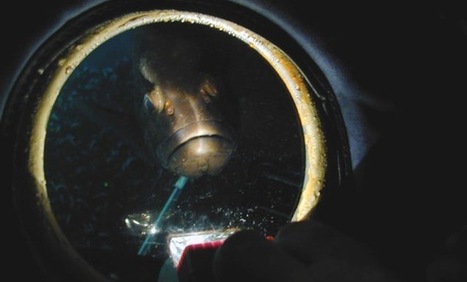
Watch: World's Deepest Fish Lurks 5 Miles Down in Mariana Trench

Video footage shows a delicate, transparent animal with a doglike head more than five miles down.
PIRatE Lab's insight:

New snailfish is getting ton of press...even though no samples were taken.

No comment yet.
Scooped by PIRatE Lab
December 15, 2014 4:01 PM
Scoop.it!

Storm to bring more rain, but less intense

Storm to bring more rain, but less intense | Coastal Restoration | Scoop.it
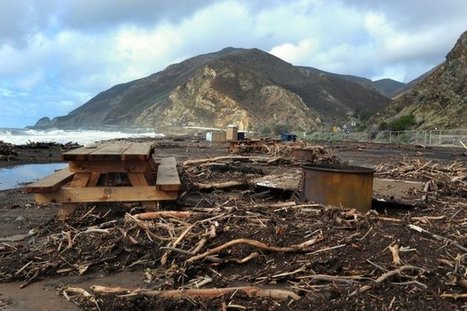
With more rain headed to the county, officials said Monday that a stretch of the Pacific Coast Highway closed since Friday's storm probably won't reopen for three to four weeks.


The closure runs from Las Posas Road in Camarillo to Yerba Buena Road near Malibu. Mud and debris slid across the highway in several spots, pushing concrete barriers 70 feet across the road. 

Debris must be cleared and hauled out of the area, and several shoulder sections also must be repaired, officials said.

PIRatE Lab's insight:

Wow.  The impacts to PCH were much more severe than I was led to believe.  Yet another coastal management challenge; all of this stemmed from the 2013 Camarillo Springs Fire and subsequent drought which has kept this region revegetated for ~2 years.


See also:

http://www.latimes.com/local/lanow/la-me-ln-portion-of-pch-to-be-closed-20141215-story.html


http://www.latimes.com/local/lanow/la-me-ln-near-death-experience-on-pch-20141212-story.html


No comment yet.
Scooped by PIRatE Lab
September 29, 2014 4:19 PM
Scoop.it!

Framework for Nature Conservation and Protected Areas in the Pacific Islands Region 2014 - 2020

Framework for Nature Conservation and Protected Areas in the Pacific Islands Region 2014 - 2020 | Coastal Restoration | Scoop.it
Framework for Nature Conservation and Protected Areas in the Pacific Islands Region 2014 - 2020
No comment yet.
Scooped by PIRatE Lab
August 22, 2014 10:09 PM
Scoop.it!

Mining company escapes Great Barrier Reef compensation payments and strict operating conditions

Mining company escapes Great Barrier Reef compensation payments and strict operating conditions | Coastal Restoration | Scoop.it
The Australian government’s environmental protections system has been labelled “broken” after Gina Rinehart’s mining company managed to negotiate d
PIRatE Lab's insight:

Good to know that the Australian government is going the route of a full environmental retreat for all ecosystems and not "just" for terrestrial protected areas.  G'Day Climate Change!

No comment yet.
Scooped by PIRatE Lab
August 12, 2014 4:37 AM
Scoop.it!

Hawaii to get massive floating fish farms

Hawaii to get massive floating fish farms | Coastal Restoration | Scoop.it

A US firm has started work on huge floating cages that will hold 1,000 tonnes of fish in the deep sea off Hawaii’s coast.


Hawaii Oceanic Technology Inc. (HOTI) has received permits to build 12 cages, which it calls “Oceanospheres“, in a 247-acre area off the coast of Hawaii, which it has leased out.


The floating fish farms will be 180 feet wide cages submerged at a depth of 20 metres. The farms will raise tuna fish from egg to harvest size in a self-contained system. The company hopes to harvest fish within 18 months.


“Our goal is to develop a new, environmentally responsible way to raise tuna in deep waters,” Bill Spencer, CEO of HOTI was quoted as saying in media reports.


HOTI hopes to cash in on ocean fish farming which is estimated to be a US$75 (€56.033) billion market by 2020, West Hawaii Today reported.

Scooped by PIRatE Lab
August 9, 2014 8:33 PM
Scoop.it!

Humans have tripled mercury levels in upper ocean

Humans have tripled mercury levels in upper ocean | Coastal Restoration | Scoop.it
Pollution may soon overwhelm deep seas' ability to sequester mercury.
PIRatE Lab's insight:

Wow, a HUGE number.

No comment yet.
Scooped by PIRatE Lab
August 6, 2014 12:09 PM
Scoop.it!

SoCal anglers score rare opah trifecta

SoCal anglers score rare opah trifecta | Coastal Restoration | Scoop.it
Anglers on a tuna-fishing trip out of San Diego are surprised to find an opah school in their midst; three of the large moon-shaped fish are landed
PIRatE Lab's insight:

We here in Southern California certainly seem to have some ocean that thinks it might want to be heading towards an El Nino condition.  While I am still waiting for the pelagic red crabs to start showing up on our shores from the balmy waters of Mexico's Baja California (my main marker of an impending El Nino winter), the Opah have certainly seemed to have found our digs of late.


Don't forget the pier fisherman who caught one in March: 


http://www.utsandiego.com/news/2014/mar/28/outdoors-opah-san-diego-bay/

No comment yet.
Rescooped by PIRatE Lab from Rescue our Ocean's & it's species from Man's Pollution!
July 10, 2014 5:34 PM
Scoop.it!

Sea surface temps are up. So why haven't forecasters declared El Niño conditions?

Sea surface temps are up. So why haven't forecasters declared El Niño conditions? | Coastal Restoration | Scoop.it
Sea surface temperatures are up. So why haven't forecasters declared El Niño conditions? 

Via Marian Locksley
PIRatE Lab's insight:

Good summary of the different index measurement points.


Please also see the frequent updates from NOAA here:


http://www.cpc.ncep.noaa.gov/products/analysis_monitoring/enso_advisory/index.shtml

No comment yet.
Scooped by PIRatE Lab
July 6, 2014 3:28 PM
Scoop.it!

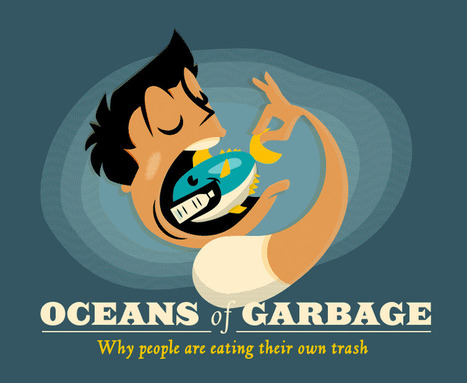
Ocean Garbage: Why People Are Eating Their Own Garbage

Ocean Garbage: Why People Are Eating Their Own Garbage | Coastal Restoration | Scoop.it

This is a nice little info graphic which might have some utility/good images for folks making outreach presentations.

No comment yet.
Scooped by PIRatE Lab
April 7, 2014 11:51 AM
Scoop.it!

Aerial Photographs Catalogue the Life and Death of Volcanic Islands

Aerial Photographs Catalogue the Life and Death of Volcanic Islands | Coastal Restoration | Scoop.it

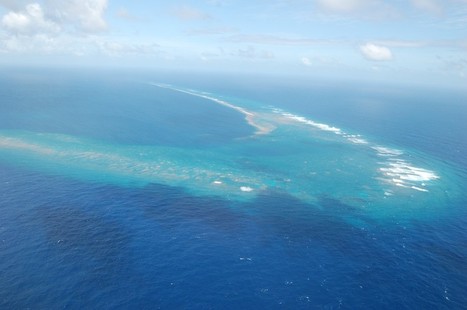
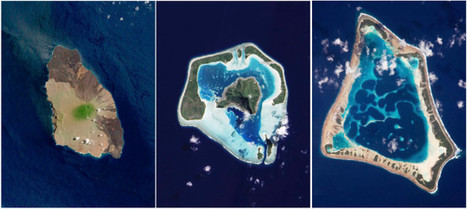
Volcanic islands can seem to appear out of nowhere, emerging from the ocean like breaching monsters of the deep. Below, Mika McKinnon explains how these odd geological formations are born, how they evolve, and how they eventually vanish back beneath the waves.

PIRatE Lab's insight:

Darwin was the first to bring an academic overview to the formation of these coral-harboring islands but the beauty and diversity were really first brought home with free aerial imagery (ala Google Earth, etc.).


Where an island is along this developmental continuum says much about the human populations that may inhabit said island.  If the island is tall and young with rich volcanic soil, the mountain will attract rainfall and the soil could support agriculture, making the island able to sustain a higher population density.  On the other hand, an old, eroding island with little rainfall and depleted soils will need human inhabitants to rely on the ocean's resources for food and would thus support a more minimal population.  These islands are changing, even if the time scale is slow--but just recently two disconnected islands 'merged' as growing volcanic island has expanded in the Pacific.

Matthew Richmond's curator insight, December 2, 2015 3:30 PM

Re-scooped from Professor Dixon, pretty cool story on the formation of islands in the south Pacific. A couple of them look like the island visible from the beach in Rincon, Puerto Rico where I stayed. The island is one giant rock so nobody lives there and it's a naval base for the U.S. military. This, however, is a different situation when you realize that not only do people live here, but kind of a lot of people live here.

Matt Ramsdell's curator insight, December 14, 2015 9:00 PM

What causes the death and the caldera in a volcano? One thing that happens in a deceased volcano is the center of the volcano starts to either erode or the inside finally caves in. Once this happen a caldera takes shape and the ocean starts to take over. As the waves eat away at the shores it will eventually create a island that is shaped like a "U". After this happens that island will someday retreat back into the ocean and someday form a barrier reef.

Adam Deneault's curator insight, December 14, 2015 10:52 PM

Based on general knowledge, I know that the taller a volcano is, the younger it is and the shorter it is, the older it is. The reason they start to get short is from erosion. Hot spots in the Earth's crust make small islands from molten rock. Young islands can be very dangerous, because if they are inhabited, they have the possibility of erupting, whereas an old island does not since the volcano is lnactice and eroding. Over time the inactive volcano will crumble and a caldera will take shape and after even more time, that caldera will slip under the ocean and become a reef. 

Rescooped by PIRatE Lab from Rescue our Ocean's & it's species from Man's Pollution!
March 19, 2014 2:35 PM
Scoop.it!

Experienced fish may be critical for keeping migrating populations on track, a study finds.

Experienced fish may be critical for keeping migrating populations on track, a study finds. | Coastal Restoration | Scoop.it
Experienced fish may be critical for keeping migrating populations on track, a study finds.

Via Marian Locksley
PIRatE Lab's insight:

Just like elephants!

No comment yet.
Rescooped by PIRatE Lab from Rescue our Ocean's & it's species from Man's Pollution!
March 14, 2014 2:36 AM
Scoop.it!

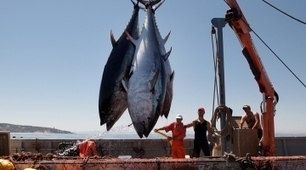
Japan Plans to Halve the Number of Young BluefinTuna It Catches

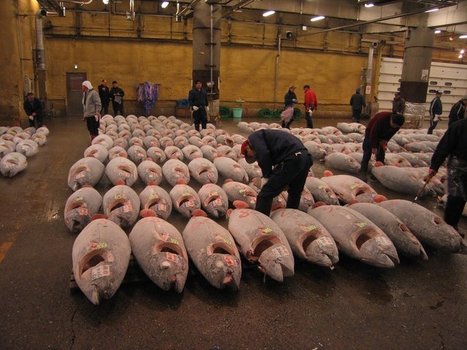
Japan Plans to Halve the Number of Young BluefinTuna It Catches | Coastal Restoration | Scoop.it
Sushi might get more expensive, but tuna populations need the break (RT @Coffeewarblers: Japan plans to halve the number of young Bluefin Tuna It catches.

Via Marian Locksley
No comment yet.