



A “fairly large” mountain lion that was spotted roaming in a La Crescenta neighborhood Thursday afternoon was tranquilized for relocation in the wild, a state wildlife official said.
Get Started for FREE
Sign up with Facebook Sign up with X
I don't have a Facebook or a X account


 Your new post is loading...
 Your new post is loading...
Your new post is loading...
 Scoop.it!
A “fairly large” mountain lion that was spotted roaming in a La Crescenta neighborhood Thursday afternoon was tranquilized for relocation in the wild, a state wildlife official said. 
No comment yet.
Sign up to comment
Scoop.it!
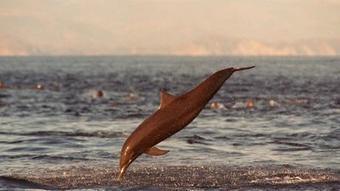
When the World Trade Organization found last year that U.S. labeling requirements for dolphin-safe tuna put Mexican tuna fishermen at a trade disadvantage, marine advocates worried that the federal government would weaken its dolphin-safe standards.
PIRatE Lab's insight:
We have consistently found over thousand of interviews and susrveys of both customers and folks selling seafood to the publi, that "Dolphin-Safe" certifications are the most widely known and understood.
In recent years, there has been a tendency to let the rigor with which this certification was created lapse. Here is to hoping that this is strengthened. Putting everyone on the same playing field is the only way to ensure true sustainability of exploited stocks.
Scoop.it!
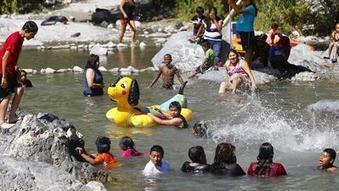
Interior Secretary Ken Salazar on Wednesday recommended designation of the San Gabriel River watershed and most of the San Gabriel Mountains as a national recreation area, making the popular playground eligible for additional law enforcement,...
PIRatE Lab's insight:
This should be a no-brainer.
Scoop.it!
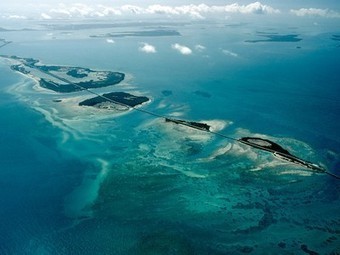
Photos of U.S. National Marine Sanctuaries and download free marine park desktop wallpapers from National Geographic.
Scoop.it!
Web survey powered by SurveyMonkey.com. Create your own online survey now with SurveyMonkey's expert certified FREE templates.
PIRatE Lab's insight:
Good survey, although a question or two seems a bit misleading. But still a good way to learn a few things. But make sure you keep track of your answers. I was hoping to see my score at the end and ended up just geting a "thank you." I missed two I think....
Scoop.it!
PIRatE Lab's insight:
A good place to start for those interested in coastal image processing.
Scoop.it!

California sagebrush in the southern part of the state will adjust better to climate change than sagebrush populations in the north, according to researchers.
PIRatE Lab's insight:
Data from their common garden experiment...
Scoop.it!
(AP) — Alongside a flooded field of rice stubble, Jacob Katz dipped a fish net into turbid water and came up with a half dozen or so silvery juvenile salmon.
PIRatE Lab's insight:
This is a no-brainer. The only wonder is that it is not more widely practiced.
Scoop.it!
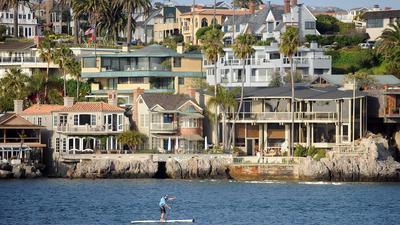
Governors Andrew Cuomo of New York and Chris Christie of New Jersey don't need to wait on gridlocked Washington to confront future risks from climate-change intensified storms.
Scoop.it!

I will always remember the day I woke to the news that more than 2,000 fires were burning in California. I thought I must not have heard correctly. Two thousand fires? How could that be?
PIRatE Lab's insight:
A nice little piece on climate change, but the title promised something more interesting...
Scoop.it!

JAPAN's fisheries minister has blamed "sabotage" by the Sea Shepherd anti-whaling group for a record low catch of just over 100 whales from this season's Antarctic hunt.
PIRatE Lab's insight:
Paul's efforts and the reality television mega-hit have given them a platform to both grow their direct action campaign and to (apparently) have a significant impact on the harvesting of whales for "science."
Scoop.it!
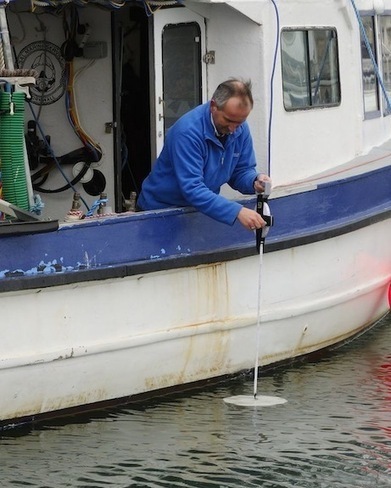
An app allows boat travelers to track declining levels of phytoplankton, a microscopic organism at the base of the marine food chain
Scoop.it!
Specifically placed small wetlands can help capture watershed runoff, helping city planners to guard against flood disasters
PIRatE Lab's insight:
The more tools like this that are out there, the fewer obstacles exist for the average citizen to do the right thing.
|
Scoop.it!
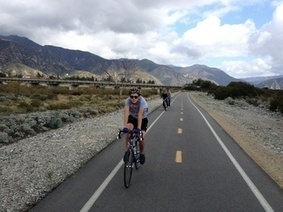
The proposed expansion would go a long way to ensure access to green space and better health for park poor, income poor communities.
PIRatE Lab's insight:
Interior Dept supporting a COMBINED Santa Monica and San Gabriel Mountains National Recreation Area here in SoCal. At our next Santa Monica Mountains Conservancy meeting on April 29, the NPS study group will be making a summary presentation.
Scoop.it!

Researchers have already uncovered worrying signs that exposure to traffic – and the vehicle emissions that come with it – can increase a child’s risk of developing asthma and autism .
Scoop.it!

That bottle of Bordeaux you put aside may become even rarer in the next few decades as climate change could reduce wine grape production in traditional parts of the world and move it elsewhere, researchers say.
PIRatE Lab's insight:
Climate change-induced migration.
Scoop.it!
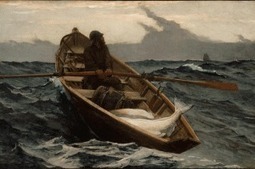
"The Mortal Sea." A ship's captain turned scholar tracks our impact on the oceans through time.
PIRatE Lab's insight:
Great examples here of shifting baselines.
Scoop.it!
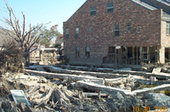
The field trip to some of the devastated areas of New Orleans is a constantly evolving project. New versions of the Field Guide are posted frequently and routes change. The latest version can be downloaded as an Adobe PDF file. Note also that many of the images are proprietary, so if you use the images, please include the reference to the original sources.
PIRatE Lab's insight:
The best tour of how the New Orleans Flood Protection System (i.e. the flimsy levees) failed.
Scoop.it!
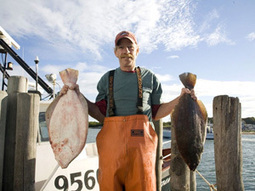
By Michael Conathan and Shiva Polefka This article was originally published by the Center for American Progress.
PIRatE Lab's insight:
These are but a handful of our priorities, but they are a start.
Scoop.it!
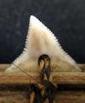
The Gilbert Island reefs in the Central Pacific were once home to two species of sharks not previously reported in historic records or contemporary studies.
PIRatE Lab's insight:
Another example of non-traditional information shedding light on historic (or "baseline") conditions.
Scoop.it!

California may be known for its vulnerability to earthquakes and wildfires, but the state also faces the risk of devastating floods, according to a report being released Wednesday by the state Department of Water Resources and the U.S.
Scoop.it!

After years of depletion, California's fish populations appear to be bouncing back.
PIRatE Lab's insight:
Many of California's fish stocks are now heading in the right direction. The challenge now is to assure ourselves that we continue to see improvement AND to make sure we have a viable seafood industry.
Scoop.it!

The Sustainable Working Waterfronts Toolkit is a web-based information portal that contains a wealth of information about the historical and current use of waterfront space, the economic value of working waterfronts, and legal, policy, and financing tools that can be used to preserve, enhance, and protect these valuable areas. The Toolkit also features case studies of successful working waterfronts initiatives from communities around the country. Sharing this information with stakeholders – including waterfront businesses and industry, waterfront landowners, users and residents, and planners and governments – is an essential first step toward increasing knowledge, awareness, and implementation of the range of tools and options are available.
PIRatE Lab's insight:
We need vibrant, working waterfronts that provide jobs and endeavors that are more than simply boat docks and tourist jumping off points. Working ports are central to a just and (ultimately) sustianable coastal zone.
Scoop.it!

The cardboard box has always been the quintesential toy for kids. With this creative design, it also becomes a puzzle and teaching tool.
PIRatE Lab's insight:
A fantstic idea and well designed packaging. This is what happens when you have a designer that actually knows ther environment in which the material will be use. Cool!
Scoop.it!
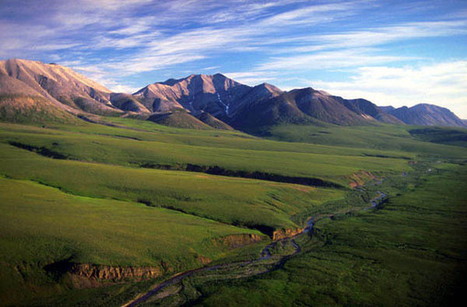
As the climate changes, trees and shrubs are poised to take over tundra and alter the Arctic's ecosystems
|





Finally, we are shooting these guys with tranquiliers rather than bullets!