Your new post is loading...

|
Scooped by
Trevor Lee @ TravConsult
May 23, 11:07 PM
|
China's carriers face sky-high jet fuel, lack of hedging strategies, and a customer base that can easily pivot to cheaper high-speed rail services.
|
|
Scooped by
Trevor Lee @ TravConsult
May 23, 11:02 PM
|
ZHENGZHOU, May 19 (Xinhua) -- As China celebrates its annual tourism day on Tuesday, a younger gener
|
|
Scooped by
Trevor Lee @ TravConsult
May 20, 9:13 PM
|
How has the Iran war impacted Chinese consumer sentiment about travel to the Middle East and North Africa (MENA), and how should regional travel brands approach the Chinese market now? These are the latest insights from Dragon Trail’s consumer research, market intelligence, and strategy planning. Co
|
|
Scooped by
Trevor Lee @ TravConsult
May 19, 2:05 AM
|
Most international clean beauty brands entering China in 2026 still think hope is a strategy.
The market entry approach that used to work in China is not just outdated. It's increasingly ineffective.
Here's what separates successful founders from the ones burning budget and wondering why nothing is converting.
1. Xiaohongshu first. Not as an afterthought.
For a clean beauty or skincare brand entering China in 2026, Xiaohongshu is not one channel among many, it's where brand credibility is built or destroyed.
Founders getting this right treat it as a long form trust building platform, not a promotional channel. They build a content library around ingredient transparency, formulation philosophy and real skin results, not vibes.
2. Ingredient literacy is now taken for granted.
Chinese skincare consumers, particularly the urban 25-40 demographic that buys premium, can decipher an ingredient list much better than you can.
If your formulation claims aren't substantiated, if your hero ingredient is underdosed, if the gap between your marketing and your formulation is visible, they will find it, and post about it.
Successful brands in China are leading with ingredient transparency as a brand asset, not managing it as a compliance obligation.
3. China Chic is real competition.
Domestic Chinese skincare has grown up fast. Brands like Proya, Winona and Florasis have sophisticated formulations, credible clinical positioning, and deep channel infrastructure. Competing with them on price or on "natural" claims alone is a losing strategy. You need to own something specific that domestic brands structurally can't replicate.
4. Pricing architecture before you launch. Not after.
Grey market is not a distribution problem, it's a pricing architecture problem. If your RRP in China is too far above your home market, or you discount too heavily, parallel imports will undercut you before your authorised channel has found its feet.
I've seen brands spend heavily on setting up a flagship shop only to watch daigou beat them to the punch, and their sales.
5. The first twelve months are not about revenue. They're about signal.
Founders we work with enter China with a clear set of leading indicators that aren't GMV. Revenue follows signal. Brands that optimise for short term sales in year one almost always compromise positioning to get there.
China's clean beauty market in 2026 is genuinely exciting. Consumer sophistication is high, appetite for credible international brands is real, and there is white space for founders who do the work properly.
If you're a founder mapping a China entry for the first time, or you've been in market for twelve months and the numbers don't make sense, let's talk.
I'm Iain Langridge 毅安 co-founder In2Asia Export. We launch, grow, and manage international brands to deliver a sustainable presence in China.
#chinamarket #chinabusiness #cleanbeauty #skincare #premiumbrands #chineseconsumers
|
|
Scooped by
Trevor Lee @ TravConsult
May 18, 12:32 AM
|
The report identified the next set of travellers that will fuel the region’s travel retail development, and the role of AI and innovation to fuel this future growth.
|
|
Scooped by
Trevor Lee @ TravConsult
May 17, 9:12 PM
|
A foreign tourist browses products at a trendy toy store on Nanjing Road Pedestrian Street in Shang
|
|
Scooped by
Trevor Lee @ TravConsult
May 17, 9:08 PM
|
A collaborative research project by DONG Luxury Collection and Dragon Trail, the Luxury Travel Trends in China White Paper provides a comprehensive analysis of China's luxury travel market, based on surveys and interviews with HNWIs, travel agents, and hospitality partners.
|
|
Scooped by
Trevor Lee @ TravConsult
May 17, 9:00 PM
|
Despite differences and disagreements on the issue of the West Philippine Sea, the Philippines wants more Chinese tourists to visit and experience the country’s beauty, culture and warm welcome that Filipinos are known for.
|
|
Scooped by
Trevor Lee @ TravConsult
May 17, 8:57 PM
|
Korean retailers have made the most of the early May holiday period, as their sales soared with a massive flock of foreign tourists visiting the country. Accord
|
|
Scooped by
Trevor Lee @ TravConsult
May 7, 7:05 PM
|
Pre-World Cup 2026, we dissect China’s growing appetite for soccer style, from Adidas’ Shanghai flea market to local brands.
|
|
Scooped by
Trevor Lee @ TravConsult
May 7, 7:37 AM
|
”Lying flat”, or Tang Ping, is a concept that started to become popular around 2021 in China.
|
|
Scooped by
Trevor Lee @ TravConsult
May 3, 8:32 PM
|
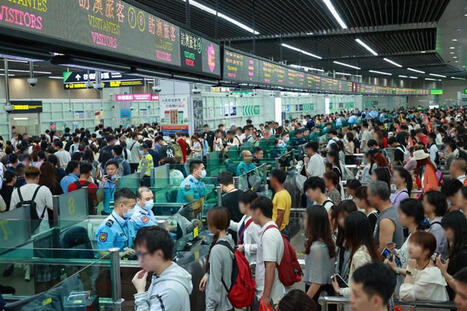
According to preliminary figures released by Macau’s Public Security Police Force, there were more than 630,000 visitor arrivals over the
|
|
Scooped by
Trevor Lee @ TravConsult
May 1, 3:03 AM
|
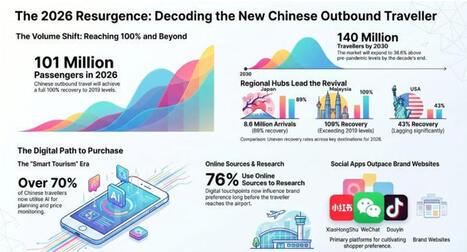
101 million Chinese outbound passengers returning in 2026. And 55% of them finding airport shopping less appealing than before.
Both things are true at the same time. That's what makes this moment interesting.
m1nd-set just released their Chinese outbound travel forecast and the number of Chinese passengers coming back is exhilarating.
But the Chinese traveller coming back has different views about shopping now.
🔸 45% have already decided what they want before they reach the terminal - researching on Chinese social platforms, not in the store.
🔸 More than 1 in 5 feel Duty Free just doesn't offer the exclusives it once did.
That's a meaningful shift in a shopper who was once among the most valuable in the world for the global travel retail industry.
On where they're headed - regional Asia dominates.
Japan leads with 8.6 million arrivals, followed by South Korea and Thailand. Malaysia is the only top ten destination expected to exceed pre-Covid levels. Long-haul destinations are lagging - the US sits at just 43% recovery.
For the Middle East - 53% of Chinese travellers visiting the region still prefer shopping abroad over shopping at home. Higher than the global average of 49%.
The shopping appetite still persists, but needs to be approached differently now.
Here are three things that stand out:
Reach them before they fly. Chinese social platforms are where purchase decisions are being made - long before the terminal. If we're not in that conversation early, we've already lost the moment.
Make exclusivity mean something again. Unlike most other markets, China already has multiple duty free e-commerce apps giving shoppers access to duty free pricing at home. Limited editions and travel retail firsts are the one thing those platforms simply can't replicate which is an advantage for GTR. Of course the turf wars between domestic and GTR teams on who should control the e commerce is an ongoing internal debate across organizations.
Rebuild value perception. GTR-only offers that make it genuinely feel worth it. Chinese shoppers feel the difference immediately.
The recovery is real and the opportunity is large.
If we approach it smartly, there is a lot to gain.
Curious what others in the industry are thinking about this.
#TravelRetail #DutyFree #ChineseOutbound #GlobalTravelRetail #MiddleEast
Image Courtesy- AI
|
|
|
Scooped by
Trevor Lee @ TravConsult
May 23, 11:05 PM
|
Like every country around the world, China deals with the aftermath of armed conflict in West Asia and the economic fallout in its wake.
|
|
Scooped by
Trevor Lee @ TravConsult
May 21, 5:44 AM
|
What appeal does cruise travel have for HNWI Chinese? How can luxury cruise operators tap into the potential of China’s travel market? Here are the findings from the Luxury Travel Trends in China White Paper by Dragon Trail and DONG Luxury Travel Collection.
Many thanks to Jackie Hoo (The Ritz-Carlton Yacht Collection) and Adam Radwanski (Silversea) for their insights.
🚢 There are challenges in selling Chinese HNW travelers on cruise as a form of travel, as they may think first of crowded, mass-market experiences. Selling points for luxury cruises include luxury on-board amenities, privacy, and exclusive destinations and experiences.
🗺️ 60% of Chinese HWNI travelers say that the cruise itinerary is very or extremely important. They will be looking for niche destinations and unique itineraries – including ports that are too small for standard cruise ships – and exclusive access to heritage sites or private excursions.
🐧 Luxury yacht cruises and expedition cruises are the most appealing cruise type for Chinese HNWIs. These travelers are looking for access to unique, off-the-beaten-path destinations (60%) and opportunity for closer interaction with nature and wildlife (22%).
Read the full article at https://lnkd.in/er9NCi8Q
☎️ Dragon Trail has extensive experience working with the cruise sector on both B2C and B2B marketing in China, in addition to our work with the luxury hotels sector. Contact us to discuss how we can help your brand to launch or optimize its approach to the Chinese travel market.
|
|
Scooped by
Trevor Lee @ TravConsult
May 19, 10:45 PM
|
By Dan Siebers — 25 Years in China Wine & Spirits In my last article, I described China’s wine market as a landscape shaped by compulsive entrepreneurialism — a culturally driven flood of operators entering any category that shows demand, fragmenting markets faster than they can consolidate, and res
|
|
Scooped by
Trevor Lee @ TravConsult
May 19, 1:06 AM
|
China Retail Has Entered a New Era
And most brands haven't even noticed...
Most Western brands still think China retail works the way it did five years ago.
It doesn’t.
And this week’s China Pulse #018 shows just how fast the ground is shifting underneath fashion, lifestyle, and athleisure brands trying to compete in China in 2026.
Some brands are adapting. Others are quietly disappearing.
Inside this week's China Pulse:
🔎Why Vuori launched 5 simultaneous Shanghai pop-ups instead of 1 flagship, and why distributed retail is outperforming traditional store launches by 3–5x on Xiaohongshu
🔎How China’s new “kidult economy” turned glossy plastic shoes into $400+ status products with 30M+ impressions, and why anti-perfectionism is becoming a real retail strategy
🔎The uncomfortable reason Galeries Lafayette just shut down its massive Beijing flagship after 12 years, and what it reveals about the collapse of the old Western department store model in China
🔎Why brands built around “curation” are losing to Xiaohongshu, Douyin, and community-driven discovery ecosystems
🔎How MAIA ACTIVE, ALO Yoga, and a wave of emotionally-positioned brands are reshaping China’s athleisure market while legacy players struggle to keep up
Here’s the part most companies still don’t understand:
China consumers didn’t stop buying.
They changed how they discover, evaluate, and emotionally connect with brands.
And many Western retail formats were never built for that world.
The brands still operating with a 2021 China playbook are about to learn that lesson the hard way.
Check out China Pulse #018 to find out what's working in China right now.
|
|
Scooped by
Trevor Lee @ TravConsult
May 17, 9:12 PM
|
China's retail sales of consumer goods remain a major indicator of the country's consumption strength. From January to March, retail sales expanded 2.4 percent from a year ago. Some retailers, such as discount chains, see opportunities in consumer market segmentation. Chen Tong spoke with the head of one popular outlet chain in China.
|
|
Scooped by
Trevor Lee @ TravConsult
May 17, 9:11 PM
|
|
|
Scooped by
Trevor Lee @ TravConsult
May 17, 9:03 PM
|
Chinese luxury travel market sees significant growth
|
|
Scooped by
Trevor Lee @ TravConsult
May 17, 8:59 PM
|
The number of Chinese visitors to Korea this year is expected to reach 7 million. This outlook is attributed to multiple favorable factors such as the
|
|
Scooped by
Trevor Lee @ TravConsult
May 17, 8:46 PM
|
Thrilled to share this 520 playbook. Had the pleasure to speak with Ye Zhang Cyanhill Capital 青山资本, Danni Liu iBLUE GROUP, Aslada Gu Gusto Collective and Lisa (Chenyan) Z. WB Immersive, to unpack what today’s Chinese consumers really want from 520. The old 520 formula — men buy, women receive, brands package the sentiment — is waning. Cue the rise of self-gifting, practical luxury, and emotionally resonant experiences
🔺China’s 520 romantic observance is shifting from performative gifting to emotionally driven, values-based consumption as younger consumers reject scripted romance.
🔸The traditional “boyfriend economy” is weakening, with over 30% of men opting out of gifting and women increasingly driving self-purchasing.
▪️Emotional relevance now matters more than luxury signaling, fueling growth in wellness, fragrance, travel, practical tech products, and friendship-driven gifting.
▫️Brands need to recalibrate 520 strategies away from short-term sales spikes toward long-term emotional resonance, community engagement, and experiential marketing.
🔹Limited-edition gift boxes alone no longer guarantee conversion as consumers increasingly favor personalization, co-creation, immersive experiences, and products with lasting utility or meaning.
Full story: https://lnkd.in/dN2Pxw65
|
|
Scooped by
Trevor Lee @ TravConsult
May 7, 3:47 PM
|
China's mobile user growth is effectively capped, but time-on-platform and sector-level engagement are accelerating sharply, led by AI-generated content (AIGC) apps at 61.7% YoY growth.
|
|
Scooped by
Trevor Lee @ TravConsult
May 5, 4:36 PM
|
Borderless travel is evolving into a seamless digital ecosystem.
Our 2026 Labor Day data (May 1–3) reveals a massive shift in how the world connects through seamless digital experiences. From Thai travelers to Hong Kong locals, familiar tools are bridging regional gaps through seamless "neighborhood" moments.
Here's how these digital connections translate into real-world growth:
📈Inbound Momentum: International card transaction volume via Weixin Pay grew 58% YoY.
📲Digital Adoption: Inbound travelers’ average daily Mini Program usage increased 42% YoY, with Thailand leading at +73%.
💰The "Neighborhood" Effect: Spending by Hong Kong SAR residents in the Chinese Mainland surged 78% YoY.
📊Lifestyle Integration: Hong Kong consumers are increasingly using Weixin Pay for pet services, utilities, and cinemas while across the border.
🌐Global Outbound Surge: Transaction volumes surged for Chinese mainland travelers in South Korea (+150% YoY) and Malaysia (+140% YoY).
💹Seamless Overseas Usage: Transactions via Weixin Mini Programs overseas grew over 52% MoM, with Singapore leading the charge, achieving 5× YoY growth at scale.
Travel is no longer about "visiting"; it's about "integrating" via familiar digital tools.
As regional integration and digital payments evolve, which of these shifts—inbound, outbound, or regional connectivity—do you see having the biggest impact on your industry this year?
#Weixin #WeChat #WeixinPay #MiniProgram #FinTech #Tourism #BusinessGrowth #LaborDay2026 #DataInsights
|
|
Scooped by
Trevor Lee @ TravConsult
May 1, 3:04 AM
|
The mainland is now where most Chinese luxury spending happens, reversing the overseas-travel era of the 2010s.
That detail came up at a closed-door session Jing Daily and Plug and Play Tech Center and Play hosted in Paris this month, with Stephen Morgan (COO, Jing Daily), Yuan Zou (VP APEC, Zadig&Voltaire), Philip Meyer (GM Asia, NOBLE PANACEA), Nicolas Rieul (Co-founder, Actionable), and Philipp Hödl of Plug and Play Tech Center.
Bain expects Chinese consumers to drive 40 percent of global luxury spend by 2030, beauty leading the way through 2035. What used to be one consumer is now four, moving in different directions:
▸ Millennials buying to substantiate taste, not signal arrival
▸ Gen Z choosing tribe loyalty over legacy brand names
▸ The silver economy, sitting on high wealth and peak leisure, emerging as the market's hidden moguls
▸ The cultural consumer driving Guochao 3.0 through provenance and storytelling
The proposition of luxury is being rewritten in real time. Access and affordability are non-negotiable. So is a sharper case for why a full-price, in-store purchase is still worth making.
Read the full recap: https://lnkd.in/eu4ShvPn
|















![Record-Breaking K-Tourism... The Return of Chinese 'Youke' [Click eJongmok] | Chinese Travellers | Scoop.it](https://img.scoop.it/1Bh-jtDXUVLsj0sGXbwVtDl72eJkfbmt4t8yenImKBVvK0kTmF0xjctABnaLJIm9)