Your new post is loading...

|
Scooped by
Trevor Lee @ TravConsult
October 1, 5:00 PM
|
I am not sure how Chinese people would react to this 🤭
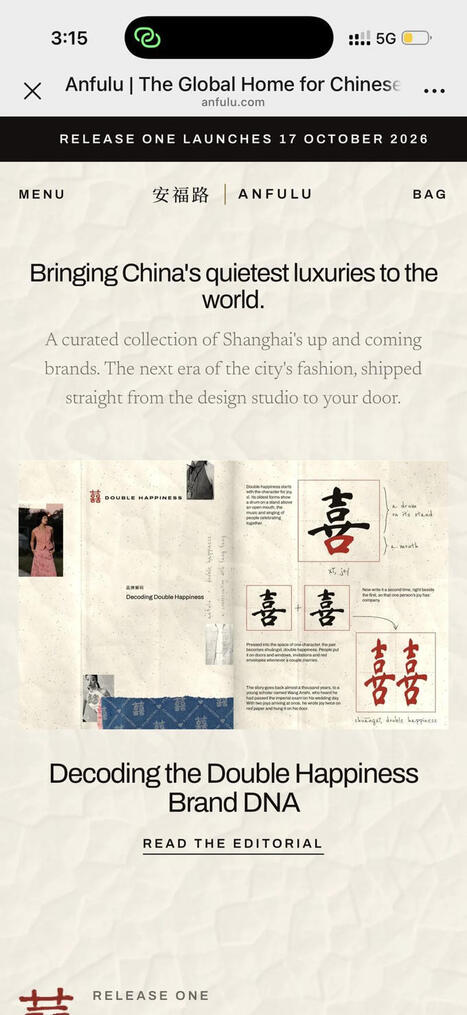
Brand is using 囍, the most auspicious Chinese character, as a fashion pattern.
Brand’s name is Anfu Lu (安福路)
My perspective is that the brand is walking on thin ice.
The target is obviously Shanghai expats.
After all, we all like Anfu Lu.
By the way, I like the designs a lot (says me sitting in a Qipao on October 1). But I would be careful buying it.
But Chinese people..will they like this..
Just some weeks after LV story
What do you think?
Tribute or appropriation
Olivier Verot
Coco L.
Ke Shi
Arnold Ma
Sean Upton-McLaughlinSean Upton-McLaughlin 马培善马培善
Yewen Zhang
Juju Meng (Global Headhunter)
Beifang Zhu
Iris Lau
Jon Wang
Jun Jiang
#xiaohongshu #rednote #wechat #douyin #tmall #taobao
|
|
Scooped by
Trevor Lee @ TravConsult
September 6, 9:46 PM
|
This is not cynicism. It is platform behaviour.
Chinese prestige consumers do not trust brand content. They trust other consumers talking about the brand.
Brand-generated content is understood as:
🗣️ marketing intent
🗣️ official narrative
🗣️ useful, but partial
You only say what you want them to know.
What builds genuine purchase conviction at the prestige price tier:
✍️ a peer who writes an unprompted ingredient breakdown
✍️ a consumer comparison article citing three brands including yours
✍️ a KOC first-person before/after review posted without an obvious brief
For a product priced in the ultra-prestige range, the Chinese consumer does not purchase based on a brand post.
They purchase after reading two or three peer-generated sources that confirm the brand's own claims from an independent position.
The credibility hierarchy in China looks like this:
1️⃣ Organic peer review - highest conviction
2️⃣ KOC content - seeded but authentic voice
3️⃣ KOL endorsement - professional, partially trusted
4️⃣ Brand-owned content - lowest conviction driver
This changes the content investment calculation entirely.
Over-indexing on brand-owned content while underinvesting in KOC seeding and Zhihu organic development produces high output and low purchase conviction.
💡 The content that converts at the prestige tier is peer-generated. The brand's job is to make sure peers have something worth writing about - and the conditions to write it.
#china #wechat #tmall #rednote #xiaohongshu #douyin #tiktok #taobao
|
|
Scooped by
Trevor Lee @ TravConsult
August 29, 9:23 PM
|
China Duty Free Group Co. Ltd.
|
|
Scooped by
Trevor Lee @ TravConsult
August 26, 11:15 PM
|
Born inland, in a mountainous area of Southwest China's Sichuan province, Yang Siqi's origin couldn't be more at odds with her sporting career — catching breakers atop a surfboard.
|
|
Scooped by
Trevor Lee @ TravConsult
August 26, 9:38 PM
|
ANTA Group released its H1 2026 results, strengthening its position as the world’s #3 sportswear group. Highlights 👇🏻
🌍 Global
Revenue: $6.5B (+12.9% YoY)
Gross margin: 63.9% (+0.5pp)
SG&A: 24.5% of revenue (-0.4pp)
EBIT margin: 27% (+0.7pp)
Online share: 35.7% (+15.7% YoY)
Inventory: 130 days DIO (-6 days YoY), above 90% sold at full price
🏷️ Brand portfolio
Anta: 40.7% of revenue | +4.8% | EBIT margin 22.5%
FILA : 34.6% | +6.1% | EBIT margin 28.7%
Other brands: 24.7% | +44.2% | EBIT margin 33.1%
(Descente Global Retail , KOLON SPORT (China) Co., Ltd. JACK WOLFSKIN )
What do the numbers tell us?
Solid, well-controlled growth with a well-balanced portfolio targeting different consumer segments — Anta sports performance at accessible prices, FILA sports lifestyle targeting a younger consumer, and the other brands positioned more premium.
Apparel remains the largest category, but footwear continues to progress strongly(+80% YoY)
Not many obvious weak spots.
One to watch: how will Anta’s first US stores perform?International expansion is clearly becoming an important part of the next growth phase.
🤖 Tech & AI is also moving up the agenda
Three interesting initiatives:
• AI design: Linglong (proprietary)can turn initial sketches into design renderings in ~15 seconds.
• AI-powered predictive analytics: identifying trends 6–12 months ahead, combined with agile test & repeat and intelligent inventory pre-positioning, potentially a powerful combination for inventory management.
• AI styling: Lingxi provides personalised styling recommendations and VTO (virtual try-on) experiences.
Can Anta become a truly global #3 behind Nike and adidas, and can it do it through DTC, or will wholesale be essential to scale internationally?
#sportswear #sportinggoods #retail #tech #omnichannel
Source: Anta interim reports H1 2026
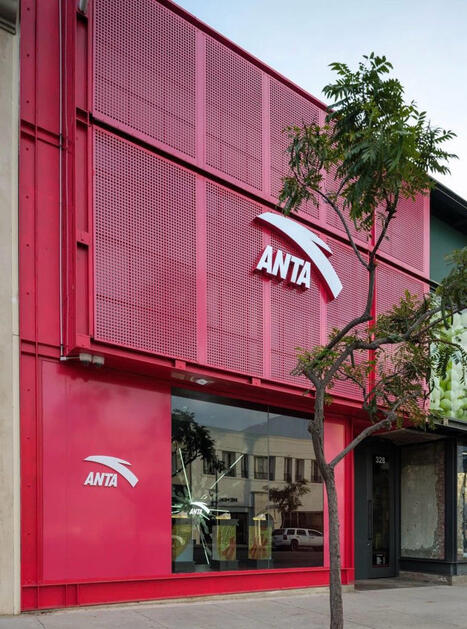
Image: Anta first store opened in Beverly Hills (February 2026)
|
|
Scooped by
Trevor Lee @ TravConsult
August 16, 7:22 AM
|
Using Chinese symbols is no longer enough. The harder task is making a local cultural moment feel unmistakably like the brand.
|
|
Scooped by
Trevor Lee @ TravConsult
August 13, 8:43 PM
|
|
|
Scooped by
Trevor Lee @ TravConsult
August 5, 1:41 AM
|
Chinese consumers are spending more on premium skincare while cutting back on luxury handbags, signalling a major shift in buying habits as economic uncertainty reshapes the country's luxury market.
|
|
Scooped by
Trevor Lee @ TravConsult
July 26, 2:53 AM
|
#China and the #UnitedStates lead the global #ecommerce landscape by a massive margin, with both nations generating well over $1.3 #trillion in annual online sales.
The largest e-commerce markets in the world are ranked below by total market size and digital revenue:
1. #China
Market Size: Over $1.38 #trillion
Dominant Players: Alibaba Group (Taobao Marketplace & Tmall), JD.COM, Pinduoduo
Key Characteristic: China features a deeply integrated digital culture with a staggering 47% e-commerce penetration rate, leading the world in live-stream shopping and mobile payment adoption.
2. #UnitedStates
Market Size: Over $1.34 #trillion
Dominant Players: Amazon, Walmart, eBay
Key Characteristic: Despite a lower overall digital penetration rate of 15.8% relative to total retail, the US boasts massive purchasing power and highly mature logistics frameworks.
3. #UnitedKingdom
Market Size: $141 billion-$195 #billion (depending on year-over-year reporting metrics)
Dominant Players: Amazon UK, Sainsbury's, Tesco, ASOS.com
Key Characteristic: The UK is the largest e-commerce market in Europe, sustained by an exceptionally high digital payment acceptance culture where mobile shopping accounts for over half of all online checkouts.
4. #Japan
Market Size: Approximately $169 #billion
Dominant Players: Rakuten, Amazon Japan, Yahoo! Japan Shopping Cart
Key Characteristic: A mature market where 76% of the population shops actively online, with strong historical consumer preferences toward top-tier customer service, grocery, and electronics.
5. #SouthKorea
Market Size: Approximately $147 #billion
Dominant Players: Coupang, naver shopping, Gmarket
Key Characteristic: Known for world-class, hyper-efficient delivery times and advanced infrastructure, South Korea stands out as a highly innovative market where online grocery shopping dominates over fashion.
6. #Germany
Market Size: Approximately $110 billion-$141 #billion
Dominant Players: Amazon Germany, OTTO, Zalando
Key Characteristic: Boasting a 79% online shopping penetration rate, German consumers prioritize highly secure digital transactions, robust logistics, and detailed product specifications.
Summary Comparison Table
Rank | Country | Primary Market Driver | Digital Landscape Profile
1. #China Alibaba, JD.com High mobile wallet use & live commerce
2. #UnitedStates Amazon, WalmartHigh per-capita digital spending
3. #UnitedKingdom Amazon UK, Grocery Chains Leading European market size
4. #Japan Rakuten, Amazon JP High focus on service & localization
5. #SouthKorea Coupang, Naver Hyper-fast logistics & digital grocery
6. #Germany Amazon DE, Otto High security & cross-border trade.
|
|
Scooped by
Trevor Lee @ TravConsult
July 15, 8:09 PM
|
The sunscreen market in China was valued at RMB 27.5 billion in 2025, down 7.8% year-over-year. This decline is less driven b
|
|
Scooped by
Trevor Lee @ TravConsult
July 15, 7:28 PM
|
✈️ 𝐂𝐡𝐢𝐧𝐚 𝐣𝐮𝐬𝐭 𝐨𝐩𝐞𝐧𝐞𝐝 𝐭𝐰𝐨 𝐦𝐨𝐫𝐞 𝐝𝐨𝐨𝐫𝐬 𝐢𝐧𝐭𝐨 𝐄𝐮𝐫𝐨𝐩𝐞. 𝐄𝐮𝐫𝐨𝐩𝐞𝐚𝐧 𝐜𝐚𝐫𝐫𝐢𝐞𝐫𝐬 𝐬𝐭𝐢𝐥𝐥 𝐜𝐚𝐧'𝐭 𝐜𝐥𝐨𝐬𝐞 𝐭𝐡𝐞 𝐠𝐚𝐩.
𝐖𝐡𝐚𝐭'𝐬 𝐧𝐞𝐰?
China Eastern will start 3x weekly Airbus A350-900 service between Shanghai Pudong and Dublin on July 20, its first route into Ireland and its 14th European destination. It's part of a wider July push: Air China opened Beijing to Venice on July 2, becoming the second Chinese carrier on that route after China Eastern. Together they're adding capacity on city pairs European carriers have historically owned alone.
𝐓𝐡𝐞 𝐧𝐮𝐦𝐛𝐞𝐫
Chinese carriers now control about 𝟖𝟑% 𝐨𝐟 𝐂𝐡𝐢𝐧𝐚 𝐄𝐮𝐫𝐨𝐩𝐞 𝐜𝐚𝐩𝐚𝐜𝐢𝐭𝐲, excluding Russia, up from roughly two thirds in 2019. That's not organic market share growth. It's structural.
𝐖𝐡𝐲 𝐭𝐡𝐞 𝐠𝐚𝐩 𝐤𝐞𝐞𝐩𝐬 𝐰𝐢𝐝𝐞𝐧𝐢𝐧𝐠?
Since 2022, Western airlines have been barred from Russian airspace & forced into longer, costlier routings to Asia. Chinese carriers kept direct access. A Paris to Beijing flight that took 10 hours 15 minutes in 2019 now takes over 11 hours for Air France. The Chinese equivalent barely moved. That's not a pricing strategy or a better product. It's a block time advantage that compounds on every single rotation, every single day, for 3 years running.
𝐖𝐡𝐚𝐭 𝐬𝐞𝐜𝐨𝐧𝐝𝐚𝐫𝐲 𝐜𝐢𝐭𝐢𝐞𝐬 𝐭𝐞𝐥𝐥 𝐲𝐨𝐮
The real signal isn't Shanghai to London or Paris. It's Shanghai to Dublin, Beijing to Venice, Shanghai to Zurich. Chinese carriers are no longer just defending flagship routes, they're colonizing the secondary city pairs European airlines never prioritized. That's what market share consolidation looks like before anyone calls it that.
Airspace access isn't a footnote in this industry. 3 years in, it's become one of the clearest competitive moats in commercial aviation & it's not one European carriers can close on their own.
#Aviation #China #AirlineStrategy #Airbus #Geopolitics
📸 Myself | 26 comments on LinkedIn
|
|
Scooped by
Trevor Lee @ TravConsult
July 9, 6:21 AM
|
Chinese outbound luxury spending is being redistributed toward destinations offering the strongest combination of price arbitrage, proximity, and VIC clienteling. Growth now depends less on visitor volumes than on capturing high-value transactions from an increasingly polarized and selective consume
|
|
Scooped by
Trevor Lee @ TravConsult
June 28, 9:29 PM
|
🍷 Thanks to a run of wine activation and tasting events, I've spent the last four weeks on the frontline in China talking to wine lovers. There is one question I can't stop thinking about.
Is China's wine market quietly splitting along geographic lines?
Not in a dramatic way. Not in the import data. But in conversations, real ones, at trade events, at bistros over bottles - something is crystallising that the industry isn't talking about loudly enough.
Here's what I heard:
1. The South is quietly leaving red wine behind.
In Guangzhou and Shenzhen, the shift to white is not a trend. It's a transition. Consumer after consumer told me the same thing: we don’t drink red wine anymore.
Cantonese cuisine is delicate. Dim sum, seafood, lighter broths - they're not asking for Cabernet Sauvignon or Shiraz. They never were. The market just took 20 years to admit it. White, aromatic, lower alcohol styles are being reached for deliberately, preferentially.
2. The North is still loyal to red - but it's more selective.
In the north, red wine holds stronger thanks to milder summers and colder winters. But the conversation has changed. Consumers want to know the story behind the glass - the region, the vintage, the winemaker.
The red wine drinker in Shanghai in 2026 is considerably more informed, and harder to impress, than five years ago.
3. Cuisine is the driver. Always was.
This is the part that should have always been obvious. Chinese regional cuisine is extraordinarily diverse. What pairs with a spiced lamb dish Hohhot is not what you want beside a plate of steamed fish in Ningbo.
The wine market in China was built on gifting, banqueting, and prestige – on obligation - all of which flattened regional differences and defaulted to red.
As consumption shifts toward genuine pleasure drinking (悦己), those regional food cultures are asserting themselves.
Consumers have grabbed the steering wheel.
4. White wine isn't a category. It's a positioning opportunity.
Wine brands gaining traction in southern China have started showing up where the consumer actually is: with food pairing content on social media, blending lifestyle moments with lighter, fresher styles at realistic price points.
5. I believe this divide will widen, not narrow.
As Chinese wine consumers mature, regional palate differences will become more pronounced, not less. One size fits all national distribution strategies are already struggling. In five years, the gap between what sells in Guangzhou and what sells in Suzhou or Dalian will be as significant as the gap between London and Naples.
International wine brands that understand that, and build channel architecture, content, and range selection accordingly, will outperform the ones still looking for a single national play.
Thoughts?
I’m Iain Langridge 毅安, co-founder of In2Asia Export & In2Asia Wine. I launch, manage, and grow premium international brands in China.
#china #chinamarket #chinabusiness #wine #chinawine
|
|
|
Scooped by
Trevor Lee @ TravConsult
October 1, 9:42 AM
|
Long-time Foreo Global Travel Retail Director Gary Leong is returning to TFWA World Exhibition in Cannes with his own company, Gulf Pacific, to meet existing and prospective brand partners. Here he shares his thoughts on the travel retail market.
|
|
Scooped by
Trevor Lee @ TravConsult
September 3, 12:35 AM
|
Chinese Consumers Aren’t Buying Local Out of Patriotism
They’re buying because the products are better.
Most Western executives still think China’s shift toward domestic brands is about nationalism.
It’s not.
At least, that’s not what I’m seeing on the ground.
Chinese consumers are choosing local brands because the products are often better, the design is more relevant, the technology is more advanced, and the value is hard to ignore.
Need proof? Look at the streets of Shanghai.
Get into a Zeekr or Maxus and it can feel like you’ve stepped into the future. Then look at the price. You’re talking roughly $30K–$40K.
This isn’t a patriotic purchase. It’s a consumer making a rational decision.
And it’s happening across categories. Domestic brands now account for roughly three-quarters of China’s FMCG market.
The factories that once made your products don’t just know how to manufacture anymore.
They've learned branding, distribution, data, and perhaps most importantly... the consumer.
The competitive set changed underneath us.
And blaming nationalism might be the easiest way for Western brands to avoid admitting it.
Does this match what you’re seeing in your category?
|
|
Scooped by
Trevor Lee @ TravConsult
August 27, 6:14 AM
|
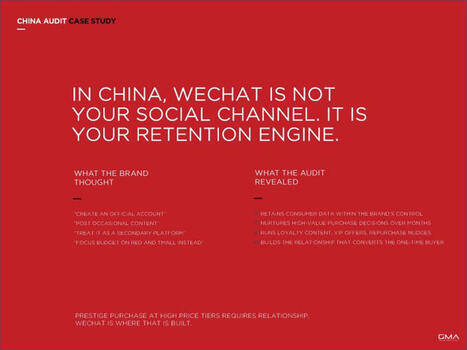
We see this gap consistently across audits for prestige brands.
A brand has invested in:
✅ Tmall store, optimised product pages
✅ RED content, KOC seeding programme
✅ Zhihu presence, ingredient-focused articles
And then:
❌ WeChat official account: last post four months ago
❌ Mini-program: not built
❌ Private domain community groups: nonexistent
Here is what that means in practice:
👇 The brand acquires customers on Tmall.
👇 There is no path from first purchase to relationship.
👇 The customer forgets and leaves.
👇 Repurchase rate is low.
👇 The brand acquires another customer. The cycle repeats.
For products priced at the upper prestige tier, the consumer does not repurchase on impulse.
They repurchase because they trust the brand, and trust is built through ongoing relationship, not through a product listing.
WeChat private domain is where that relationship lives:
→ Content that feels personal and exclusive
→ Product education that builds genuine expertise
→ Community that reinforces the purchase decision over time
→ Direct promotions that do not cannibalise the Tmall price position
❗️ The Western mental model of WeChat as a messaging app dramatically underestimates its commercial role.
In ultra-prestige beauty, WeChat is the repurchase engine. Without it, the acquisition cost never pays back.
By the way, in B2B, Weixin/WeChat is also a retention channel. Even though the way it works would be entirely different.
#china #wechat #tmall #rednote #xiaohongshu #douyin #tiktok #taobao
|
|
Scooped by
Trevor Lee @ TravConsult
August 26, 11:12 PM
|
iqi Yang (CHN) and Ocean Lancaster (AUS) have claimed impressive wins over the weekend at the MURF Electric Bikes Tweed Coast Pro Junior World Surf League (WSL) event. The pair overcame a field of nearly 100 of the Australia/Oceania region's best surfers aged 20 and under in super fun waves at...
|
|
Scooped by
Trevor Lee @ TravConsult
August 24, 2:07 AM
|
Perfumes in China are gradually moving beyond their traditional role as a symbolic luxury item to become an integral part of daily life.
|
|
Scooped by
Trevor Lee @ TravConsult
August 16, 6:41 AM
|
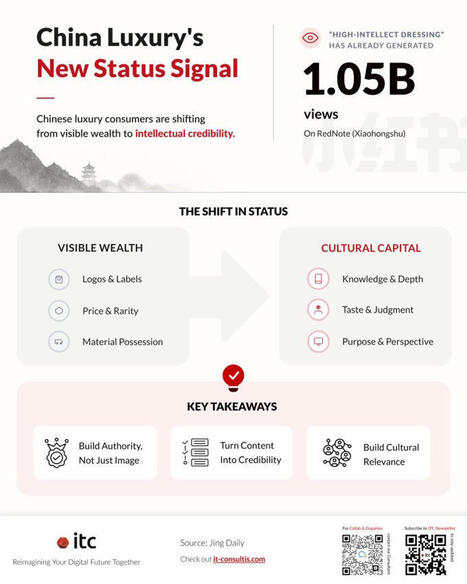
💡 What if luxury in China is no longer judged by how visible wealth looks, but by how credible INTELLIGENCE feels?
That is the real message behind the rise of China’s “high-intellect aesthetic.” And I think it matters far beyond fashion.
📊 On RedNote (Xiaohongshu), “high-intellect dressing” has already generated more than 1.05 billion views. That scale tells us this is not a niche style moment. It reflects a broader shift in how Chinese consumers define aspiration, taste, and status.
For years, luxury brands competed through visibility. Logos, limited editions, and recognizable codes helped consumers show access and success.
Now the benchmark is changing. Consumers are asking a different question: Does this brand feel thoughtful, credible, and culturally informed?
🔍 And what does that look like in practice?
Cartier’s recent moment with mathematician Wang Hong shows the same shift from another angle. The product did not change, but its meaning did. Association with intellectual achievement created a level of authority that many paid campaigns struggle to manufacture.
Consumers are no longer just buying what a brand makes. They are also buying what the brand seems to know, understand, and represent.
In other words, cultural capital is becoming commercial capital.
📌 Why does this MATTER for brands?
1️⃣ Image is no longer enough. Chinese consumers increasingly expect brands to show a real point of view, not just polished aesthetics.
2️⃣ Content has to work harder. Authority today is built through education, craft, scientific credibility, and consistent storytelling across touchpoints.
3️⃣ China localization becomes more strategic. Global brand codes need to be translated into signals that feel relevant to local conversations around competence, restraint, and discernment.
This is especially true in China’s digital ecosystem, where platforms like RedNote and WeChat do not simply amplify trends. They shape how consumers interpret expertise, trust, and cultural relevance.
🎯 At IT Consultis, this is where we can help. We work with brands to turn positioning into something Chinese consumers can actually experience - across content, social platforms like RedNote and WeChat, CRM journeys, and commerce touchpoints - so authority is not just claimed in a campaign, but felt consistently in the market.
For luxury brands in China, the challenge is no longer just to stay visible. It is to build a point of view that consumers see as credible, relevant, and worth following.
How are you seeing luxury brands in China balance visibility and authority today? Happy to exchange ideas :)
Thank you to Lisa N. from Jing Daily for sharing this interesting insight.
Image source: RedNote/Xin Zhilei and Fields Medal
|
|
Scooped by
Trevor Lee @ TravConsult
August 6, 12:42 AM
|
Louis Vuitton parked a ship in Shanghai.
Louis Vuitton has opened a 30-meter-tall, 114.5-meter-long metallic ship in the heart of Shanghai. It is called "The Louis" and it is anchored at HKRI Taikoo Hui, designed by the renowned architecture firm OMA.
The building is one of the brand's most ambitious architectural projects to date and a clear signal of where luxury retail is heading.
What is inside? The ship contains five distinct layers:
➡️ The exterior is a massive metallic hull wrapped in the LV Monogram, designed to evoke the 19th-century ocean liners that first carried Louis Vuitton trunks around the world.
➡️ Inside, a 1,200-square-meter retail space spans two floors, designed by OMA. The boutique is not an add-on. It is integrated into the ship's structure, retail woven into architecture.
➡️ The "Visionary Journeys" brand exhibition, designed by OMA/Shohei Shigematsu, features a glowing "Trunkscape" and rooms dedicated to fashion, craftsmanship, and olfactory creation. It is a museum-grade retrospective of the brand's 170-year history.
➡️ Le Café Louis Vuitton, the third global café concept, sits on the ship's top deck. The menu blends French cuisine with Haipai culinary traditions, curated by Michelin-starred chef Leonardo Zambrino and pastry chef Zoe Zhou.
➡️ And the building itself is the exhibit. The store is part of the experience, not the other way around.
Louis Vuitton is building cultural landmarks. The Louis is designed to anchor the brand in the cultural landscape of China's most dynamic city. This is less about selling more handbags but rather about claiming cultural territory. The brand's retail strategy is shifting from "places to buy" to "places to belong.".
Sales per square meter is no longer the primary metric. Emotional equity is.
Shanghai is the perfect location. The city is not just China's commercial capital, it is its cultural capital. The Louis is a statement that Louis Vuitton understands this distinction.
For capital allocators, the message is clear. The rules of luxury retail have changed. The brands that win are the ones that build experiences, not stores. The ones that invest in architecture, not just inventory. The ones that understand that the future of luxury is not about what you buy, it is about the world you enter.
🇩🇪 Auf den Punkt gebracht:
Louis Vuitton hat ein 30 Meter hohes, 114 Meter langes Schiff in Shanghai eröffnet – "The Louis", entworfen von OMA. Das Gebäude ist ein kulturelles Wahrzeichen, kein gewöhnlicher Store. Es beherbergt eine Ausstellung, ein Café und einen Store, die in die Schiffsstruktur integriert sind. Die Botschaft: Luxus-Einzelhandel ist nicht mehr Verkaufsfläche, sondern Kulturkampf. Die Zukunft des Luxus liegt nicht im Produkt, sondern im Erlebnis.
|
|
Scooped by
Trevor Lee @ TravConsult
July 29, 4:30 AM
|
𝐈𝐧𝐬𝐭𝐚𝐧𝐭 𝐑𝐞𝐭𝐚𝐢𝐥 𝐈𝐬 𝐑𝐞𝐰𝐫𝐢𝐭𝐢𝐧𝐠 𝐂𝐡𝐢𝐧𝐚’𝐬 𝐅𝐌𝐂𝐆 𝐌𝐚𝐫𝐤𝐞𝐭
Foreign brands entering China often treat e-commerce as a marketplace decision: open a store, buy traffic, wait for orders. In 2026, you need more.
Instant retail (doorstep delivery of groceries, drinks, personal care, medicines, household goods within 30-60 minutes) is moving from a convenience service to a mainstream shopping channel.
By 2030, the instant retail industry is projected to exceed 2 trillion RMB, accounting for about 12% of the physical e-commerce market (up from 6% in 2024).
Delivery speed is becoming part of the product proposition, particularly for FMCG categories where demand is frequent, situational, and often unplanned.
For brands, this changes the discussion: Traditional E-commerce marketplaces remain important for search and planned purchasing, but instant retail can capture the moments: a drink for tonight, skincare before a trip, pet food that has run out, ingredients for dinner, or a last minute birthday gift.
But the operational implications are significant, with brands needing locally available inventory, accurate store data, rapid replenishment, packaging designed for short-distance delivery, and marketing connected to nearby stock.
My advice for brands is maintain their traditional e-commerce operations, while exploring the options offered by instant retail. In China’s 2026 market, availability, proximity, and speed are part of how consumers judge value.
#RedFernDigital #ChinaMarketing #InstantRetail
|
|
Scooped by
Trevor Lee @ TravConsult
July 26, 12:43 AM
|
🍷 Penfolds just froze Bin 407 supply to China. This is exactly what I've been warning clients about for years.
Treasury Wine Estates has suspended new orders for Penfolds Bin 407 in China for three months, effective through the end of September.
Bin 407 isn't a minor label, it's long been Penfolds' flagship commercial product in the market. Distributors describe the underlying issue in very plain terms. Inventories have become excessive, wholesale prices continue to fall, and TWE is hoping tighter supply will help stabilise the market.
Read between the lines and this is a pricing and channel control crisis, not a demand crisis. Ecommerce and grey market volume have been undercutting authorised distributors for years, and the issue has now reached a point where TWE has to pull supply just to stop the bleeding.
I've written about this exact dynamic for years, and it bears repeating because so many international brands still get it wrong.
It doesn't matter whether you are selling wine, skincare, supplements, or olive oil. In the early phase of building volume in China, unauthorised channels feel harmless. Daigou, grey market resellers, opportunistic cross border ecommerce stores - they move stock, they boost the sales numbers, and it's tempting to just let it ride. "It's still sales, right?"
💣 Wrong. It's a ticking time bomb.
Every unauthorised unit sold outside your controlled channels does three things simultaneously:
1. Undercuts your authorised distributors on price, making them unwilling to reorder.
2. Erodes the premium positioning that justified the price in the first place.
3. Trains your own customer base to expect to find your product cheaper somewhere else.
And who knows how these channels are describing your products. Sure as eggs its a hot mess.
None of that shows up in the numbers immediately. It shows up two or three years later, when your flagship label has so much grey market inventory sloshing around that even one of the world's most recognised wine brands has to hit pause on supply just to reset the market.
Penfolds has the balance sheet, the brand equity, and the patience to absorb a three month freeze and rebuild. Most brands entering China do not have that luxury.
If your pricing structure and channel discipline collapse before you've built real brand equity, there's often no controlled reset available. You just lose the market.
👩🎓 The lesson isn't "don't sell in China." It's this: control who buys your product, at what price, and through which channel - from day one, not after the damage is done.
Volume built on unauthorised channels isn't really your volume. It's borrowed, and eventually, one way or another, the bill has to be paid. By you.
I’m Iain Langridge 毅安, co-founder of In2Asia Export and In2Asia Wine. We launch, grow, and manage international brands in China. Follow or DM me to find out more.
#china #chinamarket #brandmanagement #pricingcontrol #greychannel #ecommerce #distribution
|
|
Scooped by
Trevor Lee @ TravConsult
July 15, 7:34 PM
|
RADII explores how Yindi Zhang, AKA the Beer Lady of Shanghai, transformed a neighborhood grocery store into one of the city's most beloved craft beer destinations.
|
|
Scooped by
Trevor Lee @ TravConsult
July 10, 11:19 PM
|
What began as "punk wellness", Gen Z's habit of balancing indulgence with self-care, is evolving into a much larger consumer movement. From Traditional Chinese Medicine cocktail bars and herbal cafés to premium skincare and hospitality, younger consumers are embracing ancient wellness practices in modern, experience-led ways.
Luxury brands are already taking notice. LVMH launched TCM-inspired skincare brand Cha Ling, while L Catterton invested in wellness startup WTHN, signalling growing confidence in Traditional Chinese Medicine as a premium lifestyle category.
Link to our full breakdown on how China's wellness movement is opening a new frontier for luxury: https://lnkd.in/gtPJECnK
#TraditionalChineseMedicine #TCM #Wellness #PunkWellness #ChinaLuxury
|
|
Scooped by
Trevor Lee @ TravConsult
July 7, 11:30 PM
|
|


 Scoop.it!