

It's a growth industry, with a market value expected to exceed $63 billion by 2034
Get Started for FREE
Sign up with Facebook Sign up with X
I don't have a Facebook or a X account


|
Scooped by
American Institute Health Care Professionals
onto Case Management in Health Care September 26, 2025 4:03 PM
|
 Scoop.it!
It's a growth industry, with a market value expected to exceed $63 billion by 2034


 Your new post is loading...
 Your new post is loading...
Your new post is loading...
Scoop.it!

And what has it achieved? The meaning and achievements of managed care change with the times, the context, the goals — and in the eyes of the beholders.
American Institute Health Care Professionals's insight:
What exactly is managed care today? | Managed Healthcare Executive Managed care Please also review AIHCP's Managed Care program
Scoop.it!

Administration comprises 25% of all healthcare costs, making it a key target for automation. Organizations are using AI to support documentation, coding, scheduling and more.
American Institute Health Care Professionals's insight:
AI in Healthcare Administration: A Complete Overview | HealthTech Magazine
AI and healthcare admin. Please also review AIHCP's Case Management Certification
Scoop.it!
With current waiver deadline approaching, the AMA details the case for letting patients access this vital care modality.
American Institute Health Care Professionals's insight:
How telehealth drives care improvement and saves money
Power of telehealth Please also review AIHCP's Case Management Program
Scoop.it!

The Case Manager I heard a story on NPR over the weekend about kindness. The reporter shared an experience that changed his life. One day, he was in the men's room at an airport, and a fellow traveler was washing his hands. When the traveler left, he said to the attendant standing in the corner, “Thanks for keeping it | WorkersCompensation.com
American Institute Health Care Professionals's insight:
CASE MANAGERS AND KINDESS
Case Managers can help people in need Please also review AIHCP's Case Management Program
Scoop.it!
AbstractWe build and deploy machine learning models that accurately predict short- and medium-term inpatient outcomes for Hartford HealthCare, including 24–48 hour discharge, ICU transfer
American Institute Health Care Professionals's insight:
Patient Outcome Predictions Improve Operations at Hartford HealthCare | INFORMS Journal on Applied Analytics
Better patient outcomes Please also review AIHCP's Case Management Program
Scoop.it!
American Institute Health Care Professionals's insight:
Scoop.it!

Becker’s asked five health system strategic leaders about the role value-based care plays in their system's strategic planning and how they're managing…
American Institute Health Care Professionals's insight:
How healthcare executives are managing value-based care challenges
Understanding value based care and its challenges Please also review AIHCP's Case Management program
Scoop.it!
Behavioral health management doesn’t have to strain resources. Learn how the collaborative care model can reduce costs, scale resources, and transform patient care — without major investments.
American Institute Health Care Professionals's insight:
How the collaborative care model improves access to behavioral healthcare
Important care models Please also review AIHCP's Case Management program
Scoop.it!

Implementing a new VBC program in healthcare requires cross-functional support and overcoming numerous challenges
American Institute Health Care Professionals's insight:
Reinventing Value-Based Care Program Administration with AI
Value based care Please also review AIHCP's Case Management Program
Scoop.it!

Burn injuries are severe traumas causing serious complications and high mortality. Managing burns is especially challenging in resource-limited settings. This study explores burn care challenges from the perspectives of both patients and healthcare providers. This qualitative descriptive study was conducted in Iran (2024–2025) with 41 hospitalized burn patients and healthcare providers, including physicians, nurses, psychologists, physiotherapists, and nutritionists. Participants were purposively sampled, and data were collected through semi-structured interviews until saturation. Data were analyzed concurrently using Graneheim and Lundman’s content analysis method with MAXQDA 2020 for data management. An inductive data analysis process revealed two main categories and nine subcategories. The categories identified were: “Structural and Professional Barriers in Burn Management” and “Challenges Related to Burn Patients and their Families”. Key structural barriers include inadequate interprofessional collaboration, limited resources and specialized expertise in non-specialized centers, insufficient burn care education in health profession curricula, and a lack of attention to burn injuries in health policy. Patient- and family-related challenges include cultural and economic factors, insufficient post-discharge follow-up, and low public awareness about burn injuries. This study highlights the multifaceted challenges in burn management from both healthcare providers’ and patients’ perspectives. Addressing these interconnected challenges requires comprehensive strategies encompassing healthcare system reforms, enhanced education and training, culturally sensitive care approaches, and supportive policies. Such efforts are essential to improve patient outcomes, reduce long-term complications, and alleviate the substantial burden of burn injuries on individuals and the healthcare system.
American Institute Health Care Professionals's insight:
Challenges in burn care management: a qualitative study of health professionals’ and patients’ perspectives | Scientific Reports
Burn care management Please also review AIHCP's Case Management Program
Scoop.it!

Explore why nurse career advancement matters, using insights from two recent reports, to show how growth and recognition drive satisfaction.
American Institute Health Care Professionals's insight:
Why Nurse Career Advancement Matters
Advancing in nursing Please also review AIHCP's Healthcare certifications for nurses
Scoop.it!

A practice-ready nurse is one who can make consistent, effective clinical judgements, and know when to ask for assistance, says this nursing leader.
American Institute Health Care Professionals's insight:
What Makes a Nurse Ready to Practice? | HealthLeaders Media
Nurses Please also review AIHCP's Case Management Program
Scoop.it!

Healthcare organizations face ongoing challenges like burnout and inefficiency, but a shift towards integrated technology and collaboration offers hope for improvement.
American Institute Health Care Professionals's insight:
Healthcare Organizations Are Stuck in Crisis Mode as Clinicians Lose Time to Administrative Work
Less time and staff Please also review AIHCP's Case Management Training
|
Scoop.it!
Patient surveys rank Ochsner Health No. 3 nationally for care coordination as Medicare savings hit $44.8 million, showing value-based care can deliver on both.
American Institute Health Care Professionals's insight:
Better-connected care shows quality and savings can rise together
Better quality care and savings Please also review AIHCP's Case Management programs
Scoop.it!
The Case Manager I recently moderated a webinar for new nurses who wanted to pivot their careers into workers' compensation case management. We were discussing the competencies that nurse case managers need to bring to their jobs. One of the panelists said something that caught my attention. She said it is important that a nurse | WorkersCompensation.com
American Institute Health Care Professionals's insight:
https://aihcp.net/case-management-ce-courses-program/
Strengthening careers Please also review AIHCP's Case Management Certification
Scoop.it!

Improper payments, unnecessary utilization, and administrative inefficiencies represent persistent structural challenges within the United States healthcare system. This places significant pressure on healthcare spending. Value-based care (VBC), particularly through bundled episode payments and alternative payment models (APMs), has emerged not only as a potential cost containment strategy but also as a potential framework for strengthening payment integrity and promoting appropriate resource use.
American Institute Health Care Professionals's insight:
Enhancing Payment Integrity in U.S. Healthcare Through Value-Based Care: The Role of Bundled Episodes and Alternative Payment Models | Cureus
Understanding the role of value based care Please also review AIHCP's Case Management Program
Scoop.it!

A recent report highlights the role of improved communi […]
American Institute Health Care Professionals's insight:
Improved Communication Between Field Teams and Case Managers Reduces Delays in Medication Access for Rare Disease Patients - GeneOnline News
Improving communication Please also review AIHCP's Healthcare Case Management Certification
Scoop.it!
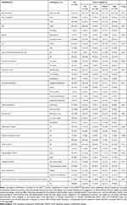
Identifying predictors of patient engagement in a care coordination program for individuals with work disabilities using a continuum-based engagement definition
American Institute Health Care Professionals's insight:
Predictors of Patient Engagement in a Care Coordination Program | PPA
Patient engagement Please also review AIHCP's Case Management Certification
Scoop.it!
As we wrap up another year and get ready for 2026 to begin, it is once again time for everyone's favorite annual tradition of Health IT Predictions! We reached out to our incredible Healthcare IT Today Community to get their insights on what will happen in the coming year, and boy, did they deliver. We,
American Institute Health Care Professionals's insight:
Healthcare Revenue Cycle Management – 2026 Health IT Predictions | Healthcare IT Today
Please also review AIHCP's Case Management Program
Scoop.it!

Monster’s 2025 Healthcare Market Report shows skyrocketing demand for nurses including CNAs, LPNs, RNs, and NPs. Learn why hiring is rising, what is driving shortages, and how nurses can leverage today’s job market.
American Institute Health Care Professionals's insight:
Nursing Demand Hits New High as Turnover and Shortages Reshape the Workforce | Nurse.Org
The demand of nursing Please also review AIHCP's Case Management Certification
Scoop.it!
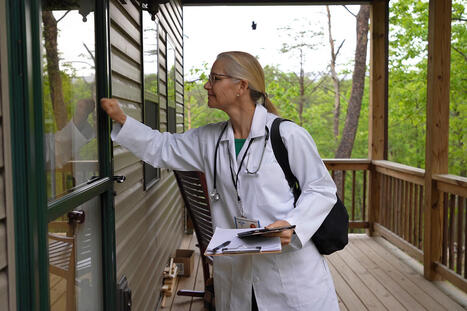
Rural Americans face significant challenges in accessing primary care, but there are opportunities for policymakers and healthcare leaders to address these issues, according to a new issue brief from The Commonwealth Fund.
American Institute Health Care Professionals's insight:
Rural challenges Please also review AIHCP's Case Management Program
Scoop.it!
The Case Manager The US has the best ‘sickcare’ system in the world. Today, doctors and other healthcare professionals have numerous tools to keep people alive and treat them for complex conditions. One example is cancer care. Years ago, cancer was viewed as a terminal disease. Today, due to advances, cancer is now considered a | WorkersCompensation.com
American Institute Health Care Professionals's insight:
How to Move From A Sick System to a Health Care System? - WorkersCompensation.com
Please also review AIHCP's Case Management Program
Scoop.it!
The Case Manager In this week’s post, I wanted to let readers know that Case Management Week will take place from October 12th to 18th this year. While the official celebration runs from Oct. 12 to Oct. 18, the Case Management Society of America is recognizing case managers all month long with free and educational | WorkersCompensation.com
American Institute Health Care Professionals's insight:
Case Management Week is Almost Here! How Are You Celebrating? - WorkersCompensation.com
Case Management Please also review AIHCP's Case Management Program
Scoop.it!
It's a growth industry, with a market value expected to exceed $63 billion by 2034
American Institute Health Care Professionals's insight:
Population Health Management Gaining Market Traction | MedPage Today
Understanding population health Please also review AIHCP's Case Management program
Scoop.it!

Oncology Nursing News connects oncology nurses and APPs with updates on therapy advances, side effect management, and patient-centered cancer care.
American Institute Health Care Professionals's insight:
Where Is the Care in Health Care?
Understanding healthcare Please also review AIHCP's Case Management Certification
|






Population Health Management Gaining Market Traction | MedPage Today
Understanding population health
Please also review AIHCP's Case Management program