



Alors que le secteur des vêtements intelligents est en plein boom, une entreprise a eu l’idée de développer un tee-shirt permettant de

 Your new post is loading...
 Scoop.it! Alors que le secteur des vêtements intelligents est en plein boom, une entreprise a eu l’idée de développer un tee-shirt permettant de 
No comment yet.
Sign up to comment
Scoop.it!

Here at the Greystone Healthcare Internet Conference, many of the discussions have revolved around utilizing social media in healthcare. One interesting perspective is to mobilize your physicians to utilize social media as a channel to communicate with their patients. To address this, the keynote speaker on Day One was Dr. Natasha Berger, whose engaging presentation demonstrated not only the value of social media in healthcare, but that she individually is a shining light for the whole healthcare industry.
Let’s start with the challenges facing your hospital’s physicians. According to Dr. Berger, these doctors are unsure:
a) How to spread healthcare information to their patients and the public at large, b) How to truly take care of a patient when you see them so rarely, c) How to manage a patient’s condition when your visit is only 20 minutes long, d) How to cope with the fact that Facebook, WebMD, and Dr. Oz are the most popular sources for health information. Today’s physician needs to understand that social media is not just about sharing funny cat videos. Instead, social media is one more tool for taking care of patients, reaches them where they are, and speaks in an informal yet powerful way. Moreover, 40% of social media users say a social media presence would influence their choice of doctor or hospital – so this is critical to your hospital’s growth.
Dr. Berger also argued that social media makes a doctor’s office more efficient. First, it decreases the number of phone calls to your practice. Second, you don’t have to do all the work yourself: social media is also a great channel for spreading the voices and insights of other brilliant physicians around the country. Third, using QR codes and shortlinks in the waiting rooms, Dr. Berger allows patients to educate themselves while they’re waiting to be seen. Fourth, social media and her blog allow patients to learn when they are ready to hear; as you can imagine, a busy doctor’s office isn’t always the best place to deeply educate that patient on their condition. This takes the boring, rote lectures out of the equation; now, Dr. Berger’s conversations are more focused and tailored to that individual family and their questions.
I found it especially interesting how Dr. Berger has used social media and the Web for far more than just simple communication. She used it as a bully-pulpit, publicly complaining to Fisher-Price about the safety of one of their products. She uses it to build trust with potential patients, long before they actually come into the office. Because Facebook has become a universal language that we all read and enjoy, as a result of Dr. Berger’s efforts, parents can now better communicate with their kids.
So how can your hospital engage doctors in social media? You’ll have to demonstrate how social media will help them do their jobs better, more efficiently, and more effectively. In addition, you can help promote and share that doctor’s talents on a national scale. How is your hospital using social media? How are you tracking the results? Via Plus91
Scoop.it!

Google-owned smartphone maker Motorola has applied for a patent for an "electronic tattoo" on people's necks that doubles as a mobile microphone, lie detector and digital display.
The tattoo would capture vibrations, or sound, directly from a user's throat, thus eliminating background noise that so often mars conversations over mobile phones.
The sound would then be transmitted from the electronic tattoo, which has its own power supply built-in, to a nearby smartphone via Bluetooth, near-field communication, also known as NFC, or the wireless technology ZigBee.
"Mobile communication devices are often operated in noisy environments ... Communication can reasonably be improved and even enhanced with a method and system for reducing the acoustic noise in such environments and contexts," reads the patent.
"The system comprises an electronic skin tattoo capable of being applied to a throat region of a body."
According to the patent, the device could also be used as a lie detector by measuring the skin's electrical conductance or "galvanic skin response" – the level at which electric current passes through something. "A user that may be nervous or engaging in speaking falsehoods may exhibit different galvanic skin response than a more confident, truth-telling individual," reads the patent.
The tattoo could even be fitted with a display and user interface for inputting commands, such as muting the device and joining a group conversation.
The device also has the potential to communicate with tablets and other mobile computing devices.
The patent, titled ''Coupling an electronic skin tattoo to a mobile communication device'' was filed in May 2012, and was published on Thursday in the US.
The neck tattoo is by no means the first foray into creative uses of technology for Motorola, which was bought by Google for $12 billion in 2011.
The company revealed its work with digital tattoos and password pills in May this year, and just last week Motorola unveiled Project Ara – a modular smartphone users can build and add to themselves. It has focused on a new wearable tech unit since July, according to TechCrunch, while its parent company is hard at work on Google Glass, and is rumoured to be releasing a smart watch next year.
Via nrip
Scoop.it!

Tout mesurer dans sa vie à l’aide d’applications ou de petits gadgets à porter sur soi: ce phénomène ne cesse de prendre de l’ampleur. Bénéfique ou inquiétant?
Scoop.it!

Selon une étude allemande, les jeux entraînent une augmentation de la matière grise du cerveau. Des résultats qui pourraient être exploités à des fins thérapeutiques pour certains malades.
Scoop.it!

A bias persists that doctors don’t use technology enough, particularly social media and apps. A Poll by Sermo however shows that while some doctors are reluctant to enter the digital pool, once they adopt, they adopt enthusiastically. Doctors are open to adopting more technology to manage their practices and they embrace medical reference apps. The most popular smart phone for physicians is the iPhone according to MedCrunch. A few top apps are listed below Medscape. Used by over 3 million doctors, nurses and medical students worldwide, Medscape is big. You can use it for medical news, clinical reference to things like drugs, diseases, conditions and procedures, and even provides medical education.
EpocratesRx. This app is popular for drug interactions, research, Pill ID and medicine calculators. The lite version is free, but you can purchase the full version for $160.
NeuroMind is a great app for neurologists, neurosurgeons and med students. It provides basic safety checklist requirements via the World Health Organization, and has “interactive clinical decision support.” It is the number one neuro app with over 140,000 downloads.
Original: http://blog.sermo.com/2013/11/06/sermo-poll-mobile-technology-and-app-use-by-physicians/ Via nrip
Scoop.it!

L'association Alsace Digitale organise un hackathon e-santé du 28 au 30 mars 2014 à Strasbourg : le DigitalhealthCamp. Présentation. A l’initiative d’Alsace Digitale, association à but non lucratif...
Scoop.it!
Portail des applications et de services aux citoyens sur téléphone mobile, coordonné par la Délégation aux usages de l'Internet (Ministère de la Recherche / Ministère de l'Industrie) .
Scoop.it!

Étant donné que des centaines de millions de personnes à travers le monde souffrent de diabète, l'une des grandes tendances en la matière sont les...
Scoop.it!

On connait les bracelets santé qui analysent l'activité physique ou le pouls. Mais Tim Cannon, alias DIY Cyborg, est allé beaucoup plus loin : il a implanté dan
Scoop.it!

La Fédération Française des Diabétiques lance un nouveau site communautaire pour les patients diabétiques : "La pompe à insuline, parlons-en ! " Présentation. Pour aider les patients diabétiques et...
Scoop.it!
Le Leem lance cette semaine une nouvelle web série sur les les bons réflexes à adopter avec les médicaments : « Médicaments à la maison ». Découverte. Pour permettre au grand public d'adopter les b...
Scoop.it!

The quick pace of mobile technology, coupled with a broad worldwide penetration of smartphones, has effectively transformed Healthcare into a new entity called mHealth.
In 2012, the number of medical application users will reach 247 million, which is more than double the 124 million users who downloaded medical applications in 2011.
Global revenue from mHealth apps grew from 140 million in 2010 to 1.3 billion in 2012, and continues to progress on an upward curve. Why is mHealth so commercially successful, and what factors contribute to this economic success story?
Medication schedule management Cancer treatment is a very complex and painful process demanding the highest level of accuracy from both physician and patient. And it is also an area where mobile technology can assist with treatment. Regular smartphones can be converted into effective medication schedule managers. This involves a straightforward process; simply select your cancer type and treatment plan, point to a start date, and make sure your device is in close proximity in order to see/hear reminders and notifications. Either patient or caregiver may add additional days and times for further dosage if required.
Tracking symptoms history
Tracking blood count
Some cancer treatments, such as chemotherapy or radiotherapy, may damage not only cancerous cells but also normal body cells including blood cells.
Reach the doctor easier The modules described above not only enable a user to cope with cancer treatment, but also to prepare valuable information for an appointment with a doctor. To make appointments more effective and informative, users can type or voice record their questions beforehand. During the meeting, users have the option to type or voice record a doctor’s answers as well. When the FAQ database is available, users can browse it through a mobile device to see available answers and adjust their questions appropriately. Receive up-to-date information
Cancer is one of the most researched medical conditions in the world, and those who have contracted it often desire to be kept informed about the most up-to-date information and cure recommendations.
Stay connected with community It’s easier to cope with a problem when you know that you are not alone. Access to a community, the ability to ask questions, the opportunity to read success stories, and to be able to participate in a community information exchange is extremely important in a cancer sufferer’s battle to stay positive. Thus, this module is a very valuable addition to a companion app for people struggling with any serious long-term disease.
Via nrip

Nay's curator insight,
June 7, 2024 12:14 PM
https://chaojiyaowu.com/
https://perderepesoefedrina.com/
|
Scoop.it!

L'ANSM lance sur son site web un nouvel espace dédié à la déclaration des effets indésirables. Présentation. Pour simplifier et encourager la déclaration des effets indésirables suspectés d’être li...
Scoop.it!
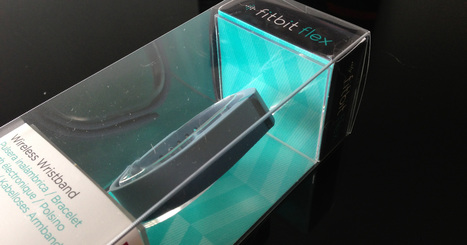
Voici notre test du bracelet Fitbit Flex, bracelet qui suit quotidiennement votre activité et votre sommeil. Via sylvie Royant-Parola

sylvie Royant-Parola's curator insight,
November 7, 2013 12:20 AM
Dans le genre c'est surement un produit intéressant. Mais le concept me trouble toujours , pourquoi se mettre un tracker /mouchard qui nous surveille et nous mesure! Nous préparons nous à être constamment sous surveillance (pour le meilleur et pour le pire()
Scoop.it!

A new app called TalkToDocs answers your medical questions without making you lift a finger. Via Alex Butler

RUDER FINN's curator insight,
November 11, 2013 10:59 AM
This is a cool little app (paid for with a cost of ($0.99) which allows users to ask medical questions aloud just as on siri. The app is called TalkToDocs and the answers are from a database of 50,000 doctors.
Scoop.it!
Premier site français d’information en continu sur les technologies de l’information et de la communication (TIC, NTIC) dans la santé - TIC santé
Scoop.it!

Selon les Centres pour le contrôle et la prévention des maladies aux Etats-Unis (CDC), environ 17% (soit 12.5 millions) d’enfants et d’adolescents âgés entre 2 et 19 ans et plus d’un adulte sur tro...
Scoop.it!

Mobile devices are uniquely positioned to make a significant contribution to medical imaging. Portability, computing power, accessibility and built in internet connectivity are well described advantages of mobile devices. There is a growing body of research which supports the use of mHealth technologies for imaging, and a number of novel uses are described in the literature.
The role of mobile devices in medical imaging has broaden to encompass a broad range of functions including diagnostic purposes, facilitating triage of emergent conditions, improving communication between health care providers to expedite patient care, and providing a feasible system for patient follow-up and self monitoring. The ever increasing capabilities of mobile technologies have also enabled their purpose to expand beyond simply an image capturing tool. This has been reflected in a spectrum of basic sciences, medical and surgical specialties, and public health that are using the imaging capabilities of mHealth to improve access and delivery of patient care.
One of the more novel fields of mHealth emergence is in its role as a diagnostic instrument in the laboratory. Traditionally, laboratory tasks such as microscopy, fluorescent imaging, and enzyme-linked immunosorbent assays (ELISA) require sophisticated and expensive equipment. In this context, the use of mobile technology has been explored as a viable adjunct for laboratory imaging to perform calorimetric analysis of fluid to detect biomarkers of ovarian cancer, microscopy to detect giardia lamblia,and optofluidic assessment for rapidly performing cell counts of body fluid samples.
The use of mobile devices for medical imaging is rapidly growing, with many traditional imaging techniques being challenged. With increasing image quality, and software designed to take advantage of the computational power of smartphones, combined with rapidly declining costs, mHealth imaging has the potential to change the future of medical image capture.
read more at the original source: http://www.journalmtm.com/2013/the-utility-of-mhealth-in-medical-imaging/ Via nrip
Scoop.it!

Pendant que Google et Apple s’unissent pour tenter de répondre à la Grande Question sur la vie, l'univers et le reste via Calico leur nouvelle compagnie qui tentera, pour commencer, de nous faire v...
Scoop.it!

De nombreux objets connectés émergent dans le domaine de la santé. Partons à la découverte de GlowCaps boite de médicaments connectée. Avec l'arrivée prochaine de vente de médicaments à l'unité en ...
Scoop.it!

Social media has become an extraordinary tool for patient empowerment. By now patients know they can use the internet and social media to get involved with their health and they are getting more benefits out of it every day.
Scoop.it!

LE CERCLE. L’industrie pharmaceutique traverse une crise de modèle, le pipeline de nouvelles molécules fonctionnant au compte-goutte et les génériques poussant les prix vers le bas. À l’ère du digital, le développement de services au-delà du médicament pourrait devenir un axe d’innovation à part entière, créateur de valeur pour le système de soins dans son ensemble...
Via Isabelle Delignière-Léglise
Scoop.it!
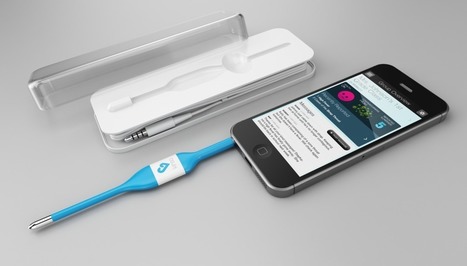
Kinsa, est un thermomètre qui transmet ses données à une application mobile qui cartographie les maladies près de chez vous et suit votre historique santé. Via nathalie Bissot-Campos
Scoop.it!

Lancé en 2007, le dossier pharmaceutique électronique a déjà conquis près de 29 millions de Français. Ce DP pourrait servir de support à un grand nombre de services de santé, du rappel de vaccin aux alertes sanitaires.
|




