


Les laboratoires Pierre Fabre lancent une nouvelle version du site « mon-partenaire-sante.com » et proposent une nouvelle application mobile : Géopharma. Découverte. Lancé courant 2011 pour accompa...

 Your new post is loading...
 Scoop.it! Les laboratoires Pierre Fabre lancent une nouvelle version du site « mon-partenaire-sante.com » et proposent une nouvelle application mobile : Géopharma. Découverte. Lancé courant 2011 pour accompa... 
No comment yet.
Sign up to comment
Scoop.it!

On a recent trip to the US, I couldn’t help notice the huge difference in the way American pharmaceutical brands are promoted compared to here in the UK. Vast sums are lavished on TV advertising prompting the good citizens of the US to ‘ask your doctor today’ about heartburn, insomnia, thin blood and, of course, erectile dysfunction. As if the scare-mongering messages aimed at men and women at a certain life stage weren’t enough, over two thirds of the ads were given over to the terrifying small print. ‘Side effects include…’ (deep breath). My immediate response – ‘why?’ Surely there is a better, more cost effective, way to promote your brand given the changing dynamics of healthcare marketing? The rise of the empowered patient, access to information online, the decline of blockbuster drugs and the emergence of specialist treatments all fly in the face of mass-market ‘one-to-many’ TV advertising. Enter digital marketing, stage left. On closer inspection, though, change is indeed afoot. US healthcare companies are spending far less on TV advertising compared to five years ago and are instead putting investment behind new digital solutions and a more targeted approach. TV spend dropped 10% in 2012 whilst pharma's overall direct-to-consumer (DTC) advertising dropped by 11.5% to just $3.47 billion. To understand the recent fall, we need to look back at the market context around the time TV advertising of prescribed drugs was first allowed in the US. A series of huge blockbuster drugs hit the market and pharma cos went to great expense to leverage their patent protection. It was Rufen, manufactured by Boots, to first get plugged on US television in 1983. Worried about consumer safety and a legal backlash, the FDA introduced strict rules in 1985 requiring the ads to include significant risk information about the prescription drug in question. Hence the rise of the tediously long informercial, still present on US TV today. And pages of small print in press ads. But even this didn’t put the big drug companies off. Now, the landscape has changed, meaning the limitless budgets of yesteryear (over $5 billion in 2006) don’t offer the same virtually guaranteed returns. Generics have eroded the market share of the big licensed brands and, more significantly, “citizen scientists” seek endorsement from their own social communities, rather than take the TV ads at their word, and look for genuine data-based persuasion from the drug companies and their doctors. Hence the huge opportunity for digital in pharma. Today’s patient goes online first, to the surgery second. Brands should therefore concentrate on educating consumers, not just HCPs, with broader condition-based information that presents options and helps patients make the right choice. Brands using digital to help, not sell to, consumers will reap the rewards as they will be seen to empower end-users. Hence the emergence of sophisticated apps, online health portals, and other digital innovations that slowly but surely are transforming healthcare, including the prescription and monitoring of medications. Pharma companies are even further behind the curve when it comes to social media. A host of forces are at play here. Regulation cannot keep up with the technology, brands are terrified of leaving themselves open to litigious patients but, most fundamentally, the ‘always on’ 24 /7 nature of the medium jars with the painfully slow internal approval processes of most pharma companies. Imagine if every tweet you put out needed ten people to approve it? The moment would pass. It’s also telling that the MHRA, the body that regulates the advertising of medicines in the UK, has no reference at all to social media in its Blue Book guide. But pharma will catch up. It has to. We are seeing more clients embrace digital – new websites, the trialling of e-commerce, the creation of patient communities and even baby steps into social media. Ultimately, consumers hold the cards so it’s up to the pharma companies to respond.
Via Plus91
Scoop.it!

"What Nintendo will try to achieve in the next 10 years is a platform business that improves people’s QOL in enjoyable ways," Iwata said. Via Olivier Janin
Scoop.it!

#hcsmeuGrowing numbers of senior citizens are seeking digital options for managing their health services remotely Via Alex Butler

Dr Martin Wale's curator insight,
February 13, 2014 10:58 AM
Our experience suggests that many older people expect services on line, but delivery, particularly from physicians, may lag.
Dr Martin Wale's curator insight,
February 13, 2014 11:03 AM
Although many tech-savvy older patients are expecting online resources for managing their health, supply may lag.
Scoop.it!

Infographic illustrates all digital health funding since 2010 from StartUp Health Insights, the most comprehensive funding database in digital health.
Scoop.it!

Automesure est un site médical réalisé par des médecins et des professionels de la santé.
Scoop.it!

L’objectif de notre recherche est d'explorer, par le biais des hyperliens, la façon dont sont structurées certaines organisations du domaine de la santé.
Scoop.it!

If you think cancer removal surgery is but a one-time procedure, you'd be wrong. Doctors don't always cut out all affected tissues in one go, but a new Via Alex Butler

malek's comment,
February 12, 2014 10:00 AM
a robot operating using these glasses is better to develop soon
Scoop.it!

La montre iWatch aurait vu son équipe de développement doubler ces derniers mois mais elle ne devrait pas disposer de fonctions nécessitant un encadrement par la Food and Drug Administration. Via Celine Sportisse
Scoop.it!

Un espace dédié à l’insertion professionnelle des jeunes a été mis en ligne au mois de janvier sur le site de l’Institut virtuel des Métiers et Formations des Industries de Santé, l’IMFIS. Un espace développé grâce à l'implication du Leem, du Ministère de l’Enseignement supérieur et de la Recherche et des universités, avec l’appui de l’Onisep.
Scoop.it!

L'innovation au service de la santé Paperjam Invité par la Commission européenne à innover dans le domaine de la santé publique, le Luxembourg – par le biais de Luxinnovation – devrait lancer cette année encore un projet pilote visant à mieux... Via Agathe Quignot
|
Scoop.it!

Ce n'est peut-être pas le cadeau le plus glamour qui soit pour la Saint Valentin, mais l'oreiller Snore Activated Nudging Pillow pourrait sauver de...
Scoop.it!
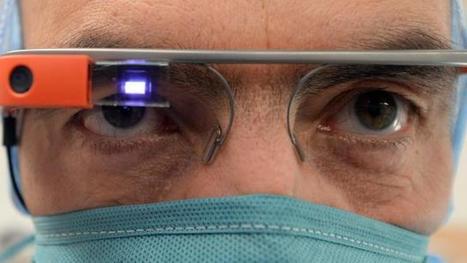
Première mondiale au CHP Saint-Grégoire près de Rennes. Un chirurgien a opéré avec des Google glass et les images transmises à 10000 km de là.
Scoop.it!

L’oreillette Bluetooth développée par la startup Vigo permet de lutter contre la somnolence au quotidien en agissant avant même que son utilisateur s’aperçoive qu’il est fatigué, et préviendrait ainsi de nombreux accidents de la route. Via Romain DEFOY
Scoop.it!
Nestlé a annoncé la création de Nestlé Skin Health SA, entreprise qui sera issue de l'acquisition de 50% de Galderma Pharma, sous réserve de l'approbation par les organismes d...
Scoop.it!

Pour accompagner les étudiants dans la préparation des concours PACES, plusieurs associations d'étudiants ont créé le site web tutoratpaces.fr. Présentation. La PACES correspond à la Première Année...
Scoop.it!

Les Français sondés pour le baromètre BVA-Syntec Numérique, plébiscitent la santé et la sécurité comme applications à développer pour les objets connectés.
Scoop.it!
Orange Healthcare, entité dédiée à la stratégie santé du groupe Orange, concentre son expertise autour de trois domaines d’intervention : les services pour les professionnels de santé, les services de télésanté et les services de prévention. Orange Healthcare est un partenaire technologique privilégié du secteur de la santé, il contribue à moderniser les infrastructures de santé mais également les systèmes de soins dans leur ensemble, en équippant les établissements de santé en solutions de communication au niveau national et international. Hébergement et sécurisation des données informatisées des patients, meilleure gestion des matériels médicaux, amélioration de l’accueil des patients, perfectionnement du parcours patient et équipement multimédia, télésuivi des maladies chroniques, services de maintien à domicile, accompagnement de la perte d'autonomie, services de télémédecine sont autant de réponses qu’Orange Healthcare se propose d’apporter au monde médical à travers ses offres.
Scoop.it!

L’innovation dans le secteur du numérique a connu un véritable bouleversement ces dernières années : l’appareil photo numérique, le smartphone, la clé USB, le CD-Rom etc…autant d’innovations dites...
Scoop.it!

Le laser pourrait permettre un jour de diagnostiquer, voire de traiter les maladies neurodégénératives, selon une étude européenne. Le laser sera-t-il bientôt la nouvelle arme contre les maladies d’Alzheimer, de Parkinson ou encore d’Huntington ? C’est ce que laissent entendre de chercheurs suédois et polonais qui travaillent ensemble sur l’intérêt de cette source lumineuse de haute intensité pour diagnostiquer, voire traiter, ces maladies. Les résultats de leurs travaux ont été présentés la semaine dernière dans la revue scientifique Nature Photonics
Scoop.it!

If knowledge is power, then content (in proper context) is king. Why am I online blogging, pushing content through my website and even interacting on Facebook, Twitter, Google+, Pinterest and many other sites? Because my patients are there. Increasingly, they are utilizing the Internet to self-diagnose; to look for “second opinions” from peers and friends; to research a physician, recommended treatment, or hospital; or to find the latest information on their disease. Studies suggests that patients forget more than 50 percent of what they are told in the doctor’s office. Add to that misremembering or misinterpretation, and the information holes grow even larger. What happens to the holes when these individuals get home? Research shows that consumers trust the recommendations of peers or friends far above those of any advertisement. And where are people interacting with those friends? Where are they searching? In many instances, online. They are sharing useful information, and this includes health concerns, treatment protocols, and medications. When patients feel they can’t turn to their doctor for answers, pulling information from the Internet is an easy, efficient, and logical choice. Medicine and healthcare are undergoing massive changes; more and more regulations and obligations eat into physicians’ clinic time. Reimbursements have dropped, and as a result many doctors have felt they needed to increase their appointment load and decrease the time they spend on each. For patients, that translates to less time with their physician, less learning, more questions, more doubt, and sadly, more fear. Their antidote is Google. The root word for doctor is “docere,” or “to teach,” and our patients are making decisions based on what they read online. We as physicians have a moral obligation to be sure that the information they are receiving is accurate. If we do not have the time to teach our patients while they are in the clinic, we need to be present where they are to address their residual questions, hesitancy, and fears (often due to lack of knowledge), and also to aid them through their medical decision-making process. In short, we need to be active in producing or curating online medical content to aid our patients. Doctors often believe that they need to spend hours upon hours coming up with content; they believe there is too much risk involved in “tweeting” or putting a post on Facebook. Yet most studies show that physician content and social media interactions are perfectly appropriate. You know the rules – follow them. You do not need to be an active writer; you already answer the same questions day in and day out. Why not just sit and dictate the answer to those questions and post them online? Don’t want to hire a professional? Don’t. Tumblr, Posterous, and other such sites make it simple to set up a site for content in minutes. Still don’t want to create content? Fine – then share links to accurate, actionable, and useful information on Twitter or Facebook. We are physicians; our job is to lead patients toward health. We owe it to them to be sure that the information they are reading is of the same quality as we would give in our office, or want to get if (or, rather, when) we looked in the mirror and saw a patient staring back.
Via Plus91

Nuria Parra Macías's curator insight,
February 10, 2014 2:19 AM
In short, we need to be active in producing or curating online medical content to aid our patients.
Scoop.it!

La société Terraillon enrichi sa gamme d'objets connectés en lançant deux tensiomètres connectés : Tensio et TensioScreen. Découverte. Il y a quelques semaines, je vous ai présenté la balance conne...
Scoop.it!
Un pirate informatique vendait de fausses Nike et des contrefaçons de luxe sur le sited'un centre hospitalier des Yvelines. Nous vous parlions, il y a peu, du piratage d'un espace de La Poste, du Crouss de Bordeaux ou encore de nombreuses communes Françaises par des "malveillants" publicitaires. Des pirates informatiques spécialisés dans l'infiltration discrete. Mission, cacher dans les espaces web pénétrés des lienspublicitaires, voir de fausses boutiques de ventes de fausses baskets Nike et autres contrefaçons de médicaments ou de produits de luxe.
|






