


La nutrition à l\'ère du digital : comment le ser Healthcare presentation.

 Your new post is loading...
 Scoop.it! La nutrition à l\'ère du digital : comment le ser Healthcare presentation. 
No comment yet.
Sign up to comment
Scoop.it!

Des chercheurs de l'université de Georgia Tech ont trouvé une manière de faciliter l'apprentissage du Braille.Un gant relié à un système...
Scoop.it!

Paris Incubateur, c'est le "révélateur des start-ups parisiennes", un réseau d'une vingtaine d'incubateurs thématiques qui accompagnent les premiers pas des jeunes pousses innovantes, d'abord en le...
Scoop.it!
La base de données publique Transparence - Santé rend accessible les liens d’intérêts des entreprises avec les acteurs du secteur de la santé
Scoop.it!

Bracelets dits intelligents ou applis pseudothérapeutiques, de nouveaux gadgets connectés dits d'"automesure" envahissent notre quotidien afin de nous permettre de mieux maîtriser notre corps.
Scoop.it!

E-santé, télédiagnostics... le numérique nous fait basculer dans une logique de prévention renforcée. De quoi alléger les coûts pour la sécurité sociale ? Trois experts du secteur en débattent et présentent les initiatives de santé connectée de leurs organismes respectifs. Via Clinique PASTEUR
Scoop.it!
L'UE se dote d'un logo pour sécuriser les achats de médicaments en ligne
Scoop.it!

Les objets connectés s'installent dans notre quotidien et proposent une dynamique d’auto-mesure permettant d’accéder à un meilleur niveau de connaissance de son corps : le quantified self. Via Xavier SEDES

Le Lab Marketing Digital's curator insight,
June 25, 2014 2:52 AM
Selon l’étude éditée par le cabinet Research2guidance et publiée en mars 2013 : « Le marché de la santé sur mobile (m-santé) devrait représenter 26 milliards de dollars à l’horizon 2017 et concerner près de 1,7 milliard d’utilisateurs » . Le marché potentiel des utilisateurs de m-santé va passer de 1 milliard en 2012 à 3,4 milliards en 2017. La vente d’appareils ou de capteurs connectés devrait représenter la deuxième source de revenu avec près de 5 milliards de dollars alors que les services pèseront pour plus des deux tiers.
Scoop.it!

Les startups de la eSanté ont présenté leurs solutions innovantes aux professionnels et au grand public, dans le cadre de Futur en Seine 2014.
Scoop.it!

En France, la moitié des patients atteints par une maladie rare sont des enfants ou des jeunes adultes.©Phovoir En France, 3 millions de patients souffrent
Scoop.it!

(AFP) - L'oeil "bionique" n'est plus un gadget de science fiction: ce système futuriste d'implant électronique posé à même la rétine a déjà permis...
Scoop.it!
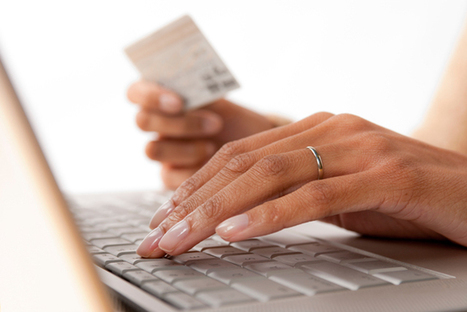
Doctors and nurses say social media including Facebook and Twitter are among their new professional tools.
More than two-thirds of physicians told surveyors in 2011 that they were utilizing some form of social media "for professional purposes," and likely that number has grown.
Alan Neuhauser, who published a piece in U.S. News & World report recently on the subject, said social media is used in varying ways, and it's helped to save time, and perhaps even lives. "(Social media) lets (doctors and nurses) share articles and videos with a number of patients at once, it lets them monitor Twitter during big events like big games," Neuhauser told WTOP. For example, Twitter was critical to trauma teams as they awaited victims of the Boston Marathon bombing to local hospitals in 2013.
In his article, Neuhauser also talks about doctors and nurses creating their own professional Facebook pages and Twitter accounts to invite patients to weigh in and communicate. Aside from sharing information to a wider group with videos and links, they are also able to monitor the well-being of their patients on a regular basis. This has helped particularly with veterans who might not be so comfortable coming forward and asking for help.
"They have come across (Facebook) posts that let them know, that maybe a guy is having a tough day because maybe it is an anniversary of a tough event," Neuhauser pointed out. Doctors and nurses can take a more proactive role in their care as a result. The nurses he spoke to for his story say they prevented at least 12 suicides by reaching out to vets after reading their cries for help online.
As with all such technology, there are privacy concerns. While hospitals are still wary with the professional use of Facebook and Twitter, medical schools are beginning to issue guidelines, rather than prohibitions, for their use.
Via Plus91

ChemaCepeda's curator insight,
June 23, 2014 10:22 AM
Allí donde estén los pacientes tendremos que estar los profesionales, aprovechando las oportunidades que ofrecen estos canales para comunicarnos y aprender junto a ellos 
Blanca Usoz's curator insight,
June 24, 2014 3:56 AM
Fascinated about the proactive way of preventing suicide.
Scoop.it!
#Premier site français d’information en continu sur les technologies de l’information et de la communication (TIC, NTIC) dans la santé - TIC santé Via Stéphanie Chevrel

Stéphanie Chevrel's curator insight,
June 21, 2014 7:22 AM
Suite publication de la tribune dans le Monde par APM |
Scoop.it!
For whatever reason – whether it’s budget, time, buy-in or understanding – healthcare hasn’t fully embraced social media. But luckily the ePatient movement has already—perhaps unknowingly—done the grunt work and outlined the tenets of realizing social media’s value in healthcare. Patient engagement thought leaders, such as Dave deBronkart (@ePatientDave), have been indirectly driving home the values of optimal social media use for quite some time. In the following Perspectives by Fenton + TEDMED video, ePatientDave with commentary from James Merlino, Chief Experience Officer at the Cleveland Clinic, outline the “5 Es of the ePatient,” which parallel the values health organizations should keep in mind when engaging their audiences using social media. 5 Es of the ePatient and social media Educated – While there is a push to educate patients on their care options and health management, there is a parallel need for consumers to know why a product or service is a solution to a REAL problem. While engagement will bring audiences to your door, educating them on the value proposition of actively participating - both on and off the web - ensures they have the tools necessary to know if they want to start a long-lasting relationship. It’s a courting process. Empowered – An empowered patient is one that can claim self-reliance, just as an empowered consumer doesn’t need an organization to tell them what decisions to make. Empowered consumers are essential to an organization’s growth as they are the marketplace compass - guiding those who listen toward finding answers that matter. When the time comes, use social to welcome feedback. While it’s scary to arm consumers with a public voice, listening to them – the ultimate stakeholder – allows organizations to stay relevant with some of the best and uninhibited market intelligence out there. The transparency of your efforts will not go unnoticed by other consumers in the social space - in fact, it's the new normal. Equipped – Armed to the teeth with empowerment and valuable information, an equipped patient then has the tools to manage his or her own care. Like patients, consumers want to be autonomous. Equipping consumers with resources and information solidifies organizations and companies as a staple in the consumer growth process. Look for your equipped consumers as they are gold mines for testimonials and social proof to get their friends in line to see what the “fuss” is all about. Give them your attention and a stage to share their stories, they'll give you pure gold in return. Expert – Rinse and repeat. Over time, as patients are more included in their care, they become experts in it. Fostering this relationship over the course of a lifetime not only makes stakeholders an expert on an organization’s value, but positions that organization as the expert and thought leader in its respective industry – whether it’s healthcare, health IT or any other for that matter. When you go to the local coffeehouse every morning for that quintessential cup of joe, don’t you know EXACTLY how it tastes, how it’s made and the friendly barista that makes it? You're an expert. Patients can always find a new doctor, hospitals a new technology, companies a new consultant. The name of the game in social media is value – and when done with the consumer at heart, we are only looking at a brighter and healthier healthcare ecosystem.
Via Plus91
Scoop.it!

Le groupe français d'informatique médicale a reçu une offre de l'américain qui souhaite lui racheter "la majeure partie" de ses activités de gestion de la relation client. Le CRM représente près de la moitié de son chiffre d'affaires.
Scoop.it!

Qu’est-ce que l’Internet des objets ? A quoi peut servir un objet connecté ? Quels sont les chiffres de ce marché et secteur en plein développé ? Via Emmanuel Capitaine , Esposito Christelle
Scoop.it!

L'entreprise souhaite poursuivre le développement de ses produits et envisage des partenariats avec de grandes marques sportives.
Scoop.it!

Apple, Google, and Samsung are reportedly looking into creating sensors for wearables that would measure glucose levels. Via Alex Butler

Laurent FLOURET's curator insight,
June 24, 2014 5:53 AM
The FDA reportedly told Apple in December that a wearable with a glucometer would be classified as a medical device and face regulation if it was marketed to diabetics as the ultimate tool for tracking glucose. However, if that same wearable were only intended to be used to measure glucose for nutrition, it would not be regulated.
Scoop.it!

Fondée sur des moyens informatiques très puissants et les progrès de l'imagerie médicale, une nouvelle discipline tâche de révolutionner notre santé : la médecine In Silico. Via Chanfimao, Celine Sportisse

Christophe Guyomar's curator insight,
July 13, 2014 5:51 AM
Le "In Silico", la préparation virtuelle avant le "in vivo"
Scoop.it!

The ubiquitous “Dr. Google” has allowed patients to be more involved in their own healthcare than ever before. The idea of the engaged patient, through the power of digital, has now become the “empowered” patient. Let’s walk through an example scenario. When patients start to notice something doesn’t feel quite right, theygoogle their symptoms and make a preliminary diagnosis. These self-diagnosers find a physician with some expertise in their condition and check Google Maps to see who is convenient to their homes or offices. They assume they will end up with a specialist, so they read the local specialist reviews on Vitals and Healthgrades. In the waiting room, they post iPad updates on their situations to Twitter and Facebook. Maybe they do some last-minute research. An empowered digital patient’s relationship with “Dr. Google” doesn’t stop after communicating with their real doctor. After the doctor visit, they research side effects of prescribed medications. They set up accounts in the physician’s EHR. Then they change social-network profile icons to show support for a cure. While marketing has always played a role in getting new patients in the doors, it is important to not forget about sustaining relationships with the fully engaged—these are the ones who will spread the word about your organization. Follow the digital patient journey with “Dr. Google” from start to finish in our new infographic.
Via Plus91
Scoop.it!

Cegedim Logiciels Médicaux a lancé il y a quelques jours un nouveau portail web proposant plusieurs services pour les professionnels de santé : monEspacePatient. Pour compléter son offre destinée ...
Scoop.it!

Denise Silber's curator insight,
June 22, 2014 6:18 PM
Attention: cette émission cite une étude française de 2012 concernant l'usage par les médecins des communautés professionnelles.
Scoop.it!

Rumors of a new health-focused wristwatch from Microsoft have been swirling for some time now, and a digital health industry source told VentureBeat that those rumors are true.
What’s more, Microsoft may be in a particularly strong position to capitalize on a health-focused smartwatch, since its HealthVault data platform — which has been in existence for years and just got a refresh on June 10 — is a perfect place to store and use data from the device. Microsoft has been trying to recruit designers and engineers in Silicon Valley to work on the device, our source said.
This seems to corroborate a late May report in Forbes citing unnamed sources saying that such a watch was in the works, although the report revealed few details of the health applications of the watch.
A patent for the device was filed two years ago. In early May the U.S. Patent Office published a 2012 Microsoft patent application describing a wristwatch with sensors in the band to detect heart rate and other biometrics. Via Alex Butler
Scoop.it!
Past and future development for pharma edetailing, to leverage return on sales. A core issue to Pharma's new commercial conduct. Via Isabelle Delignière-Léglise

Jarek Kucia's curator insight,
April 11, 2013 8:22 AM
Polski rynek farnaceutycznu nadal nie jest gotów na tego typu rozwiązania. Głównie ze strony branży famaceutycznej. 
eMedToday's curator insight,
April 26, 2013 9:12 PM
This is an excellent overview of key issues to consider for e detailing |






