


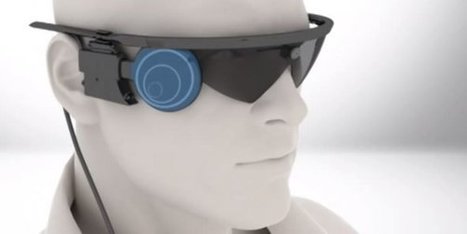

La Tribune revient sur une dizaine d'innovations, idées et opérations marquantes produites dans et par les établissements hospitaliers au cours de l'année écoulée.
Via Paris Healthcare Week

 Your new post is loading...
 Scoop.it! La Tribune revient sur une dizaine d'innovations, idées et opérations marquantes produites dans et par les établissements hospitaliers au cours de l'année écoulée. Via Paris Healthcare Week 
No comment yet.
Sign up to comment
Scoop.it!

[Série] Première délégation européenne, la French Tech est venue en force au Consumer Electronics Show 2015, le plus grand salon mondial pour l'électronique grand public et l'innovation technologique. Chaque jour, La Tribune vous présente un produit emblématique qui fixe les tendances dans de très larges secteurs (santé, vêtements, son 3D, technologies de l'image, greentech...)
Scoop.it!

Le laboratoire Abbott lance un patch connecté pour mesurer en continu le taux de sucre dans le sang : Freestyle libre. Présentation. Aujourd'hui en France, on évalue à 3,5 millions le nombre de per...

betty_ls's curator insight,
January 6, 2015 3:34 AM
Enfin un dispositif moins intrusif et une mesure en continu de la glycémie !
Scoop.it!
Mis en place par un chercheur suédois, un nouveau système veut permettre aux ordinateurs de simuler avec toujours plus de fidélité les mouvements humains. Le but selon lui ? Améliorer la santé au travail.
Scoop.it!

Withings profite du CES 2015 pour annoncer une déclinaison à sa montre connectée pour mesurer l'activité physique. L'Activité Pop est une version entrée de gamme à moins de 150$.
Scoop.it!

Les technologies telles que les lunettes et casques connectés intéressent le domaine de la santé, notamment dans le cadre de certains troubles qui aff... Via Jerome Leleu
Scoop.it!

Découvrez les dernières nouveautés du digital santé francophone au cours du mois de décembre 2014. Vous pouvez également retrouver toute cette veille et plus encore sur mes différents scoop it ! : ...
Scoop.it!

INTRODUCTION
2) Rare Diseases Via Plus91
Scoop.it!
La startup Nara Logics se spécialise dans l’intelligence artificielle et l’analyse du fonctionnement du cerveau pour proposer un service de recommandation personnalisée aux entreprises.
Scoop.it!

L'utilisation de plus en plus fréquente de technologies numériques va faire évoluer la façon de faire de la recherche clinique à de multiples niveaux, ont montré les intervenants à un colloque, mi-novembre. Via Philippe Marchal
Scoop.it!
Une nouvelle méthode pour produire des circuits électriques sur papier promet de rendre toujours plus accessible la santé connectée.
|
Scoop.it!

Mesurer en temps réel vos paramètres de santé via vos vêtements, tel est l’objectif de la startup Cityzen sciences. Le D-shirt (D pour digital) de Cityzen sciences était présenté sur le stand de l’opérateur télécoms Orange à l’occasion de l’événement « Osons la France », organisé le 5 décembre à Paris, au Grand Palais. Fréquence cardiaque L’objectif …
Scoop.it!

La France est le deuxième pays le plus représenté au Consumer Electronic Show de Las Végas, "the place to be" pour les start-up. Parmi les quelque 120 entreprises françaises présentes, deux start-u...
Scoop.it!
Plusieurs projets nés dernièrement veulent permettre des diagnostics rapides et peu chers. De l’imagerie médicale aux prélèvements, la santé connectée se ferait désormais à la maison, au détriment des spécialistes.
Scoop.it!

IDC s’est intéressé aux parties du corps les plus plébiscitées pour les futures objets connectés. L’oreille est paradoxalement une des parties du corps qui permet le plus de mesures.
Scoop.it!
Premier site français d’information en continu sur les technologies de l’information et de la communication (TIC, NTIC) dans la santé - TIC santé
Scoop.it!

Marketing your medical practice online is becoming increasingly essential to insuring that your practice will attract new patients and thrive in the modern, digital age. After all, 35 percent of American health care consumers research medical issues online before calling their doctor and a growing number search for a new doctor online when they move to a new area. If you're not present on the web and on social media sites, then you're likely falling behind your competition. (Yes, practicing medicine should be all about helping people, but if they don't know your practice exists, you'll have no one to treat.) Things to include in your digital marketing plan 1. Website. You website is the anchor to which all of your other digital marketing elements will point. Look at this like your building and your reception area. It's the first impression most patients are going to get of your practice. Take the time to make it professional, informative, easy to navigate and relevant. You'll also want to make the website reflect the personality of your practice. 2. Social media.Social media is no longer just for sharing kid and cat photos. Today, you're as likely to find corporations (and medical practices) on Facebook, Twitter, Pinterest and the like as you are individuals. These sites offer a host of advantages for physicians. They help to take the "scary" out of visiting the doctor by allowing potential patients to get to know you before they call for an appointment. In addition, such sites make great forums for sharing public health information and information about special events. 90% of adults 18-24 years of age said they would trust medical information shared by others in their social media networks. (Source: PwC Health Research Institute) 3. Paid advertising.A little online paid advertising can yield big results. Unlike traditional channels like radio, tv and print advertising, where you pay to reach thousands of consumers who may not need your services, paid digital advertising can be targeted to reach just those people who have expressed an interest in your specialty by searching for the information online. 81% of people click on a sponsored link when looking for health information (Source:Geocentric) and 77% of patients used search prior to booking an appointment. (Source: Google). 4. Accurate Directory Information. There are over 800 different directories like Yelp, Yellow Pages, Super Pages, etc....It is impossible to identify which directories potential patients are using when locating a physician. Make sure your information is up-to-date and accurate so that whichever directory is being used, your information (location, hours of operation, phone numbers) is correct. 5. Claim Profiles and Monitor Review Sites. If you haven't done so already, claim profiles on sites like Vitals.com, Healthgrades, RateMDs and MD.com. Monitor these sites (as well as others like Yelp and Google+) for reviews about you or your practice. Stay proactive and protect your online reputation. 94% of prospective patients said reputation of facility is important (Source:Google) Online marketing for physicians doesn't have to be time consuming or difficult. You just need a marketing plan that includes the elements mentioned above to grow your business into a successful medical practice.
Via Plus91

Terry Hill, PhD's curator insight,
January 3, 2015 9:52 AM
Doctors are heavily into the game to survive competition over decreasing resources. 
Gina Tucker's curator insight,
January 3, 2015 6:02 PM
medical groups are gaining traction on social! Don't let your practice fall behind. Scoop.it works with lots of medical consultants and doctor offices to boost their web presence. 
Tiziano Galli's curator insight,
January 4, 2015 1:13 PM
Online marketing for physicians doesn't have to be time consuming or difficult. You just need a marketing plan that includes the elements mentioned above to grow your business into a successful medical practice...
Ogni tanto è utile rinnovare il concetto!!
Scoop.it!

Une étude américaine remet en cause la précision des articles médicaux figurant sur Wikipédia, suite à l'analyse des informations concernant dix maladies.
Scoop.it!

"En 2015, je dis stop aux problèmes de dos !" Cela pourrait être le slogan du "Smart Back Brace", ou SBB. Se présentant sous la forme d'un harnais, ce redresseur de dos connecté corrige les mauvaises postures adoptées par les utilisateurs en les alertant directement sur leur smartphone. Un capteur placé aux croisement des lanières dorsales permet en effet de détecter toute position à risque et communique les
Scoop.it!

Un site Internet dynamique et collaboratif recense les cas de ciguatéra dans toute la Polynésie française. Ce site ciguatera.pf est né à l’Institut Louis Malardé (ILM), un référent mondial de la ciguatéra. Il s’enrichit grâce aux déclarations des professionnels de santé mais aussi des pêcheurs et...
Scoop.it!

Redécouvrez les principaux articles publiés sur Buzz e-Santé concernant l'actualité du digital santé et de l’e-santé en 2014. Dernière partie consacrée aux études, enquêtes et évènements. Etudes, e...
|






