From the shiny, strong nacre that gives abalone shells an unbreakable, opaline sheen, to the goopy mix of proteins fired by a velvet worm that solidify and snare prey upon impact, nature is packed with inspiration for scientists designing new ...


 Your new post is loading...
 Your new post is loading...
Your new post is loading...
 Scoop.it!
From the shiny, strong nacre that gives abalone shells an unbreakable, opaline sheen, to the goopy mix of proteins fired by a velvet worm that solidify and snare prey upon impact, nature is packed with inspiration for scientists designing new ... 
No comment yet.
Sign up to comment
Scoop.it!

More and more companies now turn to biomimicry - sifting through our planet’s lengthy archives for innovations inspired by nature.
Scoop.it!

From
io9

When it comes to insect flight, we usually only think about how the insect's wings contribute to aerial stability. But scientists have now discovered that the abdominal movements of some insects also play a large role in flight control, particularly when hovering — a finding that could lead to improved aerial drones. Via Miguel Prazeres
Scoop.it!

"New research conducted by marine biologists reveals that the mantis shrimp Haptosquilla trispinosa uses a unique color vision system. [...] «Modern cameras struggle with the amount of data they take in due to increased pixel numbers. Maybe there is a more efficient way and the bio-inspiration provided by the shrimp could be the answer», Ms Thoen [lead author of study] concluded." Via Miguel Prazeres
Scoop.it!

I recently came across the Hospital Microbiome Project, a multidisciplinary, multinational project designed to investigate the hospital microbiome. The. Via Adriana Daudt Grativol
Scoop.it!
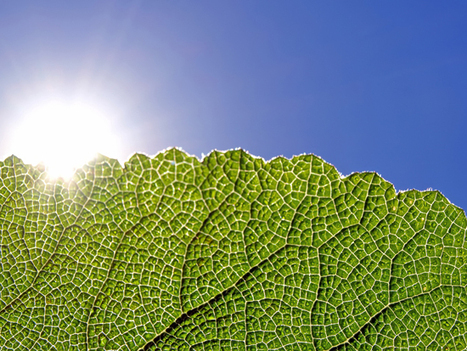
From thin air: Making fuel like a tree Via Olivier Allard
Scoop.it!
From
issuu
ZQ: Our mission is to establish a credible platform showcasing the nexus of science and design in the field of biologically inspired design, using case studies, news and articles that are exemplary in their impact on the field, rigorous in their... Via Olivier Allard
Scoop.it!

Stinson Beach Installs PAX Water Mixer In Storage Tank To Maintain High Water ... Via Rowan Edwards
Scoop.it!

Biomimicry: Design Innovation Inspired by Nature ... They have distilled patterns found across 99.9% of life on this planet – strategies that most organisms use to respond to our challenging and ever changing climate. Via Rowan Edwards
Scoop.it!
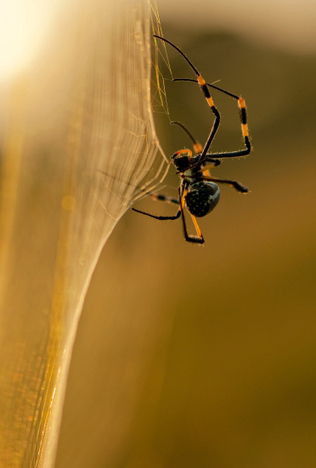
Doing biomimicry requires understanding not what your design will be but what it needs to do. Therefore, we organized nature's strategies according to functions that innovators might want to accomplish. Via Rowan Edwards
Scoop.it!

... and Technology Biomimicry or biomimetics is the imitation of the models, systems, and elements of nature for the purpose of solving complex human problems Los Angeles based B+U Architects, a design office recognized ... Via Rowan Edwards
Scoop.it!

US scientists have designed a super-grip plaster covered with microscopic needles to heal surgical wounds. The "bed-of-needles" patch, inspired by a parasitic worm that lives in the guts of fish and clings on using its cactus-like spikes, fixes skin grafts firmly in place without the need for staples.
Scoop.it!
"New research conducted by marine biologists reveals that the mantis shrimp Haptosquilla trispinosa uses a unique color vision system. [...] «Modern cameras struggle with the amount of data they take in due to increased pixel numbers. Maybe there is a more efficient way and the bio-inspiration provided by the shrimp could be the answer», Ms Thoen [lead author of study] concluded." Via Miguel Prazeres
|
Scoop.it!

Studying Photosynthetic Antenna Proteins Could Make for Better Solar Cells Solar Novus Today Yang believes that incorporating this concept into future designs of biomimetic light-harvesting materials or photovoltaic devices may help advance their...
Scoop.it!

In my previous article, I wrote about AskNature and its more than 1,600 biological strategies that could inspire more sustainable and innovative designs. When applying biomimicry, you first have to figure out what your design ... Via Rowan Edwards
Scoop.it!

Different Sponge Species Have Highly Specific, Stable Microbiomes Science Daily (press release) 21, 2014 — The sea sponge is about as simple as an animal can get, but its associated bacterial community -- its microbiome -- is known to approach the... Via Adriana Daudt Grativol
Scoop.it!
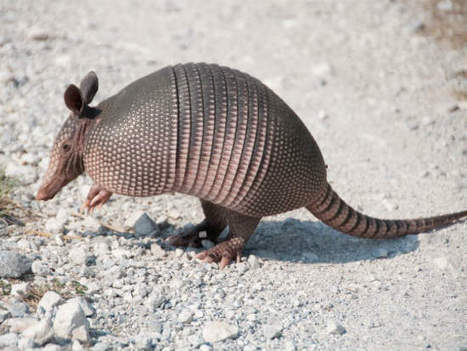
Why Sprint turned to biomimicry for packaging design Via Olivier Allard
Scoop.it!

Esri visions, strategic initiatives, and trending topics. RSS 2.0 · Atom 1.0 · Latest News · Technical Marketing News · Webcasts · Main · Agenda · Maps · Registration ... The Geodesign-Biomimicry Connection. Via Rowan Edwards
Scoop.it!
From
io9
When it comes to insect flight, we usually only think about how the insect's wings contribute to aerial stability. But scientists have now discovered that the abdominal movements of some insects also play a large role in flight control, particularly when hovering — a finding that could lead to improved aerial drones. Via Miguel Prazeres
Scoop.it!

The core of biomimicry is that it uses nature as mentor, model, and measure, as articulated in Life's Principles.” ... The emulate element brings the principles, patterns, strategies, and functions found in nature to inform design. Via Rowan Edwards
Scoop.it!

Yale Environment 360, January 06, 2014 - ▶ URBAN NATURE: HOW TO FOSTER BIODIVERSITY IN WORLD'S CITIES As the world becomes more urbanized, researchers and city managers from Baltimore to Britain are recognizing the importance of providing urban habitat that can support biodiversity. It just may be the start of an urban wildlife movement... http://www.globalpossibilities.org/urban-nature-how-to-foster-biodiversity-in-worlds-cities/ The Green Leap: Can We Construct Urban Communities That Conserve Biodiversity? Huffington Post Green, March 3, 2013 - ▶ THE GREEN LEAP: CAN WE CONSTRUCT URBAN COMMUNITIES THAT CONSERVE BIODIVERSITY? Why are green developments different? The goals are conservation while providing a unique living experience. Biodiversity, however, often is lower on the totem pole of priorities. For the first time in our history, more people live in urban vs. rural areas and humans continue to move into cities. Cities have huge impacts on our natural resources. Urban dwellers consume vast amounts of energy, produce waste, and alter landscapes to the point where native plant and animal populations decline precipitously. As cities grow, people have pondered -- can we develop land without destroying our natural heritage?.. http://www.huffingtonpost.com/mark-hostetler/the-green-leap-can-we-con_b_1314981.html US Forest Service Research & Development - ▶ URBAN WILDLIFE http://www.fs.fed.us/research/wildlife-fish/themes/urban-wildlife.php - ▶ THE NATURE OF CITIES: A collective blog on cities as ecological spaces http://www.thenatureofcities.com/ - ▶ BIOPHILIC CITIES| The Biophilic Cities Project http://biophiliccities.org/the-biophilic-cities-project/ Yale Environment 360, December 16, 2013 - ▶ SINGAPORE TAKE THE LEAD IN GREEN BUILDING IN ASIA http://e360.yale.edu/feature/singapore_takes_the_lead_in_green_building_in_asia/2720/ - ▶ RESEARCH CONFIRMS FOR THE FIRST TIME THAT GREEN SPACE DOES IMPROVE MENTAL HEALTH AND HAPPINESS. The new study compared the mental well-being of hundreds of people in the UK who moved from a grey urban setting to a greener area to those who moved in the opposite direction.The results revealed that those surrounded by nature felt happier and more content for many years. http://www.clickgreen.org.uk/research/trends/124091-green-space-boosts-happiness-for-years%2C-new-research-confirms.html -▶ BRINGING NATURE BACK INTO YOUR LIFE -- AND THE WORK PLACE http://sco.lt/5ih73J Harvard Business -▶ MAKING THE CHOICE BETWEEN MONEY AND MEANING : THE PURSUIT OF HAPPINESS http://sco.lt/8Zzbyz -▶ REWILD THE CHILD http://sco.lt/6BGlA9 - ▶ WHY CHOOSING NATURE WILL ONLY ADVANCE HUMAN SOCIETIES http://sco.lt/8BIJP7 - ▶ NATURE HAS THE ANSWERS: WE ARE SURROUNDED BY GENIUS - WHOLE SYSTEMS DESIGN BY NATURE http://sco.lt/8yvXjV THICH NHAT HANH: - ▶ BEYOND ENVIRONMENT: FALLING BACK IN LOVE WITH MOTHER EARTH | Guardian Sustainable Business | guardian.co.ukhttp://www.guardian.co.uk/sustainable-business/zen-thich-naht-hanh-buddhidm-business-values?intcmp=239 - ▶ WETLANDS VITAL IN SUPPORTING HUMAN LIFE AND BIODIVERSITY http://sco.lt/6Gprk1 -▶ STATE OF THE WORLD'S BIRDS REPORT INDICATES A PLANET IN PERIL http://sco.lt/4yq6z3 AN URGENT MEMO TO THE WORLD The Natural Eye Project http://thenaturaleye.wordpress.com/2012/07/12/an-urgent-memo-to-the-world/ Via pdjmoo, Adriana Daudt Grativol
Scoop.it!
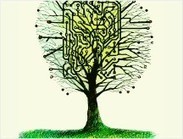
So-called biomimicry, in which scientists copy nature to solve human problems, is taking hold in industries from energy to consumer goods.
Scoop.it!

A University of Canterbury (UC) postgraduate researcher is investigating New Zealand seaweed to see if it can inspire commercial wet-resistant glue.
|