Your new post is loading...

|
Scooped by
Janine Benyus
February 27, 2014 11:46 AM
|
An emergent property arises when individual components or actions, combined together, collectively generate a higher-level aggregate experience. Think democracy. Or plague. Or community. One does not
|
|
Scooped by
Janine Benyus
February 27, 2014 11:05 AM
|
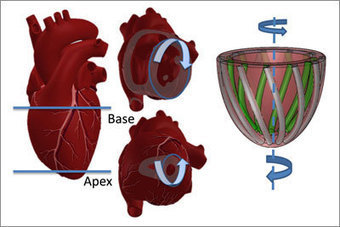
Nanowerk Artificial muscles that do the twist Nanowerk They demonstrated the material's potential by using it to replicate the biological motion of the heart, and also developed a matching 3D computer model of it, as reported in Advanced Materials...
|
|
Scooped by
Janine Benyus
February 27, 2014 11:04 AM
|
For lovers of organic biomimetic designs, you will be pleased to know that there is an open-source printable lamp that is a shelled torus divid into "cells" thus "cellular" from Nervous System.
|
|
Scooped by
Janine Benyus
February 27, 2014 10:50 AM
|
In the heart, as in the movies, 3D action beats the 2D experience hands down. (Cancer News Researchers develop bio-inspired actuated material that mimics complex motion of heart muscle: In...
|
|
Scooped by
Janine Benyus
February 26, 2014 8:39 PM
|
On the occasion of the exhibition that is being displayed at the Roca Barcelona Gallery until the 1st of June, Biomimicry. Design inspired by nature, Roca has organised a series of conferences on b...
|
|
Scooped by
Janine Benyus
February 26, 2014 8:24 PM
|
|
|
Scooped by
Janine Benyus
February 26, 2014 11:41 AM
|
Biomimicry influences both Architecture & Interior Design;we've worked with Biomimicry expert Janine Benyus to develop products inspired by nature.
|
|
Scooped by
Janine Benyus
February 25, 2014 8:00 PM
|
In the world of architectural biomimicry, design practice Exploration and its founder Michael Pawlyn is at the forefront; the agency was set up in 2007 to focus exclusively on developing the field...
|
|
Scooped by
Janine Benyus
February 25, 2014 8:00 PM
|
Performers Cited for 'Best of Biomimicry in 2013' DVIDS DTRA CB/JSTO-funded researchers work on biomedical devices for drug delivery, nanofabrication, and cell manipulation was recognized as one of the most notable bio-inspired developments of the...
|
|
Scooped by
Janine Benyus
February 25, 2014 7:59 PM
|
Architectural Association School of Architecture, undergraduate and postgraduate courses and public programme (Interested in architecture, biomimetics & generative design?
|
|
Scooped by
Janine Benyus
February 25, 2014 7:51 PM
|
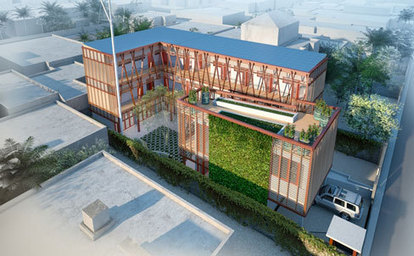
When prairie dogs dig tunnels in the American Midwest, they often show a natural intuition for ventilation, lighting and safety. Plants that grow in the feast-or-famine-like weather around Lavasa, India ...
|
|
Scooped by
Janine Benyus
February 24, 2014 11:24 PM
|
" Rather than reinvent the wheel, we can often look at the solutions that nature has come up with over millions of years of trial and...
|
|
Scooped by
Janine Benyus
February 24, 2014 11:20 PM
|
TopNews Arab Emirates
Artificial Leaf Technology Clears Major Development Hurdle
CleanTechnica
An artificial photosynthetic reaction center containing a bioinspired electron relay (yellow) mimics some aspects of photosynthesis.
|
|
|
Scooped by
Janine Benyus
February 27, 2014 11:06 AM
|
Solar forest designed by Neville Mars. Photo taken from bURB Biomimetics is a growing discipline, where engineers and designers ask themselves how nature would solve a problem before opting to find a solution.
|
|
Scooped by
Janine Benyus
February 27, 2014 11:04 AM
|
Companies such as AirCarbon and Novomer turn greenhouse gases to into new materials for everything from shoes to buildings (Could future chairs, clothes and even buildings be made from carbon emissions?
|
|
Scooped by
Janine Benyus
February 27, 2014 10:52 AM
|
Banff International Research Station for Mathematical Innovation and Discovery, in Banff, Alberta, Canada (2014 5 Day Workshop: Biological and Bio-Inspire...
|
|
Scooped by
Janine Benyus
February 27, 2014 10:30 AM
|
Wyss Institute at Harvard
|
|
Scooped by
Janine Benyus
February 26, 2014 8:25 PM
|
|
|
Scooped by
Janine Benyus
February 26, 2014 8:10 PM
|
Knovel is a web-based application integrating technical information with analytical and search tools to drive innovation and deliver answers engineers can trust.
|
|
Scooped by
Janine Benyus
February 26, 2014 11:40 AM
|
biomimicry, evolution, Janine Benyus, George de Mestral, Biomimicry 3.8, Eiji Nakatsu, Shinkansen Bullet Train, Pak Kitae, Peter Agre, Frank Fish (Smart Inventions Inspired by Nature: http://t.co/cbRa6f4wcP)...
|
|
Scooped by
Janine Benyus
February 25, 2014 8:00 PM
|
Learn more about Biomimetic Membrane at ornl.gov (@igabashvili Enjoyed this article very much. ORNL has a neutron imaging facility that may be of interest.
|
|
Scooped by
Janine Benyus
February 25, 2014 7:59 PM
|
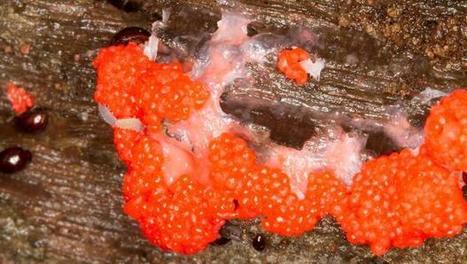
Using biomimicry, urban planners could learn how to build better networks of roads and railway lines by looking at the super-efficient many-headed...
|
|
Scooped by
Janine Benyus
February 25, 2014 7:56 PM
|
|
|
Scooped by
Janine Benyus
February 25, 2014 7:50 PM
|
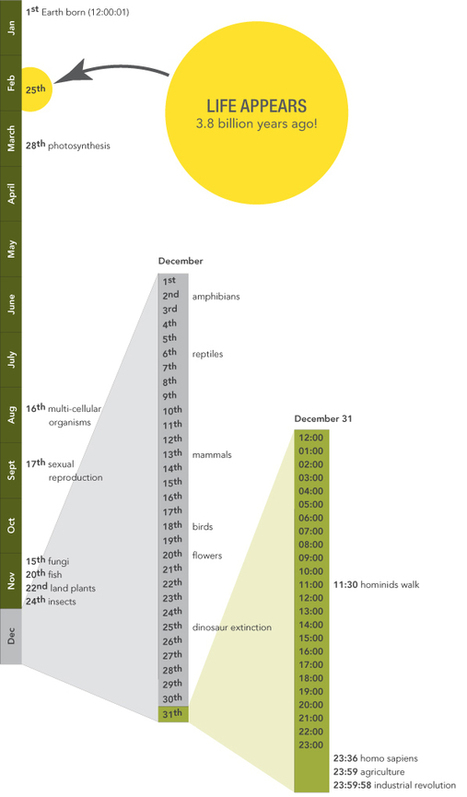
Life's birthday is today, February 25. No, we're not saying that we know life started on this particular date.
|
|
Scooped by
Janine Benyus
February 24, 2014 11:21 PM
|
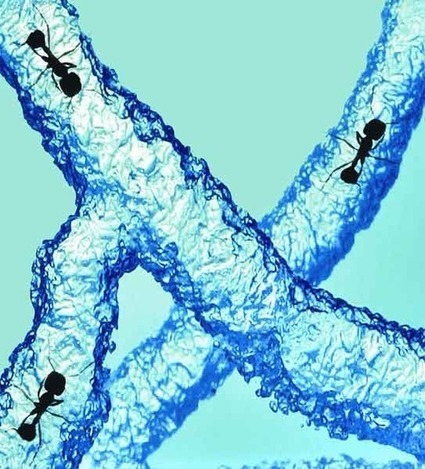
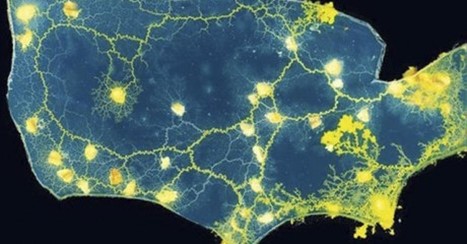
In an increasingly complex and interconnected world, how do we go on about designing efficient transport systems? Some innovative research claims that the answer is in slime mould... (Watch the vid!
|


 Scoop.it!