Your new post is loading...

|
Scooped by
Janine Benyus
January 11, 2019 3:52 PM
|
Through studying bugs, the Pentagon aims to identify new computing paradigms that will enable improved AI with considerably reduced training times and power consumption.
|
|
Scooped by
Janine Benyus
January 8, 2019 12:10 PM
|
SpiNNaker's spiking neural network mimics the human brain, and could fuel breakthroughs in robotics and health.
|
|
Scooped by
Janine Benyus
January 6, 2019 5:38 PM
|
Biomimicry takes full effect as UBC researchers look to gulls for airplane innovation....
|
|
Scooped by
Janine Benyus
January 6, 2019 5:37 PM
|
Inspired by nature, Chinese scientists have produced a synthetic analogue to vulcanized natural rubber. Their material is just as tough and durable as the original.
|
|
Scooped by
Janine Benyus
January 2, 2019 12:14 PM
|
As a lead up to Sustainable Brands conference SB’18 , students, alumni, and faculty of our MA in Sustainable Design program interviewed selected speakers — leaders in corporate sustainability initiatives. In this blog we share our interview with Erin Meezan, Vice President and Chief Sustainability Officer at Interface. Erin Meezan, Vice President and Chief Sustainability Officer, leads the company on an audacious →
|
|
Scooped by
Janine Benyus
December 28, 2018 1:37 PM
|
This video describes a project in which students used design thinking and nature inspired design to engineer a tool for a family activity.
|
|
Scooped by
Janine Benyus
December 28, 2018 11:42 AM
|
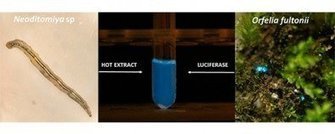
An insect larva found in the caves of Intervales State Park, an Atlantic Rainforest remnant in the municipality of Ribeirão Grande, São Paulo State, Brazil, was initially of no interest to the research group led by biochemist Vadim Viviani, a professor at the Federal University of São Carlos (UFSCar) in Sorocaba. The researchers are investigating bioluminescence, the capacity of living organisms to produce their own light.
|
|
Scooped by
Janine Benyus
December 27, 2018 11:32 PM
|
A group of Cal Poly students and graduates are working to combat climate change with a carbon dioxide capturing device.
|
|
Scooped by
Janine Benyus
December 27, 2018 11:26 PM
|
As a science educator, I feel we can and should do a far better job of helping people see and understand the systems that govern our world, and internalize the lessons they can teach us.
|
|
Scooped by
Janine Benyus
December 19, 2018 12:27 AM
|
Physicists have argued for 50 years over which of two theories explains how fish produce thrust. Now a computer simulation has provided the answer.
|
|
Scooped by
Janine Benyus
December 18, 2018 11:09 PM
|
As NASA’s Mars InSight is set to burrow into Martian soil, roboticists on Earth are still developing devices for soil monitoring and exploration
|
|
Scooped by
Janine Benyus
December 16, 2018 4:21 PM
|
In biological and engineered systems, an inherent trade-off exists between the force and velocity that can be delivered by a muscle, spring, or combination of the two. However, one can amplify the maximum throwing power of an arm by storing the energy in a bow or sling shot with a latch mechanism for sudden release. Ilton et al. used modeling to explore the performance of motor-driven versus spring-latch systems in engineering and biology across size scales. They found a range of general principles that are common to animals, plants, fungi, and machines that use elastic structures to maximize kinetic energy.
|
|
Scooped by
Janine Benyus
December 16, 2018 3:42 PM
|
An artificial nanostructure inspired by the sea anemone can be used for efficient removal of a wide range of water contaminants.
|
|
|
Scooped by
Janine Benyus
January 10, 2019 2:25 PM
|
“Scientists have discovered that a wood-eating crustacean may hold the secret to unlocking a huge source of renewable energy from wood, according to a new study published in Nature Communications. Gribbles, small, translucent marine crustaceans who feed on the sugars found in planks and logs, possess a natural mechanism to digest and release all the nutrients in wood.
|
|
Scooped by
Janine Benyus
January 8, 2019 11:53 AM
|
Xenos peckii is a parasitic insect that spends much of its life cycle within the body of a wasp, but it's also known for its unusual eye structure. By copying that structure, scientists have created an ultra-slim camera that could allow for the manufacturing of thinner-than-ever smartphones.
|
|
Scooped by
Janine Benyus
January 6, 2019 5:38 PM
|
Inspired by nature, Chinese scientists have produced a synthetic analogue to vulcanized natural rubber. Their material is just as tough and durable as the original.
|
|
Scooped by
Janine Benyus
January 4, 2019 1:47 AM
|
The term ‘biomimicry’ originates from the Greek words bios, meaning life and mimesis, meaning imitate. It refers to imitating natura
|
|
Scooped by
Janine Benyus
December 29, 2018 8:36 PM
|
Biomimicry evolves into a systematic design process for optimizing efficient, lightweight structures.
|
|
Scooped by
Janine Benyus
December 28, 2018 11:49 AM
|
In her book, Katherine Collins discusses how biomimicry can make the world of investing more sustainable and resilient.
|
|
Scooped by
Janine Benyus
December 28, 2018 11:37 AM
|
A pair of new studies from researchers at The Ohio State University offers a possible solution to water scarcity, inspired by nature.
|
|
Scooped by
Janine Benyus
December 27, 2018 11:28 PM
|
New research finds that exposure to the natural world lowers the risk of cardiovascular disease by reducing stress.
|
|
Scooped by
Janine Benyus
December 27, 2018 11:12 PM
|
New nanostructure inspired by a sea anemone might be a cost-effective alternative to traditional wastewater treatments
|
|
Scooped by
Janine Benyus
December 19, 2018 12:26 AM
|
Biological research can inspire technological innovation. Also, software that models computer networks can inform health care for patients with neurological disorders.
|
|
Scooped by
Janine Benyus
December 18, 2018 2:26 PM
|
The unique digestive system of wood-eating gribbles could solve a major renewable energy problem.
|
|
Scooped by
Janine Benyus
December 16, 2018 4:16 PM
|
A team of international scientists have created a new form of highly-efficient, low-cost insulation based on the wings of a dragonfly.
|


 Scoop.it!