


Researchers have looked to nature to develop mechanosensors that could help drones navigate dangerous environments and cars to avoid accidents.


 Your new post is loading...
 Scoop.it!
Researchers have looked to nature to develop mechanosensors that could help drones navigate dangerous environments and cars to avoid accidents.

No comment yet.
Sign up to comment
Scoop.it!

--- contents --- ~ about ~ learning ~ by definition ~ film ~ pages image | above Photo of a human-made 3-D shape inspired by...
Scoop.it!

image | above A 3-D printed structure inspired by nature's bees, with their innate intelligence.artwork: by Dizingof --- film...
Scoop.it!

EU-funded LINABIOFLUID scientists studied desert-dwelling horned lizards by using electron microscopes.
Scoop.it!

From
creation

Sandfish skink lizard (Scincus scincus)’s scaly skin inspires super-slippery steel surfaces...
Scoop.it!

- Apple Summer Camp for Kids is back! - - Absolute Geeks - Technology, Movies, Smartphones, Gadgets and more
Scoop.it!

Two startups belonging to a "new species of entrepreneur" and raised up by the Biomimicry Institute walked away from Circularity 19 with big checks.
Scoop.it!

Scientists have developed a new type of bioinspired material called TrAPs that can help in healing your wounds faster.
Scoop.it!
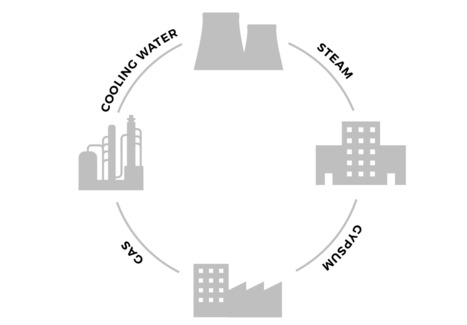
For the circular economy to work, we need system-wide innovation, and that will require rethinking and redefining our products and services.
Scoop.it!

More than 90% of all goods worldwide are transported by ships. The vast portion of the energy consumption of a ship is the need to overcome the drag between ship hull and water—depending on the shape of the vessel and its size up to 90% of total fuel consumption. University of Bonn and partners revealed that the use of high-tech air-trapping materials on hulls, inspired by Salvina fern, could contribute to decrease global CO2 emissions by 1%
Scoop.it!

At Fraunhofer IME, scientists investigated rubber from dandelions. Like the rubber from rubber trees, 95 percent of dandelion rubber consists of polyisoprene, while the remaining percentage is made up of organic components such as proteins or lipids. The advantage of dandelion rubber over tree rubber: the former has a generation succession of just three months as opposed to seven years for the latter. That makes rubber made from dandelions an ideal starting point for investigating the influence of organic components on the rubber characteristics. To this end, the Fraunhofer researchers eliminated the key organic components involved in a targeted manner. After they had identified the organic components that were important for abrasion behavior, the researchers at Fraunhofer IAP synthesized the BISYKA rubber out of functionalized polyisoprene with high microstructural purity and the respective biomolecules.
Scoop.it!

Learning how birds and other animals see the world around them could help aircraft design with better sensors for pilots.
Scoop.it!

Disciplines such as bionics and biomimetics take inspiration from the natural world to tackle human problems, leading to new findings in physics, engineering, and technology.
|
Scoop.it!

Like its biomemetic counterparts, biological computers could be one potential solution to the limits of silicon hardware. However, most of the DNA computers designed to date have been quite simple, in the sense that they could only solve the one task that they were tailored for, and could not be...
Scoop.it!
Synthetic proteins with improved properties could fight infection, help treat diseases, and more.
Scoop.it!

Biomimicry of polar bear hairs offers synthetic heat insulating material...
Scoop.it!

MetaFly is not just another drone, it’s a unique biomimetic controller creature, delivering new flying experience.Just forget about drones, this unique...
Scoop.it!

Industries from tech to manufacturing are bringing biologists on board.
Scoop.it!
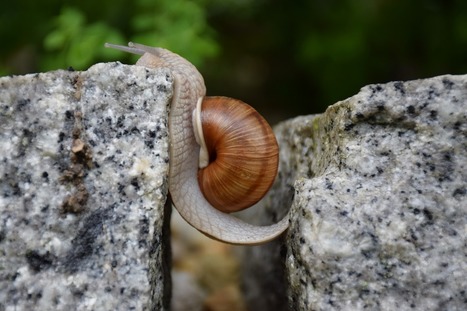
Researchers have presented a snail epiphragm-inspired adhesion mechanism where a polymer gel system demonstrates superglue-like adhesion strength (up to 892 N⋅cm−2) that is also reversible.
Scoop.it!

78 Likes, 1 Comments - Biomimicry 3.8 (@biomimicry38) on Instagram: “Congratulations to the newest group of graduates from our Biomimicry for Social Innovation…”
Scoop.it!
From
twitter
Learn how the winners of the 2019 Youth Design Challenge looked to nature to create solutions to climate change https://biomimicry.org/biomimicry-youth-design-challenge-and-the-winners-are/ …
#biomimicry #STEM #STEAM #climatesolutions #climatehopepic.twitter.com/6TMYpmXbEN
Scoop.it!

GE has developed a fascinating 3D printed part design that’s partly inspired by biology.
Scoop.it!

Presenting a novel biomimetic design method for transferring design solutions from nature to technology, this book focuses on structure-function patterns in nature and advanced modeling tools derived from TRIZ, the theory of inventive problem-solving. The book includes an extensive literature review on biomimicry as an engine of both innovation and sustainability, and discusses in detail the biomimetic design process, current biomimetic design methods and tools. The structural biomimetic design method for innovation and sustainability put forward in this text encompasses (1) the research method and rationale used to develop and validate this new design method; (2) the suggested design algorithm and tools including the Findstructure database, structure-function patterns and ideality patterns; and (3) analyses of four case studies describing how to use the proposed method. This book offers an essential resource for designers who wish to use nature as a source of inspiration and knowledge, innovators and sustainability experts, and scientists and researchers, amongst others
Scoop.it!

From
phys
Over a 150 years since it was first described by Darwin, scientists are finally uncovering the secrets behind the super strength of barnacle glue. Still far better than anything we have been able to develop synthetically, barnacle glue – or cement - sticks to any surface, under any conditions. But exactly how this superglue of superglues works has remained a mystery – until now. An international team of scientists led by Newcastle University, UK, and funded by the US Office of Naval Research, have shown for the first time that barnacle larvae release an oily droplet to clear the water from surfaces before sticking down using a phosphoprotein adhesive. Publishing their findings this week in the prestigious academic journal Nature Communications, author Dr Nick Aldred says the findings could pave the way for the development of novel synthetic bioadhesives for use in medical implants and micro-electronics. The research will also be important in the production of new anti-fouling coatings for ships.
Via Dr. Stefan Gruenwald
|





