Saylor.org is a free and open collection of college level courses. There are no subscriptions, registrations, or fees. You will not earn a college degree or diploma, but our team of experienced college professors have designed our courses so that you will able to achieve the same learning objectives as students enrolled in traditional colleges.
Complete the Introduction to Financial Accounting with The Saylor Foundation
A bank reconciliation is a necessary part of the internal controls of a business particularly in terms of identifying recording errors and fraud. The bank reconciliation process provides an independent verification of the accuracy of the accounting records of the business and must be completed before preparing the financial statements.
Forensic accounting is defined as a specialty accounting practice where accountants work with figures that are in legal disputes or who perform accounting fraud investigations. The term “forensic” means suitable for use in a court of law, so forensic accounting review numbers and often give expert testimony during trials.
The forensic accountant is a blend of great accounting skills as well as good investigative skills. To enjoy this field, you must be someone who enjoys looking for the information that is buried deep within a company’s finances or other files.
Discussion of the accounting equation and how to solve for unknown amounts. In addition, there is a short description of retained earnings and how it is affected by net income and dividends.
A bank reconciliation is an internal control procedure that explains the difference between the cash balances of two sets of independent accounting records. Each set of accounting records detail exactly the same cash transactions but on any given day they may not necessarily agree. These two sets of records are kept by (1) the business that record these cash transactions in the "Cash at Bank" account in the general ledger and (2) the bank that details these same cash transactions on a bank statement.
Financial statements are prepared immediately after the adjusted trial balance. Knowing how to record transactions, make adjusting entries, and create trial balances gives you a greater under-standing of the information financial statements contain.
This principles of accounting website provides a free comprehensive textbook and support resources. Both financial accounting and managerial accounting topics are covered including: Characteristics of the corporate form of organization, Common and preferred stock, Treasury stock, Stock splits and stock dividends, The statement of stockholders’ equity.
Basically, accounting controls are operational, financial, or technological mechanisms used by businesses to ensure or encourage a particular behavior or result. Internal controls give owners and managers some degree of assurance that people are doing what they are supposed to be doing and that material mistakes, accidental or otherwise, will be detected prior to going out the door.
This principles of accounting website provides a free comprehensive textbook and support resources. Both financial accounting and managerial accounting topics are covered including: Long-term notes and present value concepts,The nature of bonds and related terminology,Accounting for bonds payable, whether issued at par, a premium or discount,Effective-interest amortization methods,Bonds issued between interest dates, bond retirements, and fair value measurements,Analysis, commitments, and leases.
A 10-column worksheet is a columnar template that helps accountants and bookkeepers plan and facilitate the end-of-period reporting process. It is not a mandatory step in the accounting process but is often completed to help eliminate errors associated with the end-of-period adjustments. The 10-column worksheet conveniently ensures that all of the details related to the end-of-period accounting and statement preparation have been properly accounted for at the end of each each fiscal period.
In drawing up accounting statements, whether they are external "financial accounts" or internally-focused "management accounts", a clear objective has to be that the accounts fairly reflect the true "substance" of the business and the results of its operation.
The theory of accounting has, therefore, developed the concept of a "true and fair view". The true and fair view is applied in ensuring and assessing whether accounts do indeed portray accurately the business' activities.
To support the application of the "true and fair view", accounting has adopted certain concepts and conventions which help to ensure that accounting information is presented accurately and consistently.
End-of-period-adjustments in accounting are journal entries made to the accounts of a business prior to the preparation and distribution of the financial statements for a given accounting period. End-of-period adjustments ensure that the these financial statements reflect the true financial position and performance of a business by allocating to the appropriate period the income earned and expenses incurred. End-of-period adjustments are also known as year-end-adjustments, adjusting-journal-entries and balance-day-adjustments. End-of-period-adjustments apply the matching principle of accounting which include accruals, deferrals and asset value adjustments.
Glossary of accounting terms, acronyms and ‘Also Known As’ - A description and meaning of 300 of the most common terms and acronyms used in accounting to help you understand the basic accounting concepts $1.99 eBook.
After all adjustments are made, the final trial balance can be used to prepare the balance sheet and income statement. GAAP also requires the preparation of two other financial statements: the Statement of Cash Flow and the Statement of Owner’s Equity.
A good free resource that covers the basic accounting concepts.
In today's business sphere, accountancy has become an integral part of the mechanism by which we reconcile our ideas with the changing environment. The purpose of this website is to make accounting easy to understand. We have made every possible attempt to change your ambiguous world of accounting into elements of simplicity and clarity.
This principles of accounting website provides a free comprehensive textbook and support resources. Both financial accounting and managerial accounting topics are covered including: Special reporting situations, Earnings per share and other key indicators , The objectives and qualities of accounting information, The development of generally accepted accounting principles, Key assumptions of financial accounting and reporting, Issues in accounting for global commerce.
Insurers take lead in IFRS transition - IFRS are principles-based standards, interpretations and framework adopted by the International Accounting Standards Board (IASB).
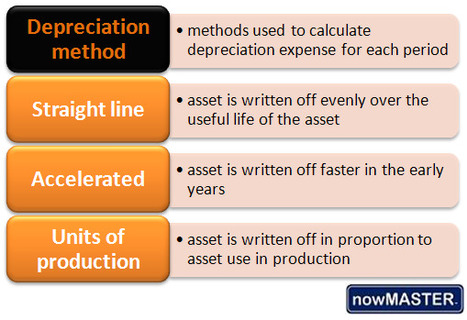
Depreciation in accounting is a process that proportionately expenses the cost of a fixed asset over the asset's useful economic life. In time, fixed assets will eventually lose all their economic value due to a combination of aging, wear and tear, deterioration and/or obsolescence. Depreciation expense ensures that this decline in the value of the fixed assets is matched in the accounting system against the income generated over the same period of the fixed asset’s useful life. Depreciation then is the necessary fulfilment of the matching principle in accounting. While depreciation expense is a bookkeeping entry that does not involve any cash outlay, it is, under certain conditions, an allowable and legitimate tax deduction as a cost of doing business.
Many businesses find it necessary at some point to borrow funds. Lenders need to assess the credit worthiness of borrowers. Two determinants of credit worthiness are the existence and extent of collateral and the liquidity of the business. The balance sheet can be useful in assessing both factors. Collateral are those assets that are pledged by a lender to secure a loan. Even though assets, particularly fixed assets, are not reported at current fair market values on the balance sheet, the lender can determine the kind of assets the business owns and the extent of debt to other lenders. It is usually not difficult for lenders to reach reasonable estimates of the current liquidating values of most business assets, so their absence on the balance sheet usually is not a major problem.
There are two broad types of accounting information:
• Financial Accounts: geared toward external users of accounting information
• Management Accounts: aimed more at internal users of accounting information
Although there is a difference in the type of information presented in financial and management accounts, the underlying objective is the same - to satisfy the information needs of the user.
The first step in the accounting process is to analyze every transaction (economic event) that affects the business. The accounting equation (Assets = Liabilities + Owner's Equity) must remain in balance after every transaction is recorded, so accountants must analyze each transaction to determine how it affects owner's equity and the different types of assets and liabilities before recording the transaction.
After all adjustments are made, the final trial balance can be used to prepare the balance sheet and income statement. GAAP also requires the preparation of two other financial statements: the Statement of Cash Flow and the Statement of Owner’s Equity.
This principles of accounting website provides a free comprehensive textbook and support resources. Both financial accounting and managerial accounting topics are covered INCLUDING The nature and recording of typical current liabilities. Accounting for notes payable. The criteria for recognition and/or disclosure of contingent liabilities. Basic accounting for payroll and payroll related taxes. Other components of employee compensation.
To get content containing either thought or leadership enter:
To get content containing both thought and leadership enter:
To get content containing the expression thought leadership enter:
You can enter several keywords and you can refine them whenever you want. Our suggestion engine uses more signals but entering a few keywords here will rapidly give you great content to curate.


 Your new post is loading...