


The Ucamara Radio, make a very hard work to maintain alive the language and the knowledge of the Kukama indigenous communities in Nauta, Loreto, Peru.


 Your new post is loading...
 Scoop.it! The Ucamara Radio, make a very hard work to maintain alive the language and the knowledge of the Kukama indigenous communities in Nauta, Loreto, Peru. 
No comment yet.
Sign up to comment
Scoop.it!
Jerónimo M.M.'s insight:
Reportaje colombiano, sobre el Taita Martin Agreda, figura clave de los últimos 20 años y padre de Taita Juan
Scoop.it!
Yulieth, una joven que a la edad de ocho años probó por primera vez yagé, una planta usada por chamanes para curar el alma que puede producir varios efectos, entre estos alucinaciones, y años después decide volver a tomarlo lo cual la ayuda a reencontrarse con ella misma. Varios son los testimonios de personas que han probado este brebaje, que ayuda a liberar el espíritu. La elaboración de esta bebida, los rituales y la vida de los “taitas”, también hacen parte de esta historia.
Jerónimo M.M.'s insight:
Extraño documental colombiano con partes muy interesantes, aunque no sé si me parece buena idea entrevistar a la gente durante los efectos de la ayahuasca
Scoop.it!

From
scfh

The blacksmith is a significant and honored personality in all traditional cultures where metalwork is known. Even today, the Eastern Buryats believe in the divine origin of the smith’s craft; they believe that a person receives it as a gift from God. And with the gift he gets the patronage and protection of the deity who is responsible for the smith’s work. Like a shaman, whose craftsmanship is inherited, a blacksmith should come from a family of blacksmiths. As for the Buryats, blacksmiths and shamans always go hand in hand: the shaman protects the blacksmith and his craft, and conducts blacksmith ceremonies. In his turn, the blacksmith makes metal shamanistic accessories and articles of the shaman’s clothes, which protect him when he travels from one world to the other.
Scoop.it!

From
scfh
This musical and ritual instrument was kept at the home of the well-known film director Grigory M. Kozintsev. In 1930, he was making his film Alone in Gorny Altai, where he met Tanashev, an unusual person and adventurer, in a sense, but undoubtedly talented. The film director invited Kondrat to Leningrad and shot the episode in which the shaman was beating the drum. The very drum. This was the shaman's winged horse. Speeding it with its whip-tampon, the shaman traveled across the worlds: up to the sky and down to hell. Attached to the drum's handle is the wooden head of Ul'gen', Altaian supreme deity, who grants people the gift of becoming a shaman; on the exterior there is a drawing: the sun, stars, rainbow, and a vertical symbolizing the world tree or a horse line - the Universe in miniature.
Scoop.it!

From
scfh
A unique “shaitan” burial was discovered on the bank of Omuk-Kuel Lake in the Middle-Kolyma ulus in Yakutia. According to the legends, buried in it are mummified remains of a shaman woman who died during a devastating smallpox epidemics in the 18th c. In an attempt to overcome the deadly disease, the shaman’s relatives used her remains as an emeget fetish. The author believes that these legends reflect the real events of those far-away years
Scoop.it!
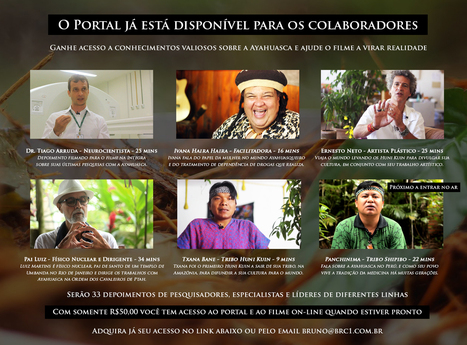
O documentário "Ayahuasca, O Espírito da Floresta" apresenta a medicina sagrada dos indígenas, as últimas pesquisas realizadas pelos principais pesquisadores, cientistas e médicos para a cura da doença de alzheimer, câncer, depressão e dependência em heroína e como essa cultura milenar está trazendo mudanças na consciência de milhares de pessoas pelo mundo.
Jerónimo M.M.'s insight:
Apoyen este documental Brasileño
Scoop.it!

From
scfh
We offer our readers some chapters from the book The Forest Nenets, which is the result of the long-term project “Our Neighbors: The Forest Nenets”. The aim of the project is to study and preserve the material and spiritual culture of the Forest Nenets, a small ethnic group living in the southern part of the Yamal-Nenetsk Autonomous District (“YNAD”) in the Pur River basin. The project is quite unique because it was carried out by the workers of the Gubkinskiy Museum of North Development jointly with the natives, who still live according to their traditions. The natives recorded and described their daily routine life. For this purpose, the Museum donated to them tape recorders, video and photo equipment. In this way, the daily routine of Nentsy camps was “self-documented” over several years.*
Jerónimo M.M.'s insight:
Interesting similarities with native americans (shape of tent) and Amazonian shamanism (sucking the diseases out of patients)
Scoop.it!

From
scfh
A list of common folk remedies collected from 1737 to 1738, both ordinary and sophisticated, taken by mouth or applied externally by Russians, Tatars, Ostyaks, and Chulim Tatars as cures for various diseases, as well as many treatments
Jerónimo M.M.'s insight:
Traditional medicine of the Russians, Tatars, Ostyaks, and Chulim Tatars
Scoop.it!
“We went to Putumayo planning to make one type of film, but ended up making something very different,”
Jerónimo M.M.'s insight:
I've been following Neil and Lesly's project for some time now
Scoop.it!

Did you know that scientists in North America, Europe and South America have been investigating ayahuasca in recent years?
Jerónimo M.M.'s insight:
Not to be missed, Kahpi's output is flat-out amazing
Scoop.it!

Ayahuasca in Ecuador: Ceremonies with Kichwa shamans: the Natural Medicine Gathering invites you to the home of ayahuasca for collective healing!
Jerónimo M.M.'s insight:
An ayahuasca gathering built with one of the Amazon's longest running indigenous shaman association. I'm extremely happy to see the ethics and thought behind this project (and for being quoted!)
Scoop.it!
Una parábola sobre la relación entre el hombre y la naturaleza, una historia ejemplar sobre la capacidad humana para alcanzar cualquier objetivo que s
Jerónimo M.M.'s insight:
El libro de Jean Giono es una maravilla, este corto también
|
Scoop.it!
Realizado por:
Jerónimo M.M.'s insight:
Otro documental colombiano
Scoop.it!
Jerónimo M.M.'s insight:
Reportaje colombiano, me alegro de ver que también menciona algunos de los problemas que se dan alrededor del yagé
Scoop.it!

From
scfh
.Finding it two thousand years later is a pure chance; its amazingly good condition is almost a miracle. How it made its way to the grave of a person it was not meant for will long, if not forever, remain a mystery. Of greatest surprise though was the unique embroidery made from wool. Its pattern was the ancient Zoroastrian ceremony, of which the principal personage was …a mushroom. In the center of the composition to the left of the altar is the king (priest), who is holding a mushroom over the fire. The «divine mushroom» embroidered on the carpet resembles well-known psychoactive species Psilocybe cubensis.
Jerónimo M.M.'s insight:
Very interesting, though I must confess it seems to me they jump to the conclusion it's a psychedelic mushroom rather fast
Scoop.it!

From
scfh
Despite the processes of globalization and assimilation of cultures, modern mankind does not have a single face. Rather, this is a great mosaic which consists of a multitude of peoples: small and great
Scoop.it!

From
scfh
The shaman’s path does not come to an end when he passes away. The Evenks believe that after the death he goes to meet celestial residents – the light gods of aiyy. To ensure the meeting takes place, shaman’s relatives offer the gods deer, equip sledges, and erect a churima – the quarters of the deceased in the world of the dead
Scoop.it!
The film presents the work of the research & therapy center Takiwasi, based in the High Amazon region of Peru. Founded in 1986 by French, Peruvian and Japanese doctors, Takiwasi uses Traditional Amazonian Medicine combined with Western psychotherapy to achieve a high success rate in the treatment of severe drug addiction, depression and other psychological ailments. Patients from around the globe as well as from the local community seek the center's services. Takiwasi relies on a multinational staff of Western-trained doctors, psychologists, molecular biologists and ethnobotanists as well as traditional healers from around the region which is notorious for producing some of the greatest curanderos of the Amazon. The center has developed a unique approach of integration and articulation of Western science and traditional methods to produce a therapeutic protocol focused on long term, sustainable results for its patients.
Jerónimo M.M.'s insight:
Ricardo D'Aguiar's great documentary about Takiwasi is now available online. Recommended.
Scoop.it!

This is an exciting time to be involved in psychedelic research. Medical researchers are rediscovering the possible benefits of responsible use of psychedelics in therapeutic settings. The media, too, is beginning to wake up to this wealth of scientific discovery. The stigma surrounding psychedelics is being lifted, and journalists are no longer afraid to seriously discuss the therapeutic potential of these compounds.
Jerónimo M.M.'s insight:
Great summary by Amanda Feilding
Scoop.it!

From
scfh
The December issue of SCIENCE First Hand (# 6 (12), 2006) featured documents of the Second Kamchatka Expedition dealing with the role of alcohol in the life of 18th century Russian Siberians. The present article dwells on the alcoholic habits of Siberian aborigines as well as on their consumption of hallucinogenic mushrooms and other narcotics producing euphoria and stupor.
Scoop.it!

On one of those first nights, the shaman gave two tourists, both men, a plant bath, which entailed his spreading a specially prepared mixture of medicinal plants directly on their skin. After the men’s treatment, the shaman told Ross to do as they had: go into the hut and strip down to her undergarments. “I knew in the back of my mind that you’re not supposed to take your clothes off and go into the private place with the shaman for the healing — that’s how creepy things happen,” she told me later. “But then having seen him do these baths with these men, I was like, All right, I think I can actually trust this.” The shaman covered her in a fragrant concoction of plants. He instructed her to put her clothes back on and left.
Jerónimo M.M.'s insight:
yikes
Scoop.it!

Suggestions for decreasing the potential for sexual abuse and harassment while participating in ceremonies that use psychoactive substances.
Jerónimo M.M.'s insight:
Great tips
Scoop.it!

A real-life ‘Breaking Bad’ for the psychedelic set, THE SUNSHINE MAKERS reveals the fascinating, untold story of Nicholas Sand and Tim Scully, the unlikely duo at the heart of 1960s American drug counter-culture. United in a utopian mission to save the planet through the consciousness-raising power of LSD, these underground chemists manufactured a massive amount of acid, including the gold standard for quality LSD, ‘Orange Sunshine,’ all while staying one step ahead of the Feds.
Jerónimo M.M.'s insight:
I was lucky enough to see this last night. Crazy story, great film! Opens in New York on January 20, in other US cities and on demand January 27
Scoop.it!

From
zoom
Join us in an exploration of how the international drug control regime is being influenced by ayahuasca globalization. Presenter Jeffrey Bronfman will share with us the lessons learned from the União do Vegetal historic legal success in the USA.
Jerónimo M.M.'s insight:
A fantastic beginning for the Ayahuasca Defense Fund webinar series!

Jerónimo M.M.'s curator insight,
February 1, 2017 8:21 AM
There's still space, don't miss this chance |





Local radios are super important in the Amazon, please support this important project