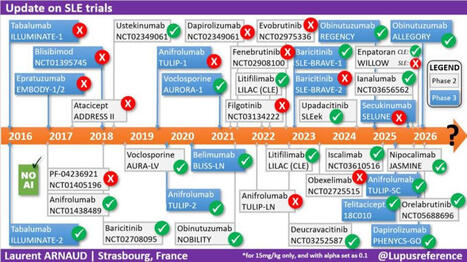
✅ 10 YEARS of RANDOMIZED TRIALS in #LUPUS ⏲️summarized on a single slide!!!! With a specific focus on phase 2(b) and 3 #RCTs, as well as whether the main endpoint was reached or not 👍 The least we can say, is that we have collectively put A LOT OF EFFORT in the development of new treatments 💊 in #SLE. As always I used only my natural intelligence (#NoAI) so please let me know if I have forgotten a trial or if something needs to be corrected.
Five lupus patients in England are in remission after being treated with a revolutionary therapy that genetically modifies their own cells, in a medical breakthrough that could offer people a cure, doctors have said.
CAR (chimeric antigen receptor) T-cell therapy involves removing a type of white blood cell also called T lymphocytes, which are crucial for hunting out infected or damaged cells, and engineering them to spot and destroy disease. The T-cells are then fed back into the patient via an infusion to reset their immune system.
The therapy is already revolutionising cancer treatment. Now medics in London have successfully used the technique to effectively cure five NHS patients with severe lupus aged between 19 and 50.
CAR T-cell therapy, which patients only need to have once, could transform lupus treatment and remove the need for lifelong medication, doctors said.
Autoantibody flares are important drivers of pathology in systemic lupus erythematosus (SLE), highlighting the pivotal role of B cells in initiating and propagating chronic autoimmunity. Although autoreactive specificities are a normal feature of the naive B cell repertoire, these cells are normally suppressed by layered tolerance checkpoints that limit inappropriate activation. Autoimmune-prone environments can lower these tolerance thresholds, rendering naive autoreactive B cells more sensitive to aberrant cues. Cytokines and other microenvironmental signals shape tissue niches that direct autoreactive B cells towards either germinal-centre or extrafollicular differentiation pathways. Germinal centres support the entry, selection and diversification of autoreactive B cells, with T cell help sustaining these repertoires. By contrast, naive autoreactive B cells entering the extrafollicular pathway exhibit an attenuated requirement for cognate T cell help and strong dependence on complement and TLR signalling. Emerging evidence continues to refine our understanding of germinal-centre and extrafollicular responses as complementary sources of autoreactive effector cells. With this progress, investigations into the origin, development, longevity and tissue dynamics of autoreactive memory B cells as chronic sources of autoantibodies are warranted. Although broad B cell depletion therapies have yielded benefit, a key challenge now is developing precision strategies that selectively target pathogenic B cell subsets. Autoreactive B cells normally held in check by tolerance checkpoints can be driven towards germinal-centre or extrafollicular differentiation in autoimmune environments. This Review examines the cellular, molecular and contextual cues that shape these pathways and considers their implications for systemic lupus erythematosus pathogenesis and therapy.
Encouraging to see the rapidly evolving translational landscape of CAR-T cell therapy in autoimmune diseases highlighted in Nature. The field is progressing from first-in-human studies in lupus toward phase I/II trials in rheumatoid arthritis, systemic sclerosis, and myositis - including our ongoing efforts at Charité. These developments point toward a potential shift from continuous immunosuppression to time-limited immune reset with the prospect of sustained, treatment-free remission.
Nature: “They don’t have symptoms”: CAR-T therapies send autoimmune diseases into remission https://lnkd.in/dc2QEThC #AutoimmuneDiseases #Rheumatology #TranslationalMedicine #Immunotherapy
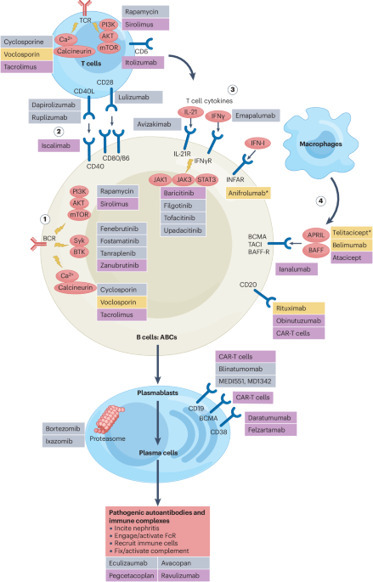
Lupus nephritis (LN) is a type of glomerulonephritis and one of the most serious complications of systemic lupus erythematosus (SLE). LN affects 25–60% of patients with SLE, with incidence and prevalence varying by age, sex, ethnicity and socioeconomic factors. LN predominantly develops within 5 years of an SLE diagnosis and, for many patients, it is the initial manifestation that leads to the recognition of SLE. In some patients, LN may develop late in the disease course, highlighting the importance of persistent awareness of its symptoms and signs. Despite an increasing understanding of disease biology and more effective treatment options, LN remains a substantial cause of morbidity and mortality as it can lead to irreversible kidney failure and associated complications. Risk factors for progression to kidney failure include persistent proteinuria, low glomerular filtration rate, hypertension at diagnosis and frequent disease flares. LN pathogenesis involves complex immune dysregulation, with key pathways including type I interferon signalling, calcineurin activation, and B and T cell dysfunction. Several immunomodulatory drugs are used for the management of LN, and treatment paradigms are increasingly shifting towards multi-agent regimens. Along with appropriate pharmacotherapy, multidisciplinary care tailored to the patient’s individual needs, involving rheumatologists, nephrologists, social workers and other health professionals, is crucial for holistically addressing both the immune and non-immune risk factors for progressive kidney function loss and for maximizing kidney lifespan in LN. Lupus nephritis is an autoimmune-mediated glomerulonephritis and a serious complication of systemic lupus erythematosus. In this Primer, Parodis and colleagues describe the epidemiology and pathophysiology of this disease, discuss current diagnosis and management, and highlight the effects on patient quality of life as well as future areas of research.
The ACR has released its 2025 Systemic Lupus Erythematosus (SLE) treatment guidelines and consensus-based good practice statements, applicable to children and adults with SLE. Overall, the goals of SLE management are to achieve remission or a low level disease activity, reduce morbidity and mortality, and minimize treatment-related adverse events. For treatment of SLE, they recommend universal use of hydroxychloroquine, minimizing glucocorticoid exposure, and early introduction of conventional and/or biologic immunosuppressive therapies.
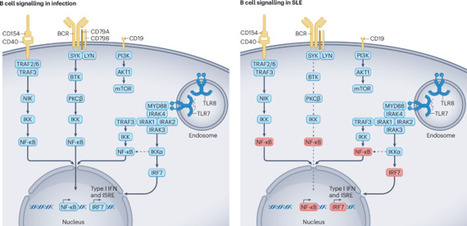
BCR-independent memory B cell reactivation via TLR7 or TLR8 activation, type I interferon production, immune complex formation and T helper cell signalling is central in SLE pathogenesis. Dörner and Lipsky discuss the potential of targeting these pathways to eliminate autoreactive memory B cells...
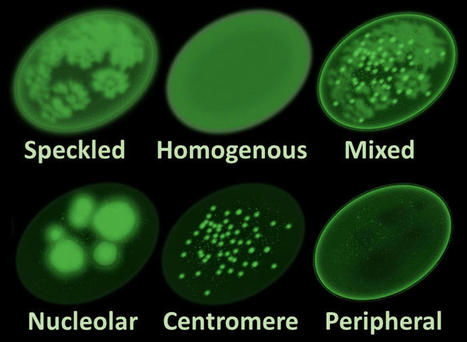
Systemic lupus erythematosus (SLE) is a prototypic autoimmune disease that primarily affects young women and causes a wide range of inflammatory manifestations. The hallmark of SLE is the production of antibodies to components of the cell nucleus (anti-nuclear antibodies [ANAs]).
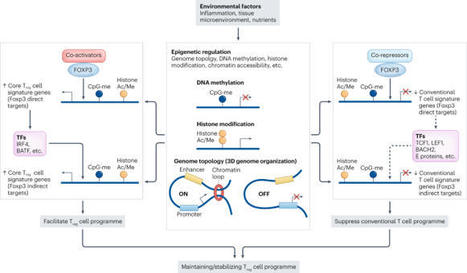
The discovery of FOXP3+ regulatory T (Treg) cells as a distinct cell lineage with a central role in regulating immune responses provided a deeper understanding of self-tolerance. The transcription factor FOXP3 serves a key role in Treg cell lineage determination and maintenance, but is not sufficient to enable the full potential of Treg cell suppression, indicating that other factors orchestrate the fine-tuning of Treg cell function. Moreover, FOXP3-independent mechanisms have recently been shown to contribute to Treg cell dysfunction. FOXP3 mutations in humans cause lethal fulminant systemic autoinflammation (IPEX syndrome). However, it remains unclear to what degree Treg cell dysfunction is contributing to the pathophysiology of common autoimmune diseases. In this Review, we discuss the origins of Treg cells in the periphery and the multilayered mechanisms by which Treg cells are induced, as well as the FOXP3-dependent and FOXP3-independent cellular programmes that maintain the suppressive function of Treg cells in humans and mice. Further, we examine evidence for Treg cell dysfunction in the context of common autoimmune diseases such as multiple sclerosis, inflammatory bowel disease, systemic lupus erythematosus and rheumatoid arthritis. In this Review, the authors discuss the origins of regulatory T (Treg) cells in the periphery and the mechanisms by which Treg cells are induced, as well as the regulation of the suppressive function of these cells. Moreover, they examine evidence for and mechanisms of Treg cell dysfunction in common autoimmune diseases such as multiple sclerosis, inflammatory bowel disease, systemic lupus erythematosus and rheumatoid arthritis.
Sjögren syndrome is a phenotypically varied autoimmune disorder that can occur alone in primary Sjögren syndrome or in association with other connective tissue diseases (CTDs), including rheumatoid arthritis, systemic lupus erythematosus (SLE) and systemic sclerosis (SSc). The estimation of the prev …
Comprehensive study reveals that whole ginger extracts have a significant impact on inhibiting neutrophil hyperactivity, a key factor in autoimmune diseases like APS and lupus. Consuming ginger for just a week showed promising results in both animal models and human trials, positioning it as a...
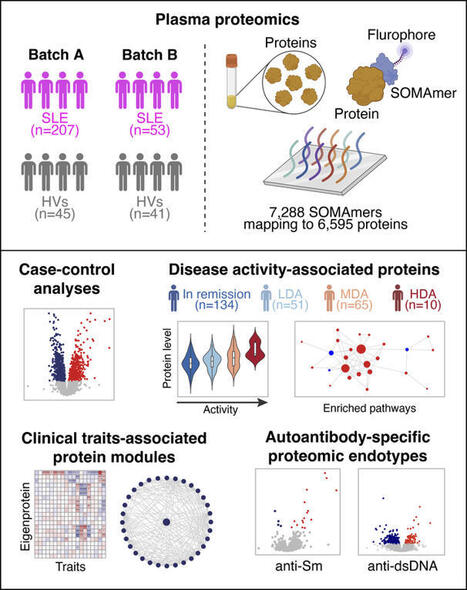
Plasma proteomic profiles of SLE. We recruited 268 patients with SLE and 86 HVs. The cohort encompassed a wide range of disease duration and disease activity (Table 1). Positivity for autoantibodies was as follows: anti-dsDNA n = 70 patients (28%), anti-Sm n = 63 (24.6%), anti-Ro60 n = 120...
Antiphospholipid antibodies (aPL) are directed against phospholipids and phospholipid-binding proteins. Laboratory assays used to detect aPL include serological tests for aPL against β2-glycoprotein 1, cardiolipin and other molecules, as well as functional assays for lupus anticoagulant. The presence of aPL can lead to endothelial dysfunction or a hypercoagulable state through prothrombotic and antifibrinolytic mechanisms. These processes, often in conjunction with a ‘second hit’, such as trauma, surgery, or other causes of hypercoagulability or stasis, can lead to venous or arterial thrombosis. The thrombotic risk associated with aPL is best recognized in thrombotic antiphospholipid syndrome, characterized by a persistently positive test for lupus anticoagulant or seropositivity for aPL associated with venous, arterial or microvascular thrombosis. However, aPL seropositivity and its clinical effect on thrombotic events have been increasingly recognized in a broader group of individuals who do not meet traditional research criteria for thrombotic antiphospholipid syndrome. In this Review, we provide an overview of the evidence related to aPL seropositivity in individuals with or without previous thrombosis and the clinical relevance of aPL seropositivity in predicting the risk of thrombotic cardiovascular events. We discuss potential management strategies and identify key knowledge gaps that warrant further research. Antiphospholipid antibodies (aPL) are associated with an elevated risk of thromboembolic events in patients with antiphospholipid syndrome and, increasingly, in those without previous thrombosis. In this Review, Bikdeli and colleagues discuss the clinical relevance of aPL seropositivity in predicting the risk of thrombotic cardiovascular events, summarize potential management strategies and identify key knowledge gaps that warrant further research.
More excellent #scicomm from Unbiased Science written by Aimee Pugh Bernard, PhD, Leigh Baxt, and Jess Steier. Learn more about the science behind Lupus and new treatments on the horizon for this autoimmune disease likened to "the wolf within."
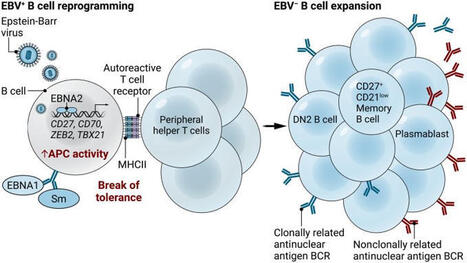
Epstein-Barr virus–mediated B cell reprogramming may initiate systemic lupus erythematosus
- Epstein-Barr virus (EBV) has been making waves as a candidate driver of diseases like multiple sclerosis and Long Covid. It has also long been linked to systemic lupus erythematosus (SLE), although the “why” behind this link has not been defined.
- Here, the authors provide evidence for a link between EBV infection and disease development using an original EBV sequencing (EBV-seq) approach, which combines EBV transcript detection with single-cell transcriptomics.
- The authors evaluated peripheral blood samples from 11 patients with SLE, finding a mean EBV+ B cell frequency of approximately 25 per 10,000 sequenced B cells. In contrast, EBV+ B cell frequencies ranged from 0 to 3 per 10,000 B cells in 10 healthy controls.
- By combining EBV-seq data with single-cell transcriptomics, the authors demonstrated that these latently infected EBV+ B cells were predominantly CD27+CD21low memory B cells exhibiting up-regulation of genes related to antigen processing and presentation, such as IFI30, TAP2, and PSMB6, a population not observed in EBV+ B cells from healthy controls.
- These EBV-infected B cells with antigen-presenting abilities had the capacity to activate autoreactive helper T cells, setting off a chain reaction where those T cells could activate other autoreactive B cells, including uninfected ones.
- These findings support a model in which extremely rare, but overpotent EBV+ “driver” B cells activate helper T cells, which then expand autoreactive EBV− B cells capable of generating the characteristic autoantibodies associated with SLE.
Novartis immunology advancements autoimmune diseases Sjögren’s disease ianalumab rapcabtagene autoleucel systemic lupus erythematosus Cosentyx ACR congress 2025. Discover late-breaking Phase III data from ianalumab trials in Sjögren’s disease, biomarker insights for CAR-T therapy in lupus, and real-world evidence on Cosentyx for psoriatic arthritis. This video explores Novartis's commitment to innovative medicines for complex autoimmune conditions, highlighting potential first-in-class therapies and an investor update on their immunology pipeline. Learn how these developments aim to transform care for millions suffering from rheumatic diseases.
Thrilled to share a huge work conducted with my mentor George Tsokos and friends and colleagues Antonios Kolios & Vasileios Kyttaris.
We critically review 20 years of advances in the treatment of #lupus and try to paint the landscape of its near future. As often, many treatments come from an improved understanding of the disease pathogenesis !
Aberrant immune responses to viral pathogens contribute to pathogenesis, but our understanding of pathological immune responses caused by viruses within the human virome, especially at a population scale, remains limited. We analyzed whole-genome sequencing datasets of 6,321 Japanese individuals, including patients with autoimmune diseases (psoriasis vulgaris, rheumatoid arthritis (RA), systemic lupus erythematosus (SLE), pulmonary alveolar proteinosis (PAP) or multiple sclerosis) and coronavirus disease 2019 (COVID-19), or healthy controls. We systematically quantified two constituents of the blood DNA virome, endogenous HHV-6 (eHHV-6) and anellovirus. Participants with eHHV-6B had higher risks of SLE and PAP; the former was validated in All of Us. eHHV-6B-positivity and high SLE disease activity index scores had strong correlations.
Genome-wide association study and long-read sequencing mapped the integration of the HHV-6B genome to a locus on chromosome 22q. Epitope mapping and single-cell RNA sequencing revealed distinctive immune induction by eHHV-6B in patients with SLE. In addition, high anellovirus load correlated strongly with SLE, RA and COVID-19 status. Our analyses unveil relationships between the human virome and autoimmune and infectious diseases. Analysis of the blood DNA virome in patients with COVID-19 and autoimmune disease associates endogenous HHV-6 (eHHV-6) and high anellovirus load with increased disease risk, most notably for systemic lupus erythematosus. eHHV-6 carriers show a distinct immune response.
Sixteen presentations of preclinical studies funded by the Lupus Research Alliance (LRA) to advance understanding of lupus and potential treatment pathways,...
Chimeric antigen receptor (CAR) T cells are highly effective at targeting and eliminating cells of the B cell lineage. CAR T cell therapy has become a standard-of-care treatment for patients with relapsed or refractory B cell malignancies. In addition, the administration of genetically modified T cells with the capacity to deplete B cells and/or plasma cells has tremendous therapeutic potential in autoimmune diseases. In the past few years, CD19-based and B cell maturation antigen (BCMA)-based CAR T cell therapies have been applied to various B cell-mediated autoimmune diseases including systemic lupus erythematosus, idiopathic inflammatory myopathy, systemic sclerosis, neuromyelitis optica spectrum disorder, myasthenia gravis and multiple sclerosis. The scientific rationale behind this approach is that deep depletion of B cells, including autoreactive B cell clones, could restore normal immune function, referred to as an immune reset. In this Review, we discuss important aspects of CAR T cell therapy in autoimmune disease, including considerations relating to patient selection, safety, efficacy and medical management. These considerations are based on the early experiences of CAR T cell therapy in autoimmune diseases, and as the field of CAR T cell therapy in autoimmune diseases continues to rapidly evolve, these issues will remain subject to ongoing refinement and adaptation. CAR T cell therapy shows promise for achieving long-term drug-free remission in various autoimmune diseases. This Review discusses the ongoing challenges and unanswered questions of CAR T cell therapy in autoimmune diseases, including pre-procedural, procedural and post-procedural considerations.
Des chercheurs du Max Planck Institute for Infection Biology ont identifié un mécanisme génétique précis capable de déclencher le lupus, une maladie auto-immune sévère, dès l’enfance. Leur étude montre qu’une seule mutation peut suffire à provoquer la maladie. Le mécanisme identifié concerne la régulation du récepteur immunitaire Toll-like receptor 7 (TLR7), qui permet normalement de détecter le matériel génétique des virus et bactéries. En situation normale, la quantité de ce récepteur est strictement contrôlée grâce à sa dégradation régulière dans la cellule. Les chercheurs ont démontré que ce processus dépend d’un complexe protéique appelé BORC, associé à la protéine UNC93B1. Lorsqu’une mutation altère le fonctionnement d’UNC93B1, le récepteur TLR7 n’est plus correctement dégradé et s’accumule dans les cellules immunitaires. Cette accumulation conduit alors le système immunitaire à reconnaître le matériel génétique de l’organisme lui-même, déclenchant une réponse auto-immune et l’inflammation systémique caractéristique du lupus. Cette découverte a été confirmée chez un patient pédiatrique atteint de lupus sévère, porteur d’une mutation du gène UNC93B1. Des travaux complémentaires ont également identifié d’autres mutations similaires, associées à des formes particulièrement agressives de la maladie apparaissant très tôt dans la vie.
Ces résultats ouvrent la voie à de nouvelles stratégies diagnostiques et thérapeutiques, notamment le dépistage génétique ciblé d’UNC93B1 et le développement de traitements visant à corriger le mécanisme en amont, plutôt que de se limiter à la suppression de l’inflammation.
For many years, the failure of randomized controlled trials (RCTs) has prevented patients with systemic lupus erythematosus (SLE) from benefiting from biological drugs that have proved to be effective in other rheumatological diseases. Only two biologics are approved for SLE, however they can only be administered to a restricted proportion of patients. Recently, several phase II RCTs have evaluated the efficacy and safety of new biologics in extra-renal SLE and lupus nephritis. Six drug trials have reported encouraging results, with an improvement in multiple clinical and serological outcome measures. The possibility of combining B-cell depletion and anti-BLyS treatment has also been successfully explored.
To get content containing either thought or leadership enter:
To get content containing both thought and leadership enter:
To get content containing the expression thought leadership enter:
You can enter several keywords and you can refine them whenever you want. Our suggestion engine uses more signals but entering a few keywords here will rapidly give you great content to curate.


 Your new post is loading...