Adrian Bejan is a rebel with a cause and a good job. He’s a cheerful and weird engineering professor at Duke University who wants us all to be free thinkers, to question convention and authority, and to connect the dots across topics. He himself has tried to do just that, inventing a physics principle
Very good piece from Quartz. It is a fresh comprehensive tell of how constructal law came to be by the mind of Adrian Bejan.
The idea that no flow-system prevails if freedom to morph is not present and that the morphing goes in the direction of facilitating access to what flows is powerful. Now one seeks the features of a system with freedom to morph and try to anticipate the trends of such changes.
In the case of wealth inequality we discovered that if the economy is based on the movement of goods with close relation between energy expenditure and wealth production, it is inevitable that a hierarchical network of distribution of goods and production of wealth will take place.
Organization of flow-systems towards more and more efficient energy expenditure in the movement of goods is key.
It does not mean an ultimate fate, rather the presence of a strong forcing factor.
We have seen a trend of decoupling generation of wealth and energy expenditure these last two decades - that is suppose to rearrange the flow network of wealth. We shall see.
Perhaps, what constructal law is just saying is that pushing against the flow is unfruitful for wealth distribution. Rather we shall discover another flow-system of wealth in which the natural tendency will make wealth reach more and more parts of the population. In all cases, freedom to morph must be present.
It's a challenge to all of us, now that we accept that there is a natural law in play.
Golden Ratio in Time reveals how Nature Evolves Increasing Complexity for the Least Energy. How Asynsis Information Geometry via Universality links Quantum, Relativistic and Thermodynamics of Dynamical Systems from Fundamental Particles to Evolution, Consciousness and Political Economy via E8, Constructal law and Orch OR-Phi-IIT Theories. A New Extremely (Lean) Mean, Design Theory of Everything in Nature & Culture with Universal applications.
For more on our applications to Design itself, including our ASYNSIS Architecture + Design practice and R&D blog (plus very latest science-geometry news on AsynsoΦia), please visit:
BA Diploma (MA) Architecture, Leadership in Energy and Environmental Design, Green Associate (US Green Building Council Accredited Professional), Royal Institute of British Architects Chartered Member, University College London - Bartlett Faculty of the Built Environment Alumnus, Architects Registration Board UK - European Union Licensed Architect. Masters Supervisor & Visiting Tutor-Juror, Shanghai University Fine Art, Architecture and Design Faculty - L'ecole de Design Nantes Atlantique, China & France.
Design Director and Founder, ASYNSIS Architecture + Design Architect + Designer, Complexity geometer, Sustainability advocate,
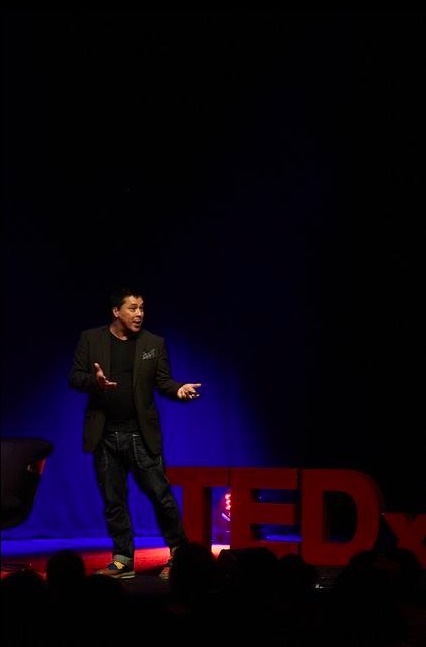
TED speaker, Asynsis principle: More for Less, Form follows Flow
The 12th Constructal Law Conference “Freedom, Design and Evolution” will be held in Torino, Italy, on 21-22 September 2023.
“Freedom. Design and Evolution" are the key words of the 12th Constructal Law Conference scheduled in Torino, Italy, on 21-22 September 2023. The Constructal Law governs all phenomena of design evolution in Nature, bio and non-bio, human made and not human made. The conference explores diverse areas: Physics of life; Design in nature; Evolutionary design with freedom; Evolution: geophysical, biological, social, technological, communications, science, literature, city, government, climate; Thermodynamics, Energy, power, and economy; Thermoeconomics, Bioeconomy and circular economy; Information, Complexity, Change, Time arrow Human beings as part of nature; Hierarchy, Power laws, Inequality, Innovation; Living and non-living from the same point of view; Natural and social sciences together; Art and science together; Predicting evolution, Sustainability
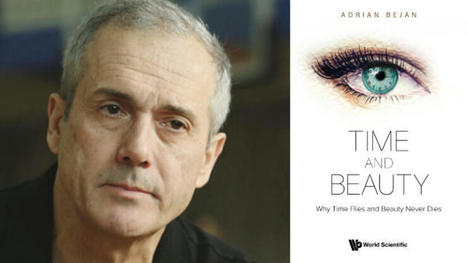
Adrian Bejan, the J.A. Jones Distinguished Professor of Mechanical Engineering at Duke University, has published a new book titled "Time and Beauty: Why Time Flies and Beauty Never Dies." This is Bejan's fourth book written for a general audience that uses his concept of constructal law—the tendency of all systems to evolve towards easier access to flow—to explain everyday phenomena that aren't traditionally tied to physics. The book was published in early February 2022 by World Scientific.
#Asynsis design thinking mentor and patron Adrian Bejan publishes his new book with perfect timing, beautifully aligning with the #FormFollowsFlow#SynPlexity-curating #AsynsisPrinciple, the geometric foil to the first-principles physics of the #ConstructalLaw.
After all, is beauty in the eyes of the beholder? How free is one to determine what is beautiful?
One more time, Prof. Bejan has provided us with a novel perspective on issues that we may take for granted or settled and even think they are out of the realm of Physics. He presents possible predictions, not just descriptions, of some universal aspects of beauty and its relation to us, to the surroundings, to nature. The book sheds light on the "je ne sais quoi " of beauty and, surprisingly, he proposes that beauty is related to time, another thing we intuitively think we know what it is. I am looking forward to receiving the hardcopy edition.
"A lot of care and attention is payed to urban planning, but the evolution of human settlements happens naturally because it is governed by a law of Physics." The evolution of the City is discussed by professor Adrian Bejan in the February 2017 issue of the Mechanical Engineering magazine. Source A. Bejan, Evolution and the City, Mechanical…
Benjamin Franklin Medal (2018): For his pioneering interdisciplinary contributions in thermodynamics and convection heat transfer that have improved the performance of engineering systems, and for constructal theory, which predicts natural design and its evolution in engineering, scientific, and social systems.
Polymath #BenjaminFranklin would approve: warm congratulations Adrian - a #FormFollowsFlow milestone for our #Constructal physics and #Asynsis geometry #DaoOfDesign visions!
Adrian Bejan is a rebel with a cause and a good job. He’s a cheerful and weird engineering professor at Duke University who wants us all to be free thinkers, to question convention and authority, and to connect the dots across topics. He himself has tried to do just that, inventing a physics principle
Very good piece from Quartz. It is a fresh comprehensive tell of how constructal law came to be by the mind of Adrian Bejan.
The idea that no flow-system prevails if freedom to morph is not present and that the morphing goes in the direction of facilitating access to what flows is powerful. Now one seeks the features of a system with freedom to morph and try to anticipate the trends of such changes.
In the case of wealth inequality we discovered that if the economy is based on the movement of goods with close relation between energy expenditure and wealth production, it is inevitable that a hierarchical network of distribution of goods and production of wealth will take place.
Organization of flow-systems towards more and more efficient energy expenditure in the movement of goods is key.
It does not mean an ultimate fate, rather the presence of a strong forcing factor.
We have seen a trend of decoupling generation of wealth and energy expenditure these last two decades - that is suppose to rearrange the flow network of wealth. We shall see.
Perhaps, what constructal law is just saying is that pushing against the flow is unfruitful for wealth distribution. Rather we shall discover another flow-system of wealth in which the natural tendency will make wealth reach more and more parts of the population. In all cases, freedom to morph must be present.
It's a challenge to all of us, now that we accept that there is a natural law in play.
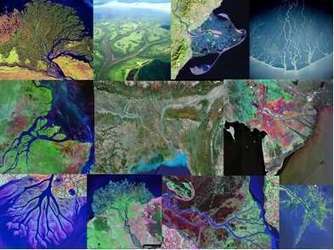
River deltas, with their intricate networks of waterways, coastal barrier islands, wetlands and estuaries, often appear to have been formed by random processes, but scientists at the University of California, Irvine and othe
Beautiful mathematical model based on guessed physics.
Is there optimality in nature designs ? Based on what ?
What about the physics behind those beautiful drawings and photos ?
Model and theory. What is the difference ? Why someone chooses to minimize or maximize entropy generation ?
It's a pity the authors and PNAS reviewing process missed pieces in the literature that explain the physical principles. Neglecting a thorough and fair review may lead people to miss important contributions on the physics behind self-organization of systems such tree-like networks.
Here some clues published in physics literature accessible to anyone that seeks the physics behind design in nature.
AD-HOC principles of minimum energy expenditure as corollaries of the constructal law the cases of river basins and human vascular systems International Journal of Heat and Technology 2016 | journal-article DOI: 10.18280/ijht.34S119 EID: 2-s2.0-84956674118 URL: http://www.scopus.com/inward/record.url?eid=2-s2.0-84956674118&partnerID=MN8TOARS
A revolutionary law of physics explains it all—sports and technology, air currents and population growth, migration and social hierarchy.
When you think of physics, what comes to mind? Atomic energy? Gravitational waves? Maybe Newtonian equations? Adrian Bejan thinks of those things too. But the iconoclastic energy scientist—a mechanical engineering professor at Duke University and one of the world’s foremost experts on thermodynamics—thinks of pretty much everything else as well. The same principles of physics, he argues, can be applied to all things that move, morph, and flow, from sports and technology to air currents and population growth, migratory patterns and social hierarchy.
Is the Hum a Music of the Spheres for our age? If confirmed, this appears to be more Asynsis-Constructal QED - more evidence (this time from celestial mechanics), that Asynsis optimal, analogical geometries best describe Constructal behaviours in nature at all scales and time frames. http://www.pattern-recogn-phys.net/1/185/2013/prp-1-185-2013.pdf "The logical conclusion is that feedback is present via perturbations…
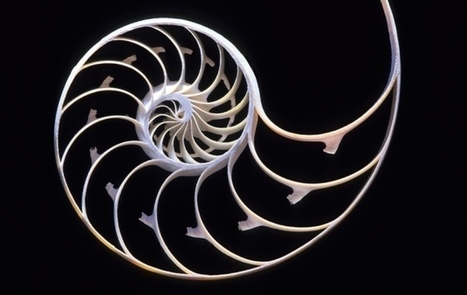
More for less, a new design and construction optimisation paradigm with global reach and universal local application to promote sustainable design and development. In our work (as just presented to ARUP Foresight & Innovation in London yesterday, Friday May 3 2013), the Asynsis-Constructal Law team describe the thermodynamic behaviours in nature that reveal the golden…
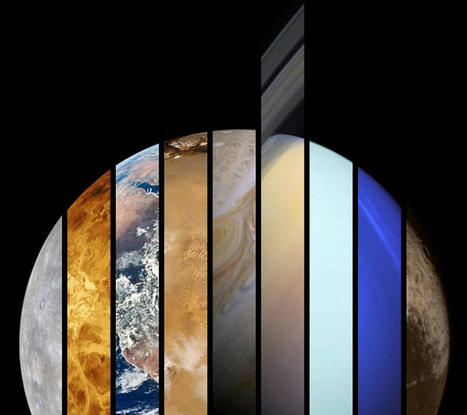
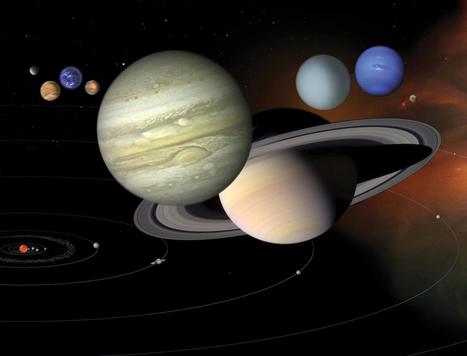
Kepler’s Mysterium Cosmographicum Dream realised with the Asynsis Constructal paradigm — a Relativity of Complexity? To celebrate the completion of NASA’s survey of the solar system, we share a new…
Why the emergence of Complexity in the Cosmos, Culminating in Life itself, is inevitable when the #FormFollowsFlow, #MoreForLess #SynPlexity Conditions are Right.
"Design is an emergent property of Entropy and Irreversibility." Nigel Reading First conjecture that Phi is an asymptotic converging constant in Feigenbaum diagram/Mandelbrot sets in AD Magazine 1994 Architecture & Film issue, now shared in Hong Kong, 2014 on TED Conferences based on confirmed proof in 2006; the #Asynsis principle describes nature's innate optimal, analogical geometric signatures…how nature designs.
Thermodynamics in Hong Kong meets E8 Quantum-Gravity in Maui, Hawaii! Asynsis-Constructal Design threads woven with Sylvie Lorente, Adrian Bejan & Garrett Lisi, as we explore the geometric architectures of our world and cosmos.
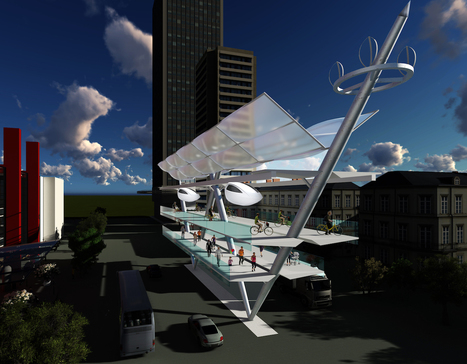
Imagine a transport system powered by renewable energy that lets you zip around on autonomous pods above the ground as quickly and smoothly as blood and nutrients course through our bodies, and is linked up to our food production systems for faster paddock-to-plate dining than ever before.
So how to make our cites more #EcoLivable, both sooner and affordably? Asynsis Architecture + Design shares #MetaLoop: #MetaLoop as one of the best, fastest & …
"Engineering (...)To have freedom and access to it is Nature itself. From every river to every animal to every one of us, freedom returns the favor and makes the creation of new engineering and with it more freedom possible.
Great recognition by ASME and a quick reminder that engineering goes beyond of making things work. Alternatively is " the application of science and mathematics by which the properties of matter and the sources of energy in nature are made useful to people" Merrian-Webster.
Why does one (or we) practice engineering ? What moves us to do it ? Why do we employ creativity ? And furthermore, why rivers do it ?
Engineering is practiced not only by "intelligent" beings, it is a way nature follows the constructal law.
"The Constructal law provides novel modeling tools to better understand the complexity in physical and biological processes. The law begins with the design and optimization of engineered systems and discovers a deterministic principle for the generation of geometric form in natural systems. The intri- cate design of all human–machine interfaces can bene t from the Constructal law. In this paper, the Constructal law is used to predict minimum time (optimal) of travel using experimental data obtained from a large-scale human–machine interface study along with the use of Fitts’s law. The results dem- onstrate a great potential to utilize Constructal law as complementary to Fitts’s law in the design of human–machine systems. Future efforts will include the application of the integrated Constructal– Fitts’s law concept to assist in the prediction of effective outcomes for various ergonomic and human factor-related conditions that exist in the work environment."
"The #Constructal law provides novel modeling tools to better understand the complexity in physical and biological processes. The law begins with the design and optimization of engineered systems and discovers a deterministic principle for the generation of geometric form in natural systems." More explicit #Asynsis principle QED, via Asynsis optimal, analogical, recursive geometries. https://medium.com/@ASYNSIS/hidden-harmonies-are-more-than-obvious-1eb24148fa93#.dxwch1by8
It was an inspiring book back at 1995 when Prof. Bejan came up with the idea that the abundance of forms, shapes, structures, rhythms and organisation in world most likely comes from a single physics principle. This book was cited many times in Constructal theory related articles.
The Physics of Life, The Evolution of Everything, is Prof. Adrian Bejan last book, and will be released May, the 24th. Kirkus 'Starred' Review: "Renowned energy scientist Bejan (Mechanical Engineering/Duke Univ.; co-author: Design in Nature, 2013, etc.) reorients the query "what is life" within the perspective of physics. Founder of the "constructal law," which holds…
Researchers have explained why objects in the universe come in a wide variety of sizes, from the largest stars to the smallest asteroids -- and it has a lot to do with how paint cracks when it dries. When a volume is under internal tension -- as the early universe was due to gravity -- the most efficient way to relieve that tension is by 'cracking' hierarchically -- few large and many small.
The principle of least action/energy, analogical (self-similar), optimal feedback loops, & irreversibility (the arrow of time), all lead to these dynamical symmetries of information flows & geometric forms. Another way of referring to gravitational "tension" is gravitational "potential energy" or even gravitational "entropy-production". We now know that QM entanglement entropy is equivalent to spacetime curvature (linked by computational complexity universality - ER=EPR theory), so Adrian Bejan is absolutely correct. Entropy production (and complexity) is maximised when we have a hierarchy of masses in the universe. This increased complexity speeds the universe more easily & rapidly towards thermal equilibrium. Just as a comet is more interesting than an asteroid, our universe chooses a more complex path, most simply. The "Synplexity" forms that these #Constructal flows yield are described by the #Asynsis principle. #FormFollowsFlow https://medium.com/@ASYNSIS/cosmogaia-2ffa281c73d
To get content containing either thought or leadership enter:
To get content containing both thought and leadership enter:
To get content containing the expression thought leadership enter:
You can enter several keywords and you can refine them whenever you want. Our suggestion engine uses more signals but entering a few keywords here will rapidly give you great content to curate.





 Your new post is loading...