Media Arts Watch Lab - www.arts-numeriques.info - laboratoire de veille Arts Numériques - twitter @arts_numeriques - @processing_org - @DigitalArt_be - by @jacquesurbanska @_Transcultures
When I was just starting out in 1992 to create interactive, or reactive as I dubbed them, graphics, there was a great deal of CD-ROM-based content emerging that seemed to miss the point of computational media.
With the digital media publisher Digitalogue, I created 4 books (the 5th never made it to print) that focused upon different aspects of the computer as related to the visual medium.
Plus performants, plus accessibles, les nouveaux casques 3D de réalité virtuelle débarquent. Que ce soit pour dessiner en 3 dimensions ou pour naviguer au milieu d'un fleuve infesté de crocodiles, l’immersion s’avère bluffante. Pour les industriels du numérique, la réalité virtuelle est l'avenir du divertissement, mais serait aussi celui du travail et des réseaux sociaux...
Des mondes numériques que l'on peut désormais explorer en mouvement comme dans la vraie vie et où l'on pourra même toucher et ressentir des objets virtuels. Des expériences d'immersion totale qui trompent nos sens à tel point que notre cerveau a bien du mal à faire la différence avec la réalité.
Festivals come in all shapes and sizes. EFFE primarily considers festivals a cultural event that takes place in a specific place, over a specific period, and that are conceived as a total package. This is a loose definition and all festivals that think they represent the criteria are welcome to apply! Visit the guidelines for more details.
How to Apply:
Start by registering on the EFFE Professional Community or log in if you already have a festival profile. Click “Yes, I want to apply” when saving your profile. Detailed instructions on how to apply can be found here. Use your login to sign in and begin your application. You can save the application and complete it later. You can spend as much time as you want working on your proposal – we can't view it until you submit it. All required fields must be filled in. The administration fee must be paid before the application is confirmed, either by credit card (PayPal) or Bank transfer. The deadline is 17 February 2017. Don’t miss it!
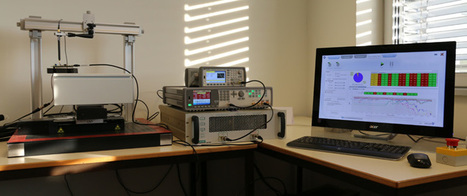
Quand on parle de sécurité informatique, la plupart des gens pensent aux mathématiques et à la cryptographie au sens logique théorique, mais peu pensent à la physique. Or dans la physique se cachent actuellement de nombreuses failles de sécurité, extrêmement difficiles à anticiper.
Commençons par une simple énigme. Une pièce contient une ampoule éteinte, vous êtes à l'extérieur de cette pièce avec trois interrupteurs sur position « off ». Vous pouvez manipuler comme vous le souhaitez les interrupteurs mais vous ne pouvez entrer qu'une seule fois dans la pièce. Comment déterminer quel interrupteur allume l'ampoule ?
In the project »Design, Development and Dissemination of New Musical Instruments«, an interdisciplinary team of researchers and artists work on questions regarding the multitude of aspects of historical and contemporary electronic musical instruments. In close collaboration with international artists and in hands-on courses for students of the associated universities, prototypes of new musical instruments are developed. The emerging designs are evaluated regarding their versatility and expressiveness in artistic practice.
The New Aesthetic and Art: Constellations of the Postdigital is an interdisciplinary analysis focusing on new digital phenomena at the intersections of theory and contemporary art. Asserting the unique character of New Aesthetic objects, Contreras-Koterbay and Mirocha trace the origins of the New Aesthetic in visual arts, design, and software, find its presence resonating in various kinds of digital imagery, and track its agency in everyday effects of the intertwined physical world and the digital realm.
Contreras-Koterbay and Mirocha bring to light an original perspective that identifies an autonomous quality in common digital objects and examples of art that are increasingly an important influence for today’s culture and society.
Influenced by a diverse range of figures, ranging from Vilém Flusser, Arthur Schopenhauer, Immanuel Kant, David Berry, Lev Manovich, Olga Goriunova, Ernst Mayr, Bruce Sterling and, of course, James Bridle, The New Aesthetic and Art: Constellations of the Postdigital doesn’t just propose a description of a new set of objects but radically asserts that New Aesthetic objects analogously function as organisms within a broader digital-physical ecosystems of things and agents.
This two-year online exhibition will present 100 artworks from net art history, restaging and contextualizing one project each week.
Devised in concert with Rhizome's acclaimed digital preservation department, Net Art Anthology also aims to address the shortage of historical perspectives on a field in which even the most prominent artworks are often inaccessible. The series takes on the complex task of identifying, preserving, and presenting exemplary works in a field characterized by broad participation, diverse practices, promiscuous collaboration, and rapidly shifting formal and aesthetic standards, sketching a possible net art canon.
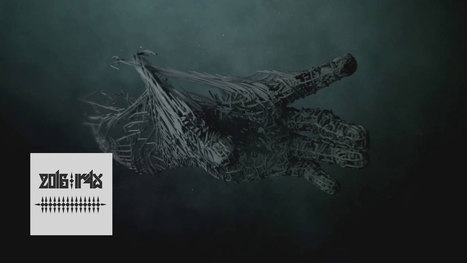
It’s lunchtime in Diego Garcia and still dark in the Mid-Atlantic, but the first light of day is reflecting hard white off the former Google facility in Hamina, Finland. The cameras on BLIX and RITTER, the twin UNDATA satellites I'm flying over Europe’s Eastern border, trigger automatically.
My shift’s first images appear on the monitor, overlays shimmering to life atop the decommissioned data center, outlining stacks of disassembled routers and cooling vents. The progress bar on the ops room’s jumbotron starts to fill. All green so far. The threat graph is bottomed-out today; the Finns have tightened up border security following several incursions by FSB and Spetssvyaz looters. But everything that was there yesterday is still there today. I take a moment to examine the traffic: dumper trucks heading towards Russia and the M10, the usual overnight flights nosing down from North America, the expected chatter in the ionosphere. Nothing to see here. The overview moves toward the Baltic States before swinging back up again, towards Sweden and the old Facebook plant.
...
Personal data is anything but personal. Our phones and televisions listen in on us; the most powerful corporations in the world trade in consumer tics, browsing histories, and demographic identities. James Bridle is an artist and technologist whose work addresses issues of privacy, surveillance, and security; he coined the term "New Aesthetic" to describe the way the visual language of technology has begun to seep into the physical world. This is his first work of fiction. -The Eds
From the paradoxical nature of our impending quantum (computing) future to the enduring mystery of the Big Bang – the ideas explored in HOLO 2 could not be any bigger. We think it shows.
It’s no surprise that insatiable curiosity mixed with, at times, stubborn determination yielded another beast of a magazine – at 236 pages, HOLO 2 is not only bigger than our first outing; it surpasses it in many ways. We’ve never worked with so many contributors across such great distances (about 12,000 km between Casey Reas in LA, Fanqiao Wang in Shanghai and Mitchell Whitelaw in Canberra – we truly span the globe). In our effort to contextualize the present we dove even deeper into the past (in search for true randomness we look back to beginning of the universe, and we met face to face with 92-year old digital art pioneer Vera Molnar) and we brought art and science a little closer together as well (by having software artist Casey Reas chat with theoretical computer scientist Scott Aaronson). “Technology has already blurred absolutes to great effect,” we muse on disciplinary “superposition” in our editorial note. And both the wealth of fields covered – astronomy, data science, human-computer interaction, psychology, social engineering – and the breadth of talents involved in creating it make this magazine equal parts documentation and product of nascent transdisciplinary practice. Welcome back to the frontiers of 21st century creativity.
Imaginez un ordinateur capable d’écrire un roman, de rédiger n’importe quel article de journal, couvrant aussi bien le dernier match de votre équipe préférée que l’évolution des chiffres du chômage. Rien ne l’empêcherait d’écrire les discours des politiciens, ni de corriger les copies des étudiants et j’en passe… Cette intelligence artificielle existe, en plusieurs exemplaires : à chacun d’eux est assignée une tâche particulière et c’est à Ada que revient la mission littéraire qui consiste à écrire et publier un roman à l’eau de rose qui soit un immense succès.
Malheureusement, Ada a disparu, sûrement kidnappée, et l’entreprise high-tech de la Sillicon Valley qui a conçu ce programme révolutionnaire appelle à l’aide Franck Logan, un inspecteur de police appartenant à une unité spécialisée dans les disparitions et le trafic d’êtres humains...
Au-delà de l’histoire de cette romancière automatique, Ada constitue une formidable réflexion sur l’intelligence artificielle, à la fois si proche et si loin de nous, sur la fascination qu’elle suscite dans notre société, et sur ses inévitables dérives. Le texte est traversé par une puissante interrogation sur la place de la technologique, la notion même de progrès, et la foi en la toute-puissance de la science.
The artistic process of Mathieu Zurstrassen is largely guided by the almost obsessive need to analyze the mechanisms of things, to understand its inner workings. His approach generates hybrid works that sometimes offer a new perspective on society, a satirical metaphor, sometimes caustic and certainly shifted reality.
By diverting everyday objects or matters of their first use, playing on the duality between simplicity and complexity or the ephemeral and the duration, his projects always offer various degrees of interpretation punctuated with humor as well as philosophical and contemporary societal questionings.
In a little over a week, the 6th edition of TADAEX festival (Tehran Annual Digital Art Exhibition) takes place at Mohsen Gallery in Tehran, Iran. It’s a strong manifestation of the digital scene in Tehran and the people who make it possible, it features Iranian digital artists as well as far reaching international network of collaborators thanks to an ongoing residency program with NODE Forum for Digital Arts. The initiative enables joint projects of one Iranian and one German artist who work together at both festivals; this year it will be Lilian Nejatpour and Simon Weckert.
Similarly, the exchange with Ars Electronica Festival and the Austrian Cultural Forum brings Austrian Artists to Tehran and provides a platform for TADAEX and its ideas: Ali Panahi, the festival’s director gave a talk on current developments and this year’s edition edition at Ars Electronica Festival 2016. In addition, TADAEX programme also includes exchange artists from Brazil, France, Japan, Kuwait and the Netherlands.
The Daniel Langlois Foundation is pleased to make available the conferences held as part of its exhibition Communicating Vessels - e-art: New Technologies and Contemporary Art, presented at the Montreal Museum of Fine Arts in the fall of 2007. These conferences, led by Jean Gagnon, Anne-Marie Duguet, Jim Campbell, David Rokeby, Lynn Hershman Leeson, Olivier Asselin, Cornelius Bork and Ernestine Daubner, are now accessible via this Web site.
How can we understand art that is being reinvented in the digital age? Today, art has gone beyond the limitations of traditional practices; it is created at the cutting edge of disciplines that not only interconnect but are continually evolving. How, then, do we position ourselves as visitors? How do we grasp the meaning of these new works of art in exhibition spaces that are themselves being utterly transformed? How do the creators of this art – who are now engineers, philosophers and computer specialists as well as artists – design a way of working that can take place equally well in a laboratory or a studio? Hear some of the artists and researchers who are presently the most involved in these questions.
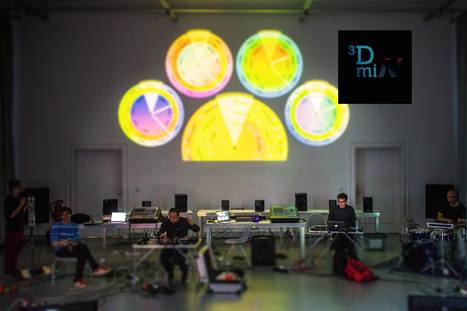
Otolab was founded in 2001 in Milan by an affinity group of musicians, djs, vjs, videoartists, videomakers, web designers, graphic designers and architects joined to go through a common path in the field of the electronic music and audiovisual research.
The projects are developed through lab sessions, seminars and live performance according to the principles of brainstorming and mutual support, free circulation of knowledge and experimentation.
The production includes collective and individual projects managed with languages ranging from experimental electronics to techno, dub and industrial sonorities, always looking for a symbiotic relationship with image and video. Otolab is a cultural association committed to create live media and installations and to carry out audio and audiovisual projects, seminars and workshops.
In these years, Otolab members have been welcomed to festivals, cultural events, museums, national and international galleries and have contributed to the realization of self-managed cultural initiatives
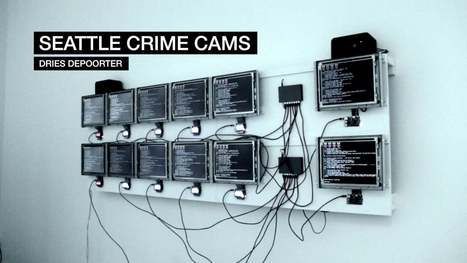
Dries Depoorter is a media artist and a freelance digital creative living in Belgium. He got a background in electronics and studied Media Arts in Ghent. Most of his work is about the internet, privacy, online identity and surveillance.
Now entering its fifth year, Vector Festival is a participatory and community-oriented initiative dedicated to showcasing digital games and creative media practices. Presenting works across a dynamic range of exhibitions, screenings, performances, lectures, and workshops, Vector acts as a critical bridge between emergent digital platforms and new media art practice.
Since 2013, Vector Festival has developed an active presence in regional and international communities related to contemporary art and critical game cultures. Curators Skot Deeming and Martin Zeilinger invite you to contribute artworks for consideration toward festival programming, which will include a feature exhibition at InterAccess throughout the month of July, along with off-site screenings, performances, workshops, and panels from July 13-16, 2017.
We currently seek works from artists at all stages of their careers that are working within the spectrum of new media art. This call is open to works on any subject.
The curators seek works for the following programs:
- Artworks for Exhibition - Film/Video/Machinima works for Screening - Performances, including sound, live coding, chipmusic concerts, as well as performances and interventions in virtual and public spaces.
The 3D Additivist Cookbook is a compendium of imaginative, provocative works from over 100 world-leading artists, activists and theorists. The 3D Additivist Cookbook contains 3D .obj and .stl files, critical texts, templates, recipes, (im)practical designs and methodologies for living in this most contradictory of times.
We set up far automatized systems that intra-communicate. On a daily basis we deeply trust on our technological achievements as we consider these being complete - Systems that control themselves by using interpretation and looping. Input = Output = Input = Output. Chinese Whispers. We conclude that systems that operate on the one hand and also control themselves on the other are technological incest. But try a different perspective: Humans intent to invent optimized technology for a certain reason that subsidiary carries the possibility to metamorphose and release creativity of great worth. Technological creativity cannot be anticipated by humankind. Next level.
Johannes Bier | Köln International School of Design short term project feedback machines by Prof. A. Muxel
cellF is the world’s first neural synthesizer. It is a real “wet-alogue” Synthesizer. cellF’s “brain” is made of a biological neural network that grows in a Petri dish and controls in real time an array of analogue modular synthesizers that were custom made to work in synergy with the neural network. It is a completely autonomous, wet and analogue instrument.
In 2012, Guy Ben-Ary received a fellowship to develop a biological self-portrait, and decided to portray one of his juvenile dreams: to become a rock star.
Guy Ben-Ary had a biopsy taken from his arm, then he cultivated his skin cells in vitro in the labs of SymbioticA at UWA, and using Induced Pluripotent Stem cell technology, he transformed his skin cells into stem cells. When these stem cells began to differentiate they were pushed down the neuronal lineage until they became neural stem cells, which were then fully differentiated into neural networks over a Multi-Electrode Array (MEA) dish to become - “Ben-Ary’s external brain”.
The MEA dishes that host Ben-Ary’s neural networks consist of a grid of 8×8 electrodes. These electrodes can record the electric signals (action potentials) that the neurons produce and at the same time send stimulations to the neurons – essentially a read-and-write interface to the “brain”.
Les éditions Contredanse ont engagé depuis plusieurs années un projet de publication avec Lisa Nelson, désirant par là combler le manque de documentations sur le travail artistique et pédagogique de cette artiste américaine, chorégraphe, improvisatrice et vidéaste. Présenter les enjeux de sa partition d’improvisation appelée Tuning Score, condenser les questions majeures de cette artiste et communiquer de manière directe sa manière d’appréhender et voir le mouvement, est ce qui a mené au projet de création de jeux vidéos. Parallèlement à un projet de publication de livre, ces jeux vidéos – développés par Polymorph et Contredanse – agiraient ici comme analogies à ses processus de composition instantanée, traduisant dans un univers numérique une synthèse des problématiques rencontrées tout au long de son parcours artistique.
Présentation des deux prototypes « Vidéo Tuning Game » et « 3D Tuning Game » :
Un premier prototype de manipulation de vidéos en temps-réel permet d’éditer le mouvement et ainsi nous enseigne sur nos stratégies d’analyse et de composition, le deuxième prototype permet la manipulation d’objets dans un univers virtuel, le comportement des objets régis par une physique simulée engendre un questionnement sur notre perception kinesthésique. Se jouant en duo, il implique un écoute et un dialogue, source d’apprentissage et composition commune.
After many years of planning, a project is in process of creating a “videogame”—an online real-time editing program—that in a sense re-reverse-engineers my initial discovery of the interactive play between visual, kinesthetic, and auditory sensations while editing video. The project, which is being produced by Contredanse in Brussels, will exist online, with the prospect of making it multi-player. The intention of the publication is to provide a set of tools that facilitate the learning process of real-time editing (which our senses do naturally all day long). The clips will offer audiovisual material that engages different senses and invite the player to discover their own patterns of seeing and choice-making as they play. Users will also be able to upload their own clips for play and analysis. Lisa Nelson
Important : Pour les retardataires, après 19h, l’accès principal est fermé et l’accès se fait avec la liste d’invités seulement. Il est donc indispensable de confirmer votre venue avant le 08/12/2016 à 16h. Présentez-vous alors au 3, rue Willem De Mol et sonnez.
All right, don’t panic, but computers have created their own secret language and are probably talking about us right now. Well, that’s kind of an oversimplification, and the last part is just plain untrue. But there is a fascinating and existentially challenging development that Google’s AI researchers recently happened across.
Following on this success, GNMT’s creators were curious about something. If you teach the translation system to translate English to Korean and vice versa, and also English to Japanese and vice versa… could it translate Korean to Japanese, without resorting to English as a bridge between them? ...
The 'Big Hex Machine' is a giant, yet simple, 16-bit computer specifically designed to explain how a computer works. Its instruction set requires a very small compiler, but it is powerful enough to implement useful programs.
The giant machine, based in the Merchant Venturers School of Engineering, measures over eight square meters. It is built out of over 100 specially designed four-bit circuit boards, which enables students to be taught about fundamental principles of computer architecture from just a few basic components.
It was designed, and built, by students and staff at the University of Bristol's Computer Science Department.
We’re excited to announce the seventh annual Theorizing the Web, April 7-8, 2017. We’re at the Museum of the Moving Image again because that place is great and those are good people.
Today, we’re opening up our call for papers. If you’d like to speak at Theorizing the Web, submit here. Also, please share this with anyone you think would be interested in submitting or attending.
Registration is now open, register here. As always, we’re pay-what-you-can.
We’ll announce some invited panels and speakers real soon. In the meantime, please help us spread the call for papers and registration widely! And thank you to everyone for all the love over the years <33
Call for Papers Theorizing the Web 2017 April 7–8 in New York City At the Museum of the Moving Image, in Astoria, Queens The submission deadline is January 22, 2017 (11:59 p.m. EST)
PREDICTIVE ART BOT is presently offering production aids in order to accelerate the physical dissemination of its deviant imaginary. This process will lead to a series of exhibitions across different countries, that becomes a hybrid laboratory for human/non-human augmentation.
PREDICTIVE ART BOT is a generator of non-human artistic concepts whose use, appropriation and misappropriation are completely free.
PREDICTIVE ART BOT is a monitoring, forecasting and self-fulfilling prophecy tool that operates in the field of art and activism.
PREDICTIVE ART BOT is a conceptual prosthesis intended to transcend creative constraints such as habit, socialization and education in order to bring about, through inspiration, the creation of completely new objects.
PREDICTIVE ART BOT is, at times, a system of sponsorship offering production aids in order to accelerate the physical dissemination of its deviant imaginaries.
PREDICTIVE ART BOT is a series of exhibitions across different countries that becomes a laboratory for human/non-human augmentation.
PREDICTIVE ART BOT is a virus that transmutes trends into the unexpected.
PREDICTIVE ART BOT is, at its best, a lucky accident between words that the machine can’t comprehend and your own imagination.
PREDICTIVE ART BOT is a manifestation of the AIvant-garde to come.
To get content containing either thought or leadership enter:
To get content containing both thought and leadership enter:
To get content containing the expression thought leadership enter:
You can enter several keywords and you can refine them whenever you want. Our suggestion engine uses more signals but entering a few keywords here will rapidly give you great content to curate.


 Your new post is loading...