Media Arts Watch Lab - www.arts-numeriques.info - laboratoire de veille Arts Numériques - twitter @arts_numeriques - @processing_org - @DigitalArt_be - by @jacquesurbanska @_Transcultures
Vernissage le mercredi 14 janvier 2015 à partir de 18h
>>> Du 15 janvier au 4 avril 2015
Artistes : Samuel Bianchini, Marie-Julie Bourgeois, Émilie Brout & Maxime Marion, Petra Cortright, Olia Lialina, Christa Sommerer & Laurent Mignonneau, Samuel St-Aubin, Gwenola Wagon & Stéphane Degoutin et Du Zhenjun.
L’art et le numérique se confondent pour « raisonner » ensemble. Aujourd’hui, nombreuses sont les œuvres initiées grâce à un moteur de recherche ou un appareil mobile. Les pratiques artistiques et usages amateurs, en réseau, s’entremêlent. Pour faire œuvre, des artistes détournent les médias sociaux que tous nous nous approprions. Car les cultures du numérique sont aujourd’hui très largement partagées. Quant aux artistes qui se saisissent des technologies de leur temps, ils nous donnent les lectures du monde qu’elles façonnent.
Connecting Cities Avec Connecting Cities, un nouveau format de communication interurbaine voit le jour : plusieurs métropoles situées aux quatre coins du globe sont reliées via un réseau d’écrans numériques géants et de façades-média. La devise du projet : « reclaim the screens! », autrement dit : « réapproprions-nous les écrans ! ». Ainsi, des espaces publicitaires où l’on montrait jusque-là des sourires Colgate, des voitures chromées et des sacs à mains de luxe sont transformés en plateformes
The unbelievably fast KUKA robot faces off against one of the best table tennis players of all time. Who has the best technique? Who will win the first ever table tennis duel of human versus robot?
Paolo Cirio is an Italian activist whose artistic quest coincides with the political and social ones. It progresses within the confines of the media for the purpose of examining its social impact on the current state of affairs as well on the vision of a potential reconquest of democracy enabling it to recover its etymological definition in the «purest» sense of the term (démos/common people and cràtos/rule, that it to say: «rule by the people»). Turbulence.org, the long-standing platform dedicated to commissioning art on line, has produced and is promoting Paolo Cirio’s latest project: Global Direct. It is currently on the internet as well as on various channels of communication as a political campaign, and it was featured in a art venues in the name of an artistic operation. ...
Next time you flip on a lamp, lean in and listen closely for the soft buzz of electricity. You might not be able to hear it on your dinky IKEA task lamp, but it’s there coursing through the cables. This silence is a good thing—most lamps are designed to be that way—unless you’re Fabio Di Salvo and Bernardo Vercelli.
The duo of italian artists makes up Quiet Collective, a studio that focuses on sound performance. For their most recent piece, The Enlightenment, they’ve taken the soft hum of electricity and turned it into a booming orchestra of sound and light. ...
Média leader dans l'actualité de l'art numérique et de l'innovation, Digitalarti vous propose sa nouvelle app gratuite disponible sur Android et iPhone.
Voyagez à travers le monde, avec les principaux artistes et créateurs, parcourez les festivals incontournables de l'art numérique et découvrez les innovations de rupture issues des rencontres de l'art et de l'innovation. Visionnez également notre sélection de vidéos présentant le meilleur de l'art numérique issues de Viméo et sélectionnées par Digitalarti.
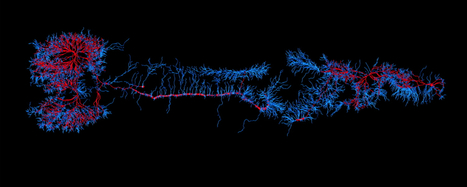
Can a digitally simulated brain on a computer perform tasks just like the real thing?
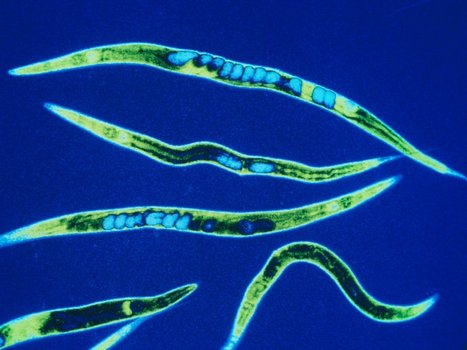
For simple commands, the answer, it would seem, is yes it can. Researchers at the OpenWorm project recently hooked a simulated worm brain to a wheeled robot. Without being explicitly programmed to do so, the robot moved back and forth and avoided objects—driven only by the interplay of external stimuli and digital neurons.
This work was born from a thesis Fixer les nuages wich proposes a genealogy of clouds leading to the advent of the Internet.
The sea of oil, sterile and without movement fills a space,
Impassive, an object, endlessly watched, shouldn't be there, Static, it has all the attributes of death but everything will change, Ordinarily its action is invisible. Here it will reveal himself. The generative power of this relationship is certain, Substances mingle, foam emerges.
Le CERN1 annonce aujourd’hui le lancement de trois nouveaux prix dans le cadre de son programme artistique Arts @ CERN, lancé en 2011. Le premier, au titre du programme de résidence artistique Collide @ CERN2, est le fruit d’un partenariat avec Pro Helvetia, la fondation suisse pour la culture. Les deux autres, au titre du programme Accelerate @ CERN3, ont été créés en collaboration avec le ministère de la Culture de Taïwan et la chancellerie fédérale d’Autriche.
« Notre engagement créatif dans le domaine artistique a suscité un intérêt formidable et reçu un soutien exceptionnel dans le monde entier. C’est donc avec fierté que nous poursuivons aujourd’hui ce programme avec de nouveaux partenaires venus d’Europe et d’Asie, a déclaré le Directeur général du CERN, Rolf Heuer.Avec Arts @ CERN, nous montrons clairement que la science est un élément fondamental de la culture au sens large du terme. »
Un projet du Pour-cent culturel Migros. Powered by dataway.ch. Site by wyw.ch. Programmation: Christian Vollenweider.
La Bourse culturelle offre aux créateurs la possibilité de s'informer sur les mises au concours, de chercher des emplois et des espaces de travail, d'acheter ou de vendre du matériel. En plus des annonces d’offres et de recherches, l’utilisateur a la possibilité de mettre en place un abonnement de recherche avec des critères spécifiques.
In the open-air prison which the world is becoming, it is no longer so important to know what depends on what, such is the extent to which everything is one. All phenomena rigidify, become insignias of the absolute rule of that which is.
Les Les Journées d’Informatique Musicale JIM sollicitent des articles dans tous les domaines de l’informatique musicale. Lors de l’événement, les articles retenus feront l’objet de présentations orales, de présentations par affiche (poster) ou de démonstrations.
Les principales thématiques de l'édition 2015 sont :
• Interprétation, arts performatifs et technologie : entre innovation et pérennité • Approches computationnelles de l'analyse musicale • Création musicale assistée par ordinateur • Outils informatiques pour la spatialisation et diffusion sonore
COMPOSTING THE NET examines the parallelprocess of fermentation and deterioration of our daily foodconsumption extra and our shared digital commons - the discardedfood scrapes reinvested; the immaterial wealth/junk of net datarecovered. The food scraps thrown onto a compost heap are layered andmingled until all traces of identities erased. On the net, theabundance of info-data sinks into oblivion with tags attached. WhileBerlin city boasts itself ECO-BIO-CHIC, it maintains anot-so-successful food waste bin system which the urbanites seldomutilize. During August 22 - 24 project launch at Kunstraum Kreuzberg/Bethanien, Berlin, COMPOSTING THE CITY calls for Berliners to'ADOPT-A-COMPOSTER" (a la ADOPT-A-HIGHWAY). 12 composting units whereworms and sensors live off and check in on the maturing of rottenmakeover are to be adopted, claimed, maintained and blogged for the 6month cycle.
Since 2006, Nicolas Maigret has been blasting iconic European architecture with high-powered subwoofers. The results are overwhelming.
Nicolas Maigret has a thing for bass. Since 2006, Maigret and Nicolas Montgermont, the other half of France-based Art of Failure collective, have been blasting iconic European architecture with high-powered subwoofers, and rolling tape as they go. The results are overwhelming. Devastating, even...
Coming from the theatre world, Thomas Israël (Brussels, 1975) approaches the visual arts from a multi-media perspective, challenging the visitor who is invited to take part in the artistic experiment.
By means of more or less sophisticated devices, it is the self-image which he questions by processes of appearance and disappearance, of superposition, thus utilizing the concept of temporality. One will undoubtedly have seized this through these mechanisms including real time animated images or delayed images, whereby the artist evokes the human destiny in forms of contemporary vanities.
The interactive video sculpture “There is No spoon”, refers to the Buddhist concepts of impermanence and dissolution of ego. Here, Thomas Israël inserts the individual portrait in a broader portrait, that of a community living the same experiment. Thus, the video portrait of the curious visitor will be mixed with other faces, known or unknown. It is placed in a group, in something broader than that of its simple experiment. “cadavre exquis” video witch questioning self-image, far from the high tech morphing of Beneton or Michel Jackson from the ‘90, the simplicity of the process leaves room to the dream. “There is No spoon” belongs to the project “Identity(s)” supported by the French Community of Belgium, Multi-media commission. ...
Andy's Deck's Glyphiti is an artistic experiment in extending the reaches of public art. Converting the clandestine creativity of the graffiti artist into something more openly available, Deck developed a globally accessible drawing wall. Built of editable 'glyphs' - squares simultaneously reminiscent of hieroglyphics, bricks and pixels - the wall can be drawn on by anyone at any time with any level of skill.
Even though participants are likely to be working alone (like any good graffiti artist surely should) perhaps on their home computer, in actual fact they are anonymous but collaborative artists working on a constantly evolving public artwork. Continuing with the graffiti metaphor, Glyphiti can permeate most corporate firewalls reminding us how adept graffiti artists are at accessing tricky spaces, as well as of the way graffiti turns private structures into very public visuals. ...
Wiki for Collaborative Studies of Art, Media and the Humanities.
The term media art is useful and used for artistic projects bringing up the technological, aesthetical, social, cultural, legal and political issues that come along with the emergence of new media. Since 1990s the new media have included internet, web, mobiles, wireless, GPS, and others. Media culture in this regard uses and is used by new media.
Neen-the meme- was born in 2000. Before leaving NY for Los Angeles, I commissioned to Sausalito-based company Lexicon, to come with a new term for Art. It had to be a word that myself and my friends could use, to call the very peculiar feeling of awe-inspiring beauty which rises sometimes from a few artifacts we encounter in the computer screen. Lexicon, the company that had come with BlackBerry for Research In Motion, Pentium, for Intel and Powerbook for Apple, had its researchers working for different months before they finally send me a list of about 70 names from which to choose. ...
Ce colloque, organisé par l’équipe MARGE (Université Jean Moulin-Lyon 3), le laboratoire Costech (Université de Technologie de Compiègne), l’EnsadLab (École Nationale Supérieure des Arts Décoratifs) et le CEMTI (Université Paris 8) aura lieu les 27 et 28 mai 2015 à la Villa Gillet (Lyon 4ème), dans le cadre des « Assises Internationales du Roman ».
Allows to search in different sections - for example, Museums, Education, or Journals - and includes onward links to relevant online services.
The Goethe-Institut is the Federal Republic of Germany’s cultural institute, active worldwide. We promote the study of German abroad and encourage international cultural exchange.
We're creating a new community based on integrating theory and application."
The School of Interactive Arts + Technology (SIAT) at SFU is an interdisciplinary research focused school where technologists, artists, designers and theorists collaborate in innovative research and immersive study.
A degree in Interactive Arts and Technology prepares students to play a leading role in the conception of new media and the design of inventive technologies. A SIAT education combines the science of human experience, the analysis of media and culture, the creation of original and experimental works of art, and the implementation of new technologies. Students bring these resources to bear on the most vital and innovative sectors of the economy, building the technologies and experiences that increasingly shape our lives.
Our program includes design studios where cross-functional teams collaboratively work with new media and interactive applications, and the study of the human experience of technology that helps to generate creative design theories and approaches. SIAT combines cutting edge research with rigorous graduate and undergraduate degree programs (MA, MSc, PhD, BA, BSc). Graduates have wide-ranging career options in every sector, working with local and international companies, or going on to pursue further research and post-doctoral studies for careers in top-tier industrial research laboratories and universities.
SIAT is one of the first schools to offer PhD degrees in our area (launched in 1999), and is unique in that it offers first year undergraduate study through to Master's and PhD level study.
VIDA is turning fifteen today. The path taken in 1999 by Fundación Telefónica to launch the competition is now considered a milestone in the history of technological art. The initiative by a group of pioneering artists – Nell Tenhaaf, Susie Ramsay and Rafael Lozanno-Hemmer –, whose vision was to detect the interest in research that linked art and life, has become a benchmark framework for understanding contemporary artistic practices.
The history of science and technology is drawn from a similar standpoint as that of art: exploration and creativity. In a society captivated by technological advancement, where the parameters by which we understand our surroundings are quickly replaced with newer and more recent versions, it is vital to have daring proposals that record our changing relationship with the environment. In particular, the science of life and its constant redefinition is currently openly proving to be one of the most powerful stimuli for contemporary culture. From this perspective, the role of the artist in these dynamics is seen as essential in showing, revealing and reflecting on the organisation of life and its variability. ...
The Center for Fundamental Living Technology (FLinT), University of Southern Denmark – in collaboration with Biofaction- is inviting an artist in residence for up to six weeks during 2015. The two-part residency will start in the spring and conclude in the summer/fall of 2015. As an artist in residence, you will actively engage with the scientists while working on a Synthetic Biology related artwork. There is no prior definition of, nor restriction to, specific genres and we welcome applications from artists, designers, writers, biohackers, or other cultural practitioners.
The stipend of a total of up to 7200 € is provided by the EU research project SYNENERGENE (Responsible Research and Innovation in Synthetic Biology)...
To get content containing either thought or leadership enter:
To get content containing both thought and leadership enter:
To get content containing the expression thought leadership enter:
You can enter several keywords and you can refine them whenever you want. Our suggestion engine uses more signals but entering a few keywords here will rapidly give you great content to curate.


 Your new post is loading...