Media Arts Watch Lab - www.arts-numeriques.info - laboratoire de veille Arts Numériques - twitter @arts_numeriques - @processing_org - @DigitalArt_be - by @jacquesurbanska @_Transcultures
Perte de Signal is one of the most creative and dynamic centres supporting Canadian and international artists committed with sound and new technologies.
Based in Montréal (QC), a city where media arts and independent artists are encouraged, promoted and defended by several cultural institutions, Perte de Signal deals with an eclectic range of media and a wide variety of approaches. Members at Perte de Signal include artists such as: Erin Sexton, Sofian Audry (who we have interviewed here), Pavitra Wickramasinghe, Nicolas Bernier, Robin Dupuis and Maxime Damecour, just to name a few. ...
During the last edition of the GAMERZ festival, i discovered the existence of the Copie Copains Club (Copy Companion Club), a community of artists who copy each other. To become a member of the club, you either copy a fellow artist or you are copied by them. It's that easy!
Copie Copains Club aims to highlight the art of copying in the Post-Internet era. Today, the works and their representations circulating on the web become themselves available materials, ready to be replayed by other artists. At a time when production companies and governments toil to outlaw copying, CCC aims to be a space where everyone can freely enjoy the copying: a playground where contemporary artists or geeks designers of all generations and all countries can question their relation to intellectual property and their own creation.
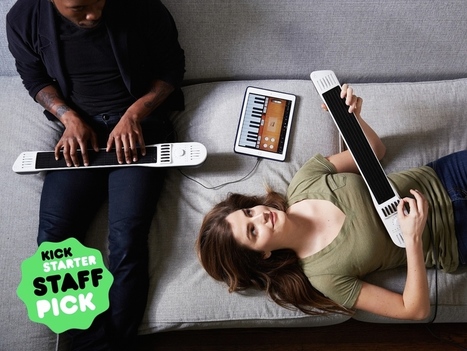
We believe anyone can make music, and that most people really want to. Like snapping an Instagram, now you don't have to already be a professional to start making music and enjoy every note. We’re building an instrument that empowers people to play music apps beyond the touchscreen, and we want to inspire people to explore music-making in their everyday lives. ...
La 7ème édition de Bouillants se déroulera du 04 avril au 31 mai 2015 et aura pour thématique Le Genre.
Choisir Le Genre comme réflexion de fond, c’est considérer qu’un propos numérique s’inscrit dans l’observation des mondes, mais aussi dans la construction du monde.
Puisque dans la définition sociologique attendue, la référence sexuée fait état de différences biologiques « cernées » entre femmes et hommes, nous interrogeons une autre dimension liée à la transmission qui s’établit à travers des processus de socialisation multiples et qui peuvent aboutir à des sortes de clair-obscur…
Si des choix d’existence « hors norme » et des combinaisons « hors formes » semblent particulièrement difficiles à mettre en œuvre dans la réalité sociale, l’art apparaît comme le territoire privilégié de la déconstruction et de la transgression des codes, des normes, et de toutes autres formes de barrières. L’art numérique ne saurait être un genre artistique en soi qui y dérogerait.
Une fois de plus, Bouillants s’emploie à interroger les stéréotypes et idées reçues en donnant la parole aux acteurs et aux artistes qui s’engagent au quotidien et tentent de décrypter notre vaste monde, avec une liberté d’interprétation salutaire. Afin de dépasser l’obsolète notion de genre, il s’agit de regarder et réfléchir ensemble à ce qu’il y a « au-delà du Genre ».
Le numérique et ses vertiges transhumanistes dimensionnent tout particulièrement la perspective…
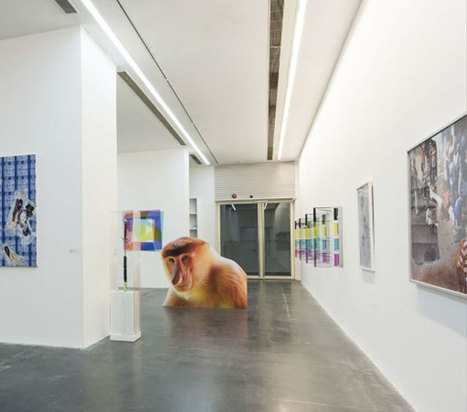
Those in search of a definitive text on post-internet artmaking now have a source book to download. Curators Karen Archey and Robin Peckham have released Art Post-Internet, a catalogue to accompany their show Art Post-Internet at the Ullens Center for Contemporary Art, Beijing China. More than that, it’s full of primary source research and information about post-internet art from dozens of critics, curators and museum professionals. These include Christiane Paul, Ben Davis, Domenico Quaranta and myself to name a few. Each catalog receives its own unique unique download number, as well as a weather report for the day and place where it was downloaded. ...
Matrix is an open standard for decentralised communication, providing simple HTTP APIs and open source reference implementations for securely distributing and persisting JSON over an open federation of servers.
You can use Matrix for…
Decentralised Group Chat Fully distributed persistent chatrooms with no single points of control or failure
WebRTC Signalling Web-friendly signalling transport for interoperable VoIP and video calling
Internet of Things Exchanging and persisting data between devices and services
"250 prepared ac-motors, 325 kg roof laths, 1.8 km rope", 2015 motors, wood, steel hooks, nylon fiber, power transformer Installation view at Knockdown Center, Queens
SIGNAL|TV offre au public l’accès à des œuvres vidéographiques et des vidéos inédites des artistes de Perte de Signal, tels que des essais, des expérimentations et des exclusivités. Grâce à un abonnement annuel, il est maintenant possible de visionner en ligne les œuvres vidéographiques indépendantes et ceci dès leur lancement.
// SIGNAL|TV offers public access to video works and new releases of Perte de Signal’s artists, as well as tests, experimentations and exclusivities. With an annual subscription you can now watch online independent video works upon their release.
La société, dans laquelle Google a massivement investi, a déposé un brevet truffé de dessins hallucinants sur les futures applications de son casque de réalité virtuelle. Attention, ça décoiffe !
On a découvert la start-up Magic Leap au mois d’octobre dernier, lors des premières rumeurs faisant état de son rachat par Google... Qui y a cependant investi plus d'un demi-milliard de dollars. Depuis, le mystère restait entier sur la capacité de cette société a révolutionner la réalité augmentée, comme elle le prétend sur son site. Mais un volumineux brevet, validé la semaine dernière par l’US Patent and Trademark Office, nous a carrément bluffé avec ses dessins surréalistes qui nous projettent dans un monde... futuriste.
92 individual light elements each controlled by a Geiger counter. Lights flash in response to the Geiger counters detecting high energy particles of radioactivity from sources both terrestrial and cosmic. Normal levels of environmental radioactivity cause the instillation to flicker randomly. A source of contamination great enough to cause the entire chandelier to remain solidly lit would be fatal to any living thing in the room.
Credits: Music and Direction : Maria Takeuchi Visuals and Direction : Frederico Phillips Performance Artist : Shiho Tanaka Camera Filming / Support : Samuel Blalark Camera equipment : Jason Guerrero
ETC MEDIA se distingue de la scène des revues d'art actuel, en proposant l'unique périodique québécois à ce consacrer aux pratiques médiatiques et numérique. Son format également très attachant signe un raffinement et une élégance, au service de la très grande richesse des œuvres du médiatique et du numérique. Une nouvelle ligne éditorial permet un espace ouvert de publication avec les communautés artistiques, tout comme avec les auteurs intéressés avec le renouvellement du langage, et des manières de faire. ETC MEDIA est une revue internationale bilingue en français et en anglais avec traduction 104 pages couleur.
ETC MEDIA stand out among contemporary art magazine as a unique Quebec periodical devoted to digital and media art practices. The very captivating format present a sophistication and a elegance that serves the great wealth of the mediaand the digital works. As well, a new editorial direction as opened space for publication engaging with artistic community and writers interested In the renewal of the language and ways of doing this. ETC MEDIA is an international magazine, bilingual in French and English, and includes translations.104 pages, full colors.Parutions: 15 février, 15 juin, 15 octobre.
Les acteurs du numérique du Sénégal s'expriment. Un point sur dix ans de création et de recherche dans le monde de la création numérique. Interrogations et perspectives.
Matrix is an open standard for decentralised communication, providing simple HTTP APIs and open source reference implementations for securely distributing and persisting JSON over an open federation of servers.
Here's an idea. Building a signaling framework for WebRTC with federation built into it. That's what Matrix is and here's an interview with Matthew Hodgson about it.
Matthew Hodgson is the Technical co-founder of Matrix.org. And Matrix.org is an open source federated signaling standard with an accompanying framework implementation. The idea as well as the execution is really interesting.
En quelques décennies, notre société a connu un essor technologique sans précédent. Les TIC ont profondément modifié notre rapport à l’autre et à la connaissance, à l’espace et à nos modes de vies. Entre mythologie de l’informatique et (ré)appropriation des usages, c’est à ce nouvel espace anthropologique -et artistique- que nous nous intéressons. Quelles imaginaires et quelles pratiques, subversives, poétiques ou alternatives, cette cohabitation en perpétuelle évolution avec la Machine génère-t-elle ?
Grâce à des expositions, des spectacles, des séminaires, des rencontres professionnelles ou encore des ateliers pédagogiques, nous avons l’ambition de poser les jalons d’une nouvelle réflexion sur notre représentation du monde numérique. Nous poursuivons également le travail commencé lors de nos Parenthèses, sur les questions du faire (prototypage et do it yourself) et de notre relation à l’environnement (urbain) au travers de ces nouvelles technologies.
The sound of empty space explores relationships between microphones, speakers, and surrounding acoustic environments through controlled, self-generating microphone feedback.
Amplifying and aestheticizing the acoustic inactivity between technological "inputs" and "outputs" - stand-ins for their corporeal correlates, the ear and mouth - the notion of a causal sound producing object is challenged, and questions are posed as to the status of the ‘amplified’.
By building flawed technological systems and nullifying their intended potential for communication, the ear is turned towards the empty space between components; to the unique configurations of each amplifying assemblage.
In each of the interrelated works - pieces which are equal parts banal, inventive, and absurd - sound is revealed not as a distinct object or autonomous event, but rather as a mutable product of interdependent networks of physical, cultural and economic relations.
Usbek & Rica est le magazine qui explore le futur. Le futur proche, le futur lointain, voire le très très long terme. En se fondant sur la méthode de l’étonnement chère aux personnages des Lettres persanes de Montesquieu (dont son titre est directement tiré), Usbek & Rica interroge la relation complexe entre l’homme et la technique, à l’heure où nous assistons aux bouleversements les plus rapides et vertigineux de notre histoire. C’est aussi un magazine qui refuse de céder au pessimisme et qui prépare, avec ses lecteurs et tous les « inventeurs de l’avenir », un futur où l’humanisme l’emportera.
En 2014, l’engagement des grosses entreprises du web 2 et du jeu vidéo pour la création de dispositifs qui immergent complètement le regard dans les univers virtuels est impressionnant : Rachat de l’Oculus Rift par Facebook avec le lancement d’un casque VR début 2015, lancement du casque VR de Sony pour la PS4 fin 2015, lancement du casque de VR de Samsung en sept 2014 adapté à son téléphone portable Google note 4, Microsoft & Google, en cours de création de leur propre casque adapté aux téléphones mobiles…
Ces engagements du monde industriel risquent de changer fortement l’accès à ces univers virtuels en modifiant tout l’écosystème (depuis la conception de ces univers jusqu’à leur distribution). De Nombreux secteurs sont en train de basculer 'naturellement' vers ces nouvelles interfaces (jeux vidéo, marketing, thérapie...). Mais qu'en est -il de l'art ? Y-a t-il un vrai nouveau champs d'investigation qui va permettre aux artistes de créer de nouvelles pratiques et esthétiques, de nouveaux dispositifs scéniques et conceptuels (installation, performance, net-art, art plastique...).
Ce premier meetup va présenter une initiative de David Guez : VRLAB.FR, collectif d'un nouveau genre ouvert à toutes les pratiques liés à l'art et aux réalités virtuelles
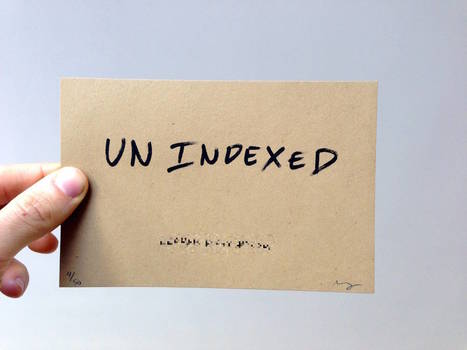
Unindexed is an online community that anyone can contribute to; it runs a back-end process that continuously scours Google for signs that it has been indexed, and securely erases itself once it discovers evidence of same.
It's a cute art project (as opposed to a cute engineering project, which would have just used a robots.txt file to stop Google from indexing it altogether), and apparently included some kind of artistic statement of purpose that was nuked, along with the rest of the site, when Google indexed it 22 days in. ...
Sonic Cinema has teamed up with Québec electronic arts organizations Elektra and Mutek to present a two-day festival of live audiovisual performances.
Digital Québec will see the UK premiere of eight innovative A/V shows. BFI Southbank’s regular Sonic Cinema strand (presenting projects “where music and film collide”) has teamed up with Québec electronic arts organizations Elektra and Mutek to present a two-day festival of live audiovisual performances. ...
La troisième édition du festival Mirage se tenait du 25 février au 1er mars à Lyon à l’initiative de l’Association Dolus et Dolus en partenariat avec l’AADN. Principalement présent sur les pentes de la Croix-Rousse dans le premier arrondissement - à l’exception notable de moments forts aux Subsistances de Lyon, au Pôle Pixel de Villeurbanne, au Sucre et au Club du Transbordeur - ce rendez-vous s’inscrit de manière de plus en plus évidente comme l’un des moments de découvertes, de rencontres et d’échanges incontournables des acteurs de l’art dit « numérique ». ...
We use tools from computer science, media design, and digital art to study massive cultural data sets.
Google searches and Amazon recommendations, airline flight paths and traffic lights, email and your phone: our culture runs on software. How does software shape the world?
Software Studies is a new research paradigm in the humanities and media studies that emerged in the second part of 2000s. The very first book that has this term in its title was published by The MIT Press in June 2008 (Matthew Fuller, ed., Software Studies: A Lexicon). In August 2008 The MIT Press started Software Studies book series, with Matthew Fuller, Noah Wardrip-Fruin and Lev Manovich as editors:
reFrag: glitch gathers together artists working in the international networks of Glitch Art for 4 days of intensive workshops, talks and performances with exhibitions in Paris and online. reFrag: glitch address the multifold ways in which glitches manifest and/or are mobilized artistically in our lives. Glitches occur in our identity (de/re)constuctions; instabilities and errors in digitized financial markets (i.e. flash crashes); hacking, cracking and tactical glitches; Dirty New Media Art approaches and the non-neutrality of technological systems.
Parsons Paris and The School of the Art Institute of Chicago’s Film, Video, New Media & Animation Department collaborate on reFrag:glitch, an international Glitch Art event running from the 19th to the 24th of March 2015.
reFrag: glitch breaks, cracks, ruptures as dirty disorganizational strategies for gathering/rallying glitch communities. Join us online and/or in Paris via the open track[s] for proposing and participating: These open track[s] to schedule opens room for surprises, improvisation and self-organized forms of participation. Please use these open track[s] to schedule in 5 minute increments i.e. a 20 minute skill share or a 15 minute talk, etc: GENERAL/OVERALL + IDENTITY partition + DISNOVATION partition + HISTORIES partition
Digital America is a new-ish online journal that focuses on digitization and digital culture with an eye toward American life. We recognize that sometimes students do great work in the classroom, and that work deserves a second life. We also realize that a lot of great work never sees professor’s desk, scholarly publication, or gallery. Digital America is a space for this wide range of critical thinking and creativity.
Our first issue cycle took place in Fall/Winter 2013. We featured work that dealt with issues and topics such as net.art, weaponized femininity on the Internet, and “digital death.” Our features highlight long-form work on digital culture, and they are published quarterly on the debut of the first issue. Our columnists shared their diverse perspectives by investigating topical subject matters, such as Kenta Murakami’s article reminiscing a brief photographic social utopia in “Flickr Friends” and Michael Leonberger’s dream-like breakdown of our tendency to delay our sleep schedule in favor of surfing the web in bed. Digital America also follows the critical and creative process that occurs in the classroom, and we has a blast covering Dr. Nicole Maurantonio’s “Unplugged: a 24-hour Media Fast” and Dr. Kristin Bezio’s “Gaming the University of Richmond.”reinvent the section in the fall of 2014. Issue No. 2 also saw an avalanche of amazing columns and feature pieces, as well as some rather interesting process explorations into maps and digital life. ...
Italian artist Dom Barra works in the emerging field of Dirty New Media Art. Jon Cates, a professor at the Art Institute of Chicago says Dirty New Media’s mission is “to express a contrast with the kind of cleanliness that is [associated] with more commercial or corporate styles of digital art and design. ...
To get content containing either thought or leadership enter:
To get content containing both thought and leadership enter:
To get content containing the expression thought leadership enter:
You can enter several keywords and you can refine them whenever you want. Our suggestion engine uses more signals but entering a few keywords here will rapidly give you great content to curate.


 Your new post is loading...