Media Arts Watch Lab - www.arts-numeriques.info - laboratoire de veille Arts Numériques - twitter @arts_numeriques - @processing_org - @DigitalArt_be - by @jacquesurbanska @_Transcultures
Installé dans une ancienne laiterie, le festival Bouillants expose des oeuvres d'art numérique. Cette année, elles proposent de s'interroger sur notre identité, notamment celle d'homme ou de femme.
Depuis 2009, l'ancienne laiterie Les Bouillants est devenue un espace dédié à l'expression numérique artistique et à la citoyenneté, un espace dont on parle chaque printemps. Organisé par l'association Le Milieu, en partenariat avec la SARL Saga, le festival Bouillants, qui se déploie sur Rennes métropole, l'Ille-et-Vilaine et la Bretagne, fermera ses portes le 31 mai. La septième édition de cet événement culturel a pour thème le genre.
Soutien à la production et à la diffusion en arts numériques. SOUMISSION DE DOSSIERS : 20 mai 2015. Agence TOPO, centre d’artistes montréalais en arts numériques, lance un appel de projets pour sa série de performances médiatiques Sortir de l’écran / Spoken screen et sa nouvelle vitrine d’exposition pour des installations interactives. Pour ses prochains programmes de diffusion, Lire la suiteRead more »
«GIF IT ! est la première édition d’une série d’expositions nomades autour du GIF art. Le concept : sortir les GIFS des écrans et les élever au rang d’œuvres d’art. Les animations se déclenchent lors d’un déplacement autour d'elles via une illusion d’optique. »
Le PAMAL est composée d’artistes, d’ingénieurs et de conservateurs-restaurateurs, mène une réflexion sur la durée de vie des œuvres d’art numériques, sur leur émergence, leur préservation, leur restauration et, parfois, leur disparition pour des raisons d’obsolescence matérielle ou logicielle. Aussi, pour cette première exposition consacrée à l’archéologie des media en France, PAMAL et Seconde Nature invitent le public à découvrir plusieurs œuvres retraçant une histoire du réseau et des machines, du minitel à aujourd’hui. D’autres créations et travaux originaux seront également dévoilés lors du vernissage, et visibles tout au long de l’exposition. ...
It has 2 electromagnetic pick-ups (microphones) to create stereo image on board and amplifier for use with headphones or with other instruments. Compared to older version, main features are stereo amplification, on-board pick-ups, high-fidelity amplifier, better filtering and tighter design. It runs on one 9V battery (included).
There's a complete invisible world around us made of electromagnetic sounds . This device lets you discover it .Must be easy to plug an audio recorder to add these sounds to your audio sources material.
VIDEOPHONIC, vous connaissez : il s’agit des résidences art numérique que l’AADN organise tous les mois.
Un RDV régulier qui vous permet de découvrir une équipe, un projet – souvent hybride – explorant la discipline des arts numériques avec un nouveau regard.
Cette année, VIDEOPHONIC c’était : 8 projets et 25 artistes accueillis, dans 7 lieux partenaires de l’agglomération lyonnaise, et toujours des formes nouvelles. Vous pouvez vous replonger dans cette saison grâce aux vidéos d’Etrange Prod, l’équipe qui nous a suivi sur chaque résidence : ici
C’est le moment de relancer la machine pour préparer la saison 2015-2016.
Adam Ferriss is one of those technologically-minded creatives who is able to put his ever-growing knowledge of code and processing to use building aesthetically wondrous digital art for the rest of us to enjoy. His images make me feel like I’ve just taken some psychedelics and stepped into one of those crazy houses you get in funfairs, where there are giant optical illusions on every wall and the floor keeps moving under your feet, except these are made using algorithms and coding frameworks and, for the moment at least, they don’t exist beyond the screen.
Intrigued and slightly baffled by the infinitely complicated world of digital art, we had a chat with Adam to find out how he got started in working with code, how much control he has over an outcome which is produced largely by random processes, and how he plans to take his work offline. ...
The Digital Media Research + Innovation Institute (DMRII), founded in 2010, facilitates the applied and academic interdisciplinary integration of research and innovation at OCAD University. DMRII was funded by the Ontario Ministry of Research and Innovation (MRI) with a total budget of $18 million; received a contribution of $9 million in 2008; and matching funds have been attained through research funding and industry-collaboration partnerships.
The DMRII consists of laboratories, exhibition, meeting and fabrication facilities, research technology and infrastructure resources. It is responsible for research business development, institutional collaborations, private-sector partnerships, coordination of research outreach and providing project management services.
DMRII supports research excellence and training in a wide range of art creation, applied research investigation, project-based research and commercialization projects that use human-centred research methods, develop and apply new design tools and design-thinking processes, all combined with the strengths of invention, experimentation and the interpretive qualities of art-making practices.
De l’analogique au numérique, 50 ans de matériel audio à Radio France Plus de 500 lots de matériels réformés de Radio France.
Vente aux enchères à la Maison de la radioDimanche 7 juin - Auditorium de Radio Francede 11h à 12h30 et de 14h00 à 18h00
Le dimanche 7 juin aura lieu la première vente aux enchères à la Maison de la radio, organisée par Art Richelieu, offrant une nouvelle vie à 500 lots de matériels réformés de Radio France.
Depuis plusieurs années, Radio France a mis en place une politique permettant d’offrir une nouvelle vie aux matériels réformés en raison des évolutions technologiques et de leur obsolescence.
A new drone camera has been released that allows users to simply throw it in the air and have it follow them around.
The drone is designed to allow people to be filmed without having someone do it for them. It looks to be positioned towards the same people who use Go Pros, mounting them to their head to film snowboarding and other extreme sports, but allows for them to feature in the video themselves.
To use the drone, users simply turn it on and throw it up into the air. From there, it will follow a special transmitter or go in pre-programmed routes.
The drone is waterproof and small, only weighing 2.8 lbs. ...
Florian Meisenberg’s 6 videos consist of screen-captures depicting the real time manipulation of the digital source-code of different JPGs chosen from the internet. In each screen-capture video, the screen is divided into the source code, opened in TextEdit window, and a preview of the output JPG image, which changes according to the alteration of the source-code. This is accompanied by the sound of typing and the surrounding ambient sound. The alterations in the code include excerpts and quotes from philosophical and historical texts–such as Søren Kierkegaard’s Sickness unto Death, J.P. Sartre's War Diaries: Notebooks from a Phoney War 1939-40, or The Communist Manifesto by Engels and Marx. The insertion of these texts into the code causes a change in the visual surface of the images, questioning the notion of an original author or authentic image.
For the 16th edition, ELEKTRA offers fans of digital arts and culture a theme centred on the power of sound, entitled POST-AUDIO, in the sense of “beyond audio,” or beyond what we know as sound. With programming that looks at the influence of sound on our psyche and explores phenomena of listening, ELEKTRA 16 is a window onto local, national and international creation.
An event that marks spring in Montreal, the festival presents more than 30 of the most innovative local and international digital artists through some 10 partner sites. The audience is at the heart of the artistic offerings and has a chance to attend audiovisual, sound and immersive performances, concerts, installations and openings, launches, as well as the International Marketplace for Digital Art (IMDA – 9th edition).
Physiological computing focuses on the use of biosignals for the development of interactive software and hardware systems capable of sensing, processing, reacting, and interfacing the digital and analog worlds. However, biosignals have specific requirements for which typical physical computing platforms are not particularly tuned. Until recently, many projects ended up hindered by high costs and limited access to suitable hardware materials. That scenario is different today, partially thanks to
En prenant la direction de la scène nationale de Martigues, Gilles Bouckaert avait annoncé que, dans ses habitudes de programmation, il n'y avait pas forcément que du spectacle vivant à voir dans un théâtre. Ponctuellement, des expositions à grande échelle pouvaient y être proposées.
Avec Micro Macro, qui s'ouvre cet après-midi, aux Salins et dans quatre autres lieux de Martigues (lire ci-dessous), il tient parole et "ouvre aussi potentiellement le théâtre à un public différent". Mais, de son propre aveu, comme il a le goût pour les arts numériques mais pas forcément les compétences pour les sélectionner, Gilles Bouckaert a fait appel à Charles Carcopino pour assurer le commissariat du projet. ...
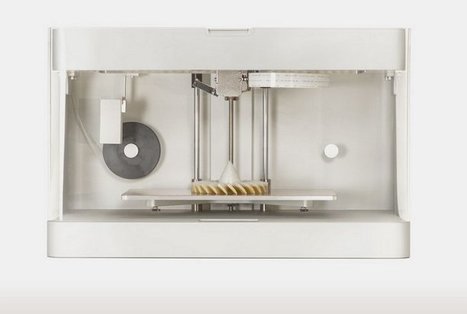
The Mark One 3D printer from MarkForgedprints in carbon fiber, Kevlar, fiberglass, and nylon formulations. With a build volume of 320 x 132 x 160 mm, it makes use of one nozzle to print a plastic material as another nozzle prints the fiber material.
The finished parts appear similar to traditional FFF printed parts but include strands of fiber running through them. Parts that include just one or two layers of carbon fiber or fiberglass are exceptionally rigid, and MarkForged Creative Director Jeff Klein says the specifications for the strength of those parts and materials has now been officially benchmarked. ...
i/o/lab is an artist-run organization that started in 2001 and since 2005 has been located at Tou Scene. i/o/lab Centre for Future Art is an active advocate for the arts and new technologies in the region. i/o/lab delivers professional artistic projects that have strengthened the center's institutional status, both nationally and internationally. The organization is affiliated with the national network - Production Network for Electronic Arts (PNEK) and has gradually built up a large international network within the field.
The activity of i/o/lab is divided into two parts:
In the public space conveys i/o/lab art that touches new technology and science to the wider public in the region with art projects in the form of exhibitions produced as Article Biennale and Public Art Screens.
i/o/lab works with professional artistic research and development with a focus on art, new technologies and science and contributes as a resource through presentations, activities and as a partner in the field, both nationally and internationally. i/o/lab also contributes as a partner to regional institutions and businesses.
i/o/lab's expertise extends from production to dissemination and knowledge of art in new technology and science. The dimensions of i/o/lab is to provide innovative and artistic projects through creating meeting places between art and research to multiple audiences in the community.
i/o/lab's projects are partly based on the dissemination of art in public spaces.
Sean Cubitt’s most recent book combines a high level of intellectual elaboration with detailed reference to source materials. It is unusual to find a book in the field of media theory capable of articulating so many key topics (the history of painting, the printing press, engraving, photography, film, television and digital media) with such depth and clarity. “The Practice of Light” does not separate concepts thematically as being exclusive to one particular media but rather identifies common scenarios, allowing for the drawing of broader conclusions. Time spent discussing the material culture associated with the diverse practices of visual media allows the author to propose a concrete genealogy of elements that have shaped the historical transformation of various media. ...
Nicolas Sassoon, currently an artist in residence at the digital art nonprofit Opening Times, turns GIFs into sculptures, and architecture into GIFs.
“Why GIFs?," Opening Times recently asked artist Nicolas Sassoon. Sassoon has been on a three-month virtual residency with the London-based digital media art nonprofit, and has spent the bulk of it working on massive GIFs that span the width of a browser and actually require scrolling. His latest work, Studio Visit, depicts a studio space complete with wall panels, a brick fireplace, and multiple LCD screens. ...
Surveillance des Etats, collecte de données par des entreprises comme Facebook ou Google : pour l'informaticien Franck Leroy, il y a des liens consanguins entre entreprises et services américains.
« Qu’on m’explique. Pourquoi les opposants au projet de loi renseignement acceptent-ils que Facebook, Google ou Twitter sachent tout de leur vie ? »
Cette manière de présenter les choses pourrait paraître simpliste (après tout les opposants à la loi sur le renseignement sont souvent très critiques vis-à-vis des GAFA), mais elle est souvent revenue ces dernières semaines : pourquoi se focaliser sur la surveillance de l’Etat alors que l’actualité nous apporte chaque semaine des exemples flippants de ce que les géants du Web pourraient faire avec nos données ?
Des personnes bien intentionnées ont essayé de lui répondre, sur le thème « Google et Facebook n’ont pas de prérogatives de puissance publique, pas le monopole de la violence légitime, nous ne risquons que la publicité ciblée ». Cette réponse paraissait un peu courte (Twitter oblige).
Deux livres du même auteur permettent d’éclairer ce débat : « Réseaux sociaux et Cie » (2013) et « Surveillance. Le risque totalitaire » (2014). Deux bouquins symétriques sur les pratiques de l’Etat (surtout les Etats-Unis) et celles des entreprises privées (surtout américaine). Sur la quatrième de couverture, « Franck Leroy », l’auteur, est présenté comme un « consultant en architecture des réseaux informatiques ». ...
MARY FLANAGAN’screative career pushes the boundaries of medium and genre across writing, visual arts, science, and design. She works in the gallery space, but also invades commercial game design, pop culture, and academia with provocative ideas about authorship, politics, aesthetics and play.
She has achieved acclaim for her novel interdisciplinary work that weaves a studio art practice with humanities research, creative writing, and scientific inquiry. She also founded & directs Tiltfactor.
It is one of the great mysteries of the digital age.
The hunt for Satoshi Nakamoto, the elusive creator of Bitcoin, has captivated even those who think the virtual currency is some sort of online Ponzi scheme. A legend has emerged from a jumble of facts: Someone using the name Satoshi Nakamoto released the software for Bitcoin in early 2009 and communicated with the nascent currency’s users via email — but never by phone or in person. Then, in 2011, just as the technology began to attract wider attention, the emails stopped. Suddenly, Satoshi was gone, but the stories grew larger.
Over the last year, as I worked on a book about the history of Bitcoin, it was hard to avoid being drawn in by the almost mystical riddle of Satoshi Nakamoto’s identity. Just as I began my research, Newsweek made a splash with a cover article in March 2014 claiming that Satoshi was an unemployed engineer in his 60s who lived in suburban Los Angeles. Within a day of publication, however, most people knowledgeable about Bitcoin had concluded that the magazine had the wrong man. ...
french ? >>> http://rue89.nouvelobs.com/2015/05/16/grand-mystere-lere-numerique-bientot-devoile-259219
Thinking through Digital Media offers a means of conceptualizing digital media by looking at projects that think through digital media, migrating between documentary, experimental, narrative, animation, video game, and live performance. Hudson and Zimmermann analyze projects at the intersections of imbedded technologies, transitory micropublics, human-machine interface, and critical cartographies to forward a set of speculations about how things work together rather than what they represent. The book frames debates on participation/surveillance, outsourcing, global warming, migrations, GMOs, and war across some of the most dynamic, innovative sites for digital media, including Brazil, Canada, China, Germany, India, Indonesia, Italy, Kenya, Nigeria, Palestine, Saudi Arabia, Singapore, and the United States.
These may be the most unexpectedly gorgeous and disturbing examples of experimental GIF art I've ever seen. Follow the multimedia artist behind them: @kyttenjanae on Twitter and Instagram. Anyone who says animated GIFs aren't a form of fine art should light up a fattie and spend some time on kyttenjanae.tumblr.com, then STFU.
Drone Garden addresses the issue of naturality in a networked and through that means virtualized environment. As a series of interconnected hybrid “plants”, the installation creates a utopian garden through wires, circuit boards, cables and other circuitry - a garden in which all of their inhabitants, the plants (drones), are constantly fighting for resources (network bandwidth).
This fight, happening on packet level on the network sockets and in the memory of the “plants”, is fueled by an instinctive codified behavior which is visualized on the screen. The installation raises the question if it is ethical to interfere with such a confined microcosm, which, even though carefully designed and therefore artificial, nevertheless behaves and fights for its existence.
To get content containing either thought or leadership enter:
To get content containing both thought and leadership enter:
To get content containing the expression thought leadership enter:
You can enter several keywords and you can refine them whenever you want. Our suggestion engine uses more signals but entering a few keywords here will rapidly give you great content to curate.


 Your new post is loading...