Your new post is loading...

|
Scooped by
Jacques Urbanska
January 11, 2016 3:55 PM
|
Today is the third anniversary of the suicide of Aaron Swartz. Aaron was one of my closest friends. That night was the worst of my life. In the weeks and months that followed, many of his friends and family — and many people that never knew him personally — asked themselves and each other the same question: what’s the best way to honor Aaron’s death? ...
|
|
Scooped by
Jacques Urbanska
January 9, 2016 9:14 AM
|
Jusqu’au 31 janvier 2016
L’inspirateur principal de cette proposition est Philip K. Dick, le grand visionnaire paranoïaque de la littérature contemporaine. En particulier, le sentiment dickien que quelque chose cloche. Que le monde n’est pas ce qu’il semble être, mais un décor, un trompe-l’œil habilement conçu pour abuser le genre humain.
Prosopopées sera donc la grande thématique transversale de la Biennale 2015 et de son exposition principale au CENTQUATRE-PARIS, la fiction d’un dérèglement savamment orchestré.
Imaginez que nous rencontrions des affichages d’aéroport qui n’en font qu’à leur tête (Signal To Noise de LAb[au]), des entités extraterrestres qui s’installent parmi nous (Timée et Hara de Guillaume Marmin), des tableaux qui prennent vie, des exo-squelettes venus de l’outre-espace qui nous invitent à danser (Inferno de Bill Vorn et Louis-Philippe Demers), des œuvres qui tentent de s’échapper de l’exposition (Nervous Trees de Krištof Kintera).
Les œuvres présentées :
À chacun son tour – Edwige Armand
A day’s pleasure – Jérémy Gobé
Art Student – Marck
Balance From Within – Jacob Tonski
BBot (BrowsingBot) – Anne Roquigny
Beauty – Rino Stefano Tagliafierro
Bleed – Michel de Broin
Élasticité dynamique : Expansion – Étienne Rey
Endophonie Mécanisée – Edwige Armand
Hara – Guillaume Marmin et Fred Marolleau
Inferno – Bill Vorn et Louis-Philippe Demers
I see I see I see – Krištof Kintera
Keep on Smoking – Michel de Broin
Mécaniques discursives – Fred Penelle et Yannick Jacquet
Miroir fuyant – Thomas Cimolaï
My Answer to Ecology #2 – Charbel-joseph H. Boutros
Nervous Trees – Krištof Kintera
Nyloïd – Cod.act
Notre bon plaisir – Pascal Bauer
Octaédrite – Félicie d’Estienne d’Orves et Lara Morciano
Pergola – LAb[au]
RE: – Bram Snijders et Carolien Teunisse
Rose – Laurent Pernot
Sans objet – Aurélien Bory
Sex sells – Marck
Signal to Noise – LAb[au]
Tablespoons – Samuel St-Aubin
temps!réel – Maxime Damecour
Timée – Guillaume Marmin et Philippe Giordani
Wave Interference – Robyn Moody
|
|
Scooped by
Jacques Urbanska
January 8, 2016 9:36 AM
|
RIXC new initiative “NORTH – creative network” is response to unstable situation of this moment, which requires constant and rapid changes in culture and art sector and finding new, innovate solutions for more sustainable future. Past years, new media artists have developed and expanded their field of interests far beyond the so-called "new media" borders. They are engaged in sustainability issues, looking at them from different perspectives – social, cultural, environmental and technological. NORTH Creative Network (NCN) – for open innovation and cultural exchange will be developed by project partners from Latvia, Iceland and Norway in a result of the project activities, taking place in all three countries. The project mission is to contribute towards sustainable culture development by designing and building more accessible routes into the sector of creative industries. Project is taking place as part of European Economic Area Financial mechanism Programme LV04"Conservation and revitalisation of cultural and natural heritage".
News about project: http://rixc.org/lv/home___/0/north-cn-izsludinata-pieteiksanas-piksel-festivalam-bergena/ http://rixc.org/lv/home___/0/foto-north-cn-elektroniskas-makslas-festivals-pikslaverk/ http://rixc.org/lv/home___/0/north-cn-biotricity-inovaciju-laboratorija-un-izstade-monsa-belgija/ More detailed information also can be found here
|
|
Scooped by
Jacques Urbanska
January 8, 2016 9:29 AM
|
UNDER WAY metaphorically transposes the building which houses it into a ship at sea, and sets the encounterer free on a voyage to uncharted shores.
THE INTERVENTION uses a series of inversions to create the perceptual conditions that allow the “ship” to set sail. It installs a moving horizon, with its ocean and stars, into the space, suggesting to the visitor that it is in fact the building which is moving. The instrument of this horizon is an illuminated, kinetic loudspeaker assembly, inspired by marine chronometers, the essential instruments of navigation. In the days of square-rigged sailing ships, the chronometer was suspended in a basket of gimballed rings, so that as the ship moved, the chronometer remained static, enhancing accuracy. Here I invert not only the building, moving its horizon to its interior, but also the chronometer, so that it tilts continually on its gimbals and drives the motions of a horizon projected onto the walls. The reimagined compass, no longer an introverted guide, projects an altered reality into the entire space.
THE INSTALLATION: A 12” speaker is mounted on gimbals so that it can move freely in 2 axes. Movement is initiated entirely by the soundtrack playing from it, via a small wire pressing on its membrane. On top of this floats a ring of mirrored film, and it is surrounded by a fixed ring of spotlights, directed inward, forming a continuous shadow line around the walls of the room, thus creating the horizon. Then, as the speaker moves, so moves the horizon. The mylar ring reflects the lights upward, projecting a celestial map overhead, rocking with the motion of the waves.
THE SOUND is a 5 channel electroacoustic composition (a quad array is hidden in the base). Recordings from the inside of a bottle at sea play from the moving speaker and produce moving nodes and doppler shifts. The fluttering of heavy cloth plays from the base, and, by using phase differentials, seems to emmanate from the floor and walls.
http://douglashenderson.org
|
|
Scooped by
Jacques Urbanska
January 8, 2016 9:16 AM
|
independent curator and cultural producer whose research is situated on the borders of contemporary art and new technologies.
|
|
Scooped by
Jacques Urbanska
January 7, 2016 4:35 AM
|
It was the low-tech, easy-to-use film format beloved of budding auteurs and cinema-obsessed visual artists, but Super 8 died a death in 1982, when Kodak stopped making the camera units after the rise of video. Now, however, Kodak has announced it will issue a new version of the Super 8 camera, half a century after it was first launched in 1965...
|
|
Scooped by
Jacques Urbanska
January 7, 2016 3:54 AM
|
This book introduces the concept of sonic virtuality, a theory of sound that positions it as an emergent perception within a framework of virtuality. In its opposition to the acoustic or standard definition of sound, that sound is a sound wave, the thesis builds its case for a sonic aggregate as the virtual cloud of potentials from which the sound as perception emerges. This is argued for from a broad interdisciplinary perspective that assesses evidence and thinking from philosophy; acoustics and psychoacoustics; auditory science and neurology; sensation, perception, and cognition; cross-modality; writings on truth, knowledge, imagination, hallucination, belief, and alief; ontology and epistemology; embodied cognition; computer games and similar environments; acoustic ecology and ecological acoustics; sound design; and theories of reality, actuality, and virtuality. Throughout, the book is at pains to not only assess from many approaches this new way of conceptualizing sound but also to demonstrate the practical applications and advantages of the ideas and models that accompany it. This is accomplished through numerous illustrative examples that not only reference everyday experiences but also probe the future of audio design in the context of new and developing technologies.
|
|
Scooped by
Jacques Urbanska
January 7, 2016 3:41 AM
|
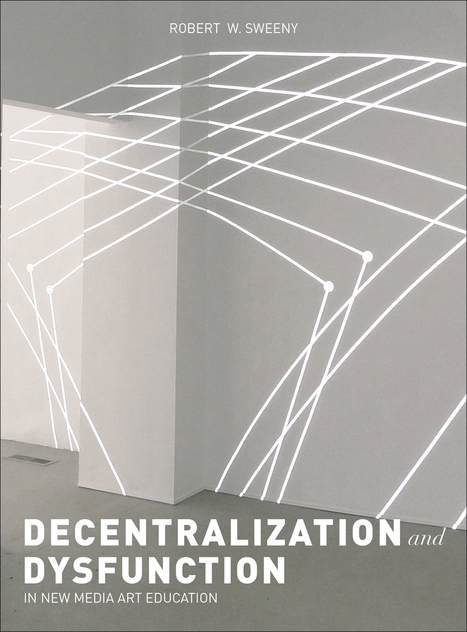
When using digital technologies, many types of dysfunction can occur, ranging from hardware malfunctions to software errors to human ineptitude. Many new media artworks employ various strategies of dysfunctionality in order to explore issues of power within societies and culture. When using digital technologies, many types of dysfunction can occur, from hardware malfunctions to software errors and human ineptitude.
Robert W. Sweeney examines how digital artists have embraced the concept of the error or glitch as a form for freedom—imperfection or dysfunction can be an integral element of the project. In this book, he offers practical models and ideas for how artists and educators can incorporate digital technologies and integrate discussions of decentralized models of artistic production and education.
|
|
Scooped by
Jacques Urbanska
January 7, 2016 3:35 AM
|
American artist and researcher Kyle McDonald now enjoys international recognition. On the line up at the biggest international festivals like Ars Electronica, Sonar and Click Festival, he is notably the name behind several installations acclaimed by the digital world. Amongst them, Augmented Hand Series, Sharing Faces and Social Soul echo social relationships between people. An enthusiast of collaborative ventures this artist stands out for his contributions to the openFrameworks community of which he is an active member.
In 2015 the jury of the Ars Electronica festival awarded a prize to Kyle McDonald for the installation Augmented Hands Shadow (created in 2014 with Golan Levin and Chris Sugrue). A famous award that gave an audience acquainted with digital arts an opportunity to experience the world of this specialist in 3D environment. This piece, comprising a box in which a visitor inserts their hand, simultaneously displayed an altered limb on a huge screen. The artist has developed twenty or so different transformations...
|
|
Scooped by
Jacques Urbanska
January 6, 2016 3:41 AM
|
Le collectif INVIVO est une plateforme qui regroupe plusieurs artistes des arts numériques et du théâtre ayant pour ambition de porter un regard différent sur la création et l’écriture contemporaine. Il se compose actuellement d'une équipe pluridisciplinaire (Alexia Chandon-Piazza / Julien Dubuc / Chloé Dumas / Grégoire Durrande / Pierre-Yves Poudou / Samuel Sérandour). Les actions du collectif se déploient sur trois axes différents : les créations, les collaborations artistiques et les accueils au sein de la structure administrative. LES CRÉATIONS DU COLLECTIF L'équipe s'est constituée autour d'une volonté de travailler collectivement sur des performances d'art numérique et immersif. Parfois je rêve que je vois, projet immersif pour 10 spectateurs au casque, pose l’esthétique et l’imaginaire développés par le collectif : un univers contrasté, rempli d’images mentales, où les sons se spatialisent dans une obscurité immanente. La création de la version définitive a eu lieu en novembre 2014, au Cube - centre de création numérique (Issy-les-Moulineaux). Black Out, en cours d'écriture, va permettre au collectif de poursuivre ses recherches technologiques et immersives. La création aura lieu le 18 décembre 2015, au Cube - centre de création numérique (Issy-les-Moulineaux). LES COLLABORATIONS ARTISTIQUES Les collaborations artistiques correspondent à l’invitation d’autres artistes/structures à travailler autour d’un texte, d’un dispositif, ou d’une thématique. Le rôle du collectif ainsi que les artistes intervenant dans la collaboration se définissent en fonction de chaque projet...
|
|
Scooped by
Jacques Urbanska
January 6, 2016 3:33 AM
|
Du 1er novembre au 31 janvier 2016 se tient la seconde édition de The Wrong (again) – Digital Art Biennale, la plus grande exposition mondiale d’art numérique. Mais également la plus …. virtuelle car seule une connexion internet suffit pour découvrir les centaines de créations numériques sélectionnées et présentées dans de nombreux pavillons. Au programme: plus de 1 000 artistes internationaux, 90 commissaires, 50 pavillons thématiques et un pavillon public ouvert aux contributions pendant toute la durée de la Biennale....
|
|
Scooped by
Jacques Urbanska
January 4, 2016 3:03 PM
|
CICA New Media Art 2016: The 2nd International Exhibition on New Media Art Featured Artists 참여작가: Sarah Choo Hans Gindlesberger Joe Hedges Sanja Hurem Colby Jennings Kang Su Jeong Mark Kleine Helen Koo Liss LaFleur Kim Miller Sean Mullan Elisabeth Pellathy Joe Ren Borja Rodríguez Schedule 전시일정: January 13, 2016 – January 24, 2016 (2016년…
|
|
Scooped by
Jacques Urbanska
January 4, 2016 2:47 PM
|
Mapping is a two-year (2014-16) participatory project initiated by Leisa Shelton/Fragment31, to archive the public memories of seminal points in Australian Media Art, Live Art and Performance Practice. It seeks to reveal seemingly forgotten artists and make visible undocumented lineages of practice.
Through a one-on-one conversation with Leisa, participants are invited to archive their key personal experiences of Australian Media Art, Live Art or Performance practice. It is a process based in MEMORY not document, and so it draws on people’s visceral lived experiences of an artwork to name the artists that have marked us as a culture.
Mapping follows two parallel lines of investigation: ‘Mapping Australian Media Art’ has been commissioned by Experimenta and will follow the festival across its eight national sites throughout 2014-16.
‘Mapping Live Art and Performance‘ takes place at several venues across Australia over 2014-16, beginning in March 2014 with the Festival of Live Art (FOLA) at Arts House in Melbourne, and then with Vitalstatistix’s Adhocracy in Adelaide, with future sites to be announced.
|
|
|
Scooped by
Jacques Urbanska
January 10, 2016 5:29 AM
|
We are proud to announce that out-of-copyright materials in NYPL Digital Collections are now available as high-resolution downloads. No permission required, no hoops to jump through: just go forth and reuse!
The release of more than 180,000 digitized items represents both a simplification and an enhancement of digital access to a trove of unique and rare materials: a removal of administration fees and processes from public domain content, and also improvements to interfaces — popular and technical — to the digital assets themselves. Online users of the NYPL Digital Collections website will find more prominent download links and filters highlighting restriction-free content; while more technically inclined users will also benefit from updates to the Digital Collections API enabling bulk use and analysis, as well as data exports and utilities posted to NYPL's GitHub account. These changes are intended to facilitate sharing, research and reuse by scholars, artists, educators, technologists, publishers, and Internet users of all kinds. All subsequently digitized public domain collections will be made available in the same way, joining a growing repository of open materials...
|
|
Scooped by
Jacques Urbanska
January 8, 2016 9:48 AM
|
This collision between the art of deception and the science of perception has also intrigued artists Michele Barker and Anna Munster, who bring this fledgling area of enquiry into the media art realm with HokusPokus. Comprising one half of the visual arts program in Performance Space’s 2011 Exchange season, this collaborative work employed an interactive cinematic magic show to explore the corporeal aspects of seeing. The artists’ playful and experimental journey into neuroscience was paired with a stunning immersive installation in the main space informed by the biological sciences, Peta Clancy and Helen Pynor’s The Body is a Big Place, with sound by Gail Priest, which engaged the organ transplantation process to challenge the disconnect we have with our own bodies and to create greater empathy for this remarkable yet often misunderstood medical procedure...
RealTime plus OnScreen online and print arts magazine covering innovative practices in media art, digital art, hybrid art, performance, dance, visual art, sound and music, film in Australia and internationally
|
|
Scooped by
Jacques Urbanska
January 8, 2016 9:32 AM
|
George Redhawk tells us how he hijacked morphing software to create his hallucinatory GIFs
A Tribute to Adam Martinakis by GameL +Adam Martinakis source: 3DVF.com/GameL. GIF animation by George RedHawk. Before becoming an unlikely viral GIF art sensation, George Redhawk worked in various areas of medicine, instructing on subjects such as x-ray technology and, rather surprisingly, phlebotomy. As he tells The Creators Project, he had a fairly productive life doing that. Then, suddenly, Redhawk lost his sight, destroying his career and life in the process. And even though he continued to teach for four years, Redhawk says he “lost everything”... .
|
|
Scooped by
Jacques Urbanska
January 8, 2016 9:24 AM
|
Future of World Wide Web: Interactive Multimedia Interconnectedness. Curated by Haydiroket - HYPERMEDIA DREAMS is part of The Wrong (again) - New Digital Art Biennale.
www.haydiroket.tumblr.com
Mert Keskin aka Haydiroket is an Istanbul resident, well known around the world with a very impressive work in this medium.His works presented on theMuseum of the Moving Image and Smithsonian's National Air and Space Museum.He has participated in many exhibitions in Canada, the UK, Italy, Portugal, Belgium, Asia and the US and has worked with numerous companies in the entertainment business and his is also a one of Tumblr’s resident GIF editors.
|
|
Scooped by
Jacques Urbanska
January 8, 2016 8:57 AM
|
télécharger le programme
Tandis que l’humanité croît au rythme d’un million d’individus supplémentaires chaque semaine, le réchauffement climatique détruit massivement la biodiversité et réduit un peu plus chaque année les terres cultivables. Il nous faut d’urgence repenser notre lien à la nature et trouver des solutions pour les générations futures. Le monde industriel mise sur une augmentation de la production grâce aux nouvelles technologies. Robotique, intelligence artificielle, plateformes numériques et traitement massif des données participent à l’édification d’infostructures à grande échelle. Mais si elles décuplent la productivité, elles amplifient les modèles à l’origine des désordres écologiques et épuisent les réserves de matières premières. Il n’y a pas de loi de Moore1 dans le monde physique, et les matériaux tels que lithium, silicium, platine ou aluminium n’existent qu’en quantité limitée. Le principe de « destruction création » cher à l’économie traditionnelle n’arrive plus à compenser les pertes qu’il provoque. Plus que sur « le moyen d’agir », c’est donc sur le sens même de l’action que l’on doit se pencher, pour trouver le chemin d’une coévolution harmonieuse entre biodiversité, technodiversité et humanité2. L’objectif peut sembler élevé, mais un chemin d’espérance se dessine autour d’une force nouvelle qui émerge. Partout dans le monde, une révolution silencieuse a commencé, portée par celles et ceux qui pensent que si « chacun fait sa part, le monde peut changer3 ». Ils expérimentent localement de nouveaux modèles et partagent leurs connaissances à l’échelle globale. Economie, énergie, agriculture, éducation, ils renouvellent les modes de vie avec souvent peu de moyens, mais avec la force de l’intelligence collective. Grâce aux moyens numériques, ils font de l’économie collaborative, du do it yourself et de l’innovation sociale un renouveau culturel et économique. Cette société civile connectée, qui s’organise et se synchronise avec agilité, constitue un fertile terreau d’individuation et d’empathie sociale. Consciente que « le numérique n’a pas d’éthique, il rend plus fort mais pas plus humain4 », elle fait de la transformation personnelle et de l’altruisme le levier du changement.
Au siècle dernier, la convergence de la mécanisation industrielle et des arts portait la promesse de rendre « le beau accessible à tous », en faisant de l’esthétique pour tous un levier d’élévation humaine. De cette vision féconde est né le design, aujourd’hui présent dans tous les foyers. Avec la révolution des makers, chacun de nous va devenir un créateur producteur. Cette production collaborative locale, qui place l’altérité au cœur du jeu social, pourrait être un remède à la crise écologique tout en donnant un sens nouveau au vivre ensemble. Nous allons passer du concept du beau pour tous à celui du bien par tous. Cet empowerment5 pourrait provoquer une révolution culturelle d’une intensité sans précédent. C’est pourquoi, la sphère culturelle porte une grande responsabilité dans cette transformation. Elle doit mobiliser les énergies créatives et accompagner chacun dans sa capacité à « être et à faire » autour des nouvelles pratiques. Elle doit arpenter les chemins du monde qui vient pour partager les nouveaux récits. Elle doit animer les passerelles entre sphère publique et sphère privée pour favoriser l’éclosion d’entreprises sociales et culturelles. Elle doit défendre les valeurs d’une société plus inclusive et émancipatrice, afin qu’advienne un futur souhaitable. Face aux déchirures du temps présent, elle se doit tout comme chacun de faire sa part. C’est son heureuse et stimulante charge, son irréductible responsabilité. 1. Loi de Moore : doublement tous les deux ans de la puissance des machines à coût constant 2. Voir La Revue du Cube n°9 sur le thème « Refondation » : www.cuberevue.com
3. Pierre Rabhi, La Part du colibri : l'espèce humaine face à son devenir, Edition de l'Aube 4. Le sociologue Nathan Stern lors de l’ouverture de la Social Good Week 2015 5. Empowerment : pouvoir des individus d’agir sur leurs conditions de vie
|
|
Scooped by
Jacques Urbanska
January 7, 2016 4:10 AM
|
Superscope presents the exhibition Color Hybrids at The Wrong (again) - New Digital Art Biennale 2015. Curated by Anthi Tzakou, the exhibition features artists at the forefront of discrete mediums in contemporary digital art. Producing fully immersive installations, these individual perceptive experiments in color blend together within a new Virtual Reality experience developed by Superscope that launches as a mobile application on Google Play. The exhibition is designed in conjunction with the accessible VR headset Google Cardboard.
Curation / Anthi Tzakou
VR Implementation / Anthi Tzakou with Sergio Irigoyen
Audio / Flavio Scutti
|
|
Scooped by
Jacques Urbanska
January 7, 2016 3:50 AM
|
The exhibition Exo-Evolution shows the interconnection between art and science and the artistic application of new technology.
The exhibition Exo-Evolution shows the interconnection between art and science and the artistic application of new technology. Over the millennia, mankind has created a culture of tools, which has expanded the boundaries of our perception and our capacities to act. Mankind has outsourced its bodily functions: the hand to the hammer, the spoken to the written word, memory to clay tablets, books and computers, etc.
Through technology, humans transcend evolution and liberate themselves from the powers of nature. With their tools and externalized artificial organs, they create a man-made exo-evolution, one which has initiated the age of the Anthropocene—a geological epoch shaped by humans with less and less nature and more and more technology around us.
|
|
Scooped by
Jacques Urbanska
January 7, 2016 3:38 AM
|
Initié par Tralalere, pionnier en éducation au et par le numérique depuis 2000 (dans les cadres scolaire et périscolaire), Code-Décode est une collection de ressources numériques en ligne pour initier les enfants au code et à la culture code.
Enrichissant les actions actuelles de Tralalere pour « penser le numérique », Code-Décode permet de « faire le numérique » en donnant accès à des ressources clé en main, faciles à appréhender pour des non-initiés (enfants, éducateurs, parents) et conçus pour mener aisément des ateliers ou pour un usage individuel en ligne.
|
|
Scooped by
Jacques Urbanska
January 7, 2016 3:32 AM
|
Dans la série des mini PC Zotac n'en est pas a un coup d'essai. Zotac annonce son nouveau ZBOX MA761 avec dans la bestiole un proco Skylake Core i3-6100T une carte graphique AMD Radeon R9 M365X de 2 Go...
https://www.zotac.com
|
|
Scooped by
Jacques Urbanska
January 6, 2016 3:37 AM
|
|
|
Scooped by
Jacques Urbanska
January 5, 2016 8:51 AM
|
|
|
Scooped by
Jacques Urbanska
January 4, 2016 2:53 PM
|
- If you are interested in the partecipation of theRome Media Art Festival please fill the form below.
- The enrollment is free.
- Artists can participate with not more than two projects. Artists can choose between 4 categories (installation, videoart, performance, sound art).
- A committee composed by experts will be establish soon. The committee reserves the right of evaluate the projects and it has not required to explain the reasons of the selection criterion.
- Artists who will enrol for installation projects have to inform if they are in possession of the materials necessary for the installation. Otherwise The RoMAF Team will define the feasibility of the installation in base of the costs, the equipments and the availability of the exhibition space.
|