Media Arts Watch Lab - www.arts-numeriques.info - laboratoire de veille Arts Numériques - twitter @arts_numeriques - @processing_org - @DigitalArt_be - by @jacquesurbanska @_Transcultures
Among the topics examined are the use of commercial platforms for art practice, what art means in an age of increasing surveillance, and questions surrounding such recent concepts as “postinternet.…
Publisher The MIT Presswrites: Since the turn of the millennium, the Internet has evolved from what was merely a new medium to a true mass medium—with a deeper and wider cultural reach, greater opportunities for distribution and collaboration, and more complex corporate and political realities. Mapping a loosely chronological series of formative arguments, developments, and happenings, Mass Effect provides an essential guide to understanding the dynamic and ongoing relationship between art and new technologies...
Au sein de l’évident bouleversement induit par les technologies numériques dans notre accès à l’art et à la culture (et dans notre rapport au monde en général), l’Algorithmic Art, au même titre que le Data Art, fait figure de petit dernier turbulent. Symptôme de la mathématisation croissante du monde en cours, après l’avènement des artistes programmeurs et la généralisation de l’usage informatique dans tous les domaines de la création artistique, ce sont aujourd’hui les machines et leurs serviteurs, les algorithmes, qui se mettent à produire de l’art en toute indépendance. Panorama d’un mouvement en cours.
Une tendance émergente est indéniablement à l’œuvre dans le champ de la culture contemporaine : il s’agit de la génération automatique d’œuvres d’art par des machines, et/ou programmes, sans l’aide d’opérateur humain. Ce mouvement, nommé Algorithmic Art, est la conséquence d’une réflexion des artistes sur l’omniprésence de tâches informatiques automatisées, gérées quotidiennement par les algorithmes...
La 11e édition de la conférence Lift qui se tenait à Genève s’est ouverte avec une session sur la fameuse Blockchain. Cette technologie cristallise aujourd’hui tous les espoirs de décentralisation et d’autonomie, à la suite de tant d’autres technologies qui ont connu leur heure de gloire avant d’être assimilées sans avoir vraiment réalisé ces mêmes promesses. Comme si cette longue histoire de déceptions et d’échecs n’avait finalement eu aucun impact sur l’enthousiasme des évangélistes des nouvelles technologies. A croire que la révolution technologique est toujours une révolution à venir…
Le ministère de la Culture et de la Communication, le ministère des Affaires étrangères et du Développement international et l’Institut français, opérateur du Pavillon français, lancent un Appel à projet pour le Pavillon français de la 57e Biennale internationale d’art de Venise 2017.
L’appel à projet concerne toutes les pratiques artistiques dans le champ des arts visuels et notamment les plus actuelles.
Il s’adresse à un(e) artiste, citoyen(ne) français(e) ou résident(e) permanent(e) en France depuis au moins 5 ans.
L'artiste retenu produira de nouveaux travaux spécialement conçus pour le Pavillon français...
From Frodo to Skynet – the new Malware Museum shows how viruses reflect our culture and our fears.
Computer viruses now have their own museum. The recently opened online Malware Museum exhibits samples of early viruses that often include amusing graphics or popular culture references. But the significance of viruses goes beyond funny curiosities from the 1980s and 1990s.
Researchers from Stanford University developed a method of reading quantum light signals by filtering out the noise of classical light.
There are significant hurdles to overcome along the road to achieving a truly secure quantum internet, the most crucial of which will be developing devices that can send and receive quantum data.
To do this, Stanford University has developed a novel quantum light source that could potentially become the basis for quantum communication. The researchers published their findings in the journal Nature Photonics.
We sat down with MIT Media Lab co-founder Nicholas Negroponte and current director Joi Ito to talk about some of the lab's biggest contributions.
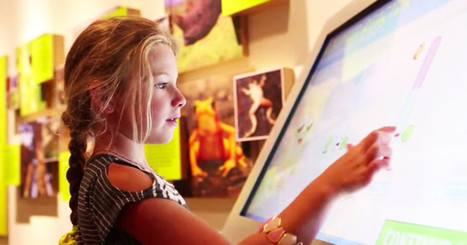
For the last 30 years, the MIT Lab has been a breeding ground for technological progress that’s pushed the world into the future. Touchscreens, e-Ink, GPS, wearables—all of these technologies got their start at the Cambridge, Mass., lab, which is known for its cross-disciplinary approach to research. We sat down with Media Lab co-founder Nicholas Negroponte and current director Joi Ito to talk about some of the lab’s biggest contributions from the last three decades...
Figure majeure des arts numériques, Samuel Bianchini crée des dispositifs qui transforment le visiteur en véritable acteur de ses œuvres.
Au croisement de l’univers de l’art contemporain et de l’art numérique, les œuvres et les installations interactives de l’artiste français Samuel Bianchini mettent en jeu et en lumière, de façon malicieuse ou parfois plus troublante, nos comportements et nos perceptions face aux réseaux et aux dispositifs technologiques qui quadrillent notre quotidien.
Du 18 au 21 février 2016, le public parisien est invité à se rassembler sur le parvis du Palais de Tokyo, autour d’un monolithe projetant un puissant faisceau lumineux vers le ciel.
Imagine a superior form of extraterrestrial life, endowed with a higher intelligence, landing on the moon’s surface. The alien picks up a human artefact, the size of half a coke can, and opens it: inside, it’s contained the historic milestones of humanity and its creativity across the millennials.
No, it’s not the opening of the latest Sci-fi blockbuster, but a true future scenario: well, except maybe for a little stretch of imagination, since there is no certain evidence of alien life, to date...
“Swans” seems like a harmless and naive name for the radical yet subtle intervention in nature accomplished by this work. Irony is a clearly recognizable element of this installation made from eight satellite dishes, seven white and one black, obvious waste elements of our society representing the power of mainstream TV and mass media. Brought to life by sound, wind and water, these animals made from recycled metal float peacefully in a pond, merging perfectly with the nature surrounding them.
Speakers installed above the bases of the former satellite dishes serve as the animals’ heads. Two layers of sound design consisting of bass frequencies and human breath passing through brass instruments provide them with voice and motion. Eight individual audio channels are used to transport the sound through the swans, bringing them to life and remodeling the landscape. This image provokes both a sense of revulsion and an intimate feeling of familiarity, serving as a hack of the natural environment while challenging the audience with its amalgamation of tech waste and wildlife. The omnipresent hand of humanity is unmistakable in its role as a kind of god in the same way that humanity relates to nature.
Cette fois ça y est , ils sont bien partis, vos Cahiers… Vers les quatre coins du monde : Belgique, France, Suisse, Pays-Bas, Royaume-Uni, Québec, Île de la Réunion… Sous les confettis du carnaval, en camionnette, en train, en avion, en bateau, en traîneau, pour finir à pied jusque dans votre boîte aux lettres…On était tellement pressés de les poster que l'on a même oublié de leur coller une couronne de lauriers pour fêter leur 35e anniversaire…Alors disons-le ici : Bon Anniversaire Les Cahiers ! 35 ans : vous ne faites pas votre âge ! Vingt ans qu’en plus du papier vous écrivez sur la toile... Et voilà qu’en prime vous vous offrez un lifting…Que d'instruments, d'appareils ont défilé dans vos pages pour vos lecteurs, que de km parcourus par vos reporters, que de salons visités ! Et ce n'est pas fini....
Bipolar Production (Montpellier, France) is a production and distribution agency that represents artists involved in digital practices, whose works span a broad range of mediums: installation, sound art, video, performance… These works explore and integrate various states of the media arts developments. Our goal is to break the boundaries between digital arts and contemporary art.
Bipolar Production supports both young talents and experienced artists in the development and promotion of their work in France and abroad. It also provides cultural consultancy services to organizations (public and private institutions, companies…) who want to support and exhibit these new forms of art. We work in partnership with several art centers, museums, festivals or events, especially with Le Fresnoy (National Studio of Contemporary Arts, Tourcoing, France) to identify young artists from around the world.
Bipolar a été créé en 2010. Implanté à Montpellier (Fr), Bipolar s’est développé au sein d’illusion & macadam, une structure plus élargie, inscrite dans une logique de services mutualisés : ingénierie culturelle, production et diffusion, bureau technique, accompagnement et formation, gestion administrative et expertise comptable.
BIPOLAR s’intéresse à ces phénomènes contemporains, caractéristiques d’une époque téléguidée par une machine de plus en plus complexe. Sans idée préconçue des médiums utilisés, les artistes avec lesquels nous engageons des collaborations, proposent des expériences qui poussent les logiques du code, des algorithmes et des outils numériques, en effet miroir d’un monde en mutation permanente.
Une prosopopée est une « figure de rhétorique par laquelle l’auteur prête la parole à un absent ou à un être inanimé », nous explique le dictionnaire Larousse. C’est également le grand thème transversal adopté par Némo, Biennale internationale des arts numériques, qui bat son plein à travers l’Ile-de-France depuis début octobre et dans le cadre de laquelle le Centquatre accueille l’exposition éponyme. Avec humour et poésie, cette dernière entraîne le visiteur au cœur d’un monde étrange, habité d’objets, pour la plupart inutiles, rendus autonomes par la grâce de la technologie numérique ; un joli pied de nez à la culture dominante du tout connecté.
« On vous propose une revue d’objets déconnectés, un grand dérèglement ; plus rien ne va, ça se situe entre Roland Barthes et Bart Simpson ! », résumait en souriant, à l’ouverture de l’exposition début décembre, le directeur de la biennale Némo Gilles Alvarez, ayant conduit avec son homologue du Centquatre, José-Manuel Gonçalvès, la direction artistique de Prosopopées : quand les objets prennent vie. Tout en banalisant le recours au numérique, la proposition, qui réunit une trentaine de sculptures et installations de plasticiens internationaux, entend favoriser une posture critique par rapport au contenu numérique et à la société connectée qui est la nôtre. En témoigne avec force ironie, non dénuée d’onirisme, L’appartement Fou, déployé au sous-sol dans les Ecuries. « On nous fait croire que nous sommes entourés d’objets intelligents, qui vont améliorer notre sort, faire des choix à notre place, reprend Gilles Alvarez.
L’école média|art|fructidor est implantée en région Bourgogne, au centre ville de Chalon-Sur-Saône, sous-préfecture du département de Saône-et-Loire.
C’est une école publique, attachée au Grand Chalon, qui relève du Ministère de la Culture et de la Communication.
Son enseignement supérieur, adossé à la recherche, permet une immersion dans le champ de la création contemporaine et tire son originalité dans sa spécificité en médias numériques.
En adéquation avec l’évolution de ces médias numériques, les deux cycles diplômants (Licence en 3 ans et Master en 5 ans) traversent les champs d’expérimentation orientés vers les nouvelles technologies, les éditions/éditions multimédia, le cinéma, le son et l’art numérique.
Le premier cycle est sanctionné par le DNA [Diplôme National d’Art, option Art, mention Média], niveau Licence et le second par le DESMA [Diplôme d’Enseignement Supérieur en Média et Art, option Art, mention Son Image Geste], équivalent DNSEP – grade Master 2.
L’école supérieure d’art et de design est un lieu qui donne les moyens de la création, encourage et initie des situations d’expérimentation, apprend aux étudiant-e-s à analyser les œuvres, à lire les images et les signes, dans une perspective résolument critique et en lien étroit avec le monde de la création contemporaine.
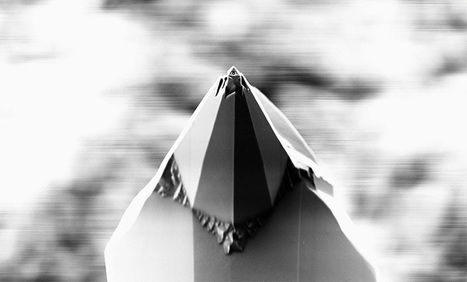
Neural-interfaces rely on the ability of electrodes to transduce stimuli into electrical patterns delivered to the brain. In addition to sensitivity to the stimuli, stability in the operating conditions and efficient charge transfer to neurons, the electrodes should not alter the physiological properties of the target tissue. Graphene is emerging as a promising material for neuro-interfacing applications, given its outstanding physico-chemical properties. Here, we use graphene-based substrates (GBSs) to interface neuronal growth. We test our GBSs on brain cell cultures by measuring functional and synaptic integrity of the emerging neuronal networks. We show that GBSs are permissive interfaces, even when uncoated by cell adhesion layers, retaining unaltered neuronal signaling properties, thus being suitable for carbon-based neural prosthetic devices.
To fans of Rembrandt’s delicate touch, Schiele’s enervating line or Rothko’s immersive color, the Internet might not seem like the perfect tool for making art, but don’t tell Lindsay Howard that. The New York-based curator took her interest in digital media and ran with it, becoming one of the few experts in the burgeoning realm of Postinternet Art. She’s already curated digital art sales for a major auction house and helped turn young digital artists like Petra Cortright into art world stars. She even positioned movie star Shia LaBeouf as a new media artist that needs to be taken seriously—no small feat. We spoke to her (over the Internet, obviously) about the state of “net art,” how digital art can work in a real-life gallery and her current research on “ex-boyfriends and gambling.” ...
Direction des vents, mouvements sismiques ou ballet géospatial, les bases de données de la nature trouvent une nouvelle résonance dans une création musicale processée tous azimuts.
Comme celles de ses auditeurs, les oreilles de la musique actuelle s’élargissent toujours davantage pour capter de nouvelles données. Le phénomène n’est pas nouveau (qu’on songe à Ryoji Ikeda et les mathématiques dans Datamatics), mais il suit l’évolution exponentielle des big datas et s’applique désormais à des données en prise directe avec notre environnement naturel...
the videos on that site being too disorganized and poorly edited for my liking. Here all of the blank screens at the end of each tape segment have been removed, and I've recompiled the tape segments back into their original order by session and date.
Huge stroboscopic datastreams, hypnotic human-machine choreographies, a cacophony of Korean, Japanese, English, German, and French – ten weeks ago, from November 25th to 28th 2015, an unlikely cross-cultural exchange took over the all new ACT Center in Gwangju, South Korea. More than a hundred artists, designers, curators, and educators – local, regional, international – had answered our invitation to add their work and voice to the inaugural edition of ACT Festival, a four-day opening celebration of the center’s monumental facilities and the first of many programming highlights to come. The goal: have the world’s best and brightest discuss the state of craft and creation in the digital age.
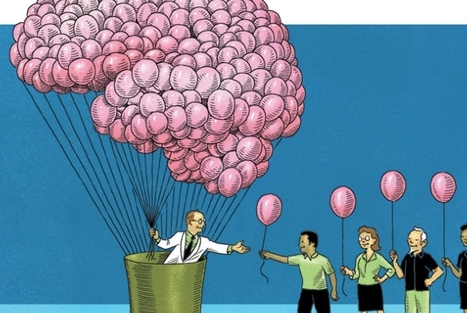
Brain researchers are overwhelmed with data. Hackers can help...
There was a time when neuroscientists could only dream of having such a problem. Now the fantasy has come true, and they are struggling to solve it. Brilliant new exploratory devices are overwhelming the field with an avalanche of raw data about the nervous system's inner workings. The trouble is that even starting to make sense of this bonanza of information has become a superhuman challenge.
Just about every branch of science is facing a similar disruption. As laboratory-bench research migrates into the digital realm, programming is becoming an indispensable part of the process. At the same time, previously dependable sources of financial support are drying up...
Resonance Extra is a pioneering new digital radio platform launched in December 2015, available on DAB to listeners in Central Brighton and online to the rest of the world. Dedicated foremost to the global artistic community and with a focus on long–form international music programming and sonic experimentation, Resonance Extra exists to mobilise diverse and emergent communities of sound artists, musicians, broadcasters, academics and expert curators.
onedotzero created a bespoke installation for Twitter at Cannes Lions Festival 2015.
Twitter commissioned onedotzero to create a table that visualizes key Twitter campaigns from the past year. Debuting at the Tweet Suite at Cannes Lions 2015, the work weighs in at a hefty 500kg and features 204 electromagnets, 3000 ball bearings, and 25 layers of CNC cut timber, pulled together by a team of 20 craftsmen over six weeks.
In true onedotzero style, the project was a collaborative effort, combining talent from the Interactive Architecture Lab of the Bartlett, UCL, with the strategic thinking and data science of the team at Twitter. The Twitter Data Visualisation table combines a mix of skills, tools and processes including robotics, engineering, electromagnetism, CNC, carpentry, code and data visualisation.
Artefact is an exhibition and arts festival on contemporary visual culture, current events and societal challenges. With Up in the Air, we gaze upwards, to the sky. What does our sky consist of ? Which phenomena play within? What does that space mean to us and how have we appropriated it? What will it mean for instance, for more and more drones to occupy the sky, and how do we as a society want to live with them? A hot topic, and sub- ject to many heated discussions now that the European guidelines for civil use of drones are on their way.
The exhibition aims to shed light on the poetic, political and economic use of our air space, presenting new perspectives on fields such as telecommunication, transport and ecology.
The Artefact festival takes place in STUK and throughout the city of Leuven (STUK, Ladeuzeplein, de Bib Leuven ...) with a careful selection of artworks, performances, concerts and lectures. More info on the theme and programme can be found on the Artefact website.
To get content containing either thought or leadership enter:
To get content containing both thought and leadership enter:
To get content containing the expression thought leadership enter:
You can enter several keywords and you can refine them whenever you want. Our suggestion engine uses more signals but entering a few keywords here will rapidly give you great content to curate.


 Your new post is loading...