Media Arts Watch Lab - www.arts-numeriques.info - laboratoire de veille Arts Numériques - twitter @arts_numeriques - @processing_org - @DigitalArt_be - by @jacquesurbanska @_Transcultures
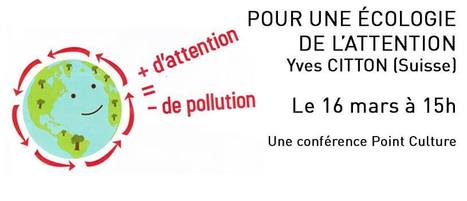
Le numérique, l’Internet des objets ou encore les big data font surgir une économie de l’abondance, qui se traduit aussi dans la sollicitation continuelle de notre attention. Le temps qu’on leur consacre est un enjeu majeur de firmes comme Google ou Facebook. Il est donc urgent de repenser l’attention en termes d’une écologie où empathie, altruisme et environnement seraient les maîtres mots.
"Il y a plusieurs voies d’accès pour mieux comprendre les discours sur ce que j’appelle le “dérèglement attentionnel”, qui me semble aussi important que le dérèglement climatique (qui en est d’ailleurs la conséquence)" Yves Citton, in Les Inrocks
Économie de l’attention, incapacité de se concentrer, armes de distraction massive, googlisation des esprits : d’innombrables publications dénoncent le déferlement d’images et d’informations qui, de la télévision à Internet en passant par les jeux vidéo, condamnerait notre jeunesse à un déficit attentionnel pathologique. Yves Citton prend à contre-pied les lamentations courantes. Oui, la sur-sollicitation de notre attention est un problème à mettre au cœur de nos analyses économiques, de nos réformes pédagogiques, de nos réflexions éthiques et de nos luttes politiques. Mais, non, l’avènement du numérique ne nous condamne pas à une dissipation abrutissante. ...
La FA+U a le plaisir de recevoir ce 10 mars Peter Friess, artiste de l'utilisation des IoT et coordinateur du cluster de la commission européenne sur l'internet des objets.
L'Internet des Objets (IdO), en anglais Internet of Things (IoT), représente la prochaine innovation économique et sociétale majeure. Avec l'IdO, tout objet physique et virtuel peut devenir connecté, souvent par Internet, à d'autres objets et à l'Internet, afin d'établir un tissu entre objets et entre les humains et les objets. Selon l'organisme d'analyse Gartner, près de cinq milliards d'objets seront déjà connectés en 2016, pour atteindre 25 milliards en 2020. Alors qu'Internet ne se prolonge habituellement pas au-delà du monde électronique, l'Internet des Objets connectés représente les échanges d'informations, de données et d'actionnement, provenant de dispositifs présents dans le monde réel vers le monde virtuel. Les domaines d'applications sont vastes, par exemple la ville intelligente, assistance aux personnes âgées, l'environnement urbain et régional durable, mais aussi les gadgets d'interaction sociale et le bricolage des objets et applications issus des espaces privés ou d'innovation.
adresse du jour : Campus archi, rue d'Havré 88 (Mons), salle 2.4, 12h30.
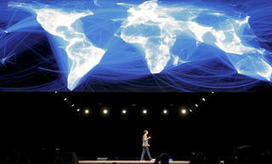
Le réseau social utilise l’intelligence artificielle pour générer des cartes de très haute résolution. Le système mis au point vise à cartographier la planète entière en quelques semaines, et à y repérer chaque habitation.
Facebook travaille sur un projet qui va donner un sacré coup de vieux à Google Maps et ses “simples” photos satellite. Dans un communiqué diffusé le 22février et intitulé “Connecter le monde avec de meilleures cartes”, le réseau social a annoncé qu’il était en train de mettre au point un système d’intelligence artificielle capable, à terme, de cartographier le monde entier et d’analyser la répartition des lieux d’habitation. ...
[C.A.F.E.] est une exposition en ligne visible depuis n'importe quel ordinateur connecté à Internet, qui met en relation des formes et des réflexions d'artistes s'emparant des notions de flux, d'échange et de réseau comme source ou matière de création.
En réunissant des œuvres hétérogènes, des années quatre-vingts à nos jours, cette exposition vise à sensibiliser le public aux questions esthétiques soulevées par le développement des techniques de télécommunication. Son titre [C.A.F.E.] – Communication Access For Everyone – renvoie ainsi au premier Café Électronique, inventé par les artistes Kit Galloway et Sherrie Rabinowitz en 1984.
Sa forme se décline à l'occasion du Mirage Festival, en Speed Show — un dispositif éphémère, créé par l'artiste conceptuel allemand Aram Bartholl ayant pour principe de louer tous les postes informatiques d'un cybercafé — afin d'inviter le public à se réunir et discuter des œuvres.
Le Mirage Festival questionne les liens entre art et innovation depuis maintenant trois ans en proposant une programmation hybride unique en son genre. Durant 5 jours, la manifestation réunit une pléiade d’artistes et de créatifs qui contribuent activement à la réinvention des pratiques artistiques et à leurs modes de représentation grâce à l’usage des technologies. Devenu un véritable rendez-vous autour des pratiques artistiques innovantes, le Mirage Festival dresse un instantané des cultures numériques, en suivant au plus près leurs évolutions. Évènement fédérateur aussi bien pour le public que les professionnels, le festival offre aussi des temps d’échange et de réflexion sur les enjeux soulevés par ces nouveaux modes de création à l’occasion du Mirage Open Creative Forum, nouveau pôle du festival au sein duquel sont proposés workshops, rencontres pros et autres espaces artistico-collaboratifs.
Le Mirage Festival est organisé par l’association Dolus & Dolus
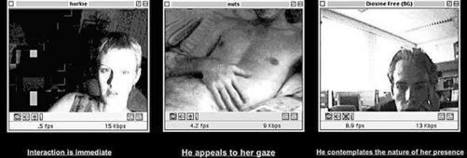
¿Qué impacto tiene Internet en la creación artística? ¿Qué forma toman las obras generadas desde la Red y con sus mismos códigos? Metrópolis emite esta noche su Sexta Carta Blanca, invitando a JUAN MARTIN PRADA, experto e investigador en Net Art, a que nos seleccione un conjunto de obras que evidencian que Internet se ha convertido en un elemento clave para generar nuevas pautas sociales, comunicativas y afectivas. Ha titulado su propuesta: “Poéticas de la Conectividad”.
Las obras seleccionadas abordan el mundo de la red desde muy diversos enfoques y metodologías, evidenciando cómo Internet se ha convertido en un elemento clave en la articulación de las pautas sociales, comunicativas y afectivas que caracterizan nuestro tiempo. De ahí que un elemento común a todas estas obras sea el homenaje que rinden al usuario de Internet, que aparece en ellas como tema central, como su protagonista último.
Éric Duyckaerts est né à Liège en 1953. Il enseigne à l’Ecole Superieure d'Art des Rocailles à Biarritz. Son travail articule avec humour les arts plastiques et des savoirs exogènes, tels que les sciences, le droit, la logique mathématique, etc... Il s’est aussi attaché à une exploration des figures de l’analogie et des entrelacs. La vidéo et la conférence-performance lui servent très souvent de médium, mais il n’hésite pas à utiliser tous les médiums plus traditionnels. Il a occupé le pavillon belge de la Biennale de Venise en 2007.
Auteur de Hegel ou la vie en rose, l’Arpenteur, Gallimard, 1992, et Théories tentatives, Léo Scheer, 2007. Une anthologie de vidéos réalisées de 1989 à 2007 est disponible.
Petra Cortright was raised in Santa Barbara, but she grew up on the Internet. The Los Angeles-based artist's work is often typified as "post-Internet art," which roughly translates to art that uses the Internet as its medium, source, context and place where it is performed, all at once. It's a mirror and a mindbender. Curators Karen Archey and Robin Peckham define it as: "art, consciously created in a milieu that assumes the centrality of the network, and that often takes everything from the physical bits to the social ramifications of the Internet as fodder... This understanding of the post-Internet refers not to a time 'after' the Internet, but rather to an Internet state of mind -- to think in the fashion of the network."
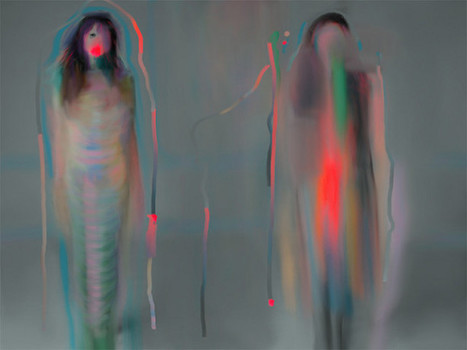
Oftentimes, Cortright is in her own videos, doing something, but not in a particularly active way. In "snow2???" (2011), the artist sits in her bedroom in front of the webcam, not really doing much. Then hazy glitchy "snow" effects appear on the screen, making this work something between a vlog entry and an experiment with the manipulation options offered by YouTube. Cortright's work is self-conscious, socially anxious, and rather sensitive. It is feminist, without being overtly so, and social, without being extroverted. If we quantified this using a Myers-Briggs pop psychology acronym, it might be something like INFP or INFJ.
The Social Innovation Tournament is the flagship initiative of the Institute’s Social Programme. It is organised every year in a different country to reward and sponsor European entrepreneurs whose primary purpose is to generate a social, ethical or environmental impact.
Four prizes are awarded by a jury, composed of specialists from the academic and business world: General Category and Special Category 1st and 2nd Prizes of EUR 50 000 and EUR 20 000 respectively. In 2016, the Special Category Prizes will go to projects focusing on health with a special emphasis on childhood obesity.
Projects are typically related to combating unemployment, marginalisation of disadvantaged communities and promoting access to education in a wide range of fields, from education and health care to natural or urban environment, through new technologies, new systems, and new processes....
The question of how to exhibit net art came up strongly in 1997. It became clear that some works were actually interesting for a traditional, offline art audience. In the beginning it seemed that exhibiting net art in a physical space was an anomaly, something contradictive to the nature and background of the attitude from which net art sprung. The online communities a lot of net art came out of refused to think of solutions for physical exhibitions, like they also found it very difficult (with some exceptions) to find a way to deal with question how to sell a net art work.
When I was approached by one of the net communities' most notorious members Frederic Madre to write a text for a tongue in cheeck woman's magazine I decided therefore to write a piece that was half satire half serious about how to deal with net art. In some sense one could say the text is metaphorical. By ridiculing the style of the average woman's magazine I compare the desire to own any art work (and also to exhibit it) to certain bourgois tendencies to use art in a semi-decorative way. We could ask ourselves whether our desire to own and present an art piece is ultimately more then a wish to exhibit our own cultural awareness in a fashionable way, like the American artist Cary Peppermint jokes in this text. The intangibility of most new media art and the impossibility to set limits to certain works force us having to face what exactly it is we want from art. Many do want something of art that seems missing: something to surround oneself with. Let's dive into the interior design of net art.
Founded in 1998 by the University of Southern California's Dean of the School of Cinematic Arts Elizabeth Daley in conversation with filmmaker George Lucas, the Division of Media Arts + Practice is dedicated to developing educational programs and conducting research on the changing nature of literacy in a networked culture.
The mission of MA+P is to empower people in the interpretation and design of media to be more engaged, active and critical citizens for the 21st century. Our educational programs promote effective and expressive communication and scholarly production through the use of multiple media applications and tools, and our faculty-directed research seeks to transform the nature of scholarship within the disciplines.
Evgeny Morozov, chercheur d’origine biélorusse établi aux Etats-Unis, remet en question les utopies associées aux nouvelles technologies. Evgeny Morozov, chercheur d’origine biélorusse établi aux Etats-Unis, remet en question les utopies associées aux nouvelles technologies.
Les objets connectés, dits intelligents, se multiplient dans notre quotidien. Est-ce un progrès, un risque, ou les deux ?
Deux problèmes se posent : l’un concerne ce que j’appelle «l’automatisation cognitive» - soit, grosso modo, à quel point nous sommes à l’aise avec l’idée de déléguer à des machines nos pensées, intuitions et émotions. L’autre touche au rôle croissant que jouent les données personnelles - sans lesquelles nombre d’appareils et de plateforme ne seraient pas «intelligents» - dans les champs politique et économique d’aujourd’hui. De façon générale, je dois avouer que je suis un grand fan de l’automatisation. Il n’y a aucune raison pour que les humains accomplissent des tâches quotidiennes ennuyeuses qui peuvent être faites par des machines. Mais chaque citoyen devrait avoir un socle de compétences, même si ces compétences sont devenues technologiquement obsolètes. Dans certains cas l’automatisation consiste à repousser les limites de la déqualification, sauf que ce sont des capacités cognitives, intellectuelles, et bientôt peut-être émotionnelles, que nous acceptons de perdre...
Aeolian instruments create an atmosphere that can be eerie, entrancing or foreboding, giving wind currents a resonant voice. Wind harps that appeared to be played by invisible spirits created the first ambient music. Singing kites have carried whistles and flutes into the atmosphere long before anyone had experienced the roar of propellers and jet engines. ...
Salvatore Iaconesi: Open-sourcing a cure for his cancer - By Alessandro Delfanti
Salvatore Iaconesi is an artist, interaction designer and hacker. He is the founder of the international network Art is Open Source, which works on the transformations brought about by ubiquitous digital technologies and networks. In 2012 he was a TED Fellow and is Eisenhower Fellow since 2013. With Oriana Persico, he teaches Interaction Design, Digital Design and Transmedia Narratives at La Sapienza University of Rome, ISIA Design Florence, Rome University of Fine Arts and IED Design institute.
In 2012, Iaconesi was diagnosed with brain cancer. He decided to hack and then publish his own medical data online and thus crowdsource his cancer, engaging people from all over the world to find a cure and to discover what it could mean to be cured in the information age. Through the website La Cura (The Cure), to this day he has received close to 900,000 messages from about 200,000 people.
Along with Alessandro Delfanti (Media@McGill Postdoctoral Fellow) and Patrick Dubé (SAT/CHU Sainte-Justine Living Lab), Iaconesi and Persico will be participating in Media@McGill’s panel on “Participatory Medicine,” Thursday, Feb. 13, at 5:30 p.m. in Leacock 232 (855 Sherbrooke Street West). The conference is free and open to the public. For more information, go here. The following is an interview Iaconesi did for the McGill Reporter.
Du 19 février au 21 mars 2016, Digital Choc revient pour sa 5e édition. Organisateur du festival tokyoïte, l’Institut français du Japon y présente une programmation strictement franco-japonaise. A travers un thème intitulé “futurama”, les artistes invités explorent le futur et interpellent par leurs regards hétéroclites. Ce mélange bi-national et les différences culturelles qui en découlent, rendent l’événement tout particulièrement fascinant.
Digital Choc a le mérite de se positionner au croisement de deux cultures fortement reconnues pour leur créativité dans le champs numérique. Pourtant, s’il existe une réelle admiration des Français pour l’art nippon, peu d’artistes japonais associés à la scène numérique sont encore connus dans l’Hexagone. La réciproque est tout aussi vrai, au point que certaines célébrités nationales, comme 1024 Architecture, peuvent n’avoir quasiment jamais été présentées au Japon. L’Institut français du Japon, à l’initiative du festival Digital Choc, permet une perspective nouvelle sur ces deux pays. Il s’agit ici de créer une passerelle entre quelques uns des artistes les plus prometteurs et de faire rayonner deux cultures numériques incontournables dans divers lieux phares de Tokyo. ...
Over recent years tiny automated and nonsensical beings have infiltrated our daily life via twitter and email. They have taken delight in agitation by imitating human behaviours – from telling jokes to online-dating. These small computer programmes are called bots (derived from the word robot) and their repetitive and often simple actions have brought fun to – and often poked fun at – the Internet platforms that now mediate our lives.
This weekend of workshops, labs and bot showcases will be a chance to meet pioneers of the bot making community, gain an insight into their practices and also uncover the darker side of these computer programmes. Bot creators come in many different guises and our weekend will feature artists, whistleblowers, developers, gamers, comedians, thinkers and inventors from this global micro-community.
In the showcase discover more about bot behaviours and their creative potential plus how these are connected to histories in automata and movements such as Dada and Fluxus. It will be a unique opportunity to get hands-on with bot inventions and prototypes as they are being created. ...
The Art of Bots is delivered in partnership with Somerset House and media partner Furtherfield. It is realised in the framework of Masters & Servers, a joint project by Aksioma (SI), Drugo more (HR), Abandon Normal Devices (UK), Link Art Center (IT) and d-i-n-a / The Influencers (ES).
This project has been funded with support from the European Commission. This communication reflects the views only of the author, and the Commission cannot be held responsible for any use which may be made of the information contained therein.
CodeCombat: Learn to #Code by Playing a Game // #coding #kidsLearn programming with a multiplayer live coding strategy game for beginners. Learn Python or JavaScript as you defeat ogres, solve mazes, and level up. Open source HTML5 game!
Loophole for All is a service to democratize offshore business for people who don't want to pay for their riches. It empowers everyone to evade taxes, hide money and debt, and get away with anything by stealing the identities of real offshore companies.
Paolo Cirio works as media artist in various fields: net-art, street-art, video-art, software-art and and experimental fiction. He has won prestigious art awards and his controversial works have been sustained by research grants, collaborations and residencies. He has exhibited in museums and art institutions worldwide. As public speaker he delivers lectures and workshops on media tactics.
The book Media Arts Zurich: 13 Positions from the Department of New Media, Edited by the Department of New Media at Zurich University of the Arts is published by Scheidegger and Spiess.
Media art is one of the most exciting experimental fields to emerge in contemporary art in recent years—and yet its innovations have been sparsely documented. Media Arts Zurich, the third yearbook published by the Department New Media at the newly founded Zurich University of the Arts, seeks to fill this gap, offering an illuminating overview of the Swiss media art scene of the past decade. This book examines the varying approaches, techniques, and strategies of acclaimed media artists as well as the public reception of their work. Accompanied by a companion DVD in PAL format and 400 lavish illustrations, this volume presents thirteen individual artists and groups in the context of their backgrounds, exhibitions, and the state of European media art. Two essays by art and media historians here position these Swiss media artists in the international art world and document the first ten years and visions for the future of the media art program at the Zurich University of the Arts and its predecessor, the School of Art and Design Zurich. Richly illustrated and deeply informed, Media Arts Zurich points the way to a new European avant-garde.
With Essays by Inke Arns, Andreas Broeckmann, and Giaco Schiesser and Photographs by Schaub Stierli. Artists include Valentina Vuksic, Andre Gwerder, Marc Lee, Lea Filadoro, Andalus, Markus von Glasenapp, Sven Konig, Annina Rüst, Meriem Bouhara, !Mediengruppe Bitnik, Mario Purkathofer, Fabian Voegeli, Roland Roos
Adam Ferriss is a photographer and digital media artist based in Los Angeles, CA. In addition to his artistic practice, Adam runs the photography labs at Otis College of Art and Design. His most recent projects involve creating tri-chromatic color separation photographs and algorithmically restructuring pixel array data.
This year, the European Media Art Festival will query the importance and impact of strategies for the future. It is taken for granted that the debate on how to shape societies, their economies and cultures necessarily involves looking to the future, creating drafts and scenarios, speculating and having visions.
However, it should also be a matter of course to ask: who creates these visions, who could have an interest in the implementation of these plans, and whose purpose do these strategies actually serve?
EMAF is one of the most influential forums of international Media Art. As a meeting point for artists, curators, distributors, galleries and an audience of experts the festival has a great impact on the topics and aesthetics of Media Art. Each year the festival offers its visitors a current overview of experimental films, installations, performances, digital formats and hybrid forms, ranging from personal and political subjects or formal experiments to provocative statements from the pulsating area of "Media Art – Society". The Festival sees itself as a place of experimentation and a laboratory where extraordinary works, experiments and ventures are created and presented.
Une UMR entre Arts et Sciences au sein d’AMU n’est pas un projet “dans l’air du temps”. C’est le résultat d’une histoire qui commence à Marseille dans les années 70, comme le rappelle Jean-Claude Risset, dont les travaux au sein du LMA auront des conséquences déterminantes. Dans les années 80, la naissance du futur Département des Sciences Arts et Techniques de l’Image et du Son au sein du secteur Sciences de l’Université de Provence marque une autre étape. Les forces qui se rejoignent aujourd’hui pour créer cette unité de recherche auront très tôt des contacts, notamment à partir de la publication du “Rapport Arts Sciences Technologies” sous la direction de Jean Claude Risset (mars 1998). Jacques Sapiega rappellera quelques exemples de collaborations / créations réalisées entre laboratoires à partir de la fin des années 90, avant d’aborder les problèmes théoriques et méthodologiques que posent les interactions entre Arts et Sciences, à partir de l’histoire de cet objet fondamentalement interdisciplinaire qu’est l’art cinématographique (de l’optique au numérique).
I'm pleased to present an interview with Lorna Mills, who has been working with the GIF format since 2005. Lorna uses different ways to create her animated GIFs, a well known one is from the huge research she makes on the Internet about viral videos, images and even found GIFs, then she manipulates it to create her animated collages to show to the viewer her own story, her own world. I must say Lorna's work is great and funny, I love to see at her work and see how all those situations are put together. But it is not always funny Lorna works can be offensive, profane, sexy, violent, bizarre.. You will find a great variety of content on her pieces, as she says; men and women wanking with rubber dolphins, masturbating kangaroos, animals humping inanimate objects... more into the post!
Lorna Mills has actively exhibited her work in both solo and group exhibitions since the early 1990's. A founding member of the Red Head Gallery, her practice has included obsessive Cibachrome printing, obsessive painting, obsessive super 8 film, and recently, obsessive digital video animations incorporated into restrained installation work. ...
SANELA JAHIĆ (1980, Kranj) graduated in Painting from the Academy of Fine Arts and Design in Ljubljana in 2008 with the paper entitled Social Subject in a Kinetic Object and received her master’s degree in 2010 in Public Art and New Artistic Strategies from the Bauhaus University in Weimar. Jahić is an intermedia artist, who constructs visual and technologically supported kinetic objects and installations. Through technological tools, she problematizes society and individuals in it. In her latest production the artist places the research of complex relations between technology and the social, individuals and their identity directly into the context of the critique of capitalist relations of production. Jahić’s artistic practice often involves collaboration with specialists for mechanical engineering, automation, software and electronics. She lives and works in Škofja Loka.
The innovation argument has often been used to justify research-creation in the “digital arts.” When tethered to a driver of the economic growth so keenly sought by politicians, this form of art is considered useful. It lends an artistic flair to unbridled technological advancement, imbues cultural industries with a little more soul, and perhaps even provides a critical dimension to regulate some of the excess. Today’s artist-engineers can even dream of becoming twenty-first-century inventors, thereby reclaiming a tradition whose roots run deep into antiquity. Whereas all other forms of art are accused, by some, of becoming auto-referential ‘art for art’s sake’ endlessly rehashing recent art history, others believe that the more virtuous “digital arts” move forward, reach a ‘younger audience,’ and, in the process, take up the forgotten pursuit of a modernity whose promise was future emancipation through the perpetual quest for novelty.
To get content containing either thought or leadership enter:
To get content containing both thought and leadership enter:
To get content containing the expression thought leadership enter:
You can enter several keywords and you can refine them whenever you want. Our suggestion engine uses more signals but entering a few keywords here will rapidly give you great content to curate.


 Your new post is loading...