Your new post is loading...

|
Scooped by
Jacques Urbanska
January 10, 2014 4:57 PM
|
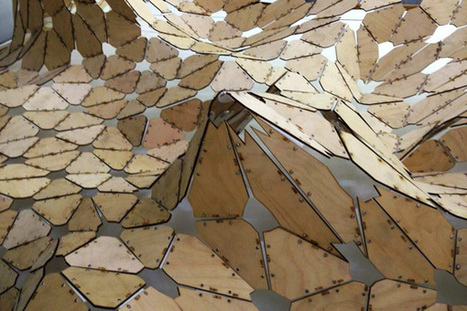
Breathing is a work of art based on a hybrid creature made of a living organism and an artificial system. The creature responds to its environment through movement, light and the noise of its mechanical parts. Breathing is the best way to interact with the creature.
This work is the result of an investigation of plants as sensitive agents for the creation of art. The intention was to explore new forms of artistic experience through the dialogue of natural and artificial processes. Breathing is a pre-requisite for life, and is the path that links the observer to the creature.
Breathing is a small step towards new art forms in which subtle processes of organic and non-organic life may reveal invisible patterns that interconnect us.
Breathing is a work of art driven by biological impulse. Its beauty is neither found isolated on the plant nor in the robotic system itself. It emerges at the very moment in which the observer approaches the creature and their energies are exchanged through the whole system. It is in that moment of joy and fascination, in which we find ourselves in a very strange dialogue, that a life metaphor is created.
Breathing is the celebration of that moment.
|
|
Scooped by
Jacques Urbanska
January 10, 2014 4:47 PM
|
Evan Roth is an American artist based in Paris whose work explores the relationship between misuse and empowerment. Creating prints, sculptures, videos and websites, the work is defined less by medium and genre than by its appropriation of popular culture. Roth's work is informed by the misuse of seemingly rigid structures and the effect that philosophies from hacker communities can have when applied to non-digital systems.
Roth's work is in the permanent collection of the Museum of Modern Art NYC and has been exhibited at various institutions, including the Centre Pompidou, the Kunsthalle Wien, the Tate and the front page of Youtube. He has received numerous awards, including the Golden Nica from Prix Ars Electronica, Rhizome/The New Museum commissions and the Smithsonian's Cooper-Hewitt National Design Award.
|
|
Scooped by
Jacques Urbanska
January 10, 2014 4:40 PM
|
" We took this as an opportunity to reinterpret the Christmas tree and its role as the traditional focal point for a communal space. 'Mobile Mobile' is a six metre circumference interactive sculpture, and signature piece for the entrance of the Lost Boys London Brick Lane studio. To cut a long story short, after a company-wide upgrade the agency had a lot of old mobiles gathering dust. We took these, built and hoisted a gigantic interactive chandelier/mobile that plays Christmas jingles in their reception. To add a little xmas spice to the mix, anyone could go online, compose and play their own jingle (and enjoy annoying the hell out of people waiting around in the reception). This was achieved by playing the thing live, using your computer keyboard from a web browser. "
|
|
Scooped by
Jacques Urbanska
January 9, 2014 5:54 PM
|
This work was shown at the Schwartz Gallery in March/April 2010. This configuration of the work is 10ft/3m high.
fans, humidifier, scaffolding, lights
|
|
Scooped by
Jacques Urbanska
January 9, 2014 5:32 PM
|
2V-P is a live visual performance tool designed by Ali M. Demirel and engineered by Pascal H. Lesport, as the outcome of their artistic collaboration. 2V-P aims to manifest the idea of a minimalist visual concept and an interactive performance technique which Demirel has developed through his live show experience.
|
|
Scooped by
Jacques Urbanska
January 9, 2014 5:21 PM
|
En 1966, Maurice Tuchman, conservateur de l’art moderne du Los Angeles County Museum of Art (LACMA) (Los Angeles, Californie), met sur pied le programme Art and Technology (A&T). Ce projet périphérique aux activités du musée a principalement pour mandat de favoriser des échanges entre les artistes et le monde corporatif. Tuchman sélectionne des entreprises californiennes aptes à soutenir des projets, soit par une contribution financière au musée, soit en fournissant de l’expertise technique. La proposition de partenariat des entreprises avec le musée est officiellement lancée en 1967 auprès de 250 compagnies. Trente-sept d’entre elles répondent à la demande et 40 acceptent de s’engager formellement à contribuer au programme. Tuchman choisit alors des artistes américains et européens de toutes disciplines (arts visuels, musique, littérature, etc.) dont les propositions peuvent potentiellement susciter un dialogue fertile avec l’industrie. Comme suite à l’annonce officielle dans les médias, d’autres artistes non sollicités par Tuchman proposent des projets au LACMA. ...
|
|
Scooped by
Jacques Urbanska
January 9, 2014 11:52 AM
|
Programming can be fun and a very creative activity. Playing with graphics and sound is a great way to get started. That's how I learnt programming and math: by experimenting and building things I could see and hear. This is my attempt to share with you how I learnt coding. Most episodes include a very short program that tries to explain one idea, and builds on top of previous episodes. The first episodes talk about a programming language calledProcessing. It's very easy to get started with it. The newer episodes combine graphics generated with Processing and sound produced with the SuperCollider programming language. Have fun mixing code and your creativity!
|
|
Scooped by
Jacques Urbanska
January 9, 2014 11:43 AM
|
While Google works to bring a polished Glass device to market, wearables startup Innovega is taking head-mounted displays a step further: contact lenses that interact with full HD glasses. Anyone who has ever dreamed up a sci-fi future in which neon interfaces float in front of us and information exists not on screens, but projected onto our eyes, is likely watching the blossoming wearable technology market with great anticipation. With its iOptik system, wearables startup Innovega has sighted in on that futuristic vision, designing special contact lenses that will read the light from projectors fitted to glasses. In doing so, it's inching closer to a product that may rival even Google in its wearable ambition. ...
|
|
Scooped by
Jacques Urbanska
January 9, 2014 4:44 AM
|
New, open source and road legal platform built on TABBY. OSVehicle Project - www.OSVehicle.com Video Production: Simone Spada Urban TABBY is the road legal evolution of TABBY. It is a kit you can apply on a TABBY chassis to make it road-legal without having to worry about all the details and structural components. Urban TABBY is ready to be modified and customized for your own needs. The outer skin can be designed, manufactured, and applied easily to Urban TABBY.
|
|
Scooped by
Jacques Urbanska
January 8, 2014 1:00 PM
|
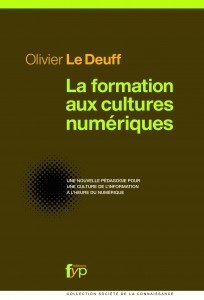
Peut-on vraiment prétendre qu’il suffit de faire partie de la génération Y – d’être né à l’époque des jeux vidéos et de l’internet – pour posséder une maîtrise innée de la gestion de l’information et des outils du numérique ? Les mutations engendrées par le numérique ouvrent la porte à de grandes potentialités, mais également à de nombreuses interrogations sur l’évolution intellectuelle, culturelle et éducative de la société. Cet ouvrage met en évidence les dangers et les problématiques de la confusion entre usages et culture. Olivier Le Deuff questionne notamment les évolutions de la lecture, de l’écriture et de l’exercice de notre pensée. Il explique comment former les individus à des environnements numériques toujours en construction et qui, eux aussi, nous transforment. Il propose une nouvelle pédagogie pour l’acquisition d’une culture de l’information et l’adaptation à la civilisation numérique. L’auteur montre également comment adapter les programmes éducatifs, les méthodes et les lieux de formation, et quels sont les apprentissages nécessaires pour les jeunes et les adultes qui doivent désormais se former « tout au long de la vie ». C’est un ouvrage indispensable aux enseignants, formateurs, pédagogues, gestionnaires de l’information, politiques, créateurs de nouveaux services, à tous ceux qui s’interrogent sur le devenir de la formation, et pour que les « natifs » du numérique ne deviennent pas les « naïfs » du numérique.
|
|
Scooped by
Jacques Urbanska
January 8, 2014 12:54 PM
|
A sound mirror (or acoustic mirror) is a device employed to reflect and concentrate sound waves. An experimentation on large scale acoustic mirrors has been run after WWI in Great Britain to detect incoming enemy aircrafts taking off on the other side of the English Channel. By enhancing the sound of enemy aircraft’s engines, the mirrors would have enabled the British defense to detect incoming airplanes fifteen minutes before they were visible. Built between 1927-30, the sound mirrors were part of Britain’s national defense strategy, but they became rapidly obsolete due to the rapid increment in speed of the aircrafts and the invention of radar. The most famous examples of acoustic mirrors are preserved in Denge on the Dungeness peninsula in England. Three different kinds existed: two made of dishes of different proportions and one, a 70 m long curved wall. Headphones were placed at the foci of the reflectors enabling a listener to detect the sound of an aircraft. ... Socks is a online magazine about Media, Art, Architecture, Cities, Design, Technology. Written by Mariabruna Fabrizi and Fosco Lucarelli
|
|
Scooped by
Jacques Urbanska
January 6, 2014 1:32 PM
|
Alloplastic Architecture is a project by Behnaz Farahi, involving an adaptive tensegrity structure that responds to human movement. In this video a performance artist, Nicole Ives, dances with the structure that reacts to her presence without any actual physical contact. A Kinect motion sensor device tracks the movement of the dancer, and thereby reconfigures the entire structure through the use of an Arduino control board and Shape Memory Alloy [SMA] springs.
|
|
Scooped by
Jacques Urbanska
January 6, 2014 1:18 PM
|
Un nouveau prototype utilisant la technologie Kinect pour traduire la langue des signes en langue parlée, et vice-versa : La Kinect Sign Language Translator a été mis au point par Microsoft Research Asia. Parce que la majorité des personnes entendantes ne comprennent pas la langue des signes, la communication entre les communautés malentendantes et entendantes peut parfois s’avérer difficile… Ainsi, les équipes de recherche de Microsoft Research Asia, en collaboration avec l'Académie chinoise des sciences et Beijing Union University, ont mis au point un nouveau prototype utilisant la technologie Kinect pour traduire la langue des signes en langue parlée, et vice-versa : La Kinect Sign Language Translator ...
|
|
|
Scooped by
Jacques Urbanska
January 10, 2014 4:53 PM
|
Subtwitter is a program that scans subtitle-files and replaces the subtitles with similar tweets. Have a try, it's a mindbending experience to watch a movie like that: interesting and fun! Dries Depoorter is a young Belgian media artist who focuses his work on programming languages and digital media. As declared, he “tries to find the beauty in complexity” when performing his artistic research. He is just graduted his media-art study program at KASK, School of Arts Ghent (http://www.kask.be/)
|
|
Scooped by
Jacques Urbanska
January 10, 2014 4:43 PM
|
Giselle Beiguelman is a media artist and professor at the School of Architecture and Urbanism of the University of Sao Paulo (FAU-USP). Her work include interventions in public spaces, networked projects and mobile art applications, exhibited internationally in the main media art museums, research centers and contemporary art venues like, ZKM (Karlsruhe, Germany), Gallery @ Calit2 (UCSD, USA) and the Sao Paulo Biennial. Curator of Technofagias – the 3rd 3M Digital Art Show and the on-line festivals HTTP_Video and HTTP_Pix among others, she is editor of seLecT magazine and the author of many books and articles about the contemporary nomadism and digital culture practices.
|
|
Scooped by
Jacques Urbanska
January 9, 2014 5:58 PM
|
Computers Watching Movies shows what a computational system sees when it watches the same films that we do. The work illustrates this vision as a series of temporal sketches, where the sketching process is presented in synchronized time with the audio from the original clip. Viewers are provoked to ask how computer vision differs from their own human vision, and what that difference reveals about our culturally-developed ways of looking. Why do we watch what we watch when we watch it? Will a system without our sense of narrative or historical patterns of vision watch the same things? Computers Watching Movies was computationally produced using software written by the artist. This software uses computer vision algorithms and artificial intelligence routines to give the system some degree of agency, allowing it to decide what it watches and what it does not. Six well-known clips from popular films are used in the work, enabling many viewers to draw upon their own visual memory of a scene when they watch it. The scenes are from the following movies: 2001: A Space Odyssey, American Beauty, Inception, Taxi Driver, The Matrix, and Annie Hall. bengrosser.com/projects/computers-watching-movies
|
|
Scooped by
Jacques Urbanska
January 9, 2014 5:39 PM
|
The building represents Romania’s first permanent digital museum. Inside visitors can explore any museum of the world through the use of the latest technology in 3d video projections, 3d screens, touchscreens and so on. A big advantage is that the museum can host any presentation, exhibition or vernissage and that the visitors can effectively inform themselves about the environment, local traditions and history without the need of a very large expositional space, a big surveillance staff or substantial maintenance costs. ...
|
|
Scooped by
Jacques Urbanska
January 9, 2014 5:27 PM
|
The ACM Hypertext conference is a premium venue for high quality peer-reviewed research on hypertext theory, systems and applications. It is concerned with all aspects of modern hypertext research including social media, semantic web, dynamic and computed hypertext and hypermedia as well as narrative systems and applications. The ACM Hypertext 2014 conference will focus on the role of hypertext and hyperlink theory on the web and beyond, as a foundation for approaches and practices in the wider community - ranging from the usage of social media to the semantics of the 'Internet of Things'. We also welcome submissions that focus on the linguistic aspects of hypertext and user experience with linked entities, resources and events.
|
|
Rescooped by
Jacques Urbanska
from FabLabs & Open Design
January 9, 2014 5:15 PM
|
Au menu de "3D" : les FabLabs, ces laboratoires de fabrication ouverts à tous. Pour nous en parler : Emmanuelle Roux, Fabien Eychenne et Raphaël Gorgé Dans 3D dimanche, les FabLabs, contraction de fabrique et de laboratoires. Sont-ils les nouveaux lieux du monde post-industriel? Après les manufactures, les usines, les garages de la Silicon Valley qui ont porté la révolution informatique, ces nouveaux ateliers d'innovation mettent les imprimantes 3D à notre disposition. Le temps de la création collective? Nous avons le plaisir de recevoir Emmanuelle Roux, Fabien Eychenne et Raphaël Gorgé.
Via Aurelie Ghalim
|
|
Scooped by
Jacques Urbanska
January 9, 2014 11:49 AM
|
Sur la scène du colloque organisé par l’association Doc Forum le 30 novembre 2013 à l’Ecole normale supérieure de Lyon, Nicolas Géraud de Dasein-interactions avait pour mission de revenir sur 3 rapports de prospectives court termistes et assez connus. “La prospective est difficile, disait déjà Pierre Dac. Mais il n’y a pas de société sans oracle. Imaginer le futur est un effort nécessaire et commun à toutes les sociétés, quelle que soit la forme que cette pythie prend. Certes, si la technique surdétermine l’avenir, il demeure difficile pour autant de savoir celles qui auront du succès demain…” “La prospective, comme discipline est née de la postmodernité”, rappelle le concepteur. “Elle nait après Auschwitz et Hiroshima, quand on constate que la technique n’est plus le lieu du progrès.”Elle nait au département américain de la défense, auprès de gens qui ont besoin de connaître les technologies de demain. En France, elle nait autour du philosophe Gaston Berger, qui lance une réflexion différente pour penser la société qui donnera naissance à la planification. “La prospective technologique a donc deux racines profondes : la menace et la pensée de la société.”
|
|
Scooped by
Jacques Urbanska
January 9, 2014 5:04 AM
|
“))))) repetition at my distance” is a kinetic/light/sound installation based on a subjective interpretation of sound traveling through space.
The memory of wind passing through trees becomes tangible as a field of 16 rotating vertical blue lightwires that oscillate in spreading patterns. The wires behave like a living entity of individuals that respond to different forces.
Through time they develop situations that evoke strong associations with natural phenomena and show organic choreographies and gestures shifting back and forth between the natural and the robotic. Its presence reconstructs architecture through a composition of light, movement, sound, and an absence of these. The piece suggests spaces via horizontal and vertical light flows, and through wind and whistle sonic elements derived from noise and sinewaves. The flickering of light produces after-images on the retina that become an integral part of the experience, as they blend with the light produced by the installation. Special thanks to: Lex van den Broek, Marcus Graf, Nenad Popov, Joris Strijbos, Maurice Tjon a Tham
With the kind support of: Stroom, Den Haag
|
|
Scooped by
Jacques Urbanska
January 8, 2014 1:06 PM
|
#DATAWALL et #TESLACOIL seront présentés dans le cadre de la soirée #DataCenter située dans un bunker souterrain à 50m sous le XVe arrondissement de Paris. http://www.expodatacenter.fr
|
|
Scooped by
Jacques Urbanska
January 8, 2014 12:55 PM
|
America loves tattoos. From tribal designs to tramp stamps, this country can't get enough ink. Last month, a Pew study showed that tattoos grace the bodies of nearly 40 percent of Americans under 40, a massive number of customers in a $1.65 billion industry. Like any industry, however, the tattoo industry must innovate. But what on Earth does tattoo innovation look like? What are we going to do next? Make them light up, or monitor our health, or turn into computers? What is the future of tattoos? Everyone from neurologists to biohackers is reinventing the very idea of the tattoo. With the right technology, tattoos can do a lot more than just look beautiful or badass. They can become digital devices as useful and complex as the smartphone that bounces around in your pocket. It sounds wildly futuristic, but the technology already exists. ...
|
|
Scooped by
Jacques Urbanska
January 6, 2014 3:59 PM
|
Henry Markram wants brain-like computing to map the brain If neuroscientist Henry Markram had a dollar for every neuron he wants to map, he still wouldn't have enough money. As it happens, the Swiss Federal Institute of Technology in Lausanne (EPFL) researcher has a billion euros, or $1.38 billion, from the European Union to spend over the next ten years, but the normal means of determining a neuron's activity can cost $1 million and take a year. By the time he got through the 3000-odd pathways shown in the photograph of a pinhead-sized slice of brain behind him in a conference room last month, he'd be flat broke, decades older, and he'd still have to map countless more pinheads' worth of neurons to understand the brain. ...
|
|
Scooped by
Jacques Urbanska
January 6, 2014 1:22 PM
|
The Hacktory was formed in November 2007 by a group of art and technology enthusiasts who frequented monthly MakePhilly meetings. This group wanted to provide formal instruction in technical topics and a central meeting place with accessible, sophisticated tools. The first course offered, “Microcontrollers for Artists and Makers,” was an instant hit. Stan Pokras, the Executive Director ofNonprofit Technology Resources (NTR), quickly saw how The Hacktory could further his organization’s mission of bridging the digital divide and reducing e-waste and offered space to hold events, store shared equipment, and become The Hacktory’s fiscal sponsor.
The Hacktory has continued to provide classes and events that build our mission to inspire and empower people to use technology for their own personal expression. We want to reinforce the idea that our world is malleable – the devices and spaces we interact with everyday can be re-purposed and modified to create new experiences. ...
|