Your new post is loading...

|
Scooped by
Jacques Urbanska
February 24, 2014 5:51 PM
|
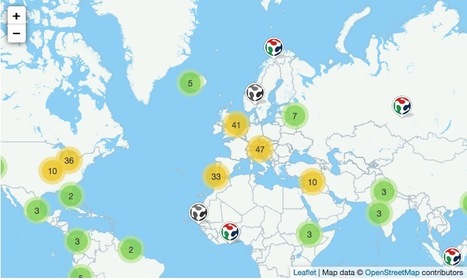
Fab labs provide widespread access to modern means for invention. They began as an outreach project from MIT's Center for Bits and Atoms (CBA). CBA assembled millions of dollars in machines for research in digital fabrication, ultimately aiming at developing programmable molecular assemblers that will be able to make almost anything. Fab labs fall between these extremes, comprising roughly fifty thousand dollars in equipment and materials that can be used today to do what will be possible with tomorrow's personal fabricators. Fab labs have spread from inner-city Boston to rural India, from South Africa to the North of Norway. Activities in fab labs range from technological empowerment to peer-to-peer project-based technical training to local problem-solving to small-scale high-tech business incubation to grass-roots research. Projects being developed and produced in fab labs include solar and wind-powered turbines, thin-client computers and wireless data networks, analytical instrumentation for agriculture and healthcare, custom housing, and rapid-prototyping of rapid-prototyping machines. Fab labs share core capabilities, so that people and projects can be shared across them. This currently includes: - A computer-controlled lasercutter, for press-fit assembly of 3D structures from 2D parts
- A larger (4'x8') numerically-controlled milling machine, for making furniture- (and house-) sized parts
- A signcutter, to produce printing masks, flexible circuits, and antennas
- A precision (micron resolution) milling machine to make three-dimensional molds and surface-mount circuit boards
- Programming tools for low-cost high-speed embedded processors
These work with components and materials optimized for use in the field, and are controlled with custom software for integrated design, manufacturing, and project management. This inventory is continuously evolving, towards the goal of a fab lab being able to make a fab lab.
|
|
Scooped by
Jacques Urbanska
February 24, 2014 5:05 PM
|
L'Objet de l'association Les Morphogènistes (loi 1901) : Mener diverses actions culturelles dans le champ des arts numériques. Elle s’organise autour de trois pôles principaux : - la création,
- la pédagogie,
- et la recherche
Les propositions artistiques de l’association s’articulent autour d'une collaboration interdisciplinaire nourrie par des objectifs à court terme pour le pôle création, et à plus long terme pour le pôle recherche ; la transmission des compétences inhérentes aux pratiques du numérique constitue l’objet du pôle pédagogique qui permet de pérenniser le savoir-faire des membres de l’association.
- d'élaborer des projets multimédias, ( qu'ils soient éducatifs ou artistiques).
- de partager la culture numérique et électronique.
- de créer des rencontres pluridisciplinaires.
- de partager ses différentes compétences.
|
|
Scooped by
Jacques Urbanska
February 24, 2014 2:26 PM
|
Welcome to ArtsIT 2014, the fourth International Conference on Arts and Technology, that will be held in Istanbul, Turkey in the Fall of 2014. The ArtsIT series of conferences have been created to provide a platform where researchers and practitioners in the arts and humanities, who have a keen interest in contemporary IT developments, meet with individuals working in the fields of computational technologies and IT who, in their turn, profess to strong ties to the fine arts and the design disciplines in their output.
Since its inception in 2009, ArtsIT has become a leading scientific forum for the dissemination of cutting-edge research results in the area of arts, design and technology. At the ArtsIT 2014 conference we hope to bring together leading researchers and practitioners from the creative fields, academia and industry to present their innovative work and discuss all aspects and challenges in a stimulating environment that will be sponsored by Sabancı University in Istanbul, Turkey. The event aims to foster trans-disciplinary alliances and co-operation between researchers of IT technologies, artists, designers and industry members and to offer content creators novel tools that expand the means of expression of the traditional art/design fields.
|
|
Scooped by
Jacques Urbanska
February 24, 2014 11:09 AM
|
Musique contemporaine Lyon festival compositeurs ensemble musique moderne
La civilisation de la haute technologie, le marché mondial, la sphère médiatique numérique s’organisent désormais selon un nouveau modèle : l’«informatique en nuages ». Tel un fluide vital, les composantes numériques se trouvent partout dans nos sociétés. Elles circulent dans les réseaux, s’affichent sur les écrans, s’écoutent sur les téléphones mobiles... Nous sommes entrés dans l’ère des réseaux, des petits groupes, et vivons à l’heure des rassemblements éphémères et effervescents. Derrière la société de masse, qui a longtemps défini l’une des formes de la modernité, se profilent les nouvelles figures d’une socialité exubérante et polymorphe dont l’artiste livre à sa façon les premiers contours. De longue date, l’artiste a en effet cherché à briser l’individualité de ses pratiques.
UNE BIENNALE PARTICIPATIVE Le département Recherche de Grame associé à Christophe Lebreton, a développé pour la Biennale deux projets liés aux nouvelles technologies et arts numériques : Le jardin des songes et le Concert Visages
|
|
Scooped by
Jacques Urbanska
February 24, 2014 10:50 AM
|
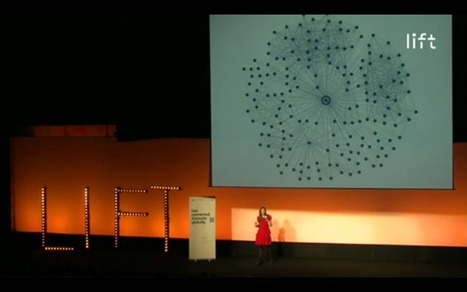
We kind of know this, because this is the main reason why people get (and stay) on Facebook: to get in touch with people. But how far is this “engineering” carried on by Facebook and how long are we going to be, if not comfortable, at least under the influence of it.
Thanks to a series of tweets, my attention was brought to this recent talk by Joanne Mcneil about “Facebook and Algorithmic culture” done at the Lift Conference earlier this week. ...
|
|
Scooped by
Jacques Urbanska
February 24, 2014 10:41 AM
|
Les samedi 1er et dimanche 2 mars, France culture, la station culturelle du groupe Radiofrance, propose un cycle bi-média, avec une programmation spéciale sur les ondes, et des contenus spécifiques sur son site et celui de France culture Plus. Parmi les programmes dédiés au numérique et au transmédia, on notera particulièrement l’intervention de Bruno Patino, directeur général délégué aux programmes, aux antennes et aux développements numériques de France Télévisions, (dans Répliques, l’émission d’Alain Finkielkraut, le samedi 1er mars de 9h00 à 10h00) ou encore celle d’Olivier Bomsel, économiste, qui parlera de l‘économie des médias dans l’environnement numérique (dans La suite dans les idées, l’émission de Sylvain Bourmeau, le samedi 1er mars de 13h30 à 14h).
|
|
Scooped by
Jacques Urbanska
February 23, 2014 12:55 PM
|
Depuis leur rencontre à l’Institut des nouveaux médias de Francfort en 1991, la botaniste, viennoise, sculpteuse et anthropologue Christa Sommerer et le “développeur de synthétiseurs” français Laurent Mignonneau, alors tout frais diplômé des Beaux-Arts d’Angoulême, poursuivent la même quête : l’exploration d’interfaces sensibles entre l’homme et la machine, qu’ils mettent en scène dans des œuvres insolites à la croisée des arts, des sciences et des nouvelles technologies.
Duo d’artistes typique des arts média, où la conception à deux têtes et la programmation embarquée s’élaborent d’une résidence à l’autre, sur une scène internationale interconnectée, de Tokyo à Shanghai en passant par Moscou et bientôt Mexico, Christa Sommerer et Laurent Mignonneau ont acquis leurs lettres de noblesse avec l’installation “Interactive Growing Plants”, montrée pour la première fois en France en 1992.
Elle fut l’une des premières pièces significatives d’un art hybride réalisé à partir d’images de synthèse créées en temps réel par l’action des visiteurs. Toute la symbolique du feedback qu’on appelle intelligence ou vie artificielle s’incarne dans le toucher ou l’approche de plantes vertes bien ancrées dans leurs jardinières, dont la résonance avec l’électricité statique du corps à proximité est interprétée, filtrée et réinsufflée dans des images botaniques projetées au mur. Électro photosynthétique : magique !
|
|
Scooped by
Jacques Urbanska
February 23, 2014 7:01 AM
|
En regardant vos productions – Concerto Grosso pour corps et surface métallique (1999) et Dévorer le ciel (2010) par exemple – je retrouve les traits d’une pensée du geste qui s’organise sur la fluidité, sur des diagonaux, là où le mouvement trouve son point de départ dans les périphéries du corps : mains, hanches, coudes, dos. Un désir de franchir les limites du corps pour se projeter ailleurs… Pouvez-vous aborder – sous forme d’un lexique en quatre notions-clés – votre approche au mouvement? Pour répondre, je me réfèrerais à ces notions :
Silence : Je crée à partir du silence. Le silence me donne l’intuition du mouvement à amorcer. J’écoute toujours la musicalité des phrasés dans le silence. Ensuite, vient éventuellement le son, la musique.
Engagement : être profondément engagé dans l’initiation du mouvement. Pour voir où cet engagement nous mène.
Résonance : percevoir et ressentir la résonance d’un mouvement dans l’espace.
Vélocité vs fugacité : je demeure constamment attirée par la vélocité du mouvement. Sans doute parce qu’elle génère une impulsion forte. Telle une sonorité puissante. J’aime aussi que le mouvement soit perceptible pour une durée très brève, qu’il soit fugace.
....
|
|
Scooped by
Jacques Urbanska
February 20, 2014 4:50 PM
|
L’AAMI est à la recherche d’un partenaire financier pour aider au développement du prix. L’AAMI est engagée à développer un partenariat qui sera mutuellement avantageux. Le prix national des arts médiatiques représente non seulement l’opportunité de valoriser un artiste canadien mais aussi de présenter la culture comme une valeur nationale.
Si vous souhaitez contribuer par un don personnel, ou pour plus d'informations sur les partenariats proposés et les opportunités de visibilité veuillez nous contacter...
Le prix national des arts médiatiques récompensera un artiste canadien en milieu de carrière avec la somme de 5000$. Ce prix sert à soutenir les artistes qui façonnent l’avenir des arts médiatiques au Canada et encourage l’innovation. Le prix sera remis lors de la Conférence nationale des arts médiatiques, Tidal Force à Halifax, en juin 2014. Le voyage et l'hébergement du lauréat seront payé. La création de ce prix n'aurait pas été possible sans le soutien financier de tous ceux qui ont contribué à notre campagne de financement sur le site indiegogo.
L'Alliance des arts médiatiques
L'Alliance des arts médiatiques indépendants (AAMI) est un organisme national à but non lucratif dirigé par ses membres, qui travaille à l'avancement et au renforcement de la communauté des arts médiatiques au Canada. Représentant plus de 90 organisations indépendantes de production, distribution et diffusion en cinéma, vidéo, audio et nouveaux médias dans le pays, l’AAMI sert ainsi plus de 16 000 artistes indépendants et travailleurs culturels.
Visitez notre site pour avoir plus d'information : www.imaa.ca
Le lancement du prix national des arts médiatiques permettra de :
• Reconnaître et soutenir un artiste dans sa carriére en arts médiatiques, enrichissant la communauté artistique canadienne.
• Encourager l’innovation dans le secteur des arts médiatiques et continuer à construire la réputation internationale du Canada en renforsant la qualité des travaux réalisés par les artistes.
• Engager les canadiens sur le plan culturel au niveau national, dans la presse écrite, audiovisuelle et sociale dans le but de développer de nouveaux publics, de nouvelles opportunités en encourageant la créativité individuelle.
|
|
Scooped by
Jacques Urbanska
February 20, 2014 4:29 PM
|
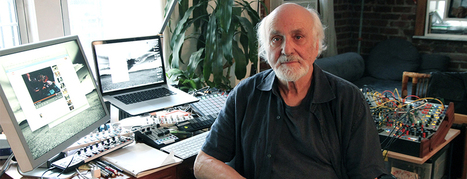
Morton Subotnick has been living in a technologically transformed world that is “beyond history” since 1959.
Pundits nowadays are extremely fond of saying that the digital technology advances of the last decade are the equivalent of the emergence of human language or the Gutenberg printing press. Some believe that the digital revolution is even more significant than either of those seismic events since it have ushered in an era that is beyond history. But Morton Subotnick has been living in a technologically transformed world that is “beyond history” since 1959!
In that year, according to Subotnick, a great convergence of events happened that would forever change his life and, subsequently, the course of society and in particular one of its most significant cultural artifacts—music. In 1959, although he was on his way to establishing himself as a prominent clarinetist, Subotnick decided to stop playing the instrument and to instead devote himself exclusively to creating his own music. During the same time he came to that decision, he read a photocopy of manuscript by Marshall McCluhan that would be not be published until a few years later as the book Understanding Media. He also saw an ad in a newspaper for transistors; they had just started being mass produced and sold commercially. And, as he acknowledged with a slight grin when we visited his Greenwich Village studio, that same year Bank of America issued the first credit cards “which meant you didn’t have to pay anything.” ...
|
|
Scooped by
Jacques Urbanska
February 20, 2014 3:32 PM
|
This installation consists of a series of 3 autonomous helium filled blimps whose movements are determined by small swarms of houseflies. The flies are essentially the brain of each of the devices, determining how they interact and respond to the space and the other devices. Up to 50 houseflies live within chambers attached to each blimp unit. These chambers contain food, water and light needed to keep the flies alive and active. The chambers also contain sensors that detect the changing light patterns produced by the movements of the flies. In real-time the sensors send this information to an on board microcontroller which activates motors connected to propellers which move the devices based on the predilections of the flies.
|
|
Scooped by
Jacques Urbanska
February 20, 2014 1:42 PM
|
kim asendorf, alexander dekker, constant dullaart, karen eliot, eteam, fabian hesse, karl heinz jeron, jan robert leegte,silvio lorusso, jonas lund, johannes p. osterhoff, niko princen, stefan riebel, sebastian schmieg, daniel schwarz,timothy shearer, rick silva, thomas artur spallek, ubermorgen.com
idea & concept by
florian kuhlmann
http://www.floriankuhlmann.com/2013/local-non-access-pics
|
|
Scooped by
Jacques Urbanska
February 20, 2014 12:14 PM
|
La Biennale internationale d’art numérique (BIAN) sera de retour à Montréal pour une seconde édition qui se tiendra du 1er mai au 19 juin 2014. À la suite du succès qu’a connu la première édition de la Biennale internationale d’art numérique, à Montréal en 2012, l’équipe derrière le Festival Elektra offre une seconde édition qui se veut plus audacieuse que la précédente.
Le public amateur d’art et de culture numérique devrait être séduit au printemps prochain par le meilleur de l’art numérique contemporain. La programmation propose un équilibre entre des oeuvres inédites d’artistes locaux et des pièces et expositions d’envergure, d’artistes internationaux.
|
|
|
Scooped by
Jacques Urbanska
February 24, 2014 5:17 PM
|
Our aim is to bring together an ever growing community of makers, hackers, artists & engineers who have a DIY mindset towards technology, creating an open network and body of knowledge through education and public events, such as workshops and concerts
|
|
Scooped by
Jacques Urbanska
February 24, 2014 2:31 PM
|
The net.art movement makes art an interactive, almost tangible experience. Sounds like something else we know
“Art,” as an uppercase institution comprised of oil paint portraits in gilded frames and cracked marble statues of muscular young men, is notoriously unwelcoming of audience participation. “No Touching” is the Met’s most important rule; guards pointedly remind visitors of this as they amble through the galleries. Snap a flash-less picture of the Van Gogh’s and the Picassos; Instagram, tweet, or tumble; move on.
Even contemporary art, so attached to the medium of immersive installation, has the audacity to demand “hands off.” Within an installation, it is easy to feel as though you are missing the point, if there even was a point to begin with. Chris Burden’s "A Tale of Two Cities," for example, replicates a battle field with a militia of static action figures and toy vehicles. A partition separates you from the stationary scene, but binoculars are provided in case you want to feel closer to the massive setup. Approximately five thousand toys and you aren't allowed to play with any of them. I push my glasses to my forehead and my eyes into the binoculars, the passive experience of peering at neglected relics feeling an awful lot like a waste of time. Maybe I just wanted a little more active violence from the man who shot himself for the hell of it. ... .
|
|
Scooped by
Jacques Urbanska
February 24, 2014 11:20 AM
|
Le point de départ de la nouvelle création de Bud Blumenthal est le constat d’un paradoxe remarquable. Notre société est marquée par une course vertigineuse vers le progrès technologique. En même temps, nous constatons une envie de nature, de retour aux sources et à l’essence de notre monde.
Perfectiøn allie ces deux contraires : A l’aide d’une technologie innovante, celle de la caméra volumétrique, Bud Blumenthal se lance dans une recherche physique et spirituelle des plus petits éléments qui nous entourent.
Car à l’heure du tout électronique, de la recherche de productivité et de rapidité, s’imposent le besoin de ralentir le rythme et de trouver un sens à ce qui nous entoure.
Avec le nouveau projet Perfectiøn, Bud Blumenthal tente d'explorer des pistes inconnues à ce jour et d'intégrer le monde nouveau de la 3D dans l'univers de la danse. Cette technologie innovatrice qui envahit aujourd'hui les jeux vidéos et bientôt nos télévisions, sera dans un futur proche inséparable de notre quotidien.
Perfectiøn est une création collective, une tentative de dialogue entre la danse et la technologie, naissant de l'interaction entre le danseur et les artistes numériques.
Perfectiøn, est la première pièce d'un diptyque. En suivra, 2015, une deuxième pièce pour six à huit danseurs, Leaves of Grass, où les résultats de cette recherche chorégraphique et technologique seront intégrés, ainsi que les outils développés à cet égard.
|
|
Scooped by
Jacques Urbanska
February 24, 2014 10:54 AM
|
L’Atelier Arts Sciences lance un appel à participation pour le salon EXPERIMENTA 2014 : aux artistes, designers, ingénieurs, chercheurs, entrepreneurs, innovateurs... dans les domaines du spectacle vivant, des arts plastiques, des industries créatives, de la recherche, ou de la culture scientifique. Vous menez un projet innovant à l’interface des arts, des sciences et des tech-
niques ?
Vous souhaitez présenter votre travail et recueillir le retour du public ? Le Salon EXPERIMENTA peut vous aider à atteindre votre objectif grâce à un accompagnement et un soutien adapté.
Merci de transmettre votre projet avant le 30 mars 2014
|
|
Scooped by
Jacques Urbanska
February 24, 2014 10:44 AM
|
Internet of my dreams is an exhibition that deals in collapsed dichotomies: digital and physical, conscious and unconscious. It is an exhibition of paintings rooted in digital wanderlust, of movement dreamed and quantified.
Using an EEG neuroheadset, Antonellis has produced a new series of digital images based on brainwave recordings of spatial movements experienced within a dream. These source images — the result of data captured and communicated by a brain–computer interface — serve as the basis for a series of paintings and moving images. Internet of my dreams is Anthony Antonellis’ first solo exhibition in the United States. This new body of work locates Antonellis’ practice squarely within the intersection of ubiquitous data and the ineffably human.
|
|
Scooped by
Jacques Urbanska
February 24, 2014 10:38 AM
|
We create visual stories about subjects and topics by combining deep amounts of data with thoughtful designs. Our goal is to make this intersection of information and art compelling enough so that you'll want to display our prints and posters in your house, apartment, office or dorm room. We started in 2004 and our graphics have won numerous design awards and have been featured in dozens of visual information design publications. However, we're still relentlessly trying to merge subject, data and design into the perfect graphic.
Whether you are a film, golf, or music enthusiast; a political junkie or history buff; or a fervent follower of any other subject covered by our catalog of prints, we hope you'll buy one and put it on your wall. Larry Gormley and Bill Younker
|
|
Scooped by
Jacques Urbanska
February 23, 2014 8:18 AM
|
Depuis un quart de siècle environ, c’est-à-dire depuis l’arrivée en masse de l’informatique personnelle et grand-public, notre présent se conjugue au futur. Cette conjugaison a ouvert la voie à « la numérisation du monde ». Plus précisément à un processus généralisé de numérisation (image, son, etc.) qui redessine notre rapport au temps et à l’espace, à l’imaginaire et au monde, et ce quelque soit notre champ d’activité (communication, éducation, économie, santé, etc.). Un phénomène passionnant, déroutant, inquiétant… Aujourd’hui nous assistons, impuissant, au développement presque heure par heure de cette hydre numérique qui colonise la moindre parcelle de notre quotidien. Et au final, avec le verrouillage des logiciels et la réification des données, pour ne pointer que deux travers de cette nomenclature du monde, la numérisation s’avère plus une entreprise de cryptage que de décryptage. C’est pourquoi nous voulions croiser les propos de philosophes, sociologues, anthropologues, mathématiciens, géographes, médecins et ingénieurs, à propos de ce changement de paradigme qui marque notre entrée dans le XXIème siècle. […] Laurent Diouf - Rédacteur en Chef
|
|
Scooped by
Jacques Urbanska
February 20, 2014 7:05 PM
|
The FingerReader is a wearable device that assists in reading printed text. It is a tool both for visually impaired people that require help with accessing printed text, as well as an aid for language translation. Wearers scan a text line with their finger and receive an audio feedback of the words and a haptic feedback of the layout: start and end of line, new line, and other cues. The FingerReader algorithm knows to detect and give feedback when the user veers away from the baseline of the text, and helps them maintain a straight scanning motion within the line.
fluid.media.mit.edu/projects/fingerreader
|
|
Scooped by
Jacques Urbanska
February 20, 2014 4:47 PM
|
Eight nylon – cords link to a mutual point that can only hold the position in space because of their interdependent movement. A loop occurs – a movement is simulated in a digitally reconstructed physical space and the resulting information of the position is transformed back to the physical space. The Outcome is form of spatial image, a kinetic plane which expands in three dimensions. As a Consequence the perception is changing, the moving image cannot only be seen from one fixed viewing angle or rather one unique viewer position.
The observer is autonomous, moving around the sculpture and is thus controlling his/her own point of view of the spatial film. Consequently restrictions of the medium are scrutinised similar to that what the expanded cinema movement questioned. With that in mind the work follows the idea of the work “Spatial Soundsculpture”, but in contrast to the older work the Screen has completely vanished. The Interface that lead to the digital medium in form of a window is only visible by the edges of the mapped coordinate system.
|
|
Scooped by
Jacques Urbanska
February 20, 2014 4:22 PM
|
Vanishing Point employs perspective as both tool and visual outcome to reshape, redefine and represent a space. Inspired by sketches of Leon Battista Alberti, Leonardo DaVinci and Albrecht Dürer, UVA sends lines into space from an arbitrary vanishing point, creating different volumes, divisions and rooms to be explored by the audience. uva.co.uk/work/vanishing-point
|
|
Scooped by
Jacques Urbanska
February 20, 2014 3:24 PM
|
The Music+Sound Awards are the World’s first and only awards programme to recognise and celebrate the indispensable role and outstanding contribution that music and sound design plays in the world of visual media. Aimed at professionals working in advertising, film, television (branding and programming) and gaming, the awards are open to anyone who is or has been involved in the creation, composition, sourcing, licensing, briefing and / or production of music and sound design for any visual media.
We welcome everybody involved in production to celebrate the role of music and sound design within their finished work. One could argue that music and sound make up at least 50% of the overwhelming majority of visual media, yet there just isn’t enough recognition for it, until now. Can you imagine a hamlet cigar commercial without Bach’s Air on a G String, a Film or TV programme without its score or a video game without sound effects? The music and sound design industry is thriving in all areas of the media and its incredible talent deserves celebration and recognition for what it achieves.
|
|
Scooped by
Jacques Urbanska
February 20, 2014 12:20 PM
|
Jerome Saint-Clair is a French artist and engineer working mainly in the field of new media.
His artwork includes computer based generative systems, interactive installations, software libraries, but also
drawings and computer-free installations or objects.
He developed a strong attachment to transdisciplinarity and also enjoys and supports open source initiatives.
Over the years, he always tried to make his work available for free, on the Internet.
His recent works focus on graffiti and also the permeability between the digital and the physical worlds.
He initiated the creation of the French branch of the Graffiti Research Lab
|