Explore Dave Snowden's Cynefin framework for understanding problems: clear, complicated, complex, and chaotic. Learn the leader's role in fostering transparency and breaking down silos. Discover the four hats of creative problem solving: explorer, artist, judge, and warrior. #ProblemSolving #DecisionMaking #Leadership #CreativeThinking #Cynefin
This is one of my news digests. If you like my editorial choices, there are more to be found by clicking on the "dear reader" link, and on my name above. Enjoy !
Takeoff projects help students complete their academic projects. Register at takeoff projects today to find and learn about different interesting big data projects and grab the best jobs. Get started right now.
Deep Coaching Intensive Open House with Leon VanderPol. Transformational Coach Training, ICF Certification
What is Deep Coaching, and how is it different from traditional coaching?
In this Deep Coaching Intensive Open House, Leon VanderPol is joined by Managing Director Jonathan and Learning Leader Hampus to explore the philosophy, structure, and transformational approach behind the Deep Coaching Intensive (DCI).
Together, they explain how Deep Coaching goes beyond transactional, goal-oriented coaching to facilitate lasting transformation through ontological awareness, presence, healing, embodiment, and spirit-based development.
Leon shares what distinguishes Deep Coaching from conventional coaching, including how transformational coaches create safe relational containers where clients can explore both shadow and light. Through stories and practical examples, he illustrates how presence, silence, and being-level awareness can facilitate profound inner transformation beyond techniques or powerful questions.
Hampus reflects on his journey from corporate coaching and spiritual practice into the Deep Coaching Intensive, highlighting the role of unlearning, Theory U, and the importance of the coach's own transformation.
Jonathan explains the structure of the Deep Coaching Intensive, including certification pathways, the Portfolio route toward ICF ACC credentialing, program foundations, mastery, peer coaching, retreats, community support, and practical guidance for building a coaching practice while integrating Deep Coaching into everyday life.
Whether you're exploring transformational coaching, seeking an ICF-aligned coach training program, or curious about Deep Coaching as a path of personal and professional development, this conversation offers a comprehensive introduction.
If you are a coach, therapist, facilitator, leader, healer, or someone committed to personal growth and transformation, this video offers a powerful introduction to the Deep Coaching Intensive and the principles that guide transformational coaching.
🦋 Be sure to subscribe and explore the videos on our channel. You never know which one might be exactly what you need right now. We publish a new video every week.
There is a wealth of wisdom waiting for you, so keep the journey going...
Time stamps:
00:00 Welcome and Overview 02:19 Leon's Coaching Journey 03:41 Transactional Coaching Basics 06:04 Three Facets of Deep Coaching 06:41 Transformational Ontology 10:32 Spirit in Coaching 12:47 Healing and Wholeness 15:56 Client Story and Presence 23:44 Hampus on the DCI Path 30:03 Embodiment and Being 31:53 Building a Coaching Practice 34:44 Jonathan on ICF and Program Structure 36:55 Deep Coaching Intensive Breakdown 43:58 How to Talk About Deep Coaching 48:24 Transforming Communities 54:11 Time Commitment 55:58 Enrollment Support and Closing
🦋 About Leon VanderPol
Leon VanderPol is a transformational teacher, coach, and thought leader whose work centers on the evolution of consciousness and the human journey of awakening. He is the founder of the Center for Transformational Coaching and the creator of the Deep Coaching Intensive Training, which for more than 10 years have supported the development of coaches and leaders around the world. Through Deep Coaching and evolutionary leadership, he helps people cultivate greater self-awareness, embody their higher nature, and live from a deeper sense of purpose, presence, and inner sovereignty.
What if the smartest person in the room... is the room itself?
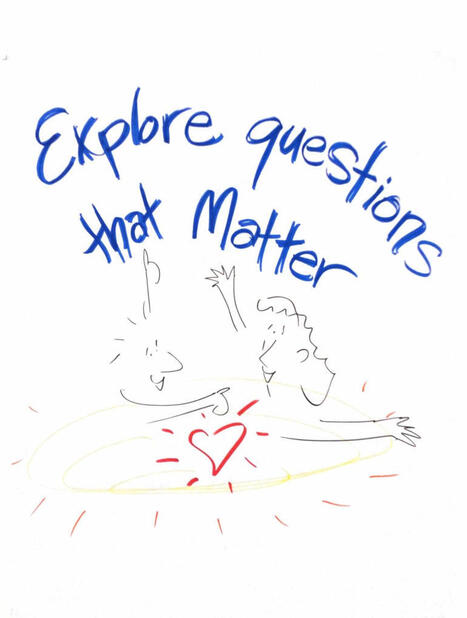
Too many meetings begin with answers. Open Space Technology begins with questions that matter. Instead of controlling conversation, it unlocks collective intelligence by creating the conditions for passion, responsibility, and self-organization to emerge.
Participants set the agenda, move where they learn best through the Law of Two Feet, cross-pollinate ideas like "bees and butterflies," and leave with real commitments, not just meeting notes. In today's complex world, innovation rarely comes from hierarchy. It comes from trust, curiosity, and shared ownership. Sometimes leadership's greatest act is creating the space where collective wisdom can flourish.
Read stories about Otto Scharmer on Medium. Discover smart, unique perspectives on Otto Scharmer and the topics that matter most to you like Theory U, Teoria U, Presencing Institute, Cambio Sistémico, Leadership, Liderazgo Consciente, Presencing, Ulab, Pensamiento Sistémico, and more.
Read stories about Emerging Future on Medium. Discover smart, unique perspectives on Emerging Future and the topics that matter most to you like Theory U, History, Otto Scharmer, Presencing, Presencing Institute, Cambio Sistémico, Change, Leadership, and more.
Category: General leadership and culture The Overlooked Foundations of Executive PerformanceIn the push for profits and results, senior leaders often ignore the human fundamentals that make peak performance possible: nutrition, sleep, and mental well-being. However, research is clear that these factors profoundly affect cognitive function, decision-making,...read more What IS Organisational Culture?What IS Organisational Culture? And Can You REALLY Change it? An organisation’s culture could be the key to unlocking stability and growth. Yet it’s a multi-layered topic. Here’s my take on what it is, and why it matters. Organisational culture can affect every aspect...read more How can executive coaching help in changing times?we're in changing times and the modern business environment is more complex, diverse and competitive than it has ever been. Thanks largely to technological advances over the past couple of decades, it is also changing at a more rapid rate than anything we have ever...read more Executive coaching – think horticulture not sport (Part Three)Organisations are collections of human beings. And the best organisations have leaders capable of facilitating the most effective ways for them to work together collaboratively toward a common goal. Freek Vermeulen, Assistant Professor of Strategy and Entrepreneurship...read more Executive coaching – think horticulture not sport (Part Two)There are plenty of examples in business history of firms that expanded at phenomenal rates, frequently aided and abetted by acquisitions, becoming the darlings of the stock market, only to crash into the dust shortly afterwards. It’s all too easy to blame such...read more Executive coaching – think horticulture, not sport (Part One)Why is cultivating a beautiful lawn a more productive metaphor to draw on during executive coaching than sporting analogies? Answer: great business leadership doesn’t lose sight of the long game for the sake of immediate competitive expediencies. Let me borrow an...read more« Older EntriesCategories TagsAI Appreciative Inquiry behaviour behaviour change change coaching Compassionate Conflict Covid crocodile management culture Culture Change diversity effective teams engagement executive coaching executive performance exhaustion fear management gestalt Keep Going leader leadership leadership well-being management Organisational Culture organisational development Organisation Development organisations people positive psychological safety psychology Resilience sustainable performance systemic coaching systems thinking team building team coaching teams team work theory trust values work
Encourage change by asking what brings joy and what small actions can amplify it. Use appreciative inquiry to focus on past successes, inspire the present, and build a better future. #talbenshahar#AppreciativeInquiry #PositiveChange #ActionableSteps #PersonalGrowth
Il Coach Adamo è tra i massimi esperti di TEORIA-U in Italia, è facilitatore della TEORIA-U e nel 2019 ha fondato il primo U-lab per la sperimentazione della Teoriau-U.
La Theory U di Otto Scharmer – professore al MIT di Boston e fondatore del Presencing Institute – è una metodologia di cambiamento ed evoluzione individuale e collettiva. Sviluppata in oltre venti anni di studi e già utilizzata con successo da numerosi leader, in tutto il mondo, per affrontare i grandi cambiamenti del futuro.
____________________________________________________________ Master Coach Italia|Scuola di Coaching nasce nel 2012. Riconosciuta da Asso.Co.Pro. e A.I.C.P. Abilita al processo di iscrizione a ICF L'unica Scuola di Coaching in Italia che ti garantisce crescita personale e formazione gratuita per tutta la vita. Per saperne di più: https://mastercoachitalia.com/come-di...
Master Coach Italia | Scuola di Coaching Sedi: Milano - Roma - Bari www.mastercoachitalia.com info@mastercoachitalia.com 800960214 (gratuito anche dai cellulari) 3475820941 (whatsapp)
Explore Dave Snowden's Cynefin framework for understanding problems: clear, complicated, complex, and chaotic. Learn the leader's role in fostering transparency and breaking down silos. Discover the four hats of creative problem solving: explorer, artist, judge, and warrior. #ProblemSolving #DecisionMaking #Leadership #CreativeThinking #Cynefin
Learn how to develop a common project vision for the PMP® exam through an executive summary focused on alignment, value logic, and professional judgment under real project pressure. Covers outputs, outcomes and benefits, the project canvas, the project charter, the business case and benefits management plan, MVP validation, SWOT and PESTLE analysis, the motivation logic of Herzberg, Pink and McClelland, and Tuckman's team development stages. This lesson explains why projects can appear controlled while already losing alignment, and how a PMP® credential holder should interpret the situation, connect purpose to outcomes and benefits, and choose responses that keep decisions governed by one shared understanding of value. You will learn how common vision supports: Project alignment Stakeholder understanding Value-based trade-offs Business case and benefits logic Project charter and governance Product vision, roadmap, and adaptive delivery Communication, commitment, and team coherence
This video is part of the complete PMP® exam preparation learning solution available at: https://pmprep.de/ Designed for self-directed PMP® candidates and training organizations, this brand-neutral solution can be integrated into a training provider’s own package as structured follow-up material that reinforces learning after classroom or live-online courses.
The complete preparation path includes: • PMP® e-learning course • Video lessons • Expert audio discussion • Written explanations • Full audiobook narration • Knowledge checks • Reasoning-based practice • Exam simulation pack
PMP® is a registered mark of Project Management Institute, Inc.
Abstract: Projects rarely fail for lack of a vision statement. They fail because effort, authority, and resources start being committed before one shared definition of value is strong enough to discipline those commitments. This chapter reframes project vision as the governing value logic of the project, not an inspirational slogan. Vision explains why the project exists, what future condition it should create, and which criteria decide trade-offs when cost, scope, schedule, quality, stakeholder demand, and sustainability come into tension. Vision is not descriptive but allocative. It determines where time, money, attention, and decision tolerance go when not everything can be protected at once. A central distinction runs through the argument: outputs are the deliverables a team produces, outcomes are the effects those deliverables enable, and benefits are the realized value when those outcomes matter to stakeholders. A project can produce every output efficiently and still fail strategically. This is why a project can look controlled early, with active governance and orderly reporting, while already drifting, because groups are reading value through incompatible assumptions. A charter, an approved vision statement, and a business case can simulate alignment while local judgment fragments underneath them. The chapter then shows how vision becomes governable. The project canvas turns vision into an operational coherence test. The project charter converts intent into authorized commitment. The business case justifies investment, while the benefits management plan governs realization through owners, measures, and timing. In adaptive settings, a minimum viable product tests whether the value logic survives contact with reality. Vision also stays connected upward through the portfolio, program, and project line of sight, and outward through product life cycle logic. SWOT and PESTLE analysis test whether it still fits a changing environment where sustainability and stakeholder acceptance increasingly become the governing constraint. Sustaining a shared vision is also a competency and motivation problem, drawing on business acumen, power skills, and the motivation logic of Herzberg, Pink, and McClelland. Communication is treated as interpretation rather than transmission, where feedback and active listening test whether intended meaning survived. Finally, vision is continuous work. The product vision anchors the roadmap, release plans, and backlog, so drift caught early prevents a sequence of reasonable choices that no longer add up to the intended product. Retrospectives, metrics, after action reviews, appreciative inquiry, and Tuckman's team development stages give the project manager disciplined ways to diagnose misalignment and recalibrate before it hardens.
Most multi-agent Claude Code is a planner LLM, N subagents, and a prayer. Here's what changes when you route by Cynefin, gate with cognitive tools, and make every claim falsifiable. Tagged with ai, agents, programming, productivity.
In 2016, the international Art of Hosting community gathered in Portugal. Excerpts from an interview with Mary Alice Arthur by Ana Teresa Silva
About: Mary Alice Arthur is a Story Activist working with story in service of positive systemic shift and for focusing collective intelligence on critical issues. She guides people to find and activate the story that will take them into a larger and more authentic future. With story as an ally, people become the visionary leaders, changemakers and paradigm shifters they want to be. She is a steward of Art of Hosting, teaching participatory practice around the world, and co-creator of Collective Story Harvest methodology.
|| Appreciative Inquiry: Why Focusing on Strengths Beats Focusing on Weaknesses || (1-Minute Management Class)
Appreciative Inquiry is a strengths-based approach to organizational change that focuses on possibilities instead of problems. Discover how the 5-D model inspires collaboration, motivation, and sustainable transformation in this 1-minute explainer.
🔐Unlock Business Jargon in Just 1 Minute! 📌 Watch more 1-Minute Management Classes here: http://bit.ly/4lVNGOZ
Have you ever felt that your business vocabulary is lacking because dictionary definitions are too dry and you don't have time for in-depth study? Our "1-Minute Management Class" series is here to help!
Each video provides a rich, 100-word explanation of both common and uncommon management terms, based on the acclaimed book series "The Ultimate Guide to Business Jargon." In just one minute, gain a foundational understanding that’s practical and easy to remember.
Why Watch? ✔️ Quick Learning: Ideal for busy professionals and students. ✔️ Concise Explanations: No need for deep dives; get what you need in 60 seconds. ✔️ Practical Knowledge: Improve your business lingo effortlessly.
Who Is This For? ✅ Business students and teachers ✅ New leaders and seasoned professionals ✅ Anyone interested in mastering business terminology
Grab your Kindle or print copies on Amazon worldwide!
🙋♂️About me I’m Ashok Grover, an Engineer-MBA, Leadership Coach, and author of “The Ultimate Guide to Business Jargon,” with over 50 years in manufacturing and corporate training.
Questions are the central preoccupation of my work.I ask them of clients, we ask them together, we ask questions about questions to be sure that we are asking good questions and when we aren’…...
Most change processes start with what's broken. This one starts somewhere entirely different.
In this episode, we walk through the 4D Cycle, the core process at the heart of Appreciative Inquiry, and show you exactly how it works in practice, from a two-hour team session to a six-month organizational transformation.
You'll learn: What each phase: Discover, Dream, Design, and Destiny, actually involves and why the sequence matters How the Discovery phase surfaces the positive core: the strengths, stories, and moments of excellence already present in your organization Why the Dream phase is a strategic tool, not wishful thinking, and what the research says about shared positive images of the future What a provocative proposition is and how it functions as a design specification for change Why the Destiny phase is where most change efforts fail, and how Appreciative Inquiry builds momentum that lasts beyond the workshop
This is not a one-off intervention. It is a continuous cycle, and when you understand it, you will never run a strategy session, a team meeting, or an engagement process quite the same way again.
Book a discovery call at hello@spaciousnessworks.com to explore strengths based leadership development and sustainable change management.
Explore our strengths based leadership and organizational development work on our website https://spaciousness.works/
I had a lovely call with Cynthia Kurtz on Friday, discussing all manner of things including an upcoming retreat with a client where we will explore complexity and use Participatory Narrative Inquir…...
Used the right management approach on one project, copied it to the next, and watched it fail? Here's the framework that tells you which approach fits — before you start.
Most Agile transformations don't fail because of bad execution. They fail because nobody asked if the work environment would allow it in the first place. The Cynefin framework, developed by Dave Snowden in 1999, sorts work into four domains — Simple, Complicated, Complex, and Chaotic — and tells you which managerial approach actually fits each one. No methodology is a silver bullet. They're tools, you need to pick the right one.
I consult on Agile Transformation, Team Coaching & Leadership, and IT Project/Delivery Management. If you're stuck applying the wrong framework to the wrong work — get in touch.
Music written and recorded by Valentin Dragin. All rights reserved.
CHAPTERS: 00:00 - Intro 00:57 - Discovering Cynefin in the Essential Scrum book 03:06 - The Shu-Ha-Ri progression 04:22 - What Cynefin is and where it came from 05:04 - Simple domain 06:20 - Complicated domain 07:42 - Complex domain 09:47 - Chaotic domain 12:00 - Real-life applications 13:35 - Summing up
Thomas Herrmann shares about how he works with Open Space Technology, OST, to support sustainable results. This video is from a follow up meeting 5 months after an organization wide OST which resulted in 18 reports and 11 action plans with each a convener and a dedicated group of engaged persons. The follow up meeting includes an impact evaluation where participants identify impacts. After lunch a mini-Open Space format is used to let the participants identify, explore and decide how to move on now.
The famous wave at Nazare, Portugal on a light day.The wave is generated from the complex motion of water travelling up a very deep underwater canyon nearly to shore where it rises and meets stron…...
FringeReview's Paul Levy explores how the principles of Open Space Technology can be used in a fringe festival context.
It is an invitation to apply these behaviours which describe how we can live in tune with a self-organized world.
Open Space is a method of meeting together and getting things done but some people have discussed and explored how we might imply it in our own personal and professional lives as a way of being and living.
Read stories about Swarming on Medium. Discover smart, unique perspectives on Swarming and the topics that matter most to you like Agile, Itsm, DevOps, Artificial Intelligence, Cynefin, Robotics, Service Desk, Swarm Intelligence, Agile Mindset, and more.
What if the key to a more radiant, connected, and fulfilling life lived in the quality of your conversations?
In this powerful episode, Heather sits down with Cheri Torres, PhD, and Jackie Stavros, DM — co-founders of the CWH Institute and co-authors of the bestselling book Conversations Worth Having — to explore how a simple but revolutionary framework called Appreciative Inquiry can transform the way we communicate with ourselves and with others.
These two brilliant collaborators have spent decades discovering that the quality of our conversations — with others, and with ourselves — is literally the key to human potential, well-being, and connection. And what they share in this episode is something every one of us needs right now.
What You'll Discover in This Episode:
• What Appreciative Inquiry ("the other AI") actually is — and how it emerged from groundbreaking research at the Cleveland Clinic
• The 5 D's framework: Define, Discover, Dream, Design, Deliver
• Two foundational practices: generative questions and positive framing
• The "flipping" technique to move from what you don't want to what you actually desire
• Why pausing, breathing, and tuning in before you speak can transform every interaction
• MSU — Making Stuff Up — and how to stop letting imaginary conversations drain your energy
• How every conversation either moves us toward or away from what we want (no neutral ones!)
• Why asking generative questions of yourself is the hardest — and most transformative — practice
• How these conversations help us move from fear-based relating to love-based connection
Resources Mentioned:
• 📘 Conversations Worth Having by Cheri Torres & Jackie Stavros — available in print and audio
To get content containing either thought or leadership enter:
To get content containing both thought and leadership enter:
To get content containing the expression thought leadership enter:
You can enter several keywords and you can refine them whenever you want. Our suggestion engine uses more signals but entering a few keywords here will rapidly give you great content to curate.


 Your new post is loading...