🧠 How to Generate Mindmap Using MassiveDiag on Bibcit | AI-Powered Diagram Tool Tutorial 🧠 🎥 Welcome to another powerful tutorial where I show you how to create stunning mindmaps using code with the help of MassiveDiag on Bibcit — in just a few simple steps! Whether you’re a student, researcher, teacher, developer, or content creator, this tool is a game-changer for visualizing ideas and boosting productivity.
📌 In this video, you will learn: ✅ What is MassiveDiag on Bibcit? ✅ How to access and navigate the interface ✅ How to write or generate mindmap code using AI tools like ChatGPT or Claude ✅ How to select the right diagram type (Markmap or Mindmap) ✅ How to generate, preview, and modify mindmaps ✅ How to export your diagram into formats like PNG, SVG, PDF, DOCX, and JSX ✅ How to insert mindmaps into documents and presentations
📍 What is MassiveDiag? MassiveDiag is an online tool available on Bibcit.com that allows you to generate different types of diagrams — from code. Whether it’s flowcharts, class diagrams, ERDs, circuit diagrams, mindmaps, or Markmaps, this platform provides a quick and professional way to visualize your data or concept.
🌟 Why Use MassiveDiag for Mindmaps? 🔹 No need to use clunky drag-and-drop interfaces 🔹 Write your diagrams using simple, readable code 🔹 Integrate AI tools to auto-generate code from text 🔹 Preview instantly and make adjustments in real time 🔹 Export diagrams for use in documents, presentations, reports, or software documentation
💡 Use Cases for Mindmaps Created on MassiveDiag ✔️ Lecture planning and teaching material ✔️ Brainstorming sessions and team meetings ✔️ Software architecture documentation ✔️ Article and blog content outlines ✔️ Strategic business plans ✔️ Academic research mapping
📤 Export Formats Available: 📎 SVG – For sharp scalable vector graphics 🖼️ PNG – For use in slides and social media 📄 PDF – Great for printing and academic submissions 📝 DOCX – Insert directly into Microsoft Word 💻 JSX – Use in your React project as a component
📥 How to Use Mindmaps in Your Projects:
In Word documents using MassiveMark
In PowerPoint presentations
In Notion, Google Docs, or Obsidian
For team collaboration or publishing research
In code documentation and technical blogs
📣 Loved the Tutorial? ✅ Like this video to support the channel ✅ Share with friends, students, or team members ✅ Subscribe for more tutorials on AI tools, productivity hacks, and tech walkthroughs 🔔 Hit the bell icon to get notified of new uploads!
💬 Have questions or want to see a tutorial on another Bibcit tool like MassiveMark, MassivePaste, or MassivePage? Drop a comment below — I respond to every question!
This is one of my news digests. If you like my editorial choices, there are more to be found by clicking on the "dear reader" link, and on my name above. Enjoy !
Takeoff projects help students complete their academic projects. Register at takeoff projects today to find and learn about different interesting big data projects and grab the best jobs. Get started right now.
In this sixth video on Appreciative Inquiry, Let’s talk about something that can really shape our success—how we think about the future. In Appreciative Inquiry, there’s a concept called “Anticipatory Reality,” and it’s all about focusing on what we want and how we can get there. This week's video explores what this is and its impact by providing more confidence in your decisions,less anxiety and a brighter outlook on the future
If we lose hope in difficult times, we lose everything.In the past, and even now, we have always held onto hope, and we gather here because together we create hope within ourselves and for …...
The site shut down in 2020. "You can't go on site anymore." ⛔ So how do you keep a massive project running? Open-space technology. A 360° camera on a hard hat let the entire team access the site remotely. Problem solved. 💡
The best intentions of mice and men... aft never leave the conference centre, according to this week's guest, Dave Snowden.
Founder of The Cynefin Company, Dave is a management consultant and complexity scientist who has worked for governments and institutions around the world to help them better understand what populations need, and how to deliver it to them. He joins me today to explain why solutions fail, why populism is on the rise, and why the middle class' penchant for what he calls "talking therapy" will never deliver real change—because it ignores the stories on the street.
This is a conversation which explores geo-engineering, putting oil companies to good use, The Troubles and even Obama's first term, with Dave insisting that it is impossible to change people's minds—we can only facilitate different interactions with the world.
Stop building Proof-of-Concepts (PoCs) without a clear strategy for the unintended consequences of AI! As senior software developers, architects, and engineering leaders, we are seeing the rise of autonomous, self-learning multi-agent systems—and with them, an alarming increase in system complexity.
Nimisha Asthagiri (Thoughtworks) cuts through the hype to present essential systems thinking and complexity theory frameworks (like the Cynefin and Iceberg models) needed to design responsible AI. Learn how to identify and govern the vicious 'reinforcing loops' that lead to undesirable outcomes like algorithmic addiction, burnout, and ethical misalignment, using real-world examples from social media to meeting scheduler agents.
⏱️ Video Timestamps (For Navigation) 0:00 The Urgent Problem: Complexity & The Tragedy of the Commons 1:25 Case Study: Unintended Consequences of Social Media 4:50 Causal Flow Diagrams (CFD) Explained 5:40 New AI Risks: Frontier Models & Fake Alignment 9:15 Automated Agents: CFD on Workload, Objectivity & Misconduct 15:00 Mapping AI Use Cases: Algorithm Aversion vs. Algorithmic Appreciation 18:50 Defining an Agent & How It Differs from Microservices 23:00 Multi-Agent Design Patterns (RAG, Chain of Thought, Reflection) 27:15 Agent Topologies: Orchestration vs. Decentralization Tradeoffs 30:00 The Cynefin Framework: Taming Complicated vs. Wicked Complex Problems 32:05 The Iceberg Metaphor: Events, Patterns, Structures, & Mental Models 36:30 Case Study: Drawing a CFD for a Meeting Scheduler Agent 40:55 Practical Tools for Behavioral Observation & Explainability (LIME, SHAP) 43:30 Architectural Boundaries: Human-in-the-Loop & Governance Agents 47:45 Q&A: The Ethics of Influencing Behavior vs. Solving Problems
Want a practical way to spark positive change? Discover how Appreciative Inquiry transforms teams and projects with clear steps and real examples. Limited time price drop of 61 percent makes this guide just 7.30 dollars. Act now to bring fresh momentum to your work and life.
De video geeft een overzicht van Appreciative Inquiry (AI), een krachtige benadering voor organisatieverandering. AI richt zich op het identificeren en versterken van successen en sterke punten binnen een organisatie, in plaats van uitsluitend tekortkomingen te analyseren. De methode is ontwikkeld door David Cooperrider en Suresh Srivastva en steunt theoretisch op sociaal constructivisme en systeemdenken. De video legt de praktijk van AI uit aan de hand van de 4D/5D-cyclus (Define, Discover, Dream, Design, Deliver), die de stappen voor positieve verandering structureert. Tot slot bespreekt de video de voordelen van AI, zoals verhoogde motivatie en eigenaarschap, maar benoemt ook de kritiek dat het risico bestaat dat problemen worden genegeerd.
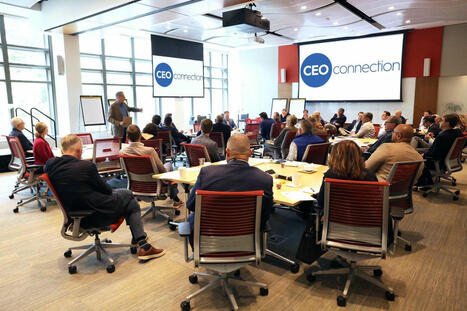
CEOs must exhibit the opposite of chaos - calm - and deploy a culturally appropriate inspiring mandate, organizational vigilance, and interactive leadership.
Summary: Now in a second edition, this classic book shows how to make conversations generative and productive rather than critical and destructive so people, organizations, and communities flourish. We know that conversations influence us, but we rarely stop to think about how much impact they have on our well-being and ability to thrive. This book is the first to show how Appreciative Inquiry-a widely used change method that focuses on identifying what's working and building on it rather than just trying to fix what's broken-can help us communicate more effectively and flourish in all areas of our lives. By focusing on what we want to happen instead of what we want to avoid and asking questions to deepen understanding and increase possibilities, we expand creativity, improve productivity, and unleash potential at work and home. Jackie Stavros and Cheri Torres use real-life examples to illustrate how these two practices and the principles that underlie them foster connection, innovation, and success. This edition has been revised throughout with new examples; updates on the latest supporting research in neuroscience, positive science, and positive psychology; and a discussion guide. It also features a new chapter on what the authors call tuning in: cultivating awareness of how our physical and mental state affect our perceptions, emotions, and thoughts as we engage in conversation. This book teaches you how to use the practices and principles of Appreciative Inquiry to strengthen relationships, build effective teams, and generate possibilities for a future that works for everyone.
Audiobook ID: 332992 Author: C. Otto Scharmer Publisher: Berrett-Koehler Publishers Genres: Business & Economics, Management & Leadership, HR & Office Administration
Summary: Creating a Better Future This book offers a concise, accessible guide to the key concepts and applications in Otto Scharmer's classic Theory U. Scharmer argues that our capacity to pay attention coshapes the world. What prevents us from attending to situations more effectively is that we aren't fully aware of that interior condition from which our attention and actions originate. Scharmer calls this lack of awareness our blind spot. He illuminates the blind spot in leadership today and offers hands-on methods to help change makers overcome it through the process, principles, and practices of Theory U. And he outlines a framework for updating the “operating systems” of our educational institutions, our economies, and our democracies. This book enables leaders and organizations in all industries and sectors to shift awareness, connect with the highest future possibilities, and strengthen the capacity to co-shape the future.
I have a lot I love for my local library here on Bowen Island. Today I’m deeply appreciating the rotating display of works from our local fabric arts guild.The Annex, my office away from hom…...
¿Tu equipo de QA solo "recibe órdenes" o realmente participa en las decisiones? 👇
Si sientes que la información en tu empresa fluye en una sola dirección (de arriba hacia abajo) y que las decisiones importantes se toman en los pasillos o en el "enfriador de agua" sin consultar a quienes realmente hacen el trabajo, este video es para ti.
En este episodio analizo el tema enfocándome en cómo el Liderazgo y la Cultura impactan directamente en la calidad del software. Descubrirás por qué los líderes modernos no deben limitarse a dar instrucciones, sino que deben facilitar un flujo de información ascendente, permitiendo que los equipos de entrega sean escuchados y que la toma de decisiones se delegue a quienes están más cerca del contexto.
Lo que aprenderás:
El peligro de los silos: Por qué las mejoras aisladas en grupos funcionales fallan si no hay una visión de "Whole Team" (Equipo Completo).
Transparencia radical: Cómo evitar que los trabajadores remotos queden excluidos de las decisiones críticas.
Cultura generativa: La conexión entre la confianza, la seguridad psicológica y el rendimiento de entrega (basado en métricas DORA y principios de Holistic Testing).
Introducción al modelo Cynefin: Una herramienta esencial para que los líderes entiendan la complejidad a la que se enfrentan sus equipos.
Si eres Test Manager, Scrum Master o Líder Técnico, necesitas dejar de gestionar tareas y empezar a gestionar la cultura.
Ever wonder what happens when you design an organization around human potential instead of human gaps?
Come join Steven Ross LSSBB, PROSCI and I as we are continuing our organizational development series, and this week we’re diving into Appreciative Inquiry—one of the most powerful, uplifting, human-centered approaches you can bring into any organization.
At its core, Appreciative Inquiry is about placing people where they can succeed by tapping into what’s already working well for them. It’s about leaning into strengths, amplifying the positive core, and recognizing that you can literally build an entire organization—foundation to rooftop—on what people and our organization do best.
Many big-name companies have already experimented with this approach, and for good reason. When you build from strengths, you unlock momentum, confidence, and alignment that traditional problem-first models struggle to produce.
Der Autor des Klassikers 'Visualisieren Präsentieren Moderieren' ordnet in seinem neuen Facilitation Buch bewährte ModerationsDesigns nach der griffigen Strukturierung der 'SixSteps' und gibt so dem Moderator und Facilitator, pragmatische Moderationsmethoden und Kommunikationstechniken an die Hand, die in jedem Setting, ob Präsenz, Online oder Hybrid, unmittelbar nutzbar sind. Elf Themenskizzen illustrieren den Ablauf bewährter ModerationsDesigns, von Appreciative Inquiry bis Zukunftswerkstatt, kurz und knapp und bringen so das Wesentliche auf den Punkt. Entstanden ist ein griffiges Praxishandbuch für die professionelle Moderation von Workshops und Großgruppen. Die zahlreichen, exzellenten Illustrationen des Niederländer Henk Stolker, machen das Buch auch optisch zum Genuss. – moderatio books
Semanalmente estarei divulgando os trechos com os melhores trechos das entrevistas "Bate-bola" realizadas com convidados especiais para abordar diferentes temáticas. ✨
Tema: Aprendizados ao trabalhar com mediação de conflitos
Magali compartilha quem é para além do currículo, conta da sua experiência ao trabalhar com mediação de conflitos, sobre a importância de ter um olhar curioso, o desejo de resolver aquele conflito. Compartilha um dos seus maiores aprendizados ao trabalhar com mediação de conflitos, seu desenvolvimento pessoal e profissional, olhar para si mesma e ampliar a sua autoconsciência.
Bio da convidada: Psicóloga de formação, Magali Lopes é mediadora de conflitos e facilitadora de diálogos. Escritora do livro Dialogo e Conexão - como o Action Learning pode suprir as necessidades mais urgentes do século XXI. Atuou por 15 anos em empresas multinacionais, implementando processos de desenvolvimento em países dos continentes americano, europeu e asiático. Formada em Coaching e Mediação de Conflitos Organizacionais, é Professional Certified Coach pela ICF, Mestre de Action Learning e Presidente do WIAL (World Institute for Action Learning) e co-fundadora da Eight Diálogos Transformadores. É pesquisadora independente de Comunicação Empática com base na Comunicação Não Violenta e Fluxonomia 4d – criação de futuros com base nas novas economias. Acredita na inteligência coletiva para solucionar problemas complexos de forma ágil e criativa e segue facilitando o desenvolvimento de times de alta performance.
Diálogo e Conexão Psicóloga. Especialista em mediação de conflitos @magalilopes
"Coloque o holofote no outro e escute de verdade. Se a pessoa quiser realmente ter um relacionamento mais saudável ou ser um líder mais influente, escute genuinamente, escute com profundidade." 🎯
---------------------------------------------------------------------------------------------------------------------- 🚀 Quer alcançar seus sonhos mais rápido e com leveza utilizando um simples método de produtividade? Um curso prático e rápido, para você conseguir produzir tudo que deseja, mesmo sem vontade de fazer ou com medo de começar. Você vai: Aprender a ser produtivo e gerir melhor o tempo para conseguir equilibrar a sua vida pessoal e profissional. Definir objetivos e metas elaborando um plano de ação para garantir a execução de todos eles. Aprimorar sua rotina criando bons hábitos e trazendo disciplina para os seus dias. E muito mais: https://hotmart.com/pt-br/marketplace/produtos/o-poder-da-produtividade-como-fazer-mais-em-menos-tempo/M83158606A
This week I continue my series on Appreciate Inquiry with the Four I Model of Appreciative Inquiry. a practical way to create positive change in your organization
So, what’s the Four I Model all about? It’s a simple framework that helps teams move good ideas from the ground level all the way up to upper management and stakeholders.
Otto Scharmer’s Theory U offers a five-step framework for leading change through awareness and empathy. This presentation examines how the model helps individuals and organizations shift from reactive, ego-driven patterns to collaborative, forward-thinking systems. By emphasizing curiosity, compassion, and courage, Theory U equips leaders to navigate uncertainty and co-create transformative futures. Its versatility extends beyond business to education, healthcare, government, and the arts, positioning it as a holistic approach to learning and leading from the future as it emerges.
Completed as part of Daemen University's Masters in Leadership & Innovation program. Learn more about this and my other LEAD presentations at https://bit.ly/GarrityLEAD
Learn how to let people self-organize around the topics that truly matter — and watch motivation and ownership rise naturally.
In this 5-minute video you’ll discover: • How to run an Open Space session from start to finish • The four principles and the Law of Two Feet • When to use Open Space to unleash collective energy and commitment
⚡ Open Space is one of five practical tools in The Five Best Group Tools series: ✳️ Me/We/Us – How to get everyone involved in reflection and decision making ☕ Café Method – How to create relaxed, high-energy conversations that build connection 💥 Dynamic Facilitation – How to turn disagreement into shared insight and creative breakthroughs 🌍 Open Space – How to let people self-organize around what truly matters 💡 Idealogue – How to generate and align ideas through structured creativity
Subscribe to get notified as each new episode is released!
🪜 Five tools · Five short videos · Free and practical. From The Handbook of Professional Facilitation by Pepe Nummi / Grape People
Would you like to join one of our free webinars? Follow us on our socials. Find them all here: linktr.ee/nexus4change
–
LEVELING UP OD: HARNESSING SIMS & GAMING FOR CHANGE Featured Speaker: William J. Rothwell, Ph.D.
Discover how cutting-edge simulations and serious gaming are accelerating learning and change in organizations. Drawing on his books featuring action research, appreciative inquiry, and 20 major OD intervention simulations, Dr. Rothwell will share practical examples of how these tools can enhance engagement, drive effective change, and develop OD capabilities. Attendees will leave with actionable ideas to bring fresh, interactive approaches to their own OD practice.
Dr. William J. Rothwell is Professor Emeritus at Penn State University and President of Rothwell & Associates, Inc. With over five decades of experience in HR, OD, and talent development, he’s worked with more than 50 multinational organizations and governments and chaired over 120 Ph.D. committees worldwide. The author of 169 books, Dr. Rothwell is celebrated for shaping global best practices and is the recipient of numerous prestigious industry awards for his work across business, government, and academia.
–
View the full Change 2025 schedule at bgsu.edu/changeconference
Most workplaces try to fix what’s broken — but real progress starts when we focus on what’s already working.
In this video, we explore Appreciative Inquiry (AI) , a powerful, positive method for creating lasting change at work. You’ll learn the 5-D Cycle of Appreciative Inquiry (Define, Discover, Dream, Design, Destiny) and how to use it to boost collaboration, engagement, and innovation in your team or organization.
Whether you’re a manager, HR professional, team leader, or job seeker, this episode will help you shift your mindset from “problem-solving” to “possibility-building.”
🧠 What You’ll Learn:
What Appreciative Inquiry is and how it works
The 5 steps of the Appreciative Inquiry model
How focusing on strengths drives better results
Practical ways to apply AI in your workplace
🔗 Related Videos
The Ownership Mindset – Take initiative and lead by example
Emotional Intelligence at Work – Build stronger professional relationships
How to Build Confidence as a Quiet Professional
📌 Subscribe for More
If you want to grow your professional mindset and workplace skills, subscribe to Professional Skills and Workplace Tips for weekly insights on leadership, communication, and career growth.
Zest fuels success and satisfaction - but how do you tap into it? Dr Galia shares practical ways to bring more energy and passion into your daily life.
🎯 Use it today 🙅♀️ No jargon 🗣 Real talk, real change
Brian and Louie make a primer for the upcoming PLASN-r meeting where they'll explore the topic of Continuing Professional Development (CPD) for teachers in autism education. They highlight the limitations of current CPD practices, emphasizing the need for a more practical and collaborative approach. The conversation introduces the concept of Appreciative Inquiry, a strengths-based model aimed at improving teaching practices by building on what already rocks! Brian might also go off on one to critique the framing of SEND as a crisis.00:00 Introduction to the Plaza Podcast00:40 Discussing the Literature 00:52 Understanding CPD for Teachers02:53 Appreciative Inquiry in CPD05:38 Challenges in the Current Education System06:41 Conclusion and Final Thoughts
Summary: Journey through hope, despair, and forgiveness Leaders cannot predict the complex challenges they are called on to face. Veteran consultants Joan McArthur-Blair and Jeanie Cockell show that Appreciative Inquiry (AI) is an invaluable tool to build resilience. AI is a widely used change approach that emphasizes identifying what's working well in a system. Leaders can use AI to increase their ability to weather the storms they'll inevitably encounter and be resilient. A profound guide, this book features personal accounts from leaders across a variety of settings describing how they've practiced appreciative resilience in the ongoing cycle of hope, despair, and forgiveness.
To get content containing either thought or leadership enter:
To get content containing both thought and leadership enter:
To get content containing the expression thought leadership enter:
You can enter several keywords and you can refine them whenever you want. Our suggestion engine uses more signals but entering a few keywords here will rapidly give you great content to curate.


 Your new post is loading...