Your new post is loading...

|
Scooped by
David Connolly
August 2, 2013 1:13 AM
|
Learn how to take and edit digital photographs using visual tutorials that emphasize concept over procedure, independent of specific digital camera or lens. This is a complete listing of all tutorials on this site; click the drop-down links in the top menu to see particular topics.
|
|
Scooped by
David Connolly
July 22, 2013 2:50 PM
|
|
|
Scooped by
David Connolly
July 5, 2013 2:58 PM
|
Geopaparazzi is a tool developed to do fast qualitative technical and scientific surveys. Its strength is its direct connection to the BeeGIS GIS, that can be used to further process the collected data. Even if the main aim is in the field of surveying, it contains tools that can be of great use also to tourists that want to keep a geo-diary. Visit the official homepage: http://www.geopaparazzi.eu for documentation. Visit the blog to find use cases and other info: http://jgrasstechtips.blogspot.it/search/label/geopaparazzi
|
|
Scooped by
David Connolly
May 19, 2013 4:51 AM
|
The fact came to light after the excavation of over 700 graves of ancient Egyptians.
|
|
Scooped by
David Connolly
May 18, 2013 3:32 AM
|
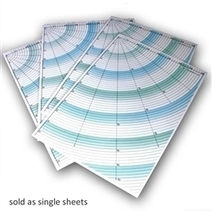
This laminated chart allows you to measure the exact diameter of an artefact rim or base.
One of the essential tools when illustrating artefacts such as pots or other circular items.
|
|
Scooped by
David Connolly
May 3, 2013 3:50 AM
|
The original archaeologists toolkit by Past Horizons just got better
This is the full professional archaeology kit… with all the best equipment and room for more.
We only use the best tools in this toolsbox as cheap substitutes just don't last out in the field.
When it comes to the best in archaeology equipment, then this archaeologists toolbox is just what you have been looking for
|
|
Scooped by
David Connolly
May 2, 2013 9:17 AM
|
Archaeological digs on the Torres Strait island of Mabuiag have shown evidence of more than 7000 years of human habitation. Archaeological digs on the Torres Strait island of Mabuiag have shown evidence of more than 7000 years of human habitation. The radiocarbon dated stone flakes and animal bones are from just after the land bridge between Australia and Papua New Guinea was flooded by rising sea levels. The findings challenge current theories about what happened to the people living in the region, if they stayed or fled and were replaced by others. Dr Duncan Wright from Griffith University spoke with Queensland correspondent Stefan Armbruster about his research that is about to be published in the journal Australian Archaeology.
|
|
Scooped by
David Connolly
May 1, 2013 3:48 PM
|
Dutch 35 Ltr Field Pack for use on archaeological fieldwork
|
|
Scooped by
David Connolly
April 11, 2013 2:18 PM
|
|
|
Scooped by
David Connolly
April 11, 2013 4:44 AM
|
As an explorer I take along a few things, travel light is always a good idea. So I bring my map book, better shoes than sandals and my camera. Other explorers bring along a lot more gear. Some get pretty loaded down and really must spend a lot, not just on the gear itself but the methods of carting it all around too.
|
|
Scooped by
David Connolly
April 5, 2013 2:45 AM
|
PAPA International offers a brief history of aerial photography, from the first time a camera took flight, until it developed into a business, with very practical applications.
|
|
Scooped by
David Connolly
March 19, 2013 12:29 PM
|
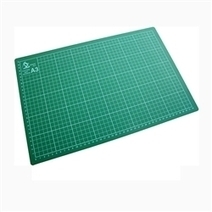
This green self-healing A3 mat with non-slip surface, is designed to protect desks and tables during cutting with scalpels and craft knives. However, it can have several other functions in archaeology - including quick scaled photography and measurement.
This mat is self healing, meaning it won`t disintegrate with repeated use, and is double sided, non reflective - one side with cm grid pattern and the other is blank.
You could use it to create a curved backdrop to photographs or use it straight onto the board.
Dimensions 450 x 300mm
Past Horizons - The trusted supplier of Archaeology Trowels - Archaeology Equipment - Archaeology Tools
|
|
Scooped by
David Connolly
March 3, 2013 11:47 AM
|
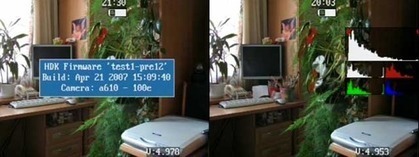
If you're using a consumer grade point-and-shoot Canon digital camera, you've got hardware in hand that can support advanced features way beyond what shipped in the box.
The Canon Hacker's Development Kit, aka CHDK, is a firmware enhancement that supports an impressive array of Canon digital cameras. I emphasize the enhancement aspect of CHDK because the tool is non-permanent and non-destructive, meaning that you load it onto your camera whenever you want to use it; CHDK makes no changes to your camera, and turning it off is simply a matter of restarting your camera. Installing CHDK involves copying a couple of files onto your camera's memory card; permanently removing it from your camera entails deleting those files. It's simple and powerful (sort of like hacking your router firmware) but even easier.
|
|
|
Scooped by
David Connolly
July 23, 2013 5:07 AM
|
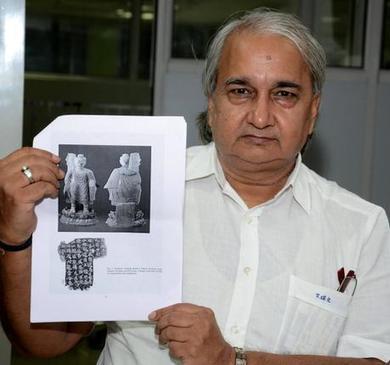
After undertaking a two-year-long research into Ashoka’s stone and bronze sculptures in South Asian countries, former Bharat Kala Bhavan director D. P. Sharma says it is high time that the Union Culture Ministry brought back rare ancient Indian art objects from abroad and displayed them in exhibitions across the country. “Over the years, Buddhist travellers from China, Japan and other South Asian countries visiting India for pilgrimage have been gifted mementos and bronze sculptures of Ashoka. In 2001, an international exhibition of four great civilizations was mounted at established museums in Tokyo and Nagaya, where art objects from India, China, Egypt and Iraq were put on display. From India, art objects from the Indus Valley Civilisation were displayed. I led this delegation.” Fortunately for Dr. Sharma, the Chinese delegation had brought a rare statue, which after meticulous examination he discovered was of Ashoka and had come from an ancient kingdom based on the border between Afghanistan and Pakistan.
|
|
Scooped by
David Connolly
July 6, 2013 8:12 AM
|
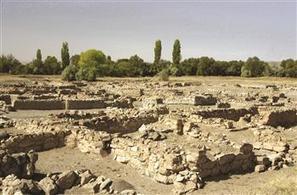
This year’s excavations have started in Kayseri’s ancient site of Kültepe, a center where the written history of Anatolia began. Officials say it might take 5,000 years to excavate the whole anicent site
The Culture and Tourism Ministry is making efforts for the Kültepe tablets to enter into the UNESCO World Heritage List. Archaeological excavations have been recently launched at a ceremony at the ancient Kültepe site in the central Anatolian province of Kayseri, under the direction of the Ankara University Professor Fikri Kulakoğlu.
Kulakoğlu said that Kültepe was a center where the history of Anatolia began. He said that Assyrian traders came to Kültepe 4,000 years ago and brought literacy to people there and, thanks to them, Anatolia had entered into the written history for the first time.
|
|
Scooped by
David Connolly
May 30, 2013 2:54 AM
|
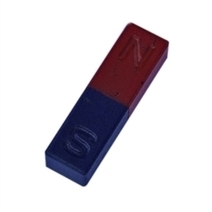
Magnet for detecting ferrous metal working This small low powered north south magnet is just perfect for running through soil to check for any signs of ferrous metal working including hammerscale.
|
|
Scooped by
David Connolly
May 18, 2013 8:02 AM
|
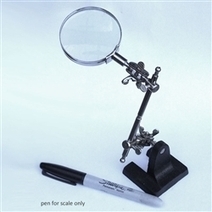
Desk Top Magnifier This fully articulated desk top magnifier comes complete with a 60mm diameter 6 x magnification lens.
Perfect for hands free examination of finds, environmental samples, documents and maps.
Heavy cast iron base and extending bar allows for the magnifying glass to be raised to 15cm (6") above the desk level.
|
|
Scooped by
David Connolly
May 12, 2013 3:41 AM
|
|
|
Scooped by
David Connolly
May 3, 2013 3:47 AM
|
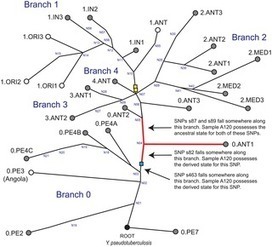
Yersinia pestis, the etiologic agent of the disease plague, has been implicated in three historical pandemics. These include the third pandemic of the 19th and 20th centuries, during which plague was spread around the world, and the second pandemic of the 14th–17th centuries, which included the infamous epidemic known as the Black Death. Previous studies have confirmed that Y. pestis caused these two more recent pandemics. However, a highly spirited debate still continues as to whether Y. pestis caused the so-called Justinianic Plague of the 6th–8th centuries AD. By analyzing ancient DNA in two independent ancient DNA laboratories, we confirmed unambiguously the presence of Y. pestis DNA in human skeletal remains from an Early Medieval cemetery. In addition, we narrowed the phylogenetic position of the responsible strain down to major branch 0 on the Y. pestis phylogeny, specifically between nodes N03 and N05. Our findings confirm that Y. pestis was responsible for the Justinianic Plague, which should end the controversy regarding the etiology of this pandemic. The first genotype of a Y. pestis strain that caused the Late Antique plague provides important information about the history of the plague bacillus and suggests that the first pandemic also originated in Asia, similar to the other two plague pandemics.
|
|
Rescooped by
David Connolly
from Heritage Apps
May 1, 2013 4:11 PM
|
The ancient monastery at Clonmacnoise is brought to life by a new 3D smart phone app
Via Ancient World Apps
|
|
Scooped by
David Connolly
April 17, 2013 1:46 PM
|
Professional Archaeology Photo Light Box Tent Cube (50cm) When taking photographs of artefacts in the field or back at base, this professional Indoor Photography Tent (50 x 50 x 50cm) is just the thing for the perfect shot.
The light tent makes it extremely simple to help you take great quality, professional digital photos right form your own tabletop studio. The tent filters the light to prevent shadows and reflections on shiny objects, gives a clean professional backdrop to all items.
|
|
Scooped by
David Connolly
April 11, 2013 2:13 PM
|
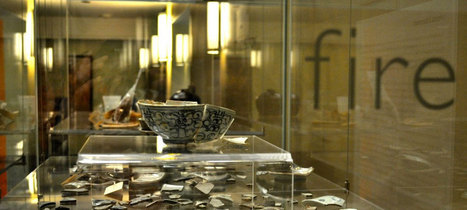
Visitors to the Stanford Archaeology Center find modern glass cases filled with fragments of a lost city – wooden toothbrushes and combs, buttons and leather shoes, ceramic bowls and soup spoons – remnants of the once thriving Chinatown community in San José.
|
|
Scooped by
David Connolly
April 5, 2013 5:40 AM
|
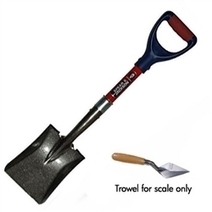
Small shovel for big works in confined spaces or if an easy to transport square mouthed shovel is needed for work in archaeology
|
|
Scooped by
David Connolly
March 30, 2013 2:36 AM
|
Help map the Roman Empire. a massive googlemaap that has forts, towns, roads, sites of all sorts - thousands of them.
|
|
Scooped by
David Connolly
March 3, 2013 11:48 AM
|
Update!
You don't need to spend thousands of dollars on a camera just for features like motion sensing, time lapse, RAW images, and control over exposure and shutter speeds.
- RAW Image Formats: When you take a picture, your camera usually does a bit of automatic post-processing like contrast and other level adjustments. Shooting in RAW disables this, so you can make these decisions yourself when you edit the photo. It's better for professional-level, high-quality shooting, but most point-and-shoots don't support it. CHDK gives you the option.
- Manual Controls: Many situations—like taking low-light concert photos or super-fast action shots—require you to make manual adjustments to your camera's aperture, shutter speed, exposure time, and other settings. CHDK gives you a ton more room to play with these settings that you have by default, letting you get better photos at concerts, sporting events, and other things that may have been more difficult before.
Time Lapse, Motion Sensing, and More: CHDK can run small scripts, many of which come bundled with the software, that emulate features of more expensive cameras. For example, you can take time lapse photos (see the video to the right), snap a picture when your camera detects motion (which is cool for things like lightning strikes), support for gorgeous high dynamic range (HDR) photos, and more. You can check out some examples of these below, or see the full list of available scripts at the CHDK Wiki. - Better Video: If you occasionally need to shoot video but don't want to shell out for another video-centric camera, CHDK can beef up your point-and-shoot's video features. You can avoid file size limits with a "continuous video mode" (via a script), and enable optical zoom to magnify far-off subjects without the quality loss that comes with digital zoom.
|