Your new post is loading...

|
Scooped by
David Connolly
September 20, 2012 2:45 AM
|
Skokholm is a small island half a mile across located off the south western coast of Pembrokeshire, about two miles south of its larger island neighbour Skomer. Using innovative new survey techniques a small team from the Royal Commission has been investigating how people lived and farmed these Pembrokeshire islands in the past – much of the focus has recently been on Skomer, – but now, the fascinating story of Skokholm is beginning to be revealed.
|
|
Scooped by
David Connolly
September 20, 2012 2:09 AM
|
Hagar Qim was excavated at the beginning of the nineteenth century and has produced many ‘fat figure’ statuettes including the naturalistic ‘Venus of Malta’.
|
|
Scooped by
David Connolly
September 20, 2012 1:49 AM
|
Archaeologists find 700-year-old mummified Ming Dynasty woman in China.
|
|
Scooped by
David Connolly
September 19, 2012 11:06 AM
|
University of Oxford are the in the middle of our course launch period once again, but there there still places in loads of fabulous online courses if you are interested. In particular I should mention our four new courses for this term, The First World War in Perspective, Archaeology in Practice, Social Entrepreneurship, and Introducing Mapping, Spatial Data & GIS.
|
|
Scooped by
David Connolly
September 19, 2012 7:13 AM
|
Archaeologists enter untouched ancient Mayan tombExaminer.comA team of archaeologists from Mexico's National Institute of Anthropology and History have entered a previously undisturbed tomb in Palenque.
|
|
Scooped by
David Connolly
September 19, 2012 7:10 AM
|
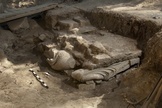
Two Roman statues discovered in Aphrodisias. were re-used as building material.
|
|
Scooped by
David Connolly
September 19, 2012 7:02 AM
|
A dictionary of thousands of words chronicling the everyday lives of people in ancient Egypt — including what taxes they paid, what they expected in a marriage and how much work they had to do for the government — has been completed by scholars at the University of Chicago. The ancient language is Demotic Egyptian, a name given by the Greeks to denote it was the tongue of the demos, or common people. It was written as a flowing script and was used in Egypt from about 500 B.C. to 500 A.D., when the land was occupied and usually dominated by foreigners, including Persians, Greeks and Romans. Read more at http://scienceblog.com/56681/scholars-finish-dictionary-of-ancient-egyptian-language/#PK7hA500pfBzwFqu.99
|
|
Scooped by
David Connolly
September 19, 2012 2:06 AM
|
Irreplaceable and ancient Aboriginal etchings destroyed in southern Alberta, met their end recently by acid and power drill, reports state.
n an article published by the Pincher Creek Voice, the man who discovered that the ancient Aboriginal pictograms and petroglyphs on a southern Alberta erratic rock face had been destroyed through acid burns, power-washing and drilling, equated the destruction of the ancient Alberta writings to some of the worst cases of cultural crimes in recent history.
|
|
Scooped by
David Connolly
September 18, 2012 10:22 AM
|
Want to build your own pyramid? How about some rice terraces? Sure, you could use some fancy modern equipment and take the easy way out... Or you could only use the tools available to those in times like 2500 B.C.
|
|
Rescooped by
David Connolly
from Anthropology and Archaeology
September 18, 2012 4:38 AM
|
Ancient patches of a giant seagrass in the Mediterranean Sea are now considered the oldest living organism on Earth after scientists dated them as up to 200,000 years old.
Via Kyle Kunkel O'Connor
|
|
Scooped by
David Connolly
September 18, 2012 3:18 AM
|
This blog is focused on the creation, curation, and publication of entirely digital content from archaeological excavations. Most of the examples come from work done for PARP:PS (Pompeii Archaeological Research Project: Porta Stabia). Having access to the PARP:PS database was invaluable when developing the Sangro Valley Project’s database and paperless workflow (see my first post for an overview and this post for more background information). In that sprit of cooperation I have made available an unlocked version of the database originally developed for the SVP. The database – which we have dubbed “Cera,” the Latin word for a wax writing tablet – can be downloaded here (see licensing below and in the ReadMe file that comes with the database).
|
|
Scooped by
David Connolly
September 17, 2012 3:47 PM
|
Archaeologists from the University of Tübingen in Germany have found eight extremely well-preserved spears – an astonishing 300,000 years old, making them the oldest known weapons anywhere. The spears and other artefacts as well as animal remains found at the site demonstrate that their users were highly skilled craftsmen and hunters, well adapted to their environment – with a capacity for abstract thought and complex planning comparable to our own. It is likely that they were members of the species Homo heidelbergensis, although no human remains have yet been found at the site.
|
|
Scooped by
David Connolly
September 17, 2012 2:13 PM
|
The Fen Edge Archaeology Group (FEAG) are hosting a talk about how archaeobotany – the study of archaeological plant remains – reveals both agriculture and aspects of society along the Roman fen-edge, with particular ...
|
|
|
Scooped by
David Connolly
September 20, 2012 2:18 AM
|
The public are once again invited to visit the dig site for the grave of King Richard III in Leicester. The announcement, last week, that confirmed human bones had been unearthed at the archeological dig, at the Greyfriars church in Leicester, has attracted thousands of visitors to the site and the city.
|
|
Scooped by
David Connolly
September 20, 2012 2:08 AM
|
The American Desert Southwest has some of the most impressive prehistoric ruins and artifacts in the world.
|
|
Scooped by
David Connolly
September 19, 2012 1:10 PM
|
Initial investigations have begun on a series of pyramidal chambers carved from the tufa rock underneath the city of Orvieto, Italy. Dr. David B. George of the Department of Classics at Saint Anselm and Dr. Claudio Bizzarri of the Parco Archeogico Ambientale dell Orvietano (PAAO) are the co-directors leading the excavation with students from Saint Anselm College. The interior of the subterranean space had been filled almost to the top with the upper section used as a modern wine cellar. However one feature caught the eye; a series of ancient stairs carved into the wall of a constructional type consistent with an Etruscan date.
|
|
Scooped by
David Connolly
September 19, 2012 11:05 AM
|
Ancient Graveyard Not for Child Sacrifice, Scientists Say A new study of the ancient North African site offers the latest volley in a debate over the primary purpose of the graveyard, long thought to be a place of sacred sacrifice.
|
|
Scooped by
David Connolly
September 19, 2012 7:12 AM
|
What if Jesus had a wife? This is the question that Christianity confronts today after a fragment of papyrus has been presented at a conference of scholars in Rome. The ancient Coptic document includes the phrase "Jesus said to them, my wife" using a term that undoubtedly references a woman who was his spouse and not some metaphorical partner. Harvard scholar Karen L. King, who announced the discovery of the papyrus at the International Congress of Coptic Studies, believes it is from the latter half of the Second Century. The fragment was authenticated by experts in New York and Jerusalem, but it awaits chemical testing to confirm its age more definitively.
|
|
Scooped by
David Connolly
September 19, 2012 7:09 AM
|
Pottery sherd from Lake Roberts Project in Southwestern New Mexico Beautiful vivid fragments of Mimbres pottery, tiny arrowheads smaller than a fingertip,...
|
|
Scooped by
David Connolly
September 19, 2012 6:59 AM
|
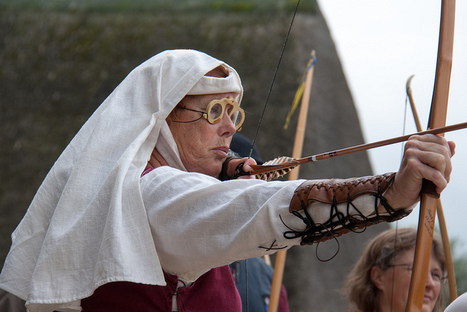
longbow shoot...
I love all of Hans Splinters work. however. the details he captures at Archaeon are wonderful!
|
|
Scooped by
David Connolly
September 19, 2012 1:55 AM
|
Experts believe they are located at Central Scotland Police headquarters in Randolphfield, Stirling. Archaeologists from Stirling Council believe the land is of historical importance. A geophysical survey is being carried out over an area surrounding two standing stones in front of the building. The stones are said to commemorate or may have been used in a skirmish during the Battle of Bannockburn in 1314.
|
|
Scooped by
David Connolly
September 18, 2012 4:43 AM
|
Italian police divers have discovered an almost intact Roman ship in the sea, buried in mud that has preserved the food inside its jars. The ship, a navis oneraria, or merchant vessel, was located at a depth of about 200 feet thanks to a remotely operated vehicle (ROV) following tips from fishermen who had caught some jars in their nets. Test on some of the recovered jars revealed they contained pickled fish, grain, wine and oil. The foodstuffs were traded in Spain for other goods.
|
|
Scooped by
David Connolly
September 18, 2012 4:06 AM
|
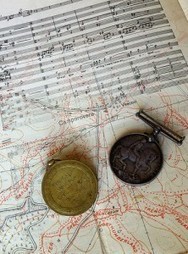
CAMPAIGN to save Edinburgh’s historical trenches from being lost forever has been given a boost after the Ministry of Defence confirmed it is actively seeking funding to preserve them.A network of trenches at Dreghorn Woods, Colinton, which it is estimated would cost around £10,000 to save, could soon disappear as they become overgrown by trees. But MoD archaeologist Philip Abramson, who visited the trenches, which were used to train troops before they went to the battlefront, has said they are “not under threat”.
|
|
Scooped by
David Connolly
September 17, 2012 3:50 PM
|
|
|
Scooped by
David Connolly
September 17, 2012 2:14 PM
|
The Team programme visits Star Carr archaeological site- Studies by archaeologists at the University of York have been put under the TV spotlight.
|