Your new post is loading...

|
Scooped by
David Connolly
September 30, 2012 3:45 AM
|
A vast and well-preserved labyrinth of storehouses, schools and courtyards in Aleppo was damaged on Saturday as fierce clashes between security forces and insurgents continued.
For many residents, the old city, with the souk at its center, is the soul of Aleppo, one of the world’s oldest continuously inhabited cities and Syria’s largest. Aleppo has been staggering for months under a bloody battle that has reduced some residential areas to rubble, and with no deaths immediately reported from the blaze, the damage to the souk pales compared with the recent human toll. For more on Aleppo's Old City: http://whc.unesco.org/en/list/21
|
|
Rescooped by
David Connolly
from Archaeology
September 29, 2012 6:37 PM
|
Amidst all the intense preparations for our Ancient Worlds re-display, a highlight of this week was a visit to the West Park Museum in Macclesfield – home to almost 500 ancient Egyptian and S...
Via Rene Nieuwenhuizen
|
|
Scooped by
David Connolly
September 29, 2012 6:35 PM
|
Since the Times Higher Education ran a story on the 13th September 2012 highlighting the bullying tactics against academic staff employed by the University of Birmingham, the situation in the college of Arts and Law has worsened – considerably. Following a supposed consultation, the College have now presented the final results of the 2012 Institute of Archaeology and Antiquity (IAA) review; this would appear to be the first of a new wave of reviews held across the University. The review has displayed an unprecedented level of bias, unfairness and aggression throughout its implementation and from the outset the University has sought to justify large scale redundancies: Over 15 proposed redundancies were announced today – 11 from Archaeology; this, following 7 years of mismanagement in the IAA by senior managers.All members of staff on research contracts in Archaeology (responsible for several high impact, media friendly research projects internationally, including the Stonehenge Hidden Landscapes Project, North Sea Palaeolandscapes Project, and Shakespeare Project among others) are targeted. Requests from the University and College Union (UCU) for an Equality and Impact Assessment regarding age and gender have been completely ignored.Senior managers have been rewarded for failures which led to the proposed closure of the department of Archaeology and the cutting of the undergraduate degree programme for Single Honours Archaeology.The University of Birmingham has refused to properly investigate a collective Grievance lodged by research staff against the Senior Management of the IAA.What impact will such massive cuts have on the University, on its students, on the research culture and on the whole student ‘experience’ – especially as a spate of such reviews is sweeping across the University? The shockwaves are being felt throughout the University as a whole. There is an atmosphere of genuine fear amongst the staff as the University’s already heavy-handed management style turns vicious in its desperate attempt to rid itself of those it perceives as expendable. Throughout the process the College was adamant in its public statement that Archaeology would have a future at the University, however the results announced today of the IAA Consultation lay bare the truth: after the large scale redundancies, the few remaining senior Archaeologists will survive scattered amongst the various schools that formerly constituted the IAA, with the discipline of Archaeology continuing invisibly and ineffectually, only as a ‘virtual’ grouping.
|
|
Scooped by
David Connolly
September 29, 2012 11:47 AM
|
Archaeological excavations carried out at the site of La Bastida (Totana, Murcia, in Spain) have exposed an imposing fortification system which is unique for its location and date. This discovery, together with all previous finds made in recent years, reaffirm that the site represents the most advanced ‘city’ settlement in western Europe in both political and military terms during the Bronze Age ca. 2,200 BCE. In terms of sophistication, it is comparable only to the Minoan civilisation of Crete.
|
|
Scooped by
David Connolly
September 29, 2012 1:55 AM
|
Excavations at the Aslantepe tumulus near the central Anatolian city of Malatya have unearthed a large building containing two spearheads and a necklace, all of which appear to date to the early trans-Caucasian culture. Excavation work continued this year on part of a structure in the southern portion of the tumulus that is believed to be the world’s first palace, the head of the Aslantepe excavations, Professor Marcella Frangipane of Rome’s La Sapienze University, told members of the press. Some other buildings found to the north of the palace in earlier phases of the excavation date from the Bronze Age, she said.
|
|
Scooped by
David Connolly
September 28, 2012 3:34 AM
|
Alongside such achievements as the aqueducts and roman numerals, the ancient people of what is now Italy made...
|
|
Scooped by
David Connolly
September 28, 2012 3:12 AM
|
Ever since a dedicated team began working on the excavation and conservation of the area, El Mirador has shaken many preconceptions about it to the core. The incredibly sophisticated architecture of El Mirador proves that the Maya were far more advanced, far earlier, than anyone could have imagined.
|
|
Scooped by
David Connolly
September 27, 2012 3:09 PM
|
State underwater archaeologists headed out Tuesday in search of artifacts at the Queen Anne’s Revenge shipwreck in Beaufort Inlet. This is the third week of an eight-week dive expedition to the shipwreck sailed and eventually run aground by the infamous 18th century British pirate Blackbeard. While the ship was sunk off the coast of Fort Macon in 1718, it wasn’t until its discovery in 1996 that it began giving up secrets on the Golden Age of Piracy.
|
|
Scooped by
David Connolly
September 27, 2012 3:04 AM
|
Wrapped in a modern house with its façade decorated with huge glass windows, a typical ancient house with 220 years of history has found a new lease of life in downtown Beijing, more than 1,000 kilometers away from its origins in Jiangxi Province, adjacent to Anhui Province. Mixing a modern flavor with traditional Huizhou architecture dating back to the Qing Dynasty (1644-1911), the building has become a very popular restaurant called Le Quai.
|
|
Scooped by
David Connolly
September 27, 2012 1:55 AM
|
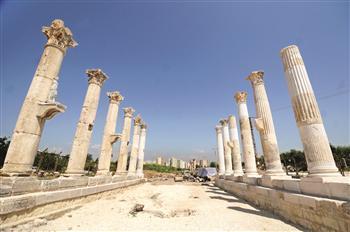
Signs of a Byzantine-era earthquake have been discovered in the ancient city of Soloi Pompeiopolis in the southern province of Mersin. The excavation team found signs of an earthquake during excavations on the city’s Milli Egemenlik Street, according to the project head, Professor Remzi Yağcı of Dokuz Eylül University. “We have found three big, half-broken cubes, Roman and Byzantine coins and a big structure. We think that this structure was ruined by an earthquake in the early Byzantine period. Its real function will be understood after future excavations. This is the second structure we have discovered that was ruined in a big earthquake in Pompeiopolis. It is an important historical finding to understand the Anatolian earthquake,” he said.
|
|
Rescooped by
David Connolly
from Anthropology and Archaeology
September 26, 2012 4:17 PM
|
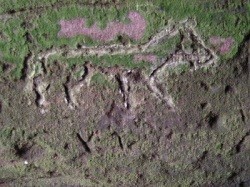
A design of a reindeer hidden in the back of a Welsh cave may be the oldest cave art in the UK, archaeologists say. but...........
Via Kyle Kunkel O'Connor
|
|
Scooped by
David Connolly
September 26, 2012 1:49 AM
|
Two years ago, when the 2,000-year-old School of Gladiators collapsed, taking with it some of the finest frescoes of the early Roman era, Italy's president Georgio Napolitano spoke of a "national disgrace", and Silvio Berlusconi, the priapic greaser then serving as prime minister, promised to make more money available for conservation. All that has happened is that the level of neglect has worsened, and funds are scarcer than ever. London's forthcoming blockbuster Pompeii exhibition may not deliver the same emotional wallop as a visit to the actual site, but at least the British Museum's roof is unlikely to land on your head.
|
|
Scooped by
David Connolly
September 25, 2012 2:49 PM
|
Iraq, which the ancient Greeks called Mesopotamia or “land between two rivers” because of the Tigris and Euphrates, has always been regarded by archaeologists as the cradle of civilization. Driven by the desire to reassemble some of the country’s lost history, a group of Iraqi archaeologists have recently managed to unearth artifacts and a Babylonian temple’s structure dating back to the middle Babylon period between 1532 BC to 1000 BC at an archaeological site in Iraq’s southern province of Nassiriya. The site, excavated at 500 square meter at Abu Rabab plateau and located 150 km in east of Nassiriya city, is part of a project called “Gardens of Eden” which Iraqi government plans to launch over the next few years to promote tourism in the province.
|
If you want to find some really vivid stories about ordinary ancient Romans – not just about the toffs, the generals, and the emperors – some of the very best places to look are their tombstones. These give some amazing ...
Via Louise Zarmati
|
|
Scooped by
David Connolly
September 29, 2012 6:36 PM
|
The first palace structure from the Urartu Kingdom has been found in excavations at the top of Van Castle in the eastern province of Van.
|
|
Scooped by
David Connolly
September 29, 2012 12:20 PM
|
The Demotic text talks of ritual sex in the name of the Goddess Mut.
A recently deciphered Egyptian papyrus from around 1,900 years ago tells a fictional story that includes drinking, singing, feasting and ritual sex, all in the name of the goddess Mut. Researchers believe that a priest wrote the blush-worthy tale, as a way to discuss controversial ritual sex acts with other priests.
oooh I say!
|
|
Scooped by
David Connolly
September 29, 2012 2:00 AM
|
Archaeologists have confirmed that a black substance found in an ancient tomb in northwest China's Shaanxi province is actually a 2,000-year-old portion of beef.
|
|
Scooped by
David Connolly
September 29, 2012 1:52 AM
|
ANCIENT Romans invented the infamous embarrassing dad look, say researchers... One researcher said: "They may have shaped the world as we know it, but this just goes to show the Romans didn't have much style. "Unfortunately they have inspired generations of embarrassing dads." It is thought the military outpost, excavated as part of a £318million Highways Agency scheme to upgrade the A1 between Dishforth and Leeming, was used by the Roman Ninth Hispanic Legion.
|
|
Scooped by
David Connolly
September 28, 2012 3:25 AM
|
Cultural authorities in Skopje have announced plans to convert the Macedonian capital’s Ottoman-era fortress into a museum displaying pieces and artifacts stemming from the imperial age. The project started earlier in September and is expected to be completed at the beginning of next year. The fortress, regarded as one of the most important in the Balkans, is expected to be revived thanks to the new undertaking, Macedonia Cultural Heritage Protection Office Director Pasko Kuzman recently told Anatolia news agency.
|
|
Scooped by
David Connolly
September 28, 2012 2:11 AM
|
The Vatican newspaper has added to the doubts surrounding Harvard University's claim that a 4th century Coptic papyrus fragment showed that some early Christians believed that Jesus was married, declaring it a "fake." The newspaper, L'Osservatore Romano, published an article Thursday by leading Coptic scholar Alberto Camplani and an accompanying editorial by the newspaper's editor, Giovanni Maria Vian, an expert in early Christianity. They both cited concerns expressed by other scholars about the fragment's authenticity and the fact that it was purchased on the market without a known archaeological provenance. " At any rate, a fake," Vian entitled his editorial, which criticized Harvard for creating a "clamorous" media frenzy over the fragment by handing the scoop to two U.S. newspapers only to see "specialists immediately question it."
|
|
Scooped by
David Connolly
September 27, 2012 3:21 AM
|
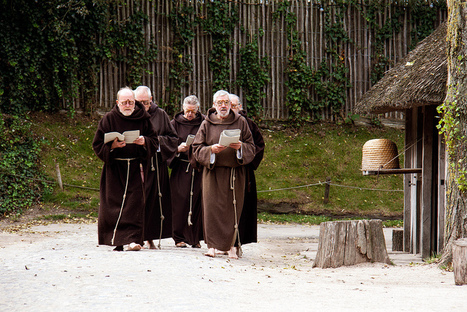
Singing brothers... from teh one and only Hanss Splinter at the Archeon Site. in the Netherlands.
Han's images capture the past with such a realisim and casual reality that you are transported back in time -
Worth browsing his thousands of images
|
|
Scooped by
David Connolly
September 27, 2012 2:13 AM
|
SCIENTISTS and archaeologists from Wales and Spain could soon be working more closely thanks to “a major new finding” about the origins of the Newport Ship. Hull timbers from the 15th century medieval vessel, found at the building site for the Riverfront Theatre in Newport ten years ago, have recently been matched to the Basque Country in northern Spain, renowned for its medieval ship-building industry.
|
|
Scooped by
David Connolly
September 26, 2012 4:17 PM
|
Fresco of Diana the Huntress, from the Hypogeum of Via Livenza, Rome #archaeology #art http://t.co/dYfMGf5k...
|
|
Scooped by
David Connolly
September 26, 2012 1:39 PM
|
A THOUSAND-year-old Buddhist statue taken from Tibet in 1938 by an Nazi SS team was carved from a meteorite.
|
|
Scooped by
David Connolly
September 25, 2012 2:56 PM
|
Crews working on a building project in San Francisco's Civic Center have unearthed the massive foundations of the old City Hall, a ghostly reminder of San Francisco's greatest disaster. The imposing old City Hall collapsed in a shower of bricks, stone and steel in the 1906 earthquake. It was the largest municipal building west of Chicago and was so elaborate it took 25 years to build. The City Hall was supposed to be earthquake proof, but it collapsed in seconds after the great quake struck. It had been open for less than 10 years.
|