Your new post is loading...

|
Scooped by
David Connolly
October 14, 2012 3:23 AM
|
New excavations continue to tell the story of an ancient city at the crossroads between east and west...
It wasn't good policy that saved ancient Zeugma. It was a good story. In 2000, the construction of the massive Birecik Dam on the Euphrates River, less than a mile from the site, began to flood the entire area in southern Turkey. Immediately, a ticking time-bomb narrative of the waters, which were rising an average of four inches per day for six months, brought Zeugma and its plight global fame. The water, which soon would engulf the archaeological remains, also brought increasing urgency to salvage efforts and emergency excavations that had already been taking place at the site, located about 500 miles from Istanbul, for almost a year. The media attention Zeugma received attracted generous aid from both private and government sources. Of particular concern was the removal of Zeugma's mosaics, some of the most extraordinary examples to survive from the ancient world. Soon the world's top restorers arrived from Italy to rescue them from the floodwaters. The focus on Zeugma also brought great numbers of international tourists—and even more money—a trend that continues today with the opening in September 2011 of the ultramodern $30 million Zeugma Mosaic Museum in the nearby city of Gaziantep. >> Now read on about the continuing work.
|
|
Scooped by
David Connolly
October 14, 2012 3:09 AM
|
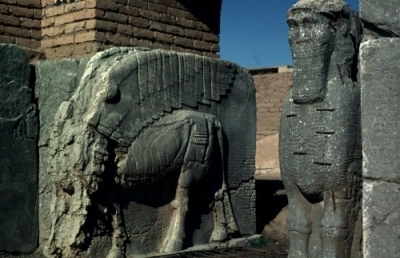
Archeologists working in northern Iraq have discovered a new Assyrian site in the vicinity of the historic Arbil city center, the head of the antiquities office in the Kurdish Province of Arbil, Haydar Hassan, was quoted as saying in an Iraqi newspaper. The Assyrian civilization flourished in northern Iraq between 1000-700 B.C., archeologists were led to discover the site when they exhumed a burial ground, complete with mud brick grave heads, Global Arab Network reports according to Iraq’s al-Zaman newspaper.
|
|
Scooped by
David Connolly
October 14, 2012 2:13 AM
|
A Chinese scientist says that humans used to eat pandas.In a newspaper interview, Wei Guangbiao says prehistoric man ate the bears in what is now part of the city of Chongqing in southwest China.
|
|
Scooped by
David Connolly
October 13, 2012 2:31 AM
|
Well, not exactly. But the latest discoveries have had a surprisingly humanizing effect.
The Neanderthals are both the most familiar and the least understood of all our fossil kin. For decades after the initial discovery of their bones in a cave in Germany in 1856 Homo neanderthalensis was viewed as a hairy brute who stumbled around Ice Age Eurasia on bent knees, eventually to be replaced by elegant, upright Cro-Magnon, the true ancestor of modern Europeans.
|
|
Scooped by
David Connolly
October 13, 2012 2:03 AM
|
The Metropolitan Museum of Art today launched MetPublications, a major online resource that offers unparalleled in-depth access to the Museum’s renowned print and online publications, covering art, art history, archaeology, conservation, and collecting. Beginning with nearly 650 titles published from 1964 to the present, this new addition to the Met's website, will continue to expand and could eventually offer access to nearly all books, Bulletins, and Journals published by the Metropolitan Museum since its founding in 1870, as well as online publications. Readers may also locate works of art from the Met’s collections that are included within MetPublications and access the most recent information about these works in the Collections section of the Museum’s website.
|
|
Scooped by
David Connolly
October 12, 2012 6:42 AM
|
Archaeologists in Guatemala have discovered the tomb of Lady K’abel, a seventh-century Maya Holy Snake Lord considered one of the great queens of Classic Maya civilization. The tomb was discovered during excavations of the royal Maya city of El Perú-Waka’ in northwestern Petén, Guatemala, by a team of archaeologists led by Washington University in St. Louis’ David Freidel, co-director of the expedition.
|
|
Scooped by
David Connolly
October 12, 2012 4:32 AM
|
Young people from throughout Moray took part in archaeological dig at Moray site over the last year.
Great project from SCotland.
|
|
Scooped by
David Connolly
October 12, 2012 1:46 AM
|
Egypt reopens one of its great pyramids as it attempts to revive a tourism industry badly hit by last year's uprising.
Antiquities Minister Muhammad Ibrahim reopened the Pyramid of Chefren (Khafre) and six ancient tombs at Giza after a long restoration project. He said he was keen to stress that Egypt is a safe country for tourists.
|
|
Scooped by
David Connolly
October 11, 2012 3:11 AM
|
Artifacts discovered during excavations at Gaziantep’s Karkamış ancient site were presented to the press. The pieces were found in a 663,000 square-meter area following the clearance of mines in a military area near the Syrian border
Discoveries from the southern province of Gaziantep’s Karkamış ancient site were shown to press members on Oct. 9, after excavation first began under tight security measures, as the site is located in a military area on the Syrian border.
|
|
Scooped by
David Connolly
October 11, 2012 2:53 AM
|
A crucial archaeological discovery near Peterborough could be the foundation for a university and tourist centre worth millions of pounds, it has been declared.
Bronze Age log boats were discovered at Must Farm, near Whittlesey, in 2011 following a dig by the Cambridge Archaeological Unit. Now Peterborough City Council has agreed to set aside £140,000 to help protect and keep the 10 boats in the city. The move has sparked protests from Peterborough MP Stewart Jackson who said the council should concentrate on front-line services. The 3,000-year-old boats provided vital evidence of settlements in and around Peterborough during the Bronze Age, and it is thought the site, located near Flag Fen, could contain other important artefacts, with excavations planned at the site over the next 10 years.
|
|
Scooped by
David Connolly
October 11, 2012 2:05 AM
|
In the second episode of Kobra’s coverage of the “Judgement Day”, we are told that October is the most popular month for the “end of the world predictions”. The Swedish artists Bigert and Bergström made a calendar for this year where several previous failed predictions are mentioned and according to them October stands out. You may remember Camping’s failed prediction for October 21 last year. Although Calleman did not predict the end of the world, he suggested that a transformation of consciousness would begin on October 28 last year.
|
|
Scooped by
David Connolly
October 10, 2012 3:46 PM
|
Like any corner-cutting modern builder, the ancient stonemasons who built Stonehenge lavished the most work and best materials where they would be first seen –shining in the last light of the setting winter solstice sun, or at dawn on the longest day. The first complete 3D laser scan of the stone circle has also revealed tool marks made 4,500 years ago, scores of little axehead graffiti added when the enormous slabs were already 1,000 years old, and damage and graffiti contributed by Georgian and Victorian visitors.
|
|
Scooped by
David Connolly
October 10, 2012 2:13 AM
|
Archaeologists began new excavations at the medieval Urvich fortress 20km from Bulgaria’s capital city Sofia at the beginning of October 2012, with the first finds including silver rings, earrings and bronze and iron personal items, Bulgarian archaeology professor Nikolai Ovcharov said. Urvich fortress is near the banks of the Iskar River in the Pancharevo area close to the road from Sofia to Samokov. The fortress is estimated to date from the 13th century CE, during the time of the Second Bulgarian Kingdom.
|
|
|
Scooped by
David Connolly
October 14, 2012 3:16 AM
|
Site where oldest computer lay for thousands of years may yield other treasures and even another Antikythera mechanism... In 1900, Greek sponge divers stumbled across "a pile of dead, naked women" on the seabed near the tiny island of Antikythera. It turned out the figures were not corpses but bronze and marble statues, part of a cargo of stolen Greek treasure that was lost when the Roman ship carrying them sank two thousand years ago on the island's treacherous rocks.
What they had found was amazing.... a whole wreck stuffed with goods from across the Empire and a remarkable early 'computer'
Now divers are returning to the site. It has taken scientists over a hundred years to decode the inner workings of those corroded fragments, with x-ray and CT scans finally revealing a sophisticated clockwork machine used to calculate the workings of the heavens
http://www.youtube.com/watch?v=ZrfMFhrgOFc&feature=player_embedded
|
|
Scooped by
David Connolly
October 14, 2012 2:21 AM
|
National Archeology Day Join the National Park Service and the Archaeological Institute of America in celebrating National Archeology Day on October 20, 2012. Archeological places across the nation will offer all kinds of special events, from public archeology days to speakers to exhibits. Learn more about the ways that archeology helps us to learn about the past, and talk to real archeologists! It's likely that events are happening near you, and not only at NPS parks, but state parks, National Register or National Historic Landmark properties, museums and other sites. Visit the National Archaeology Day interactive map of things to do and places to see. There’s something for everyone!
|
|
Scooped by
David Connolly
October 13, 2012 6:35 AM
|
The ancient mound at Ziyaret Tepe in Diyarbakir province of southeastern Turkey, comprises two distinct areas: a high citadel and an extensive lower town. Since 1997 an international team of archaeologists have been excavating a site that was occupied nearly continuously for 2400 years from the Early Bronze Age (c. 3000 BCE). Over most of this time Ziyaret Tepe was a modest village situated on the fertile Tigris floodplain. However, Professor Timothy Matney of the University of Akron, (the project director) in collaboration with Professor McGinnis of the University of Cambridge discovered that during the Middle Iron Age (c. 882 – 610BCE) Ziyaret Tepe acted as an important urban centre situated on the northern periphery of the Assyrian Empire and was known as the city of Tushhan.
|
|
Scooped by
David Connolly
October 13, 2012 2:24 AM
|
Workers clearing a plot of land in the Interior Alaska village of McGrath discovered a skull, leading an archaeologist to uncover the nearly complete skeletons of three people, believed to be ancient Alaskans.
|
|
Scooped by
David Connolly
October 12, 2012 9:04 AM
|
Sit back and enjoy teh wacky humour of Cartoon Reality…
|
|
Scooped by
David Connolly
October 12, 2012 6:41 AM
|
When geologist Liviu Giosan first reconstructed the history of how the Danube River built its delta, he was presented with a puzzle. In the delta’s early stages of development, the river deposited its sediment within a protected bay. As the delta expanded onto the Black Sea shelf in the late Holocene and was exposed to greater waves and currents, rather than seeing the decline in sediment storage that he expected, Giosan found the opposite. The delta continued to grow. In fact, it has tripled its storage rate.
|
|
Scooped by
David Connolly
October 12, 2012 2:01 AM
|
The Search for Immortality: ancient and modernBBC NewsJoin us for a session which looks at how we think about life after death, using the Han exhibition and permanent collection to explore ideas through two ancient civilisations and world religions.
|
|
Scooped by
David Connolly
October 11, 2012 3:17 AM
|
Times Higher Education Union digs in heels over proposed redundancies for archaeologistsTimes Higher EducationUnion officials at the University of Birmingham are to conduct a preliminary ballot on industrial action over the institution's decision to...
|
|
Scooped by
David Connolly
October 11, 2012 3:03 AM
|
German archaeologist Professor Klaus Schmidt first came to Turkey in 1978 for research but it wasn’t until 1994 that he realized the importance of Göbekli Tepe, an early Neolithic site in the southeast of Turkey.
“I was in Turkey with a fellow archaeologist to visit some Neolithic sites and Göbekli Tepe was one of a number of destinations,” he explains, noting: “The site was marked and shortly described by American archaeologist Peter Benedict in the 1960s because some stone tools were found there. However, its real significance went unnoticed until we went there. Not only did we stumble upon fragments of large sculptures but we also realized that the mound is artificial; it was quite obvious that this couldn’t be a natural hill. One large piece of limestone looked very familiar -- it resembled the T-shaped head of pillars I knew from Nevali Çori, an Early Neolithic place some kilometers to the north, where I worked in an excavation project before. But unlike Nevalı Çorı, where they were found only in the context of several special buildings, those pillars seemed to appear everywhere at Göbekli Tepe, which made it stand out as something unique. To date, none of the other sites in the area have been researched to the same extent as Gobekli Tepe. “
|
|
Scooped by
David Connolly
October 11, 2012 2:07 AM
|
B HUATULCO, MEXICO.- /B The sepulcher of an individual that (possibly) governed a place known today as Bocana del Río Copalita in Huatulco, Oaxaca,...
|
|
Scooped by
David Connolly
October 11, 2012 1:32 AM
|
Paulette Kaleikini wants to protect native Hawaiian burials along the planned rail route. Archeologists surveying the 20-mile route of the planned Honolulu rail transit line over the weekend discovered what appears to be ancient Hawaiian burial sites in Kakaako. The Honolulu Authority for Rapid Transportation web site documents the October 6 find on Halekauwila Street as "Disarticulated human remains from at least two separate individuals" and a "single, intact human burial."
|
|
Scooped by
David Connolly
October 10, 2012 3:41 PM
|
ArchaeologyUK, York, United Kingdom. 151 likes The Council for British Archaeology new facebook page.
Lots to view lots to see...
|