 Your new post is loading...

|
Scooped by
David Connolly
December 27, 2012 3:21 AM
|
University of Cambridge visiting scholar Louise Iles runs through the archaeological finds of 2012. As much as science looked to the future this year in fields ranging from particle physics to planetary exploration, 2012 also gave us a rich view into the past. Here's a month-by-month view of what excited archaeologists through the year.
|
|
Scooped by
David Connolly
December 26, 2012 12:08 PM
|
An ancient temple and cache of sacred vessels uncovered by Israeli archaeologists provides rare evidence of rituals held outside Jerusalem about 2,700 years ago, Israel Antiquities Authority said.
|
|
Scooped by
David Connolly
December 25, 2012 5:05 AM
|
Archaeologists in Rome have just re-opened a restored underground temple dating back to ancient Rome, dedicated to the cult of a deity named Mithras.
|
|
Scooped by
David Connolly
December 24, 2012 2:36 PM
|
Archaeologists working on one of the UK's largest projects - probing beneath the streets of central London - reveal their most exciting finds.
|
|
Scooped by
David Connolly
December 24, 2012 10:56 AM
|
Stone Pages with BAJR and Past Horizons presents the long running archaeology based podcast with the latest archaeology news, mainly related to prehistory, megalithic monuments and discoveries.
|
|
Scooped by
David Connolly
December 24, 2012 3:27 AM
|
Researchers have discovered four wooden water wells in the Greater Leipzig region in Germany, which are believed to be the oldest known timber constructions in the world.
|
|
Scooped by
David Connolly
December 24, 2012 2:48 AM
|
Professor Nvzat Cevik said the bones of the third century saint were taken out of the country in 1087 'by force' and buried in Italy.
|
|
Scooped by
David Connolly
December 24, 2012 2:25 AM
|
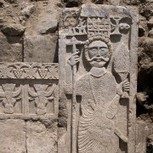
Archeologists are studying the ruins of a buried Christian empire in the highlands of Yemen. The sites have sparked a number of questions about the early history of Islam. Was there once a church in Mecca? A work of human self-portrayal has turned up in Yemen. It is a figure, chiseled in stone, which apparently stems from the era of the Prophet. Paul Yule, an archeologist from the southwestern German city of Heidelberg, has studied the relief, which is 1.70 meters (5'7") tall, in Zafar, some 930 kilometers (581 miles) south of Mecca. It depicts a man with chains of jewelry, curls and spherical eyes. Yule dates the image to the time around 530 AD. In 525 AD, the Negus, or king, of Aksum dispatched a fleet across the Red Sea. Soldiers and fighting elephants were ferried across the water to the East on un-tarred, raft-like ships to spread the gospel. In the ensuing decades, his army captured large parts of Arabia. Could this be a fragment of the kingdom?
|
|
Rescooped by
David Connolly
from Archaeology
December 24, 2012 2:14 AM
|
This mottled red granite fragment (16.5 cm in lenth) is part of smaller-than-life-size statue of Akhenaten, shown supporting a rectangular offering table. It comes from Flinders Petrie’s excavation...
Via Rene Nieuwenhuizen
|
|
Scooped by
David Connolly
December 23, 2012 3:50 AM
|
Recent excavations in İstanbul’s Küçükçekmece district have revealed İstanbul’s oldest waterway during an archaeological dig to uncover the ancient city of Bathonea, a harbor town dating from the second century B.C.
|
|
Scooped by
David Connolly
December 22, 2012 1:36 PM
|
Indigenous activists protested outside Guatemala's ancient ruins of Tikal on Thursday as members of the country's poverty-stricken Mayan communities sought to draw international attention to their plight ahead of festivities to mark the end of the...
|
|
Scooped by
David Connolly
December 22, 2012 2:58 AM
|
Archaeologists are digging up a Civil War fort to get at the 1607 Jamestown fort beneath it. Since the sensational 1994 discovery of James Fort, the first permanent English settlement in the New World, excavations have revealed palisade walls and numerous buildings, along with remarkable clues about the Anglo-American culture that started with the landing of colonists on Virginia’s Jamestown Island in 1607.
|
|
Scooped by
David Connolly
December 22, 2012 2:31 AM
|
There are many examples of Palaeolithic portable engravings that have been discovered, long after their excavation, among the collections stored in museums. For example, a remarkable pair of bear figures was spotted in the mid-1980s on a rib fragment housed with the bone industry from the Magdalenian cave of Isturitz in the western Pyrenees; the rib came from a level excavated by the St Périers in 1931 (Esparza & Mujika 2003). It is far rarer, however, for a new engraving to be found among faunal material curated within a palaeontological collection. We report here the discovery by one of us (LMK) of a horse engraving in the collection of the Palaeontology Department of the Natural History Museum (NHM), London, some 140 years after the excavation and acquisition of the specimen. The new engraving was found among the horse remains from the Late Magdalenian site of Roc du Courbet, Bruniquel, France. Discovery of a horse engraving from Bruniquel, FranceLaura M. Kaagan, Paul G. Bahn & Adrian M. Lister
|
|
|
Scooped by
David Connolly
December 26, 2012 12:09 PM
|
Judges should impose stiffer sentences on criminals who damage historic monuments to stem the destruction of Britain’s irreplaceable cultural treasures, the chief executive of English Heritage has said.
|
|
Scooped by
David Connolly
December 26, 2012 12:07 PM
|
Archaeologists have discovered the remains of a Roman theatre - dating back 2,000 years.
Dr Paul Wilkinson, founder of the Kent Archaeological Field School, believes it is the first of its kind to be found in Britain. The theatre with a nearly circular cockpit-style orchestra, which would have seated 12,000 people. It was found in Faversham, Kent - just behind Dr Wilkinson's back garden where his field school is based.
|
|
Scooped by
David Connolly
December 25, 2012 4:28 AM
|
The ancient treasures of Timbuktu have come under renewed attack by Islamists, the BBC reports.
The Islamist group Ansar Dine (Defenders of Faith) has vowed to destroy all the city's medieval shrines of Muslim saints, which they say are contrary to Islam. The city in northern Mali has been under the control of a coalition of Tuareg and Islamist rebels since April. They declared the independent state of Azawad and soon fought among themselves, with the Islamists gaining the upper hand and imposing harsh Sharia law.
|
|
Scooped by
David Connolly
December 24, 2012 2:33 PM
|
A REPLACEMENT date stone marking the presence of a building dating back to the era of the Ulster Plantation, which was razed by developers, is not enough to undo years of ‘cultural vandalism’ to Waringstown.
|
|
Scooped by
David Connolly
December 24, 2012 3:29 AM
|
Researchers from various academic and professional backgrounds are working together to better understand submerged prehistoric landscapes and their significance through a four-year EU-funded research network project entitled Submerged Prehistoric Archaeology and Landscapes of the Continental Shelf. Eight project partners from six EU countries recently travelled to Malta to join representatives from the University’s Department of Classics and Archaeology to dive to some unique submerged geological features.
|
|
Scooped by
David Connolly
December 24, 2012 3:04 AM
|
The Field Museum of Natural History is one of the premier natural history museums in the U.S., with extensive collections in archaeology, anthropology, and many other disciplines. Last week, the Museum annnounced major budget cuts and restructuring that will reduce the scientific value of its collections. The museum evidently will cut back the scope of its scientific mission (collections and basic research) in order to pay back major debts and concentrate on exhibits.
This operation will be a disaster to archaeological research in a number of ways.
|
|
Scooped by
David Connolly
December 24, 2012 2:30 AM
|
Tourists flocking to Guatemala for "end of the world" parties have damaged an ancient stone temple at Tikal, the largest archeological site and urban center of the Mayan civilization. "Sadly, many tourists climbed Temple II and caused damage," said Osvaldo Gomez, a technical adviser at the site, which is located some 550 kilometres north of Guatemala City. "We are fine with the celebration, but (the tourists) should be more aware because this is a (UNESCO) World Heritage Site," he told local media.
|
|
Rescooped by
David Connolly
from Archaeology
December 24, 2012 2:15 AM
|
Reblogged from Faces&Voices: Manchester Museum inv. 2266 (Hawara, Fayum, 138-160 AD) The woman is wearing a purple tunic maybe similar to that of the daughter of Herakleos (P.Ryl. 151)© The Man...
Via Rene Nieuwenhuizen
|
|
Scooped by
David Connolly
December 23, 2012 5:53 AM
|
Reindeer are almost mythical creatures. They are associated with Santa Claus and sleighs, with the idea of a Scandinavian icy white Christmas that is far more magical than the reality we normally experience in warmish, wettish Britain. But for me there’s also something very special about reindeer because they are survivors from the Ice Age, clinging on when so many other magnificent large mammals died out at the end of the Pleistocene, through climate change or human hand or a bit of both. They are animals that were important to our ancestors, and animals that are still revered by the Siberian tribes who have a long history of hunting and herding them.
|
|
Scooped by
David Connolly
December 22, 2012 2:40 PM
|
Ceremonial fires burned and conches sounded off as dawn broke over the steps of the main pyramid at the Mayan ruins of Chichen Itza Friday, making what many believe is the conclusion of a vast, 5,125-year cycle in the Mayan calendar...
|
|
Scooped by
David Connolly
December 22, 2012 12:26 PM
|
Deep beneath our feet lies a mass of molten iron rich rock, stirred into complex patterns by heat and the Earth’s rotation, this is the geodynamo – the source of Earth’s magnetic field.
|
|
Scooped by
David Connolly
December 22, 2012 2:35 AM
|
A mining company is proceeding with a project that could help revive Brazil’s economy, but it would also destroy caves treasured by scholars of Amazonian prehistoric human history. Archaeologists must climb tiers of orchid-encrusted rain forest, where jaguars roam and anacondas slither, to arrive at one of the Amazon’s most stunning sights: a series of caves and rock shelters guarding the secrets of human beings who lived here more than 8,000 years ago.
|










Interesting choice.