Excavating Con Moong Cave, archaeologists found tons of shells and a lot of working tools. The most valuable discovery is the remains of prehistoric people in tombs dating back tens of thousands of years ago.
The cave is the "big house" of the ancient Vietnamese. But this is not just a place of residence, but also the burial site. Digging to a depth of 3.6 m, archaeologists discovered the remains of four individuals of the Old Stone Age. Among them, there is a relatively intact tomb. The dead were buried in the lying position, with working tools made of stone.
According to scientists, Con Moong along with Nguoi Xua, Dang, Lai and Moc Long caves form a complex of relics showing the life of a community in a broad valley, with the change in population, location of residence and mode of production and this community contributed to create the Da But culture.
Since it was discovered, Con Moong cave annually attracts thousands of local and foreign tourists.
A 2,000-year-old relief carved with an image of what appears to be a stylishly overweight princess has been discovered in an "extremely fragile" palace in the ancient city of Meroë, in Sudan, archaeologists say.
At the time the relief was made, Meroë was the center of a kingdom named Kush, its borders stretching as far north as the southern edge of Egypt. It wasn't unusual for queens (sometimes referred to as "Candaces") to rule, facing down the armies of an expanding Rome.
When Juan Ponce de Leon searched for riches in Florida, he unknowingly helped turn the Sunshine State into the first travel destination in the United States.
In April 1513, the Spanish monarchy contracted the explorer to find another island off of Cuba that was rumored to have great riches. Instead he landed in Florida and named it "La Florida," after the "feast of the flowers" during Spain's Easter celebrations.
Five centuries later, the state is celebrating its Spanish heritage with a series of events throughout 2013.
"It was always seen as an exotic place," historian Dr. J Michael Francis said of Florida. "That's something that Florida tourism continues to market on some level."
Although Florida's history dates back more than 12,000 years with Native Americans, the statewide campaign "Viva Florida 500" will highlight the start of a new era with de Leon's adventurous voyage to the New World.
Much has been made of our ancestors “coming down out of the trees,” and many researchers view terrestrial bipedalism as the hallmark of “humanness.” After all, most of our living primate relatives—the great apes, specifically—still spend their time in the trees.
Humans are the only member of the family devoted to the ground, living terrestrial rather than arboreal lives, but that wasn’t always the case.
A region that features the remains of a church from a lost Christian sect, the Montanists, could become critical in drawing faith tourists to the Aegean province of Uşak’s Karahallı district, according to officials.
Karahallı Mayor Nihat Süzek said the Montanist Church and the second-century ancient cities of Tymion and Pepuza, which were discovered by German Professor Peter Lampe and U.S. Professor William Tabbernee, were very important for Turkish tourism.
I had never heard of this group either. Montanism was an early Christian movement of the late 2nd century, later referred to by the name of its founder, Montanus, but originally known by its adherents as the New Prophecy. Kept going until the 6th c AD!
While building a new border check post in the northern coastal Aswad province of Oman, the squad of Royal Oman Police (ROP) discovered ancient artifacts, settlements and tombs dating back to 2000 BC.
A senior archeologist said the discovery of the site reveals evidence of Oman as a vital part of copper trade between the Dilmun, Harappan and Mesopotamia civilizations during the Bronze Age.
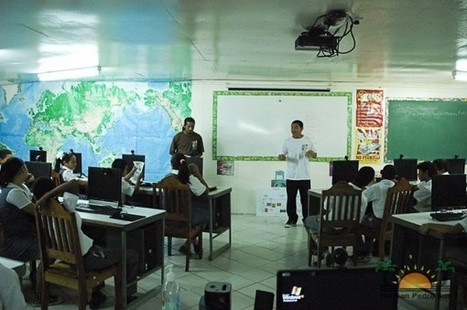
Cayo's Galen University is partnering with the University of North Carolina at Wilmington for a Public Archaeology Education Program.
"The partnership is a public education program geared towards young minds to enlighten and introduce them to the field of Archaeology and Anthropology and encourage them to consider those studies for their future as well as to educate them about the importance of studying our history and preserving archaeological sites for future generations. Dr. Scott Simmons of UNCW along with archaeology students Victor Cucul and Ismael Teul of Galen University served as “Ambassadors of the Past”, visiting the various schools on Ambergris Caye and talking about the history and culture of past civilizations, specifically the Maya, who were the original inhabitants of this entire region and whose impact and civilizations are still evident today."
Two revolutions link the history of Ordnance Survey. The first engulfed France during the late eighteenth century – with Britain fearing invasion as a result. The second sees us at the heart of the ongoing digital revolution, with web mapping services and geographic information transforming business and public services.
It was back in 1791, whilst planning defences to repel any invasion, that the Government realised the South Coast of England needed to be comprehensively and accurately mapped. So it instructed its Board of Ordnance – the defence ministry of the day – to carry out the necessary survey work.
That historic decision led to the mapping of the whole country in detail, and is also the source of the intriguing name 'Ordnance Survey'.
Today Ordnance Survey is a dynamic, self-financing £120-million-a-year civilian organisation. We’re at the forefront of the digital economy, producing digital mapping products and paper maps for business, leisure, administrative and educational use. We are still part of the UK Government, but we cover our costs by selling our products and licensing others to use our data.
Since 1999 we have had government 'Trading Fund' status, giving us more responsibility for our own finances and planning and more freedom to develop new initiatives.
A grave stone from the Roman period has been found in the grave of a Muslim judge, in the garden of a mosque in the Kadı village of the Black Sea province of Kastamonu’s Taşköprü district.
As people ring in the New Year with dancing and a bit of bubbly, they can consider themselves part of an ancient human tradition.
Several new archaeological finds suggest that alcohol has been a social glue in parties, from work festivals to cultic feasts, since the dawn of civilization.
In the December issue of the journal Antiquity, archaeologists describe evidence of nearly 11,000-year-old beer brewing troughs at a cultic feasting site in Turkey called Göbekli Tepe.
Archaeologists in Cyprus have unearthed the 3,500-year-old ruins of what may have been a primitive beer brewery and feasting hall at a site called Kissonerga-Skalia.
The excavation, described in the November issue of the journal Levant, revealed several kilns that may have been used to dry malt before fermentation.
A team of archaeologists at the Ministry of Heritage and Culture managed to unearth an archaeological site at the Aswad border Check Point area in the Wilayat of Shinas in North Al Batinah Governorate. The site includes a settlement and an archaeological symmetry that dates back to 2000 BC (Wadi Souq era) as per the archaeological surveys conducted by the ministry.
This source briefly describes the important events in Ancient Rome. This should give you the basic understanding of Ancient Rome before we go into more detail about these events in this unit.
Rock sculptures dating back to between 4,000-7,000 BC have been found in a well-preserved condition in the forests near Kudopi village in Sindhudurg district of coastal Konkan region, an official said here Tuesday.
There are more than 60 big and small images of Mother Goddess, birds and animals, found in a single location of around 20,000 square feet, considered one of the biggest such concentration anywhere in the country, Satish Lalit, leader of an expedition team which made the discovery last May, said.
"Though similar carvings have been found in other parts of India, this is the first find on a red soil laterite plateau. These are petro-glyphs unlike the picto-graphs found in places like Amravati," Lalit, a member of Rock Art Society of India ( RASI), said.
Get past the the dodgy comments about 15-foot tall Mother Goddess with all the internationally known symbols indicating her status. and there is a fascinating story here: with signs that rock art in general is being generally recognised around the world.
Peter Cox, pictured, and Darren West were given the unique punishment after they looted ancient coins from a Roman site in Northamptonshire belonging to English Heritage.
Two thieves have become the first people in Britain to be handed ASBOs banning them from metal detecting.
Peter Cox and Darren West were given the unique punishment after they looted ancient coins from a Roman site belonging to English Heritage.
The pair were caught by police who raided their homes and found a haul of coins from the Iron Age, Roman and mediaeval periods worth hundred of pounds
I do wonder if this is either the start of the shaming of these heritage criminals in general and a way to move forward. OR a sign that crime does pay - or at least is a slap on the wrist. Albeit a public one?
I would love more detectorists to stand up to these people . AND archaeologists not to think every detectorist is a nighthawk...
The Ecology of Crusading project is a new programme of research investigating the environmental impact of the Baltic Crusades. In the thirteenth century, crusading armies unleashed a relentless holy war against the last indigenous pagan societies of Europe in the eastern Baltic region.
Tribal territories were replaced with new Christian states, run by the Teutonic Order and individual bishops. They constructed castles, encouraged colonists, developed towns and introduced Christianity. Recent pilot studies have suggested that the period of crusading and colonisation coincides with a marked intensification in the exploitation of plant and animal resources, and associated landscape changes in the eastern Baltic.
Since many aspects of the natural world were sacred to the Baltic tribes, this impact would be synonymous with the cultural changes that created a new, European world at this frontier of Christendom.
A marble sculpture head of Artemis from the fourth century BC has been uncovered in the ancient city of Alabanda as the archeological excavations there come to a close. In some of the excavations made at the site, the doors of the ancient city were uncovered, the head of the excavation team, Aydın Adnan Menderes University Archeology department academic Suat Ateşlier said. The walls from the Byzantine era were also found, he added.
Where does the idea of urban civilization, or the city itself, originate?
The name Mesopotamia was used by the ancient Greeks to describe land between the Tigris and Euphrates rivers. It means literally “between the rivers” and largely corresponds to present-day Iraq. However, today the term has a broader interpretation, stretching to include parts of Syria and Turkey as well. The region, which incorporates the “fertile crescent,” is widely considered to be the cradle of human civilization.
Author and former journalist Paul Kriwaczek has observed that “ancient Mesopotamia acted as a kind of experimental laboratory for civilization.” It was into the rural environment of this region that the idea of civilization was born “in a single place, at a single time. From there and from then,” says Kriwaczek, “the concept spread at remarkable speed to conquer the world.”
I like how this article gives readers a description of Mesopotamia from both an ancient and contemporary view point. I was unaware that Mesopotamia meant between to rivers according to Greeks, or that it was home to Babylon. Interesting read indeed.
The website has been totally redesigned and contains a lot of new information about the site of Hierakonpolis and its place in the predynastic history of Egypt, as well as later times.
Discover the results of the recent fieldwork of the Hierakonpolis Expedition and the history of the site, or browse the comprehensive bibliography of Hierakonpolis! You even have a chance to become a Friend of Nekhen and help support the work of the Expedition in rediscovering, recording and conserving one of the most important sites in predynastic Egypt.
Hierakonpolis, the City of the Hawk, ancient Egyptian Nekhen, is one of the most important archaeological sites for understanding the foundations of ancient Egyptian society.
Chicago's Field Museum isn't just a science museum. It's also a research center, especially for archaeologists and anthropologists who come to the museum to make use of its extensive collections of artifacts — only a tiny fraction of which is on public display at any given time.
Unfortunately, the museum is currently up to its neck in debt, and part of the current administrators' plan to deal with that problem is to restructure the research department and cut back on curators and staffing there.It's hard to understand why this has the archaeology community so on edge unless you really understand what the Field Museum has in those vast Indiana-Jones-inspiring storage collections. Here's Michael Smith, an archaeologist who studies the ancient Aztecs, explaining why the Field Museum is so important to his work and that of his colleagues.
This is an important point to make - the museum storerooms are not dusty places where nothing happens. and one into the box, the object is never seen again.
Image of the Week: Learn about this bust of Memnon, protégé of the Athenian philosopher Herodes Atticus.
This marvelous bust is one of the very few documents of an actual black person from Greek and Roman antiquity. Memnon was a pupil and protégé of the well-known Athenian entrepreneur and philosopher Herodes Atticus.
It was found more than a century ago in one of several villas owned by Herodes, and it adds a face to the name of the person recorded by Philostratus in his Lives of the Sophists, an account of the famous philosophers of the second century.
The exact circumstances of Memnon's entry into this celebrated milieu are unknown, but there is no doubt about the esteem in which he was held. He was given the sobriquet "Memnon" in reference to the Ethiopian ally of the Trojans in Homer's Iliad. Philostratus and other sources record the extreme grief manifested by Herodes upon the early death of Memnon.
Israeli archaeologists have uncovered a rare temple and religious figurines dating back to the Judaean period nearly 3,000 years ago, Israel's Antiquities Authority said on Wednesday.
To get content containing either thought or leadership enter:
To get content containing both thought and leadership enter:
To get content containing the expression thought leadership enter:
You can enter several keywords and you can refine them whenever you want. Our suggestion engine uses more signals but entering a few keywords here will rapidly give you great content to curate.


 Your new post is loading...









Loved Vietnam, and wish I had been in this area.