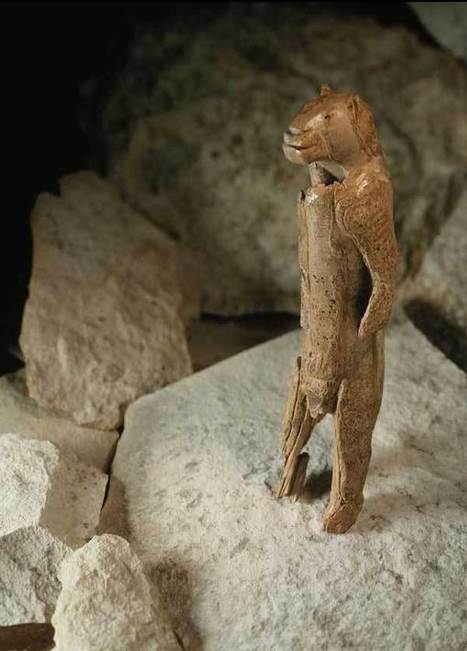
he star exhibit initially promised for the British Museum’s “Ice Age Art” show will not be coming—but for a good reason. New pieces of Ulm’s Lion Man sculpture have been discovered and it has been found to be much older than originally thought, at around 40,000 years. This makes it the world’s earliest figurative sculpture. At the London exhibition, which opens on 7 February, a replica from the Ulm Museum will instead go on display. The story of the discovery of the Lion Man goes back to August 1939, when fragments of mammoth ivory were excavated at the back of the Stadel Cave in the Swabian Alps, south-west Germany. This was a few days before the outbreak of the Second World War. When it was eventually reassembled in 1970, it was regarded as a standing bear or big cat, but with human characteristics.
British archaeology has enjoyed a surge of interest of late, with the recent unearthing of Richard III in a certain Leicester car park. However, one London archaeological site remains in limbo: the Temple of Mithras is still waiting for its new home, as one of the City’s biggest ever digs continues.
The temple, dating from 240AD, has been dismantled and is currently in storage with the Museum of London. It’s awaiting a permanent home in the rebuilt Bucklersbury House on Queen Victoria Street, which is set to be the European headquarters of media giant Bloomberg LP.
Part of the delay has to do with ongoing excavation work on the Queen Victoria Street site, which has evolved into the Walbrook Discovery Programme, one of the largest digs undertaken in the City of London, according to MOLA, with more than 50 archaeologists combing through the mud of the Roman River Walbrook.
Watch this webisode and find more videos narrated by Colm Feore at http://www.museumsecrets.tv. Museum Secrets Season 3 - Premiere TV Broadcast in Canada Sta...
Palaeopathology, the study of ancient diseases in human or animal remains usually means analysis of the skeletal material to examine the diseases effect on the bone. However, palaeopathology is not a straightforward science with many diseases not even appearing on the bone, and when they do, they present very similar manifestations but with very different causes.
There's nothing better on a cold day than a warm bowl of soup. But when did our ancestors first brew up this tasty broth? New archaeological evidence suggests that soup making could be tens of thousands of years old.
Daily Mail The brilliant beads of 'Cleopatra's necklace': Ancient Egyptian jewellery ... Daily Mail Intrigue: Professor Borodovsky suspects that the necklace arrived in Siberia via silk road through modern-day Kazakhstan.
THE mystery behind ancient remains found on the island of West Mersea could soon be solved.
The site was excavated in 1912 by Samuel Hazzledine Warren, who came across a central burial chamber containing a box with a Roman glass urn housing the cremated remains of human bones.
TYPICAL. You wait 528 years for one dead king, then three come along at once.
On Monday, archaeologists proudly proclaimed that the skeleton found underneath a car park in Leicester is definitely that of Richard III of England. Now, there is already excited talk of having a proper ferret around for Alfred the Great of Wessex and even Henry I of England, whose bodies have also gone awol over the centuries.
No-one loves history more than me, and I’ve been watching the developments surrounding Richard’s exhumation with great interest, but if we start digging up all the monarchs who missed out on a nice tomb, there are going to be quite a few car-parks turned over before we’re finished.
Frankly, I find it strange how many people are demanding that Richard be given a big funeral – some even want a state funeral – when all that’s happened is that we’ve found a bunch of bones that used to be a king.
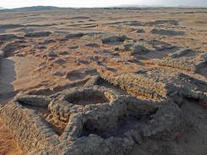
At least 35 small pyramids, along with graves, have been discovered clustered closely together at a site called Sedeinga in Sudan.
Discovered between 2009 and 2012, researchers are surprised at how densely the pyramids are concentrated.
They date back to a time when a kingdom named Kush flourished in Sudan. Kush shared a border with Egypt and, later on, the Roman Empire. The desire of the kingdom's people to build pyramids was apparently influenced by Egyptian funerary architecture.
Because it lasted for hundreds of years they built more, more, more pyramids and after centuries they started to fill all the spaces that were still available in the necropolis." [See Photos of the Newly Discovered Pyramids]
Google on Wednesday celebrated the 100th birth anniversary of British archaeologist, Mary Leakey by putting up a doodle on its home page.
The doodle features Mary Leakey at an archaeological site engrossed in excavation. Like in reality, the doodle has two Dalmatians running around her. Mary, a known animal-lover, was generally accompanied in the field by three to four Dalmatians.
Interestingly, the doodle also features one of Leakey's major discoveries, "the Laetoli footprints", and some tools used in archaeology.
The first three and last two letters of the word Google - G, O Oand L, E -are seen in the background and on her glasses while the Dalmatians replace the second G of the word.
For nine years Bashkir scientists have been engaged in the excavation of a monument found in Uchalinsky district, two kilometers from the village of Novo-Bayramgulova. Studying aerial photographs, scientists saw round construction about fifty meters in diameter. These stone circles are comparable to the famous Stonehenge.
According to experts, this may be the ruins of an ancient temple, the remainder of the people of the Neolithic.
Bashkiria has a large number of various archaeological sites. Favorable climatic conditions attracted people to the area since ancient times. However, a construction of this magnitude has not yet been found.
One week after Islamic militants fled Timbuktu under French bombing strikes, preservationists are deeply uncertain about how to continue protecting the city’s priceless ancient documents — a conundrum that cuts to the heart of how treasures are safeguarded through political upheaval in places where locals have little trust in government.
When French and African forces rumbled into northern Mali’s ancient capital 10 days ago, Timbuktu’s mayor, who had little direct information, told journalists erroneously that the jihadists had destroyed “all the important documents” and that Malians needed to “kill all the rebels.”
In fact, Timbuktu’s residents and preservationists had told TIME early last year that they had rescued tens of thousands of manuscripts before the militants seized northern Mali. They agreed to talk on the condition that TIME kept their secret until the jihadists had been defeated. The operation was conducted by Timbuktu’s old families, which have looked after the city’s 300,000 or so ancient documents for centuries.
With Leicester University's announcement that the human remains discovered in a carpark in September 2012 are in fact those of Richard III, it only seems right the excellent blogger - musingsofanunemployedarchaeologist - should blog about him!
Richard was born on 2nd October 1452 at Fotheringhay Castle, Northamptonshire. He was the youngest child of Richard Plantagenet, 3rd Duke of York and Cecily Neville. During his early years Richard was housed at Middleham Castle, Wensleydale; here he was under the tutelage of Richard Neville, 16th Earl of Warwick, who was also his cousin. He seemed to flourish in the environment and developed friendships, it is also where he first met Anne Neville, but we will come back to that later.
The battle for the final resting place of King Richard III seems already won after it was revealed the decision is in the hands of university experts.
More than 11,000 people have signed a petition calling for Richard to be re-interred in York and York Council is writing to the Queen and the Ministry of Justice (MoJ) to lay claim to the remains of the last Plantagenet king.
But yesterday the MoJ said an archaeological exhumation licence had been issued which required details of where the remains would be laid to rest.
It said: “The licence we issued states that [the University of Leicester] would, no later than August 31, 2014, deposit the remains at Jewry Wall Museum or have them interred at St Martin’s Cathedral or in a burial ground in which interments may legally take place. The precise location of reburial is now for the University of Leicester.”
A pair of tiny silk and leather slippers belonging to Napoleon Bonaparte’s sister have lain unnoticed in the vast collections of the University of Aberdeen for more than 140 years
NBCNews.com Excavation gives up all the dirt on ancient earthen mound NBCNews.com The enormous earthen monument Poverty Point, built on a Mississippi River bayou some 3,200 years ago, is an impressive feat of engineering.
Who Were the Ancient Mountain Dwellers of Coastal El Salvador?
It’s difficult to recognize and understand the meaning of ancient texts, words, symbols and the messages they contain. This is not only due to the very complexity of systems of communication, but mostly because we often don’t see them. During the holidays, I had the opportunity to go to the field with Marlon Escamilla, a Salvadoran archaeologist and Ph.D. candidate from Vanderbilt University, who’s thesis focuses on the archaeology of the people who inhabited the Balsamo Mountain Range in coastal western El Salvador. While Escamilla focuses mostly on the Pre-Columbian structures that were built on the very ridges of the jagged mountain tops, the valleys and small canyons may hold clues to the very nature of the people who once lived in this region.
ROME -- Conservation work at the crumbling ancient Roman city of Pompeii began Wednesday, a day after police announced a corruption probe into previous restoration work at the site.
Italian, New York-based photographer Rä di Martino rouses the Star Wars fan in all of us in Every World's A Stage, a series of photos of the abandoned Hollywood sets constructed for the epic George Lucas film.
In collaboration with Stonepages, British Archaeological Jobs Resource and Past HorizonsHeadlines
Clovis culture not wiped out by comet Oldest stone hand axes unearthed Early sweet potato trade Human skull found beneath Scottish golf course Archaeologistsrevise image of ancient Celts 9,000-year-old remains discovered in England Loom weights reveal weaving in Turkey 2,500 years ago
Archaeologists discover 12,000-yr-old rock paintings in Betul - The Archaeological Survey of India (ASI) has discovered pre-historic caves with rock paintings dating back to 12,000
A team of archaeologists, carrying out explorations on the Satpura ranges in Gawilgarh Hills in the border township of the Tapti-Purna valley stumbled on these ancient paintings, dispelling the myth that Vidarbha and its neighbouring region is bereft of such artistic treasures from our past.
About 71 new rock shelters harbouring paintings and engravings have been found at the site, which may give a tough competition to the World Heritage site of Bhimbetka near Bhopal, ASI officials said.
The decorated rock shelters were discovered by a joint team of ASI's Nagpur-based Pre-history and Excavation Branch-I during the ongoing exploration and documentation work in remote parts of Satpura range.
We are standing in the middle of Israel on a quiet hill overlooking a fertile green valley.
Some 3,000 years ago, this peaceful place was right at the center of conflict, says archaeologist Shlomo Bunimovitz
The border lies somewhere between here and there,” he says, pointing to the west. He is co-leading excavations which have found the remains of a temple which was later desecrated and used as animal pens.
This is Tel Beth-Shemesh, the ancient meeting point of the Canaanites, Philistines and Israelites. The Bible describes it as the northern border of the Tribe of Judah
To get content containing either thought or leadership enter:
To get content containing both thought and leadership enter:
To get content containing the expression thought leadership enter:
You can enter several keywords and you can refine them whenever you want. Our suggestion engine uses more signals but entering a few keywords here will rapidly give you great content to curate.


 Your new post is loading...














Is this not the most amazing item from the Palaeolithic/