


Archaeology News
146.0K views |
+0 today
 Your new post is loading...
 Scoop.it! 
Let's celebrate the memory of a show that charmed and educated through bejumpered boffins at toil in soil
David Connolly's insight:
Bless

Scoop.it!

Petrified trees have been unearthed that are nearly as tall as the world's highest trees today. Here's the story of their discovery and what it tells us about tall trees in general. ->
Scoop.it!

In September 2012, researchers at the University of Georgia (UGA) began the The Orpheus Relief Project to determine how a 2000 year old marble relief was originally coloured based on the surviving pigments adhering to the marble, but the final results came as a shock to everyone.
Scoop.it!

A pre-Viking woolen tunic found beside a thawing glacier in south Norway shows how global warming is proving something of a boon for archaeology, scientists said on Thursday.
The greenish-brown, loose-fitting outer clothing — suitable for a person up to about 5 feet, 9 inches tall (176 centimeters) — was found 6,560 feet (2,000 meters) above sea level on what may have been a Roman-era trade route in south Norway. Carbon dating showed it was made around the year 300. "It's worrying that glaciers are melting, but it's exciting for us archaeologists," Lars Piloe, a Danish archaeologist who works on Norway's glaciers, said at the first public showing of the tunic, which has been studied since it was found in 2011.
David Connolly's insight:
Note: the tunic was found in 2011 - http://www.aftenposten.no/nyheter/iriks/article4221404.ece#.UUwKAzcfV2A
Scoop.it!

The expert group, convened by the Yorkshire Museum in York, believes the ring could have royal connections.
David Connolly's insight:
Hmmm interesting theory
Scoop.it!

At some point during US President Barack Obama's current visit to Israel, the American president will be presented with a 2,000 year-old stone on which the Declarations of Independence of the United States of America and the State of Israel… (Netanyahu's...
Scoop.it!

Will there be any efforts to restore the Badami Trikutalaya and the inscriptions that look pale on the white-washed walls?
(This is the first of a two-part article that speaks about the Chalukyan temples and their architecture, found mostly in and around Karnataka) The ancient name of Badami was – Badami. Vatapi was the Sanskrit name that the Chalukyas gave it, when they ruled over the area. Dr. Silakant Pathar, whose D. Litt thesis was ‘Badami- A cultural study,’ says the Chalukyas changed many Kannada names into Sanskrit. For example, Kisuvolal (red town) became Raktapura. Archaeologist Dr. A. Sundara, who surveyed 2,000 villages in Maharashtra and Karnataka, when he was with the Archeological Survey of India, has an interesting interpretation about how the association of the area with the asura Vatapi might have come about.
David Connolly's insight:
Part of a new article on the temple architecture in India
Scoop.it!

About a year and a half ago, I started working with the Horsham District Archaeology Group at Alfoldean.

David Connolly's comment,
March 21, 2013 4:31 AM
But as MArtin says... we must continue to share...!
Scoop.it!
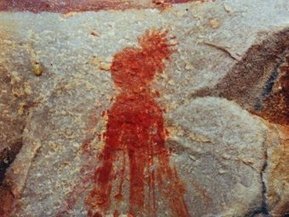
A new scientific study of rock art in the Kimberley aims to clarify the history of human settlement in Australia.
Throughout northern Australia there is rock art of the most breathtaking kind: animals and people and designs painted in vibrant ochre. So how long have Australians been painting like this? And what can the oldest paintings tells us about our forerunners, the very first Australians? Dr June Ross is one of Australia's leading experts on rock art. She taught one of the few rock art courses in Australia, at the University of New England, and she's published extensively in the field. And she's involved in several different field work projects.
David Connolly's insight:
Listen to the podcast
Scoop.it!

A three year examination of astronomical alignments found in the buildings of Mesoamerican cities has demonstrated the basis of some pre-Columbian rituals. Archaeologist Francisco Sánchez Nava, of the National Institute of Anthropology and History (INAH), together with archaeoastronomer Ivan Sprajc, from the Centre of Scientific Research of the Slovenian Academy of Sciences and Arts, jointly developed the project “The Archaeo-astronomical Properties of Architecture and Urbanism in Mesoamerica”.
Scoop.it!

A huge project to protect and develop an ancient merchant town in Central China is expected to start in October, a senior local official said.
Scoop.it!
From
kshs

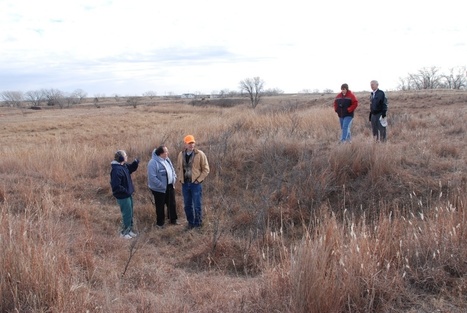
The site of Billy Dixon’s trading post (14EL311) south of Hays in Ellis County has been selected for investigation. Components will include a block excavation of dugouts and other features, survey of a segment of the Smoky Hill Trail, an artifact processing lab, classes, and associated programs.
|
Scoop.it!

Never mind the Internet. A schoolteacher is sounding the alarm after stumbling upon another medium she thinks may corrupt young minds: 19th-century whale etchings
Ann Pimentel raised the concern — and coined the unlikely phrase — after visiting the Vancouver Maritime Museum (VMM), a modest institution on the city’s west side. That’s where a small collection of etchings and engravings on whale teeth and bone is on display, part of a larger show that also features example of maritime tattoo art. Arlen Redekop/Postmedia NewsPart of the Tattoos & Scrimshaw: The Art of the Sailor exhibit at the Vancouver Maritime Museum.Nine of the etched pieces on display show images of a sexual nature, some of them quite explicit. “A Whaler’s Hope of the First Night Ashore” is etched across a tooth that’s eight inches long, extracted two centuries ago from an unfortunate sperm whale. Underneath the title is etched a saucy scene. A man and a woman, flesh exposed. Mouths open, limbs entwined. You get the idea.
David Connolly's insight:
This just made me laugh!!
Scoop.it!

The transition to farming on the Polish Lowland, which is a part of the North European Plain, was a complex process lasting over a millennium. This is partly due to the diversity of the landscapes from the Pomerania Lakeland to the north with its rolling glacial hills and the south with the flat monotonous Great Poland Lowland Plain. The largest area is covered by a light sandy soil, however, in some regions heavy, fertile mollic gleysols formed over a clay subsoil can be found; comparable to the fertile loess-based soils prevailing in the uplands of southern Poland.
David Connolly's insight:
Another fascinating article from the WAC7 conference. Good to step outside the confines of UK commercial! and this data comes from Polish Commercial
Scoop.it!

Using the photographs taken on our first survey day, we have stitched together a 360° panoramic image. We did this in an attempt to view the landscape in the immediate vicinity of the stone circle....
Scoop.it!

From
io9
A group of scientists have just busted a millennia-old myth about how the ancient Egyptians made their mummies. It turns out that nobody had to take burning cedar oil enemas after all.
Scoop.it!

MEXICO CITY — The Mexican government is demanding that Sotheby's auction house halt the planned sale of 51 pre-Columbian Mexican artifacts, arguing they are protected national historical pieces. The National Institute of Anthropology and History said Wednesday that Mexico has sent a diplomatic note to the French government seeking assistance in heading off the auction scheduled in Paris for Friday and Saturday. It also implied that some of the artifacts offered in what is known as the 300-piece Barbier-Mueller Collection of Pre-Columbian Art are fakes or imitations. "Of the 130 objects advertised as being from Mexico, 51 are archaeological artifacts that are (Mexican) national property, and the rest are handicrafts," the institute said in a statement. Still, the genuine pieces are important to Mexico. "In light of their importance for the people of Mexico, the director of the auction company has been asked to withdraw the pieces from sale," the institute said.
David Connolly's insight:
Trouble ahead
Scoop.it!

An archaeologist will assess the Whakatane Hospital car park where a human skull, thought to be of Maori origin, was found during excavation work today. Police had determined the area was not a crime scene and after further sifting of soil in the immediate area would hand the area over to the Historic Places Trust as an archaeological site, the Bay of Plenty District Health Board said. Work on the car park, which is part of a $67 million redevelopment of the hospital, was stopped after the skull was found about 11.30am today.
David Connolly's insight:
No!!! not another body in a carpark!
Scoop.it!

With over 25,000 Iron Age graveyards and burial mounds, 1,140 megalithic structures of all sizes, and about 2,500 large rune stones, Sweden is an archaeologist's paradise.
David Connolly's insight:
James Blake Wiener of the Ancient History Encyclopedia speaks to Dr. Martin Rundkvist, a Swedish archaeologist, about his most recent work in attempting to locate a Geatish mead-hall in the archaeologically rich province of Östergötland. With humor and insight, Rundkvist shares his thoughts and enthusiasm.
Scoop.it!

As part of a pilot case study for my PhD I have been putting together a series or aerial photographs focused on some local Hillforts. I was recently assisted with a Historic Scotland Sponsorship Award which has enabled me in incorporate some photography from somewhat higher altitudes than I am used to - with the hire of a Cessna 172 light aircraft. For this brief flight I picked a morning shortly after some heavy snowfall and, ably assisted by photographer Kieran Duncan, set off on a route which tied in various sites.
David Connolly's insight:
More brilliant work from Keiran Baxter!
Scoop.it!

Teamwork has been fundamental in humanity’s greatest achievements but scientists have found that working together has its evolutionary roots in our nearest primate relatives – chimpanzees. A series of trials by scientists found that chimpanzees not only coordinate actions with each other but also understand the need to help a partner perform their role to achieve a common goal.
Scoop.it!

This April, National Geographic explorers and other experts in five of the world's oldest civilizations will gather in Guatemala to discuss how the past can be a window to the future.

joseph mora's curator insight,
October 22, 2013 12:15 AM
talks about Mesopotamians, Egyptians, Chinese, People of the Indus Valley, and the Mayans and some importance in which they impacted.
joseph mora's curator insight,
November 14, 2013 11:26 PM
what we could learn from ancient civilizations 
Chris Tat's curator insight,
January 17, 2014 10:15 PM
I thought this article was intriguing because our blog for this week was to compare ancient civilization to modern day civilization. I am awe stricken that even in ancient times, human beings created a unique writing system. It is crazy to think that the tradition of writing has been passed down from generation to generation for years.
Scoop.it!
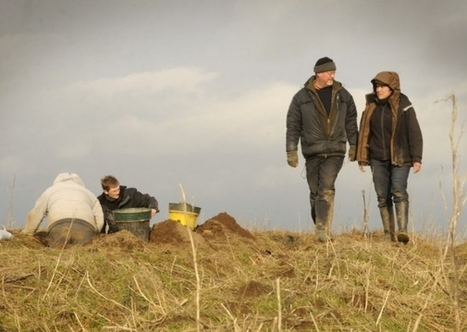
When asked to showcase the result of a two-week dig at Goldsborough, archaeologist Rachel Grahame holds up a brick of charred sandstone and several pieces of flint no bigger than a fingernail.
David Connolly's insight:
Showing that commercial archaeology and research can happen!
Scoop.it!

Popular misconceptions about evolution have led people to try protein-rich Paleo-diets, run barefoot and sleep around, as if the cave people had it right all along
|




