


A group of ancient lines in the archaeological zone of Buenos Aires, in Nazca, have been destroyed by heavy machinery, El Comercio reported.

 Your new post is loading...
 Scoop.it! A group of ancient lines in the archaeological zone of Buenos Aires, in Nazca, have been destroyed by heavy machinery, El Comercio reported. 
No comment yet.
Sign up to comment
Scoop.it!
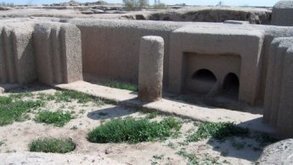
Over four millennia ago, the fortress town of Gonur-Tepe might have been a rare advanced civilisation before it was buried for centuries under the dust of the Kara Kum desert in remote western Turkmenistan. After being uncovered by Soviet archaeologists in the last century, Gonur-Tepe, once home to thousands of people and the centre of a thriving region, is gradually revealing its mysteries with new artifacts being uncovered on every summer dig. The scale of the huge complex which spans some 30 hectares can only be properly appreciated from the air, from where the former buildings look like a maze in the desert surrounded by vast walls. Just 50 kilometres (30 miles) from the celebrated ancient city of Merv outside the modern city of Mary, the ruins of Gonur-Tepe are an indication of the archeological riches of Turkmenistan, one of the most isolated countries in the world.
Scoop.it!

Friday 5 April 2013, marks the 90th anniversary of the death of the Egyptologist Lord Canarvon and the start of the mysterious curse of Tutankhamen, but author and University of Manchester Egyptologist Dr Joyce Tyldesley points out the real story is far from sinister. She argues that an exclusive media deal coupled with the subsequent reliance on non-expert comment helped fuel rumours of a curse. Although she also notes that the curse of Tutankhamen is now far more famous than both the original Egyptian king and the men who first unearthed his treasure laden tomb.
Scoop.it!

From
www

Sites like the Acropolis and the Parthenon have withstood tsunamis, earthquakes and the ravages of time, but some are questioning whether they can withstand the Greek debt crisis.

Seren's curator insight,
August 26, 2013 5:19 PM
Greek legiatiors and officials are coming to terms with the crumbling foundations of Greece. Anciet artifacts are being stolen out of the literally crumbling building which symbolised one of the greatest empires of the anciet world. What can history tell us about The People's disreguard of honor and tradition in times of great hardship?
Scoop.it!

There are a dozen reasons you might want to go digging around somebody else's land with a shovel and a vaguely communicated purpose. If so, spare some hass.
David Connolly's insight:
Brilliant :)
Scoop.it!

The archaeological site of Sanisera is located on the northern coast of Menorca, three kilometres south of the Cape of Cavalleria, in the port of Sanitja and within the territory of Santa Teresa.
Scoop.it!

An ancient gold ring thought to have inspired JRR Tolkien to write The Hobbit goes on display at a Tudor house in Hampshire.
David Connolly's insight:
How scary is that... one ring to rule them all!
Scoop.it!

Neanderthal Fossils Found In Greek Cave Suggest Ancient Humans Crossed ...
Scoop.it!
This paper will discuss some of the key themes raised in the recent 'World Archaeology' issue on the theme of Open Archaeology. It seems indisputable that there is now very real momentum towards greater willingness to share interpretations, data and software, but although technological developments are a major part of the story, the speaker will instead ask a series of questions about the social, cultural, political and economic ramifications of the Open Movement. Along the way he will reflect on the irony of publishing a collection of papers on Open archaeology in a conventional academic journal.
David Connolly's insight:
Important to understand the direction of our heritage data.
Scoop.it!

The Hindu
Scoop.it!

Many people in Newfoundland and Labrador believe they have a good understanding of the Beothuk. Yet there is still a great deal of misinformation about them. In this post, I'll try to shed some li...
Scoop.it!

Initial funding has been secured for an ambitious archaeological project to uncover a lost 17th century town in Northern Ireland
The site beside Dunluce Castle on the scenic Causeway Coast has been hailed as potentially the region's own "little Pompeii".
The Heritage Lottery Fund (HLF) has now provided more than £300,000 for an excavation project and signalled the potential for a total package of £4 million. The ruins of the castle have stood on the rocky coastal outcrop near Bushmills in north Antrim for centuries but it was only four years ago that archaeologists re-discovered a lost settlement beside the landmark.
Established in 1608 by the first Earl of Antrim, Randal MacDonnell, the town was destroyed in the uprising of 1641 and was eventually abandoned in 1680.
Scoop.it!

Editor's Note: Peter Lacovara, Senior Curator at Emory University's Carlos Museum, has worked on numerous expeditions in Egypt and published
|
Scoop.it!

Babylon was one of the glories of the ancient world, its walls and mythic hanging gardens listed among the Seven Wonders. Founded about 4,000 years ago, the ancient city was the capital of 10 dynasties in Mesopotamia, considered one of the earliest cradles of civilization and the birthplace of writing and literature. But following years of plunder, neglect and conflict, the Babylon of today scarcely conjures that illustrious history. In recent years, the Iraqi authorities have reopened Babylon to tourists, hoping that one day the site will draw visitors from all over the globe. But despite the site's remarkable archaeological value and impressive views, it is drawing only a smattering of tourists, drawn by a curious mix of ancient and more recent history.

abigail's curator insight,
October 12, 2013 7:37 PM
as many think that kingdoms, kings, queens, cultures die out they never do becasue they leave a legacy or their history and that never dies. and we give it life today by caring to know more in a respectful way.
Scoop.it!

In a rude shock to the Telugu community, the famous Kalamalla inscription, considered to be the first in Telugu on the basis of which the Official Language status was accorded to Telugu, has disappeared. The efforts of the Central Sahitya Akademi Yuva Puraskar awardee Vempalli Gangadhar, who strove for bringing back the first Telugu inscription dating back to 575 AD found in Kalamalla in Kadapa district, from the Egmore Museum in Chennai to Andhra Pradesh, proved futile with the officials of the museum as well as the Indian Archaeological Department in Hyderabad making it clear that they do not have any such evidence with them. In a reply to a letter by Gangadhar, who invoked the Right to Information Act, both the bodies admitted that Kalamalla is the first Telugu inscription. However, they made it clear that the inscription is not with them.
Scoop.it!

Bennachie Landscapes’ project is helping bind together a community that surrounds the north east Scottish mountain of Bennachie. The archaeological investigations are being conducted by the University of Aberdeen along with the Bailies of Bennachie, a local community group. They are examining the settlement which was inhabited by a band of 19th century squatters who set up a community on the foot of the North-East’s most famous peak and once the source of much local debate, but surprisingly little is known about the these Bennachie Colonists.
Scoop.it!

Graves dating back to 2000BC mark an impressive archaeological heritage and rich cultural history unearthed during the construction of the Shaikh Mohammad Bin Zayed Road project in Ras Al Khaimah, Gulf News has learnt. Since then, the Ministry of Public Works has halted the road-building until further order following a request from Ras Al Khaimah’s Al Shohooh National Heritage Association.
David Connolly's insight:
save the tombs?
Scoop.it!

Archaeologists working at spa in southern Israel say lantern is shaped like a miniature church
Archaeologists digging near a spa in southern Israel have uncovered Byzantine-era remains that include a large wine-press and a unique clay lantern decorated with crosses.
The stone remnants of what must have been a significant wine-making apparatus include compartments for storing grapes, a treading floor, and pits for collecting liquid, all spread over an area of more than 100 yards. It would have been in use about 1,500 years ago, the Israel Antiquities Authority said in a statement Thursday.
David Connolly's insight:
I just love that lantern! Glad it was excavated and not looted!

Laura Brown's comment,
April 5, 2013 12:42 AM
Old tools and other common things are more interesting than old jewellry - stuff people really used versus decorations of the rich and famous.
Scoop.it!

Indigenous people that lived in southeastern Brazil in the late 1800s shared some genetic sequences with Polynesians, an analysis of their remains shows. The finding offers some support for the possibility that Pacific islanders traded with South America thousands of years ago, but researchers say that the distinctive DNA sequences, or haplogroups, may have entered the genomes of the native Brazilians through the slave trade during the nineteenth century.
Most scientists agree that humans arrived in the Americas between 15,000 and 20,000 years ago, probably via the Bering land bridge linking northeastern Asia with what is now Alaska.
But the precise timing and the number of ‘migration waves’ is unclear, owing largely to variations in early Americans’ physical features, says Sérgio Pena, a molecular geneticist at the Federal University of Minas Gerais in Belo Horizonte, Brazil.
Scoop.it!

Brunel's Grade I-listed structure should be given protected status, to signify what is, mayor says,
David Connolly's insight:
Go on Clifton!
Scoop.it!

When surveying in the Upper Basin of the Grand Canyon National Park in April 2011, University of Cincinnati faculty and students discovered a previously unknown 17-room subterranean pueblo that likely dates back to the 12th century.
David Connolly's insight:
Look after your heritage!
Scoop.it!

An archaeological dig in western Germany has unearthed myriad traces of daily life in one of Europe's oldest and largest Jewish communities.
Scoop.it!

In the middle of the Bronze Age, around 1000 BCE, the quantity of metal artefacts traded in the Baltic Sea region increased dramatically. Around that same time, a new type of monument appeared along the coasts; stones set on edge and arranged in the form of ships, built by the maritime culture involved in that same metal trade.
Scoop.it!

Scoop.it!

For the first time, work on the Los Osos sewer project has uncovered a Chumash burial site.
David Connolly's insight:
For the first time, work on the Los Osos sewer project has uncovered a Chumash burial site. Read more here: http://www.sanluisobispo.com/2013/03/23/2441831/chumash-burial-site-uncovered.html#storylink=rss#storylink=cpy
|






Maybe only minor elements - however, the principal is one of grave concern
more so given Perus desire to respect the past and increase the heritage revenue