 Your new post is loading...

|
Scooped by
David Connolly
April 13, 2013 1:40 AM
|
Turkey’s well-known ancient site of Alacahöyük, which currently draws around 50,000 visitors a year, in the Central Anatolian province of Çorum, is set to be given new facilities reflecting traces of the Hittite civilization.
The head of the Alacahöyük excavations, Professor Aykut Çınaroğlu, said the reconstruction plan for the protection of Alacahöyük had been prepared by the Culture and Tourism Ministry, was in its final stage and was set to be implemented in a year.
|
|
Rescooped by
David Connolly
from Kiosque du monde : A la une
April 12, 2013 11:26 AM
|
EXPLORER Thor Heyerdahl was a very modern man. The Norwegian sailed the balsawood raft Kon-Tiki on a threatening and hitherto counter-intuitive 8000km journey to prove that South Americans could have migrated to Polynesia...
Via musée du quai Branly - Jacques Chirac
|
|
Scooped by
David Connolly
April 12, 2013 5:47 AM
|
A partnership involving Wajarri Traditional Owners and two archaeologists from the University of Western Australia is seeing sites of extraordinary cultural and archaeological significance investigated and documented in Western Australia’s remote Weld Range.
|
|
Scooped by
David Connolly
April 12, 2013 3:22 AM
|
A dig at a site in Mid Wales is lending weight to the theory that there may have been a Neolithic tribal centre based in the area. Mid Wales could have been home to a “Neolithic theme park” used for gatherings, religious rituals and feasts, archaeologists suggest. A dig at the Walton Basin in Radnorshire is lending weight to the theory that there may have been a Neolithic tribal centre based in the area. The site has been dated back to between 3800 and 2300BC and shows remains of palisades, cursuses (lengths of bank) and enclosures that all bear some resemblance to monuments found at Stonehenge. The Clwyd-Powys Archaeological Trust has been carrying out intermittent excavations on the site for close to 40 years.
|
|
Scooped by
David Connolly
April 12, 2013 3:09 AM
|
The Bureau of Land Management is offering a reward of up to $1,000 for information leading to an arrest and conviction of those who vandalized an archaeological site rich in Native American petroglyphs.
The site, which is located north of Blythe, Calif., and not open to the public, was recently vandalized with blue spray paint — which is a federal offense that carries a $100,000 fine and a year in prison.
|
|
Scooped by
David Connolly
April 11, 2013 2:30 PM
|
Despite coming from society's upper echelons, Otzi the Iceman showed evidence of serious gum disease, cavities and dental trauma.
|
|
Scooped by
David Connolly
April 11, 2013 2:51 AM
|
The remains of a building from Northampton’s Medieval castle have been found on the site of the town’s railway station. Archaeologists working on the site ahead of the development of a new station, have found three 12th Century walls from a stone building just feet underneath the station’s car park. Archaeologist Tim Upson-Smith said: “We certainly weren’t expecting to find a stone building this well preserved and this close to the surface.” It is not yet known what the building would have been used for in Medieval times, but it was located in the castle’s outer bailey, away from the main royal apartments.
|
|
Scooped by
David Connolly
April 10, 2013 7:48 AM
|
The hanging gardens of Babylon were famous as one of seven wonders of the ancient world. But a British academic visiting Abu Dhabi is about publish the most conclusive study yet that the gardens were actually created by the rival Assyrian empire.
|
|
Scooped by
David Connolly
April 9, 2013 3:57 PM
|
Bamburgh, fortress palace of the Anglo-Saxon Kings of Northumbria, has been continuously occupied for more than 3,000 years. Since 1996 this legacy has been investigated by archaeologists, students, and volunteers participating in the Bamburgh Research Project’s (BRP) annual excavations. But now this work is under threat. Because of rising costs and the rash of funding cuts for Arts and Heritage across the United Kingdom this predominantly student funded project now needs your help to survive.
|
|
Scooped by
David Connolly
April 9, 2013 7:33 AM
|
A crown shaped livery badge, thought to have been worn by a soldier in the personal retinue of King James IV, was discovered by archaeologists during a survey of the site of the Battle of Flodden. The badge, which is believed to have been buried for five centuries, is made of copper alloy and appears to have been snapped off a hat band. Its design includes the Fleur de Lys with jewels and diamonds, elements which were part of the Scottish crown in 1513. The Battle of Flodden was a turning point in UK history and set the stage for the subsequent Union of the Crowns between Scotland and England.
|
|
Scooped by
David Connolly
April 8, 2013 9:20 AM
|
The Djehuty Project, led by the Spanish National Research Council (CSIC), has discovered on the hill of Dra Abu el-Naga in Luxor (ancient Thebes), the burials of four individuals belonging to the elite of the 17th Dynasty of Ancient Egypt, who lived about 3,550 years ago. These findings, discovered during the 12th campaign of archaeological excavations, shed light on a little-known historical period in which Thebes becomes the capital of the kingdom and the empire’s foundations become established with the dominance of Egypt over Palestine and Syria to the north, and over Nubia to the south.
|
|
Scooped by
David Connolly
April 8, 2013 4:38 AM
|
Did he, and other Vikings, really use a brutal method of ritual execution called the blood eagle? Ninth-century Scandinavia has had good press in recent years. As late as the 1950s, when Kirk Douglas filmed his notorious clunker The Vikings—a movie that featured lashings of fire and pillage, not to mention Tony Curtis clad in an ahistorical and buttocks-skimming leather jerkin—most popular histories still cast the Denmark and Norway of the Dark Ages as nations overflowing with bloodthirsty warriors who were much given to horned helmets and drunken ax-throwing contests. If they weren’t worshiping the pagan gods of Asgard, these Vikings were sailing their longships up rivers to sack monasteries while ravishing virgins and working themselves into beserker rages.
|
|
Scooped by
David Connolly
April 8, 2013 1:54 AM
|
Site Report: Day 1 and 2 (6-7th April) 6th April (Day 1) With diggers due to arrive at 1230, work started from 0915 delivering tools and equipment to the site. The aim for the morning was to do what we could to establish a survey grid on the site, and then establish the base line in the geophysical grid that was used by GUARD archaeology (read their report) during their 2012 survey. To achieve this was going to be tricky as the report (as excellent as it is) included little information other than on small scale illustrations on how their grid was located.
Work starts
|
|
|
Scooped by
David Connolly
April 12, 2013 12:26 PM
|
Rock art and human burials found in a Sumatran cave will allow a better understanding of the prehistoric human occupation of Southeast Asia. Professor Truman Simanjuntak, from the Jakarta-based Indonesian National Centre for Archaeology described his team’s important findings to researchers (whom he hopes to collaborate with) at the recently established Centre for Archaeological Science (CAS), Wollongong University in Australia.
|
|
Scooped by
David Connolly
April 12, 2013 11:24 AM
|
Maurizio Forte a professor at Duke University, uses satellite photos and high-tech imaging technology to look at the remains of a Roman villa hidden below ground. Using this remote data, his students are creating a virtual replica of the building.
|
|
Scooped by
David Connolly
April 12, 2013 3:44 AM
|
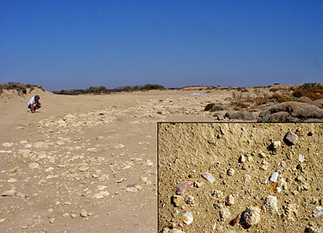
The Late Palaeolithic site of Ouriakos is located on the south-eastern coast of the island of Limnos in the northern Aegean. It was discovered in 2006 during the construction of a car park close to the beach which removed part of a sand dune.
The site is partly located on a Pleistocene calcarenite marine terrace, some 10m above present sea level, delimited by two seasonal streams. A profile along the right bank of the southern stream shows a buried dark clayey palaeosoil that developed above the calcarenite, containing chipped stone artefacts at its top, and which was sealed by a sand dune.
Surface collections made in 2008–2010 on the exposed archaeological surface , and the excavations that followed in 2009–2012, revealed that the site extends for some 1500m⊃2;.
The lower part of this deposit yielded a few unidentifiable bone fragments, a burnt sample of which was AMS-dated to 10 390±45 uncal BP/10 564–10 124 cal BC at 2σ (GrA-53229), suggesting that the site was settled during an advanced period of the Younger Dryas cold oscillation (c. 11 000–10 000 uncal BP; Lowe et al. 2001: tab. 3). Ichipped stone artefacts were recovered.
|
|
Scooped by
David Connolly
April 12, 2013 3:16 AM
|
Archaeologists at the University of Wollongong will soon be collaborating on discoveries in a cave in Indonesia. Professor Truman Simanjuntak from the Jakarta-based National Research and Development Center for Archaeology was at the university yesterday to address academics in the recently-established Centre for Archaeological Science (CAS). Prof Simanjuntak is part of a group excavating Harimau ("Tiger") Cave in Sumatra, which has yielded "some very, very impressive finds
|
|
Scooped by
David Connolly
April 11, 2013 3:39 PM
|
He came up with a brilliant idea to make his own “Pre-Columbian” pieces that are a little more difficult to mistake for ancient. He sculpted famous cartoon characters like The Simpsons, Mickey Mouse, and Snoopy imitating the ...
|
|
Scooped by
David Connolly
April 11, 2013 2:18 PM
|
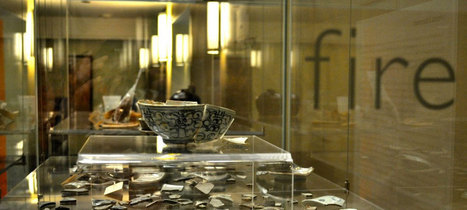
Visitors to the Stanford Archaeology Center find modern glass cases filled with fragments of a lost city – wooden toothbrushes and combs, buttons and leather shoes, ceramic bowls and soup spoons – remnants of the once thriving Chinatown community in San José.
|
|
Scooped by
David Connolly
April 11, 2013 2:07 AM
|
The unique exhibit "The Sword of King Seuthes III" is opening Wednesday at the National History Museum, NIM, in the Bulgarian capital Sofia. The exhibit is organized in partnership with the "Iskra" (Spark) History Museum in the central town of Kazanlak, the Italian Embassy, the Italian Cultural Institute in Sofia, and Unicredit Bulbank. In 2004 Bulgarian archeologists made headlines all over the world after discovering the oldest and largest Thracian tomb unearthed on Bulgarian land from beneath the Golyamata Kosmatka mound. The archaeological team was headed by late Georgi Kitov. The excavations revealed a 13-metre long passage and two halls walled up with stones behind the facade. One was used for the ritual symbolic burial of Sevt III (Seuthes) and the other for the ritual sacrifice of a horse.
|
|
Scooped by
David Connolly
April 10, 2013 2:14 AM
|
An archaeological dig in the heart of the City provides a unique insight into the first 400 years of London's Roman history, experts say.
|
|
Scooped by
David Connolly
April 9, 2013 7:53 AM
|
Nunalleq: The Yupiit and the Arctic World shows the results of a partnership between a team of archaeologists from the University of Aberdeen, in north east Scotland and the Yup’ik village of Quinhagak in western Alaska. The coastline in Quinhagak is rapidly being washed away as a result of global warming. The Quinhagak community, fearing that its heritage would be lost, asked University of Aberdeen archaeologists to conduct a rescue dig. Within hours of starting digging, archaeologists located a prehistoric village site which was falling into the sea.
|
|
Scooped by
David Connolly
April 8, 2013 5:02 PM
|
According to reports from the Peruvian newspaper El Comercio, serious damage to elements of the outer boundary of the world famous Nazca lines has been caused by heavy machinery belonging to a quarry firm removing limestone from the area.
|
|
Scooped by
David Connolly
April 8, 2013 4:56 AM
|
Human Osteology & Archaeology amongst other things...
|
|
Scooped by
David Connolly
April 8, 2013 2:34 AM
|
Travel Tool: Interactive World Heritage Site Map
Gadling
When it comes to planning my next trip, a pretty photo only inspires me half as much as a good map.
|











Wait... so they still practice the Hittite culture? I need to go there...