


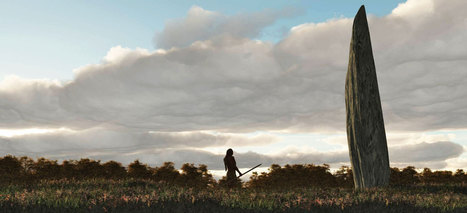
Explorable visualisation of a 3D digital world generated from archaeological and paleo-environmental data - possible with help from the public

 Your new post is loading...
 Scoop.it! Explorable visualisation of a 3D digital world generated from archaeological and paleo-environmental data - possible with help from the public 
No comment yet.
Sign up to comment
Scoop.it!

Hundreds of people flocked to an ancient monument on Bodmin Moor at the weekend as archaeologists revealed what they believe to be a "unique" stone pathway. The 4,000-year-old feature, which has been uncovered for the first time in 75 years, has attracted enormous interest across the region. A team from Cornwall's Historic Environment department has spent the past week atthe Hurlers stone circles near Minions carefully uncovering a monument believed to be the only one of its kind in the British Isles. Known variously as a "stone pavement" or "crystal causeway", experts are now certain the 4ft wide pathway linking two circles is an integral part of the site's ceremonial architecture. First excavated in 1938 by the Ministry of Works, under the direction of the grandly titled Charles Kenneth Croft Andrew and C A Ralegh Radford, it was at that time described as a "processional pathway". Anyone who would like to see one of Cornwall's most intriguing historical treasures before it is reburied will need to be quick because it is due to be reburied tomorrow. For more information visit caradonhill.org.uk
Scoop.it!

Archaeologists digging a Bronze Age site on the Russian steppes are using evidence from language and mythology to understand a remarkable discovery (Archaeologists digging a Bronze Age site in Russia used prehistoric mythology to analyze it.
Scoop.it!

Archaeological excavations beside a Londonderry church have unearthed what is believed to be three sets of human remains dating to the 17th Century.
The dig organised by the Northern Ireland Environment Agency (NIEA), Derry City Council; Museum and Heritage Service and the Centre for Archaeological Fieldwork (CAF), Queen's University Belfast, is uncovering evidence of Derry's development from the post-medieval period and possibly earlier. The work is being undertaken at Bishop Street car park adjacent to the City Walls and St Augustine's Church. On Monday the team of volunteers found articulated skeletons of two adults and a child as well as part of clay pipe stem which the CAF said indicated the finds were from a post-medieval era. Nails surrounding the child's remains also indicate a coffin which would have decayed over more than 300 years since the burial.
Scoop.it!

The remains of an iron age horse has been found in a glacier two thousand metres up in the mountains of Norway, one of the first times such an animal has been found at such altitude. "It shows that they were using horses for transport in the high alpine zone, in areas where we were quite surprised to find them," Lars Pilø, the head of snow archeology at Oppland council told The Local. The find, which was made in August, is the latest of a string of discoveries archeologists have been making around the world, as global warming melts glaciers and ice sheets, leaving perfectly preserved relics behind. "Even though the finds up there are fantastic, the background to the science is very serious," Pilø said. "Norwegian climate experts tell us that all the ice in the Norwegian high mountains will be gone by the end of this century, and of course that also adds an urgency to the work that we're doing."
Scoop.it!

The great streams of silver that reached Scandinavia in the Viking Ages – first the Arabic silver from Russia, and later coins from Germany and Britain – were for the most part converted into silver jewellery by local craftsmen. Much of the silver arrived as coins, whether through trade, looting or as paid danegeld [a tax raised to pay tribute to the Viking raiders to save a town from being ravaged]. However, in the beginning the central element was the weight of the silver, rather than the coins themselves. This turned the balance weight scale into an important tool, along with its accompanying weights. Weights were among the most important tools in the Viking Age as they were a prerequisite for many types of trading. The weights made it possible to value items and to get the correct payment for them – the very nerve centre of business. Trading was a highly specialised profession, and items of great value were sometimes at stake.
Scoop.it!

The Old Testament is rife with the admonishment of errant kings and queens worshiping ‘false gods’, with the much of the blame falling on the Kingdom of Israel and that of Ahab and his infamous queen Jezebel.
In recent years there have been a significant number of discoveries of cult stands and shrine caches throughout Israel. They were found either buried in favissae (underground cellars) or buried in caches, such as at Hazevah and Yavneh, or found in various other settings, like at Tel Rehov’s honey production site and at Tel Halif’s industrial textile area. The most recent findings were at Motza, just north of Jerusalem, where a cache of apparently cultic items were found in an ancient temple.
Israel is often touted as the birthplace of monotheism. But the Motza artifacts, so similar to those of distant Hazeva and Qitmit, taken in conjunction with the previously discovered stands, shrines and altars from Megiddo, Taanach and Beit Sh'ean, paint a significantly richer picture of the religious life of this ancient land. Add the various figurines found strewn about the land of Israel of females in various poses and states of dress and undress as well as dogs, horses, and bulls: The iconography points to a pantheon of deities, as some scholars believe, or to two main deities, something of a duality.
Scoop.it!

A WARRIOR grave dating back 2,000 years has been discovered under the site of a new golf clubhouse.
Scoop.it!

The Metropolitan Museum may not be the last institution to return looted sculptures to Cambodia. By Vincent Noce
The return to Cambodia of two tenth-century Khmer sandstone sculptures, which had been displayed for nearly 20 years at the Metropolitan Museum of Art in New York, made headline news around the world this summer. The restitution was greeted enthusiastically by Cambodia’s Council of Ministers when the sculptures, looted from the ancient city of Koh Ker in the 1970s, arrived in Phnom Penh in June. The restitution is now shining a spotlight on the degree of damage to Koh Ker and raises questions about a number of masterpiece sculptures in public and private collections. See also: • Cambodian restitution case takes surprising twistThe so-called “Kneeling Attendants” are now known to have come from Prasat Chen, the temple complex at the heart of Chok Gargyar (today called Koh Ker), which, for a short period in the tenth century, eclipsed even Angkor in its magnificence. Koh Ker is in a remote part of northern Cambodia; it was covered by jungle for centuries and only rediscovered in the late 19th century. Although there was previous damage, many experts say that looting began in earnest during the political upheaval and civil war of the 1960s and 1970s, and amid the chaos of the rule of the Khmer Rouge from 1975 to 1979, although others say that the extensive damage is even more recent.
Scoop.it!

The photo exhibition “Seeking ancient kallos” (beauty) by American photographer Joshua Garrick opened on September 12 at The National Archaeological Museum in Athens. The exhibit runs until January 8, 2014. The title of the exhibition marks his desire to seek the core of classical beauty, captured on ancient sculptures which he has been photographing for the last decades in Greek Museums. In this exhibition, Garrick’s works are black and white photographs printed on aluminum DiBond, which highlight often unseen details of illustrious Greek treasures including some of the most famous sculptures of history, exhibited in the National Archaeological Museum. In his own words, “My love of all-things-Greek comes from the fact that what we most treasure in Western Civilization – our legacy of art, history, theatre, philosophy, and government – ALL comes from that singular place and time in history. Out of respect for those geniuses who lived in Athens 2,500 years ago, I feel a ‘religious responsibility’ when I photograph their ancient statues and monuments. At this moment in history, it is more important than ever for all of us to understand the real ‘wealth’ of Greece – the inestimable ‘wealth’ of Greece is located within the walls of the National Archaeological Museum, which celebrates that ancient genius.”
Scoop.it!

New genetic research led by the Genographic Project consortium shows a distinctive ancestry for the Uros populations of Peru and Bolivia that pre-dates the arrival of the Spanish conquistadores and may date back to the earliest settlement of the Altiplano, or high plain, of the central Andes some 3,700 years ago.
Scoop.it!

A Sarmatian burial mound excavated this summer in Russia’s Southern Ural steppes has yielded a magnificent but unusual treasure. The artefacts contained within the mound are helping to shed light on a little-known period of the nomadic culture that flourished on the Eurasian steppe in the 1st millennium BC. The archaeological study of this remarkable ancient tomb, or kurgan, was carried out by the expedition of the Institute of Archaeology (Russian Academy of Sciences), led by Professor Leonid T. Yablonsky.
Scoop.it!

Real-life vampires, giant rock vaginas, ancient sites to rival those of Greece and Rome – Bulgaria’s archaeologists are putting their country on the map of world history, but first they have to stop the mafia stealing its treasures.
The illegal diggers come at night with shovels and sacks, hunting through the places where they know the professionals have been. They’re looking for the tonnes of ancient artefacts that lie hidden in Bulgaria’s soil.
In the past two decades, Bulgarian law enforcement agencies say this plunder has turned into a €30m-a-year industry for local gangs, putting it a close third behind drugs and prostitution. The artefacts – gold Roman coins, ancient Greek silver, Thracian military helmets – wind up with falsified documents in auction houses in Europe and North America, or increasingly with wealthy Arab and Asian collectors.
Police say there are 300 criminal treasure-hunting gangs in Bulgaria at present, but as many as 50,000 people are thought to be involved in illegal digging in some form. Entire villages have been known to take part in some impoverished corners of Bulgaria.
|
Scoop.it!

The University of Liverpool will lead a £1.7million AHRC award to make it possible for people to trace the records of Londoners sentenced to either imprisonment or transportation from 1787 up to the 1920s when the last convict died. The project, `The Digital Panopticon: The Global Impact of London Punishments, 1780-1925’ funded by the Arts and Humanities Research Council (AHRC), will use digital technologies to bring together existing and new genealogical, biometric and criminal justice datasets held by different organisations in the UK and Australia to produce a searchable website.

James Miles's curator insight,
November 10, 2013 5:47 PM
The "wonderful" lives of the convicts, explored by the university of Liverpool, trying to make it possible to trace the records of the Londoners.

layne peebles's curator insight,
November 10, 2013 5:56 PM
the convicts lifes of the convicts was hard and harsh. they had to work all day in the blistering sun. 
Erin Behn's curator insight,
November 10, 2013 6:05 PM
Tracing the lives of British and Australian convicts.
Scoop.it!
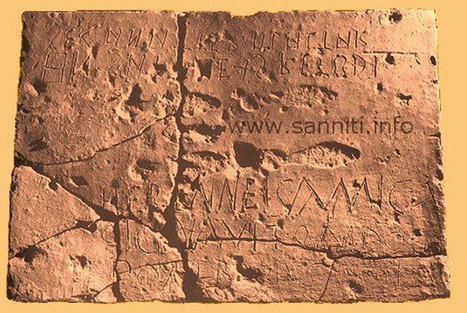
Bringing the lives of Pompeii's slaves out of the shadows by drawing on literature, law, art and other material evidence
David Connolly's insight:
insightful consideration of how you seek the hidden story
Scoop.it!
From the nine heritage zones listed in the master plan of Delhi, the Indian National Trust for Art and Cultural Heritage (Intach), an NGO, set up in 1984 to protect and conserve...
Scoop.it!

From
yle

Archaeologist Martti Pärssinen has made sensational finds of an ancient civilisation in the Amazonian area. The summer’s digs in Brazil have unearthed unique artefacts, including entirely new forms of ceramics.
The clearing of the Amazon rainforest has revealed mysterious patterns in the earth. The large-scale patterns are best visible from the air, where Finnish archaeologist Martti Pärssinen takes pictures of them. The geometrical patterns have been made with earth mounds and moats. Many of them are huge, with sides measuring up to a few hundred metres. Over 300 such structures have been discovered in the Brazilian state of Acre alone. The construction feat involved can be compared to that achieved by those that built the pyramids in Egypt. Professor Pärssinen points out that people here must have expended as much energy as the workers in Egypt, shaping the earth into vast motes and mounds, in complex, multiple structures.

elizama ramirez's curator insight,
January 25, 2014 12:22 AM
Ceramic has been found of the Amazon Rainforest and this ceramic is pretty much alike to the one that was used to build the pyramids in Egypt. This was discovered due to patterns found on the earth meaning the grounds of this area. They say this unlocks more knowledge about the past.
Scoop.it!

On the afternoon of Saturday 29th June Estequilla Rosales, vice president of the heritage association Kapaq Sumaq Ayllu, heard a noise coming from the far side of the archaeological site she has been helping to protect. The Peruvian 45-hectare complex of El Paraíso is a national cultural heritage site and one of the largest and oldest in Peru. What Estequilla heard was the sound of heavy machinery in the process of destroying one of the eleven archaeological mounds registered on the site, beneath which lay the remains of a pre-Inca pyramid, up to six metres high. “I was desperate, and climbed the hill to tell the watchman to call the police”, remembers Estequilla ” Now I feel calmer, but when it happened, I felt a deep pain, as this is part of my country, they are destroying my identity, my culture and this is an act of treason against our nation.”
Scoop.it!

Highland Council said some "exciting answers" to questions about the town's Viking past will be revealed.
Scoop.it!

CRUMBLING walls. Breathtaking temples. Mysterious cities built entirely underground. They are the astounding feats of architecture that have been left to decay for centuries. But while they may be in ruins, the sites of the world's most ancient and intriguing cities continue to wow travellers. From the popular Machu Picchu site in Peru, to the Pompeii ruins and the lesser-known Derinkuyu site in Turkey, here are eight amazing ruined cities that remain shrouded in mystery - or remain perplexing to this day, according to the science website io9.com. One thing's for sure, the world is a fascinating place.
starts with : 1. Palenque, Mexico

Sarah Kerr's curator insight,
October 10, 2013 11:15 PM
This scoop has a lot of great interesting facts on ancient cities that are now long forgotten but still widely popular in the traveling world. Some of the cities we are studying in class such as Catal Huyuk and Pompeii show up in this article. 
Cassandra Folkerth's curator insight,
October 16, 2013 1:24 AM
I love reading about the ancient architecture. Its just so cool. How did tehy come up with that and build ALL that without any modern technology.
Sarah Kerr's curator insight,
November 29, 2013 3:25 PM
I chose this scoop because, it is fascinating to think that there are places out there in the world that are full of mystery and unanswered questions. The places mentioned in this article are, Great ZImbabwe, Cahokia in the U.S., Machu Pichu in Peru, Catalhoyuk in Turkey, Pompeii in Italy, Palenqus in Mexico and Derinkuyu also in Turkey.
Scoop.it!
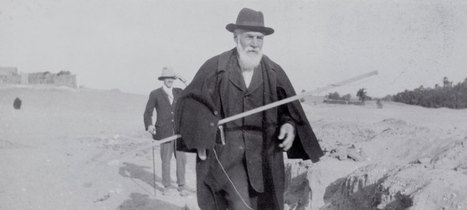
Samples from human remains housed in the Natural History Museum, London, have proved vital in the creation of a new chronology of Egyptian rulers.
New mathematical data drawn from radiocarbon dating of human remains has been used to create the first fully scientific estimate of the creation of Egypt. The new research, including work by Dr Linus Girdland Flink, a research assistant at the Natural History Museum, involved collecting dates from hair, bone and plant samples excavated at key archaeological sites in Egypt.
Scoop.it!

Few archaeological sites in South America contain uncontroversial evidence for when the first peopling of the continent occurred. Largely ignored in this debate, extreme environments are assumed either as barriers to this early wave of migration or without potential for past habitability. The heart of the Atacama desert is one of the the driest place on Earth, yet the first settlers of South America set up home there more than 12,790 years ago. The desert was just as harsh then as it is today however, Claudio Latorre of the Pontifical Catholic University of Chile in Santiago and other archaeologists, have been excavating a site called Quebrada Manih which lies 85 kilometres inland, 1240 metres above sea level and only receives rain a few times a century.
Scoop.it!

ARCHAEOLOGISTS who may have found the remains of a medieval church in York city centre will carry out further investigations next week to determine whether more detailed excavations are necessary.
The King’s Square discovery was unearthed by City of York Council’s archaeological team following a dig which started last week as part of Reinvigorate York.
They believe the remains could be part of Holy Trinity church, first mentioned in 1268, but as it was demolished in 1861 and replaced by a Victorian church, it is difficult to tell which building the bricks belong to.
Scoop.it!

More than 80,000 artifacts that provide a glimpse of life in the region 4,000 years ago have been recovered by archeologists on the banks of the Puce River. While most of the arrowheads and pieces of pottery found are 1,000 to 1,200 years old, scientists kept digging deeper and eventually came across artifacts that were 4,000 years old, said Jacqueline Fisher, an archeologist hired by the county. The artifacts were discovered during an environmental assessment for the construction of an expanded Puce River bridge on County Road 22. “It was like excavating a layer cake,” Fisher said. “You move down to the plate and you move back in time.” The excavation was done by hand over a one-hectare dig site. Some artifacts were discovered in soil less than a foot deep and Fisher said there was evidence of later Euro-Canadian habitation, including the impression of a wood cabin.
Scoop.it!

Construction in the southeastern province of Mardin’s Midyat district has unearthed ancient rock tombs that are believed to date from the pagan era between the third and second centuries B.C.
|





