To make things clear - Maldacena's universe is not like the one we actually live in! It's a model, a toy universe, which comes complete with its own physics. It's a hologram because all the physical goings-on inside it can be described by a physical theory that's only defined on the boundary. What's more, it's a universe in which the gravity/quantum conundrum has been resolved completely: the boundary theory is purely quantum, it contains no gravity, but a being living in the interior will still experience gravity. Gravity in this universe is part of the holographic illusion.
One of the problems with 3D printing is getting a hold of things to print. You can of course download pre-made objects from a variety of places like Thingiverse; but if you want something unique and made by you, that’s where things get a little difficult. Here are 9 quick and easy apps for making something a little more unique.
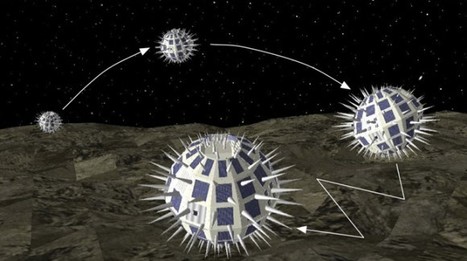
"Hopper" rover/spacecraft concept by Stanford University's Marco PavoneWith all there’s yet to learn about our solar system from the many smaller worlds that reside within it — asteroids, protoplanets and small moons — one researcher from Stanford...
Targeted manipulation of complex genomes often requires the introduction of a double-strand break at defined locations by site-specific DNA endonucleases. Here, we describe a monomeric nuclease domain derived from GIY-YIG homing endonucleases for genome-editing applications. Fusion of the GIY-YIG nuclease domain to three-member zinc-finger DNA binding domains generated chimeric GIY-zinc finger endonucleases (GIY-ZFEs). Significantly, the I-TevI-derived fusions (Tev-ZFEs) function in vitro as monomers to introduce a double-strand break, and discriminate in vitro and in bacterial and yeast assays against substrates lacking a preferred 5'-CNNNG-3' cleavage motif. The Tev-ZFEs function to induce recombination in a yeast-based assay with activity on par with a homodimeric Zif268 zinc-finger nuclease. We also fused the I-TevI nuclease domain to a catalytically inactive LADGLIDADG homing endonuclease (LHE) scaffold. The monomeric Tev-LHEs are active in vivo and similarly discriminate against substrates lacking the 5'-CNNNG-3' motif. The monomeric Tev-ZFEs and Tev-LHEs are distinct from the FokI-derived zinc-finger nuclease and TAL effector nuclease platforms as the GIY-YIG domain alleviates the requirement to design two nuclease fusions to target a given sequence, highlighting the diversity of nuclease domains with distinctive biochemical properties suitable for genome-editing applications.
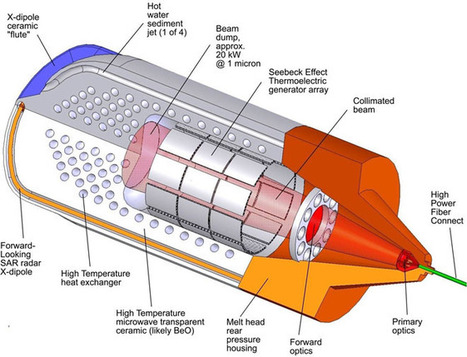
Future extraterrestrial rovers may be powered remotely by high-energy laser beams shot through miles of thin fiber-optic cables. This new technology could allow robotic probes to penetrate thick layers of ice to explore Antarctic lakes or the subterranean oceans on icy moons like Europa or Enceladus, and even power a new kind of rocket into space.
Albert Einstein’s online presence is taking a huge step forward, with the Hebrew University of Jerusalem moving to put thousands of his documents online. A limited sample of the physicist’s papers had previously been available, but with the backing of the foundation that helped put Issac Newton’s work on the web, over 80,000 Einsteinian documents will be going online. In the first stage of the project, 2,000 high-resolution images were released.
On the Internet, we’ve reached a tipping point where more than 50% of all Internet traffic is no longer generated by humans – instead, it's generated by a motley mix of search engine spiders, bots, scrapers, scammers, hackers and, yes, spies. We are no longer talking about the Internet, we are talking about the Bot Net – a “bot-mediated reality” where algorithms and bots influence where we go, how long we spend there and with whom we communicate.
Sand Flea is an 11-lb robot with one trick up its sleeve: Normally it drives like an RC car, but when it needs to it can jump 30 feet into the air. An onboard stabilization system keeps it oriented during flight to improve the view from the video uplink and to control landings. Current development of Sand Flea is funded by the The US Army's Rapid Equipping Force.
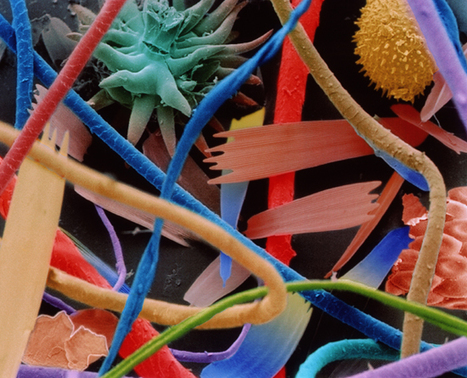
The Amazon is home to more species than almost anywhere else on earth. One of them, carried home recently by a group from Yale University, appears to be quite happy eating plastic in airless landfills.
Are You Living In a Computer Simulation? Perhaps at least one of the following propositions is true: (1) the human species is very likely to go extinct before reaching a “posthuman” stage; (2) any posthuman civilization is extremely unlikely to run a significant number of simulations of their evolutionary history (or variations thereof); (3) we are possibly living in a computer simulation. It follows that the belief that there is a significant chance that we will one day become posthumans who run ancestor-simulations is false, unless we are currently living in a simulation. A number of other consequences of this result are also possible.
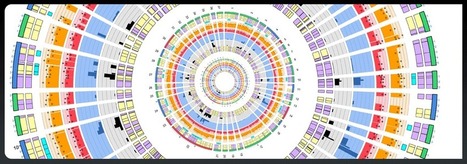
Circos is a software package conceived and created by Martin Krzywinski to visualize large amounts of data in a circular layout.
Circos is ideal for creating publication-quality infographics and illustrations with a high data-to-ink ratio, richly layered data and pleasant symmetries.
(You will need Perl to run Circos. Perl is an interpretive language, like Python or Ruby. It is available for nearly every operating system and if you're on UNIX or Mac OS X, you very likely already have it installed. Perl 5.8.x, or newer, is recommended.)
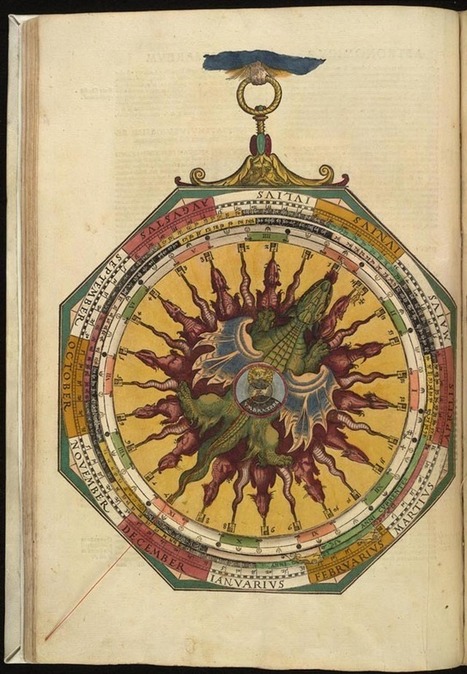
From Copernicus to Ancient Korea, or what the Chinese concept of change has to do with Aztec astrology.
The love of maps is a running theme here at Brain Pickings, from these 7 must-read books on creative cartography to, most recently, BBC’s fantastic documentary on important medieval maps. Humanity’s long history of visual sensemaking is as much a source of timeless inspiration as a living record of how our collective understanding of the universe and our place in it evolved. It seems like the farther from the known mapmakers’ imaginations traveled, the more fascinating their maps became. And hardly does the unknown glimmer with more alluring sparkle than the cosmos.
Explaining and Ordering the Heavens is a fantastic online exhibition from The Library of Congress, examining over 8 centuries of humanity’s evolving views of the universe, from ancient Buddhist cosmological maps to Galileo’s seminal work in astronomy to Persian celestial globes and more. Gathered here is a curated selection of images from the exhibition, alongside the original caption text accompanying them.
How much of planet Earth is made of water? Very little, actually. Although oceans of water cover about 70 percent of Earth's surface, these oceans are shallow compared to the Earth's radius. The above illustration shows what would happen if all of the water on or near the surface of the Earth were bunched up into a ball. The radius of this ball would be only about 700 kilometers, less than half the radius of the Earth's Moon, but slightly larger than Saturn's moon Rhea which, like many moons in our outer Solar System, is mostly water ice. How even this much water came to be on the Earth and whether any significant amount is trapped far beneath Earth's surface remain topics of research.
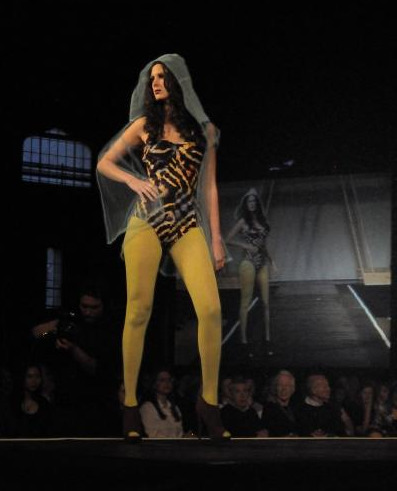
A Cornell University scientist and designer from Africa have together created a fashionable hooded bodysuit embedded at the molecular level with insecticides for warding off mosquitoes infected with malaria, a disease estimated to kill 655,000 people annually on the African continent.
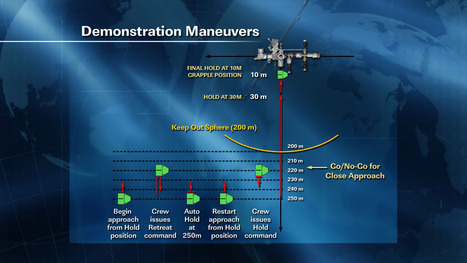
SpaceX and NASA are moving ahead with the scheduled April 30 launch date of the Dragon spacecraft and its historic docking with the International Space Station after the flight readiness review was approved at the Johnson Space Center in Houston, Texas.
The comprehensive evaluation of the SpaceX mission is one of the last major steps before the company becomes the first commercial carrier to deliver payloads to the ISS. Although SpaceX founder and chief designer Elon Musk was careful to remind everybody that the flight is a test and success is far from guaranteed.
3D printing will soon allow digital object storage and transportation, as well as personal manufacturing and very high levels of product customization. This video by Christopher Barnatt of ExplainingTheFuture.com illustrates 3D printing today and in the future.
Cyborgs, brain uploads and immortality - How far should science go in helping humans exceed their biological limitations? These ideas might sound like science fiction, but proponents of a movement known as transhumanism believe they are inevitable.
In this episode of The Stream, we talk to bioethicist George Dvorsky; Robin Hanson, a research associate with Oxford’s Future of Humanity Institute; and Ari N. Schulman, senior editor of The New Atlantis, about the ethical implications of transhumanism.
Our five senses–sight, hearing, touch, taste and smell–seem to operate independently, as five distinct modes of perceiving the world. In reality, however, they collaborate closely to enable the mind to better understand its surroundings. We can become aware of this collaboration under special circumstances. In some cases, a sense may covertly influence the one we think is dominant. When visual information clashes with that from sound, sensory crosstalk can cause what we see to alter what we hear.
50 new tech tools you should knowCNN InternationalA new 3.0 update also offers LinkedIn integration for connecting with just one click. A must-have for conference-goers and business trippers.
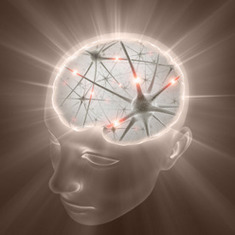
It could be that we are on the verge of a great deluge of cognitive enhancement. Or it's possible that new brain-enhancing drugs and technologies will be nothing compared to how we've transformed our minds in the past. If it seems that making ourselves "artificially" smarter is somehow inhuman, it may be that similar activities are actually what made us human.
Described as a “knowledge collider,” and now with a pledge of one billion euros from the European Union, the Living Earth Simulator is a new big data and supercomputing project that will attempt to uncover the underlying sociological and psychological laws that underpin human civilization. In the same way that CERN’s Large Hadron Collider smashes together protons to see what happens, the Living Earth Simulator (LES) will gather knowledge from a Planetary Nervous System (PNS — yes, really) to try to predict societal fluctuations such as political unrest, economic bubbles, disease epidemics, and so on.
Orchestrated by FuturICT, which is basically a consortium of preeminent scientists, computer science centers around the world, and high-power computing (HPC) installations, the Living Earth Simulator hopes to correlate huge amounts of data — including real-time sources such as Twitter and web news — and extant, but separate approaches currently being used by other institutions, into a big melting pot of information. To put it into scientific terms, the LES will analyze techno-socio-economic-environmental (!) systems. From this, FuturICT hopes to reveal the tacit agreements and hidden laws that actually govern society, rather than the explicit, far-removed-from-reality bills and acts that lawmakers inexorably enact.
To get content containing either thought or leadership enter:
To get content containing both thought and leadership enter:
To get content containing the expression thought leadership enter:
You can enter several keywords and you can refine them whenever you want. Our suggestion engine uses more signals but entering a few keywords here will rapidly give you great content to curate.


 Your new post is loading...











![NASA: How much water is on Planet Earth? Visualization: All water bunched up to a single ball [photo] | Amazing Science | Scoop.it](https://img.scoop.it/8nmxanc8RrXwGvIhyYuj1Tl72eJkfbmt4t8yenImKBVvK0kTmF0xjctABnaLJIm9)