Your new post is loading...

|
Scooped by
Dr. Stefan Gruenwald
January 27, 2020 8:30 PM
|
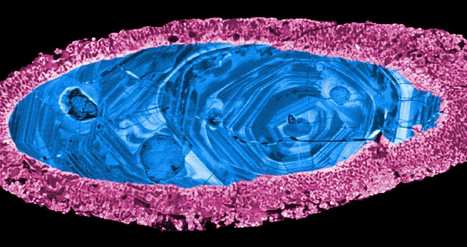
Curtin University scientists have discovered Earth's oldest asteroid strike occurred at Yarrabubba, in outback Western Australia, and coincided with the end of a global deep freeze known as a Snowball Earth. The research, published in the leading journal Nature Communications, used isotopic analysis of minerals to calculate the precise age of the Yarrabubba crater for the first time, putting it at 2.229 billion years old -- making it 200 million years older than the next oldest impact. Lead author Dr Timmons Erickson, from Curtin's School of Earth and Planetary Sciences and NASA's Johnson Space Center, together with a team including Professor Chris Kirkland, Associate Professor Nicholas Timms and Senior Research Fellow Dr Aaron Cavosie, all from Curtin's School of Earth and Planetary Sciences, analyzed the minerals zircon and monazite that were 'shock recrystallized' by the asteroid strike, at the base of the eroded crater to determine the exact age of Yarrabubba. The team inferred that the impact may have occurred into an ice-covered landscape, vaporized a large volume of ice into the atmosphere, and produced a 70km diameter crater in the rocks beneath. Professor Kirkland said the timing raised the possibility that the Earth's oldest asteroid impact may have helped lift the planet out of a deep freeze. "Yarrabubba, which sits between Sandstone and Meekatharra in central WA, had been recognized as an impact structure for many years, but its age wasn't well determined," Professor Kirkland said. "Now we know the Yarrabubba crater was made right at the end of what's commonly referred to as the early Snowball Earth -- a time when the atmosphere and oceans were evolving and becoming more oxygenated and when rocks deposited on many continents recorded glacial conditions." Professor Nicholas Timms noted the precise coincidence between the Yarrabubba impact and the disappearance of glacial deposits. "The age of the Yarrabubba impact matches the demise of a series of ancient glaciations. After the impact, glacial deposits are absent in the rock record for 400 million years. This twist of fate suggests that the large meteorite impact may have influenced global climate," Timms stated.
|
|
Scooped by
Dr. Stefan Gruenwald
January 4, 2020 12:32 AM
|
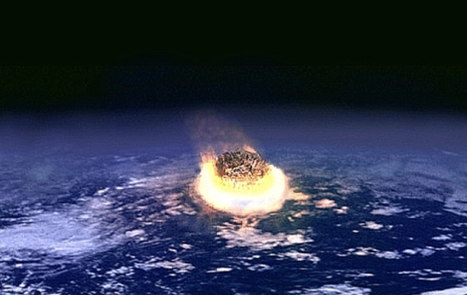
A flash of light would have come first, followed by a shockwave and massive earthquake. Only later would the hailstorm of black, glassy debris begun to fall, a rocky rain that would touch ten percent of the planet's surface. That's the scene that followed a massive asteroid impact 790,000 years ago. The remains it scattered, called tektites, have been found from Asia to Antarctica. For decades, scientists have searched for the elusive resting place of the impactor that coated the Earth with debris. Now, they may have finally found it. Elusive crater A new report published in the Proceedings of the National Academy of Sciences says that the meteorite likely struck in southern Laos, carving a 10.5 by eight mile crater now covered by a lava flow. The find helps reconstruct some of the chaos that ensued after impact, says study co-author Kerry Sieh, a geologist at Nanyang Technological University in Singapore. It could also illustrate some of what we could expect if a similarly large asteroid were to hit Earth again. Most massive meteorites struck Earth so long ago their craters have almost completely eroded, Sieh says. But this impact was unusual in that it was huge and recent enough that the site where it hit should be identifiable. But with rocks from the impact spread across the world, zeroing in on the location proved difficult. The site eluded geochemists for decades, but Sieh decided to take a new approach and look at satellite imagery from parts of the world where the meteorite might have hit. In the Bolaven Plateau in southern Laos, he found an expanse of flat, shallow rock formed from hardened lava, just thick enough to obscure a crater of this size. In-person excavations found the lava dated to around the same time as the impact, while surrounding sediments were older. Additional gravity measurements also hinted at a crater below. Altogether it's enough for Sieh to be confident he's finally located ancient ground zero.
|
|
Scooped by
Dr. Stefan Gruenwald
December 2, 2019 1:25 AM
|
The mystery of the role of people and climate in the fate of Australian megafauna might have been solved, in a newly published breakthrough study. ‘Megafauna’, giant beasts that once roamed the continent — including wombat-like creatures as big as cars, birds more than two meters tall, and lizards more than seven meters long — became extinct about 42,000 years ago. But the role of people in their demise has been hotly debated for decades. The new study, led by a team of researchers from the Centre of Excellence for Australian Biodiversity and Heritage (CABAH), analyzed fossil data, climate reconstructions, and archaeological information describing patterns in human migration across south-eastern Australia. The team developed and applied sophisticated mathematical models to the data to test scenarios to explain regional variation in the periods during which people and megafauna coexisted. For the first time, the research suggests a combination of climate change and the impact of people sealed the fate of megafauna, at least in south-eastern Australia. And that distribution of freshwater — a precious commodity for animals and people alike as the climate warmed — can explain regional differences in the timing at which megafauna died out. “There has been much debate among scientists about what conditions led to this extinction event,” said lead author Dr Frédérik Saltré, Research Fellow and Coordinator of the Global Ecology Lab at Flinders University. “Resolving this question is important because it is one of the oldest such extinction events anywhere after modern human beings evolved and left Africa”, he added. The findings, published in Nature Communications, are the result of analysis and complex modeling based on data including more than 10,000 fossils and archaeological records.
|
|
Scooped by
Dr. Stefan Gruenwald
October 14, 2019 2:30 PM
|
Fossils discovered in Thailand represent a new genus and species of predatory dinosaur, according to a study released October 9, 2019 in the open-access journal PLOS ONE by Duangsuda Chokchaloemwong of Nakhon Ratchasima Rajabhat University, Thailand and colleagues. Carcharodontosaurs were a widespread and successful group of large predatory dinosaurs during the Jurassic and Cretaceous Periods and were important members of ecosystems on multiple continents. However, the fossil record of these animals is notably lacking from the Early Cretaceous of Asia, with no definite carcharodontosaurs known from Southeast Asia. In this study, Chokchaloemwong and colleagues describe fossil material from the Khok Kruat geologic formation in Khorat, Thailand, dating to the Early Cretaceous. These fossils include remains of the skull, backbone, limbs, and hips of at least four individual dinosaurs, and morphological comparison with known species led the authors to identify these remains as belonging to a previously unknown genus and species of carcharodontosaur which they named Siamraptor suwati. Phylogenetic analysis indicates that Siamraptor is a basal member of the carcharodontosaurs, meaning it represents a very early evolutionary split from the rest of the group. It is also the first definitive carcharodontosaur known from Southeast Asia, and combined with similarly-aged finds from Europe and Africa, it reveals that this group of dinosaurs had already spread to three continents by the Early Cretaceous. The authors summarize their work as follows: "A Siam predator: New carnivorous dinosaur Siamraptor suwati discovered in Thailand was not only a terrible predator but also extremely fast.
|
|
Rescooped by
Dr. Stefan Gruenwald
from Papers
June 10, 2019 2:11 PM
|
Surviving fragments of genetic material preserved in sediments allow metagenomics researchers to see the full diversity of past life — even microbes. The moment an organism dies, its body begins to decompose. Its cells rupture, and their contents spill into the environment. What scientists have realized over the past two decades is that even though the physical structure of a body disappears, its DNA can last for centuries. Eske Willerslev, an evolutionary geneticist at the University of Copenhagen, has found this DNA in the least likely places, including the soil underneath glaciers, in caves and more. His work has helped rewrite the natural histories of many locations around the globe by reconstructing ecosystems as much as 450,000 years old, and maybe older. He claims the idea came to him as a graduate student. “It was the autumn, and I saw leaves falling from the trees, and I saw a dog take a crap on the street,” he recalled, all of which set him to wondering: “‘What happens to that DNA? Could it somehow be preserved in the sediments or in the soil where it was put?’”
Via Complexity Digest
|
|
Scooped by
Dr. Stefan Gruenwald
April 25, 2019 1:18 PM
|
Most scientists agree that a "mass extinction" event is underway on Earth, with species disappearing hundreds of time quicker under the influence of human activity. But this is not the first: over the last half-billion years there have been five major wipeouts in which well over half of living creatures disappeared within a geological blink of the eye. All told, more than 90 percent of organisms that have ever strode, swam, soared or slithered on Earth are now gone. Here are the biggest die-offs, each showing up in the fossil record at the boundary between two geological periods: Ordovician extinction When: about 445 million years ago Species lost: 60-70 percent Likely cause: Short but intense ice age Devonian extinction When: about 375-360 million years ago Species lost: up to 75 percent Likely cause: oxygen depletion in the ocean Permian extinction When: about 252 million years ago Species lost: 95 percent Possible causes: asteroid impact, volcanic activity Triassic extinction When: about 200 million years ago Species lost: 70-80 percent Likely causes: multiple, still debated Cretaceous extinction When: about 66 million years ago Species lost: 75 percent Likely cause: asteroid strike
|
|
Scooped by
Dr. Stefan Gruenwald
March 27, 2019 1:15 PM
|
In recent years, paleontologists have been revising the scientific consensus about how T. rex looked, sounded, and ate. "Everyone's preconceived ideas of what T. rex acted like and looked like are going to be heavily modified," Mark Norell, a curator at the American Museum of Natural History, told Business Insider. The museum just opened an exhibit devoted to the dino, called "T. rex: The Ultimate Predator." The exhibit showcases the latest research on the prehistoric animal. And as it turns out, these predators started their lives as fuzzy, turkey-sized hatchlings. They also had excellent vision, with forward-facing eyes like a hawk for superior depth perception. While the T. rex emerged about 68 million years ago, its tyrannosaur ancestors were 100 million years older than that. The Tyrannosauroidea superfamily consists of two dozen species spanning more than 100 million years of evolution. For earlier tyrannosaur relatives with smaller bodies, these tiny arms were long enough to grasp prey or pull food into their mouth. "The earliest tyrannosaur species had arms that were perfectly proportioned," Erickson said. T. rex's puny arms were vestigial — a body part or organ that no longer serves a function but is nevertheless retained (kind of like a human's appendix or wisdom teeth). "T. rex was a head hunter," Norell said. The predator had the rare ability to bite through solid bone and digest it. Paleontologists know this from the dinosaur's fossilized poop; they've discovered T. rex feces containing tiny chunks of bone eroded by stomach acid. An adult T. rex had a long stride, helping it reach speeds of 10 to 25 mph. But the dinosaur never reached a suspended gait, since it always had at least one leg on the ground at all times. Juvenile T. rexes, which weighed less than an adult, could run. T. rex had a bite force of 7,800 pounds, equivalent to the crushing weight of about three Mini Cooper cars.No other known animal that ever lived could bite with such force, according to museum paleontologists. By comparison, the massive saltwater crocodile of northern Australia — which grows to 17 feet and can weigh more than a ton — chomps down with 3,700 pounds of force. Scientists are pretty sure that T. rex ate members of its own species, but they don't know whether the dinosaurs killed one another or just ate ones that were already dead. Paleontologists know that the dinosaur had some of the largest eyes of any land animal ever. About the size of oranges, T. rex eyes faced forward like a hawk's and were spread farther apart on its face than most other dinosaurs' eyes, giving it superior depth perception during a hunt. A 2016 study suggested that T. rex probably didn't roar, but most likely cooed, hooted, and made deep-throated booming sounds like the modern-day emu.
|
|
Scooped by
Dr. Stefan Gruenwald
February 11, 2019 11:06 AM
|
A new study has revealed how a group of deep-sea microbes provides clues to the evolution of life on Earth, according to a recent paper in The ISME Journal. Researchers used cutting-edge molecular methods to study these microbes, which thrive in the hot, oxygen-free fluids that flow through Earth’s crust. Called Hydrothermarchaeota, this group of microbes lives in such an extreme environment that they have never been cultivated in a laboratory for study. A research team from Bigelow Laboratory for Ocean Sciences, the University of Hawai‘i at Mānoa, and the Department of Energy Joint Genome Institute bypassed the problem of cultivation with genetic sequencing methods called genomics, a suite of novel techniques used to sequence large groups of genetic information. They found that Hydrothermarchaeota may obtain energy by processing carbon monoxide and sulfate, which is an overlooked metabolic strategy. The microbes use energy from this process to grow as a form of chemosynthesis. "The majority of life on Earth is microbial, and most microbes have never been cultivated," said Beth Orcutt, a senior research scientist at Bigelow Laboratory and one of the study’s senior authors. "These findings emphasize why single cell genomics are such important tools for discovering how a huge proportion of life functions." Analyzing Hydrothermarchaeota genomes revealed that these microbes belong to the group of single-celled life known as archaea and evolved early in the history of life on Earth – as did their unusual metabolic processes. These observations suggest that the subsurface ocean crust is an important habitat for understanding how life evolved on Earth, and potentially other planets.
|
|
Scooped by
Dr. Stefan Gruenwald
December 13, 2018 12:32 PM
|
Cholesterol clinched it: A group of strange Precambrian fossils are among the oldest known animals in the rock record. Organic molecules preserved with fossils of the genus Dickinsonia confirm that the creatures were animals rather than fungi or lichen, a study in the Sept. 21 Science says. Researchers led by paleontologist Ilya Bobrovskiy of Australian National University in Canberra analyzed levels of steroids in the fossils, which date to between 571 million and 541 million years ago. The team found an abundance of cholesterol that points firmly to the animal kingdom. The finding “gets rid of the more outlandish hypotheses about what these objects were,” says MIT geobiologist Roger Summons, who cowrote a related commentary in the same issue of Science. “You can’t argue with chemistry.” Dickinsonia are part of the enigmatic Ediacara biota, the collective name for a burst of strange, alienlike life-forms that flourished during the Precambrian Eon. Ediacarans, originally named for Australia’s Ediacara Hills, where they were first discovered, are now found in Precambrian-aged rocks around the globe. The new study was conducted on Ediacaran fossils extracted from a remote coastline in northwest Russia along the White Sea. The site is difficult to access — Bobrovskiy had to helicopter in and rappel down a cliff to collect the fossils — but the rewards are worth it, paleontologists say: The fossil-bearing rocks at the site haven’t been cooked and twisted by tectonic forces. The rocks are so pristine, in fact, that they still contain traces of soft tissue containing organic molecules, which researchers can use as biomarkers to help identify the fossils. That’s particularly helpful when it comes to the Ediacaran fossils, which have proven difficult to place on the tree of life as they bear little resemblance to any known creatures.The Ediacarans were macrofossils, meaning that, at several centimeters across, they are large enough to see with the naked eye. But their strange shapes — for example, Dickinsonia resemble ribbed ovals that are symmetrical around a central axis — left scientists stumped. Most paleontologists suspected that Dickinsonia were animals. But some scientists argued they could be fungi, lichens or even giant, single-celled creatures called protists (SN: 1/26/13, p. 15).
|
|
Scooped by
Dr. Stefan Gruenwald
September 26, 2018 2:31 PM
|
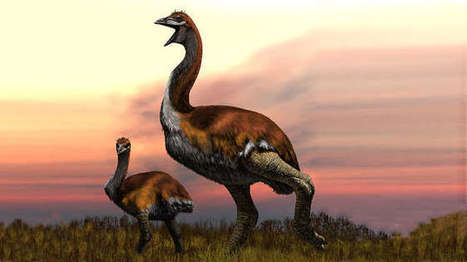
Madagascar’s giant elephant birds receive bone-afide rethink as ZSL names the species. After decades of conflicting evidence and numerous publications, scientists at international conservation charity ZSL’s Institute of Zoology, have finally put the ‘world’s largest bird’ debate to rest. Published today (26 September 2018) in Royal Society Open Science – Vorombe titan (meaning ‘big bird’ in Malagasy and Greek), has taken the title reaching weights of up to 800 kg and three metres tall, with the research also discovering unexpected diversity in these Madagascan creatures. Until now, it was previously suggested that up to 15 different species of elephant birds had been identified under two genera, however research by ZSL scientists boasts new rigorous and quantitative evidence – that shows, in fact, this is not the case. Armed with a tape measure and a pair of callipers, Dr Hansford analysed hundreds of elephant bird bones from museums across the globe to uncover the world’s largest bird, while also revealing their taxonomy is in fact spread across three genera and at least four distinct species; thus, constituting the first taxonomic reassessment of the family in over 80 years. Elephant birds (belonging to the family Aepyornithidae) are an extinct group of colossal flightless birds that roamed Madagascar during the Late Quaternary, with two genera (Aepyornis and Mullerornis) previously recognised by scientists. The first species to be described, Aepyornis maximus, has often been considered to be the world’s largest bird. In 1894, British scientist C.W. Andrews described an even larger species, Aepyornis titan, this has usually been dismissed as an unusually large specimen of A. maximus. However, ZSL’s research reveals Andrew’s ‘titan’ bird was indeed a distinct species. The shape and size of its bones are so different from all other elephant birds that it has now been given the new genus name Vorombe by ZSL.
|
|
Scooped by
Dr. Stefan Gruenwald
August 30, 2018 10:09 AM
|
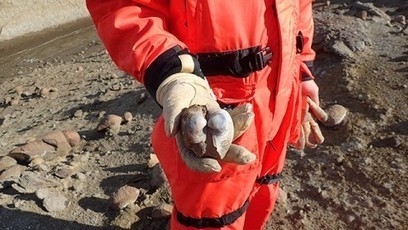
Chemicals found in 3.4 billion-year-old rocks have confirmed them as contenders for the title of oldest evidence of life on Earth. Discovered in Western Australia back in 2013, the Strelley Pool “microfossils” are thought to be all that remains of ancient bacteria. But the passage of time takes its toll on all fossils, especially microscopic ones. This means any remains that are discovered are the subject of enormous debate in the scientific community. In their latest study, a team of scientists used the chemical traces left on the miniscule structures found at Strelley and compared them with the chemical signatures of modern-day bacteria. They also used more recent microfossil evidence from 1.9 billion year-old Canadian rock formations as an additional comparison, and found that the characteristics of each were roughly the same. “We demonstrate that the elemental and molecular characteristics of these 3.4 billion year-old microfossils are consistent with biological remains, slightly degraded by fossilisation processes,” said Dr Julien Alleon, a Massachusetts Institute of Technology scientist who led the study. “This effectively supports the biological origin of the Strelley Pool microfossils.”
|
|
Scooped by
Dr. Stefan Gruenwald
August 29, 2018 1:05 PM
|
For decades, researchers have bickered about claims to have found the oldest life on Earth – but a new analysis seems to have solved the problem, and with a surprise result. Arguments often revolve around whether tiny squiggles, blobs and tubes found in ancient rocks are fossilised lifeforms or just weird minerals. Now, a study published in the journal Nature Ecology and Evolution leapfrogs these squabbles. Rather than arguing about forms, a team from the University of Bristol in the UK, led by phylogeneticist Davide Pisane, has taken a big data approach. Using 29 DNA codes that are common to species across the tree of life, they pinpoint the emergence of the last universal common ancestor (LUCA) at an extraordinarily early 4.5 billion years ago – just an eye-blink after our planet formed. Did life come from space and did the first cells land here on Earth just after our planet cooled?
|
|
Scooped by
Dr. Stefan Gruenwald
August 24, 2018 12:44 AM
|
An international team of researchers discovered a new species of dinosaur, Xiyunykus pengi, during an expedition to Xinjiang, China. The discovery is the latest stemming from a partnership between the George Washington University and the Chinese Academy of Sciences. An international team of researchers discovered a new species of dinosaur, Xiyunykus pengi, during an expedition to Xinjiang, China. The discovery is the latest stemming from a partnership between the George Washington University and the Chinese Academy of Sciences. The findings were published today in Current Biology along with the description of a second new intermediate species, Bannykus wulatensis. Xiyunykus and Bannykus are both alvarezsaurs, an enigmatic group of dinosaurs that share many characteristics with birds. Their bodies are slender, with a bird-like skull and many small teeth instead of the usual large, sharp cutting teeth of their meat-eating relatives. “When we described the first well-known alvarezsaur, Mononykus, in 1993, we were amazed at the contrast between its mole-like arms and its roadrunner-like body, but there were few fossils connecting it back to other theropod groups,” James Clark, the Ronald Weintraub Professor of Biology at the GW Columbian College of Arts and Sciences, said. However, alvarezsaurs did not always look this way. Early members of the group had relatively long arms with strong-clawed hands and typical meat-eating teeth. Over time, the alvarezsaurs evolved into dinosaurs with mole-like arms and a single claw. The discovery of the new specimens allowed the researchers to uncover an important shift in how the specialized features of the alvarezsaurs evolved. "It can be hard to pin down the relationships of highly specialized animals. But fossil species with transitional features, like Xiyunykus and Bannykus, are tremendously helpful because they link bizarre anatomical features to more typical ones," Jonah Choiniere, an associate professor at Wits University and member of the research team, said.
|
|
|
Scooped by
Dr. Stefan Gruenwald
January 21, 2020 11:26 PM
|
Half a billion years ago, the continents were quiet. Earth’s animals—represented largely by shelled mollusks, armored arthropods, and a smattering of wriggly, jawless fish—breathed with gills, not lungs, and hunted their prey at sea.
But sometime, possibly during the Silurian (the geologic period spanning 443 million to 416 million years ago) an intrepid creature, likely equipped with sturdy limbs and a set of gas-cycling tubes that could leech oxygen from air, decided to crawl ashore. In habitually venturing out of the ocean, this animal paved a habitat-hopping path for countless lineages of land-dwellers to come—including the one that eventually led to us.
The identity of this pioneering terrestrial trekker has long perplexed paleontologists. Over the years, several candidates have come forth, all known only by their fossilized remains. Two of the most promising possibilities include many-legged millipedes, eager to snack on the predecessors of today’s plants, and stinger-tipped scorpions—one of the world’s oldest arachnids, the group that also includes spiders. But when and how these arthropods first made that crucial transition from water to land remains an unsolved puzzle.
Now, new research is pushing the scorpion timeline further back than ever before and may help pinpoint the traits that helped these pint-sized predators make a living on land. Today in Scientific Reports, paleontologists announce the discovery of the oldest known scorpions to date: a pristinely preserved pair of 437-million-year-old fossils, complete with what seem to be venom-packed tails.
|
|
Scooped by
Dr. Stefan Gruenwald
December 15, 2019 10:04 PM
|
By measuring chemistry of fossilized seashells, researchers found that the Earth was already experiencing carbon cycle instability when the asteroid hit that wiped out the dinosaurs. New evidence gleaned from Antarctic seashells confirms that Earth was already unstable before the asteroid impact that wiped out the dinosaurs. The study, led by researchers at Northwestern University, is the first to measure the calcium isotope composition of fossilized clam and snail shells, which date back to the Cretaceous-Paleogene mass extinction event. The researchers found that — in the run-up to the extinction event — the shells’ chemistry shifted in response to a surge of carbon in the oceans. This carbon influx was likely due to long-term eruptions from the Deccan Traps, a 200,000-square-mile volcanic province located in modern India. During the years leading up to the asteroid impact, the Deccan Traps spewed massive amounts of carbon dioxide (CO2) into the atmosphere. The concentration of CO2 acidified the oceans, directly affecting the organisms living there. “Our data suggest that the environment was changing before the asteroid impact,” said Benjamin Linzmeier, the study’s first author. “Those changes appear to correlate with the eruption of the Deccan Traps.” The study will be published in the January 2020 issue of the journal Geology, which comes out later this month. Jacobson is a professor of Earth and planetary sciences in Northwestern’s Weinberg College of Arts and Sciences. Linzmeier was a postdoctoral researcher with the Ubben Program for Climate and Carbon Science at the Institute for Sustainability and Energy at Northwestern when the research was conducted. He is now a postdoctoral fellow at the University of Wisconsin-Madison in the Department of Geoscience.
|
|
Scooped by
Dr. Stefan Gruenwald
November 20, 2019 11:31 AM
|
A skeleton from the Cretaceous found in Japan reveals an early bird with a tail nub resembling the avians of today. Birds are ancient creatures. Every hawk, sparrow, pigeon and penguin alive today has ancestral roots dating back to the Jurassic, when the first birds were just another form of raptor-like dinosaur. Dozens of fossils uncovered and described during the last three decades have illuminated much of this deep history, but the rock record can still yield surprises. A fossil recently found in Japan is one such unexpected avian that raises questions about what else may await discovery. The skeleton, named Fukuipteryx prima, was described by Fukui Prefectural University paleontologist Takuya Imai and colleagues today in Communications Biology. And while numerous birds of similar geologic age have been named in the past few decades, the details of these bones and where they were found have experts a-flutter. The 120 million-year-old fossil was discovered in the summer of 2013 while searching for fossils at Japan’s Kitadani Dinosaur Quarry. “One of my colleagues at Fukui Prefectural Dinosaur Museum spotted tiny bones in a block of siltstone,” Imai says. At the time, it wasn’t clear what creature the bones belonged to, but once the encasing rock was chipped away, the structure of the fossil became clear. The skeleton was an early bird, and an unusual one at that. Small bodies and hollow bones have made birds relatively rare finds in the fossil record. Only a few unique fossil deposits, like China’s 125 million-year-old Jehol Biota or the United States’ 50 million-year-old Green River Formation, allow paleontologists to get a good look at ancient avians. To find a well-preserved fossil bird outside such places of exceptional preservation represents a noteworthy paleontological discovery, and Fukuipteryx in Japan adds another significant spot on the map for fossil birds.
|
|
Scooped by
Dr. Stefan Gruenwald
June 24, 2019 1:43 PM
|
“Life on Earth has littered the fossil record with a wealth of information that has only recently been accessible to science,” says Phil Manning, a professor at Manchester University. “A suite of new imaging techniques can now be deployed, which permit us to peer deep into the chemical history of a fossil organism and the processes that preserved its tissues. Where once we saw simply minerals, now we gently unpick the ‘biochemical ghosts’ of long extinct species.” Researchers have for the first time detected chemical traces of red pigment in an ancient fossil – an exceptionally well-preserved mouse, not unlike today’s field mice, that roamed the fields of what is now the German village of Willershausen around 3 million years ago. The study revealed that the extinct creature, affectionately nicknamed “mighty mouse” by the authors, was dressed in brown to reddish fur on its back and sides and had a tiny white tummy. The results were published today in Nature Communications.
|
|
Scooped by
Dr. Stefan Gruenwald
May 21, 2019 12:18 AM
|
The 28,000-year-old remains of a woolly mammoth, named ‘Yuka’, were found in Siberian permafrost. Here scientists recovered the less-damaged nucleus-like structures from the remains and visualized their dynamics in living mouse oocytes after nuclear transfer. Proteomic analyses demonstrated the presence of nuclear components in the remains. Nucleus-like structures found in the tissue homogenate were histone- and lamin-positive by immunostaining. In the reconstructed oocytes, the mammoth nuclei showed the spindle assembly, histone incorporation and partial nuclear formation; however, the full activation of nuclei for cleavage was not confirmed. DNA damage levels, which varied among the nuclei, were comparable to those of frozen-thawed mouse sperm and were reduced in some reconstructed oocytes. This work provides a platform to evaluate the biological activities of nuclei in extinct animal species.
|
|
Scooped by
Dr. Stefan Gruenwald
March 31, 2019 11:41 AM
|
Paleontologists have found a fossil site in North Dakota that contains animals and plants killed and buried within an hour of the meteor impact that killed the dinosaurs 66 million years ago. This is the richest K-T boundary site ever found, incorporating insects, fish, mammals, dinosaurs and plants living at the end of the Cretaceous, mixed with tektites and rock created and scattered by the impact. The find shows that dinosaurs survived until the impact. A study to be published Monday in the Proceedings of the National Academy of Sciences offers a scientific first: a detailed snapshot of the terrible moments right after the Chicxulub impact -- the most cataclysmic event known to have befallen life on Earth. At a site called Tanis in North Dakota's Hell Creek Formation, a team of paleontologists whose headquarters are at the University of Kansas unearthed a motherlode of exquisitely-preserved animal and fish fossils -- creatures that lived in and around a deeply chiseled river connected to the ancient Western Interior Seaway -- that were killed suddenly in events triggered by the Chicxulub impact. The fossils were crammed into a "rapidly emplaced high-energy onshore surge deposit" along the KT boundary that contained associated ejecta and iridium impactite associated with the impact about 66 million years ago -- an impact that eradicated about 75 percent of Earth's animal and plant species. "A tangled mass of freshwater fish, terrestrial vertebrates, trees, branches, logs, marine ammonites and other marine creatures was all packed into this layer by the inland-directed surge," said lead author Robert DePalma, a KU doctoral student in geology who works in the KU Biodiversity Institute and Natural History Museum. "Timing of the incoming ejecta spherules matched the calculated arrival times of seismic waves from the impact, suggesting that the impact could very well have triggered the surge." DePalma, who discovered the fossil motherlode, said the find outlines how the impact could have devastated areas very far from the crater quite rapidly. "A tsunami would have taken at least 17 or more hours to reach the site from the crater, but seismic waves -- and a subsequent surge -- would have reached it in tens of minutes," he said. "As the 2011 Tohoku earthquake in Japan showed us, seismic shaking can cause surges far from the epicenter," he said. "In the Tohoku example, surges were triggered nearly 5,000 miles away in Norway just 30 minutes after impact. So, the KT impact could have caused similar surges in the right-sized bodies of water worldwide, giving the first rapid 'bloody nose' to those areas before any other form of aftermath could have reached them." According to KU researchers, even before the surge arrived, Acipenseriform fish (sturgeon) found at the site already had inhaled tiny spherules ejected from the Chicxulub impact. "The fish were buried quickly, but not so quickly they didn't have time to breathe the ejecta that was raining down to the river," said co-author David Burnham, preparator of vertebrate paleontology at the KU Biodiversity Institute. "These fish weren't bottom feeders, they breathed these in while swimming in the water column. We're finding little pieces of ejecta in the gill rakers of these fish, the bony supports for the gills. We don't know if some were killed by breathing this ejecta, too." The number and quality of preservation of the fossils at Tanis are such that Burnham dubs it the "lagerstätte" of the KT event -- paleontologist-speak for a landmark sedimentary deposit with exceptionally intact specimens. He said this is especially true as the fish are cartilaginous, not bony, and are less prone to fossilization. "The sedimentation happened so quickly everything is preserved in three dimensions -- they're not crushed," Burnham said. "It's like an avalanche that collapses almost like a liquid, then sets like concrete. They were killed pretty suddenly because of the violence of that water. We have one fish that hit a tree and was broken in half." Indeed, the Tanis site contains many hundreds of articulated ancient fossil fish killed by the Chicxulub impact's aftereffects and is remarkable for the biodiversity it reveals alone.
|
|
Scooped by
Dr. Stefan Gruenwald
March 11, 2019 3:01 PM
|
Single cells had many of the genes and functions needed for complex life to evolve. Billions of years ago, life crossed a threshold. Single cells started to band together, and a world of formless, unicellular life was on course to evolve into the riot of shapes and functions of multicellular life today, from ants to pear trees to people. It's a transition as momentous as any in the history of life, and until recently we had no idea how it happened. The valley between unicellular and multicellular life seems almost unbridgeable. A single cell's existence is simple and limited. Like hermits, microbes need only be concerned with feeding themselves; neither coordination nor cooperation with others is necessary, though some microbes occasionally join forces. In contrast, cells in a multicellular organism, from the four cells in some algae to the 37 trillion in a human, give up their independence to stick together tenaciously; they take on specialized functions, and they curtail their own reproduction for the greater good, growing only as much as they need to fulfill their functions. When they rebel, cancer can break out. Multicellularity brings new capabilities. Animals, for example, gain mobility for seeking better habitat, eluding predators, and chasing down prey. Plants can probe deep into the soil for water and nutrients; they can also grow toward sunny spots to maximize photosynthesis. Fungi build massive reproductive structures to spread their spores. But for all of multicellularity's benefits, says László Nagy, an evolutionary biologist at the Biological Research Centre of the Hungarian Academy of Sciences in Szeged, it has traditionally "been viewed as a major transition with large genetic hurdles to it." Now, Nagy and other researchers are learning it may not have been so difficult after all. The evidence comes from multiple directions. The evolutionary histories of some groups of organisms record repeated transitions from single-celled to multicellular forms, suggesting the hurdles could not have been so high. Genetic comparisons between simple multicellular organisms and their single-celled relatives have revealed that much of the molecular equipment needed for cells to band together and coordinate their activities may have been in place well before multicellularity evolved. And clever experiments have shown that in the test tube, single-celled life can evolve the beginnings of multicellularity in just a few hundred generations—an evolutionary instant. Evolutionary biologists still debate what drove simple aggregates of cells to become more and more complex, leading to the wondrous diversity of life today. But embarking on that road no longer seems so daunting. "We are beginning to get a sense of how it might have occurred," says Ben Kerr, an evolutionary biologist at the University of Washington in Seattle. "You take what seems to be a major step in evolution and make it a series of minor steps."
|
|
Rescooped by
Dr. Stefan Gruenwald
from Popular Science
February 4, 2019 1:19 AM
|
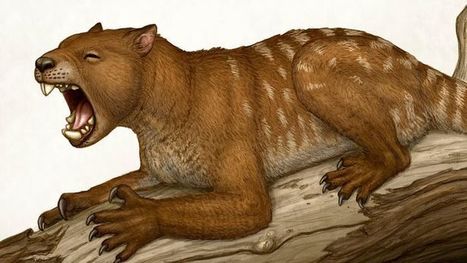
New fossil evidence paints a picture of an apex predator, as big as a lion, that terrorized ancient Australian forests. Australia is well-regarded as a place full of fauna that can kill you. Spiders, snakes, sharks, toads. But those modern-day nightmares pale in comparison to the terrifying "marsupial lion" that once stalked ancient Australia. Thylacoleo carnifex - the largest Australian marsupial carnivore ever existed some 45,000 years ago, weighed as much as a small lion and had a thumb-like digit it used to slash its prey. For the first time, paleontologists have been able to reconstruct the full skeleton of T. carnifex providing new evidence on how the creature moved, better understanding its feeding and hunting habits. The research, conducted by researchers at Flinders University in Australia and published in PLOS One on Dec. 12, 2018, built on the discovery of fossilized remains found in South Australia in 2007 -- and for the first time enabled analysis of a complete tail- and collarbones. By combining the recent discoveries with older remains, the research team could compare the skeleton to present-day marsupials, painting a picture about its true nature.
Via Neelima Sinha
|
|
Scooped by
Dr. Stefan Gruenwald
October 25, 2018 3:05 PM
|
The sixth mass extinction is underway, this time caused by humans. A team of researchers have calculated that species are dying out so quickly that nature's built-in defense mechanism, evolution, cannot keep up. If current conservation efforts are not improved, so many mammal species will become extinct during the next five decades that nature will need 3-5 million years to recover to current biodiversity levels. And that's a best-case scenario. We humans are exterminating animal and plant species so quickly that nature's built-in defense mechanism, evolution, cannot keep up. An Aarhus-led research team calculated that if current conservation efforts are not improved, so many mammal species will become extinct during the next five decades that nature will need 3-5 million years to recover. There have been five upheavals over the past 450 million years when the environment on our planet has changed so dramatically that the majority of Earth's plant and animal species became extinct. After each mass extinction, evolution has slowly filled in the gaps with new species. The sixth mass extinction is happening now, but this time the extinctions are not being caused by natural disasters; they are the work of humans. A team of researchers from Aarhus University and the University of Gothenburg has calculated that the extinctions are moving too rapidly for evolution to keep up. If mammals diversify at their normal rates, it will still take them 5-7 million years to restore biodiversity to its level before modern humans evolved, and 3-5 million years just to reach current biodiversity levels, according to the analysis, which was published recently in the scientific journal, PNAS. Some species are more distinct than others The researchers used their extensive database of mammals, which includes not only species that still exist, but also the hundreds of species that lived in the recent past and became extinct as Homo sapiens spread across the globe. This meant that the researchers could study the full impact of our species on other mammals. However, not all species have the same significance. Some extinct animals, such as the Australian leopard-like marsupial lion Thylacoleo, or the strange South American Macrauchenia (imagine a lama with an elephant trunk) were evolutionary distinct lineages and had only few close relatives. When these animals became extinct, they took whole branches of the evolutionary tree of life with them. We not only lost these species, we also lost the unique ecological functions and the millions of years of evolutionary history they represented. "Large mammals, or megafauna, such as giant sloths and saber-toothed tigers, which became extinct about 10,000 years ago, were highly evolutionarily distinct. Since they had few close relatives, their extinctions meant that entire branches of Earth's evolutionary tree were chopped off" says paleontologist Matt Davis from Aarhus University, who led the study. And he adds: "There are hundreds of species of shrew, so they can weather a few extinctions. There were only four species of saber-toothed tiger; they all went extinct."
|
|
Scooped by
Dr. Stefan Gruenwald
September 24, 2018 5:32 PM
|
Mammals are unique in many ways. We're warm-blooded and agile in comparison with our reptilian relatives.
But a new study, funded by the National Science Foundation (NSF) and led by Harvard University researchers Stephanie Pierce and Katrina Jones, suggests we're unique in one more way -- the makeup of our spines. The researchers describe their finding in a paper published this week in the journal Science.
"The spine is basically like a series of beads on a string, with each bead representing a single bone -- a vertebra," said Pierce, curator of vertebrate paleontology at Harvard. "In most four-legged animals, like lizards, the vertebrae all look and function the same.
"But mammal backbones are different. The different sections or regions of the spine -- like the neck, thorax and lower back -- take on very different shapes. They function separately and so can adapt to different ways of life, like running, flying, digging and climbing."
While mammal backbones are specialized, the regions that underlie them were believed to be ancient, dating back to the earliest land animals.
Mammals made the most of the existing anatomical blueprint, or so scientists believed. However, the new study is challenging this idea by looking into the fossil record.
"There are no animals alive today that record the transition from a 'lizard-like' ancestor to a mammal," said Jones, lead author of the study. "To do that, we have to dive into the fossil record and look at the extinct forerunners of mammals, the non-mammalian synapsids."
These ancient ancestors hold the key to understanding the origin of mammal-specific characteristics, including the spine.
|
|
Scooped by
Dr. Stefan Gruenwald
August 29, 2018 1:08 PM
|
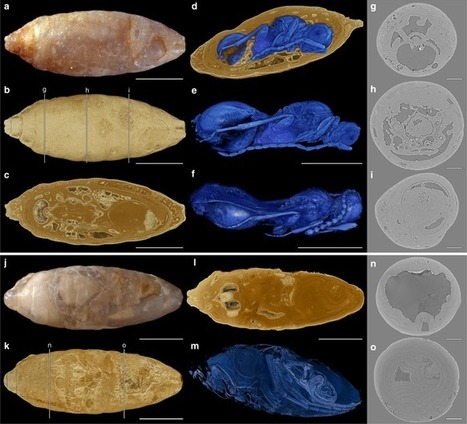
About 50% of all animal species are considered parasites. The linkage of species diversity to a parasitic lifestyle is especially evident in the insect order Hymenoptera. However, fossil evidence for host–parasitoid interactions is extremely rare, rendering hypotheses on the evolution of parasitism assumptive. Here, using high-throughput synchrotron X-ray microtomography, scientists examine 1510 phosphatized fly pupae from the Paleogene of France and identify 55 parasitation events by four wasp species, providing morphological and ecological data. All species developed as solitary endoparasitoids inside their hosts and exhibit different morphological adaptations for exploiting the same hosts in one habitat. Our results allow systematic and ecological placement of four distinct endoparasitoids in the Paleogene and highlight the need to investigate ecological data preserved in the fossil record.
|
|
Scooped by
Dr. Stefan Gruenwald
August 28, 2018 7:27 PM
|
New research has narrowed down the date of the most severe mass extinction known to have occurred on Earth. Additionally, the study has determined the rate at which extinctions occurred. It’s well known that Earth’s most severe mass extinction occurred about 250 million years ago. What’s not well known is the specific time when the extinctions occurred. A team of researchers from North America and China have published data which explicitly provides the date and rate of extinction. "This is the first paper to provide rates of such massive extinction," says Dr. Charles Henderson, professor in the Department of Geoscience at the University of Calgary and co-author of the paper: Calibrating the end-Permian mass extinction. "Our information narrows down the possibilities of what triggered the massive extinction and any potential kill mechanism must coincide with this time." About 95 percent of marine life and 70 percent of terrestrial life became extinct during what is known as the end-Permian, a time when continents were all one land mass called Pangea. The environment ranged from desert to lush forest. Four-limbed vertebrates were becoming diverse and among them were primitive amphibians, reptiles and a group that would, one day, include mammals. Through the analysis of various types of dating techniques on well-preserved sedimentary sections from South China to Tibet, researchers determined that the mass extinction peaked about 252.28 million years ago and lasted less than 200,000 years, with most of the extinction lasting about 20,000 years. "These dates are important as it will allow us to understand the physical and biological changes that took place," says Henderson. "We do not discuss modern climate change, but obviously global warming is a biodiversity concern today. The geologic record tells us that ‘change’ happens all the time, and from this great extinction life did recover." There is ongoing debate over whether the death of both marine and terrestrial life coincided, as well as over kill mechanisms, which may include rapid global warming, hypercapnia (a condition where there is too much CO2 in the blood stream), continental aridity and massive wildfires. The conclusion of this study says extinctions of most marine and terrestrial life took place at the same time. And the trigger, as suggested by these researchers and others, was the massive release of CO2 from volcanic flows known as the Siberian traps, now found in northern Russia.
|