Your new post is loading...
Commission des Forêts d’Afrique Centrale Une dimension régionale pour la conservation, la gestion durable et concertée des écosystèmes forestiers d'Afrique Centrale...
D’après un rapport tout juste publié, 27 % de la surface des forêts tropicales humides non perturbées du bassin du Congo observée en 2020 disparaîtront d’ici 2050 si la déforestation et la dégradation des forêts se poursuivent au même rythme. En janvier 2020, on estimait qu’il y avait 200 millions d’hectares de forêts sempervirentes et semi-décidues en Afrique […]
Le Cirad consacre sa seconde série de podcasts à la biodiversité. Pour ce premier épisode, rendez-vous en Amazonie, un trésor de biodiversité. Au Brésil, des femmes et des hommes vivent de cette richesse, à travers l’exploitation du bois.
Protéger les primates contre la déforestation permettrait de lutter efficacement contre le changement climatique et de préserver les espèces, explique la primatologue Sabrina Krief dans ce nouvel épisode du podcast « Chaleur humaine ».
La Convention sur le commerce international des espèces de faune et de flore sauvages menacées d’extinction (Cites) travaille à instaurer des transactions « légales, durables et traçables ».
Deforestation is pushing the Amazon rainforest dangerously close to its tipping point, and the effects could soon be felt across the globe. A new report from the World Wildlife Fund (WWF), called the Living Amazon Report, warns that threats to the Amazon have worsened in recent years, and could result in the disappearance of the […]
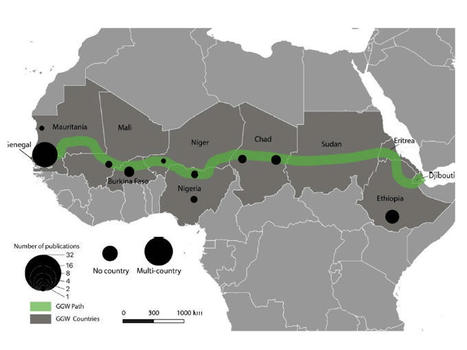
Grâce aux activité menées dans le cadre de l’initiative Grande muraille verte, les écosystèmes aux abords de la commune urbaine de Kollo reprennent vie.
La restauration des forêts constitue un élément clé de la lutte contre les perturbations climatiques. Le réseau de recherche mondial, le Tree Diversity Network, tente d’y contribuer efficacement.
Ministres et ambassadeurs adoptent la Déclaration de Wuhan Ministres et ambassadeurs adoptent la Déclaration de Wuhan 6 novembre 2022 wuhan_declaration.png Aujourd’hui, les ministres et ambassadeurs des Parties contractantes à la Convention sur les zones humides ont adopté la Déclaration de Wuhan.
Alors que l’île possède une biodiversité unique au monde, le président malgache veut y introduire girafes, éléphants et zèbres pour attirer les touristes.
We are not going to make it to 1.5°C, or even 2°C. The Paris Agreement goal of limiting global warming to below these target numbers is becoming a distant dream, with current pledges leading us into a future that is on average 2.5°C hotter than pre-industrial levels by the turn of the century. This means more […]
Au niveau des feux, l’année 2022 se situe dans la fourchette historique et n’est pas « sans précédent », contrairement à l’impression relayée par de nombreux médias.
Mangrove forests store high amounts of carbon, protect communities from storms, and support fisheries. Mangroves exist in complex social-ecological systems, hence identifying socioeconomic conditions associated with decreasing losses and increasing gains remains challenging albeit important. The impact of national governance and conservation policies on mangrove conservation at the landscape-scale has not been assessed to date, nor have the interactions with local economic pressures and biophysical drivers. Here, we assess the relationship between socioeconomic and biophysical variables and mangrove change across coastal geomorphic units worldwide from 1996 to 2016. Globally, we find that drivers of loss can also be drivers of gain, and that drivers have changed over 20 years. The association with economic growth appears to have reversed, shifting from negatively impacting mangroves in the first decade to enabling mangrove expansion in the second decade. Importantly, we find that community forestry is promoting mangrove expansion, whereas conversion to agriculture and aquaculture, often occurring in protected areas, results in high loss. Sustainable development, community forestry, and co-management of protected areas are promising strategies to reverse mangrove losses, increasing the capacity of mangroves to support human-livelihoods and combat climate change. Mangrove forests protect communities from storms and support fisheries. Here, the authors show that the association with economic growth has shifted from negatively impacting mangroves to enabling mangrove expansion, and that community forestry is promoting mangrove expansion.
|
Sharm El-Sheik, Egypt, 18 November 2022: Tropical forests are a valuable carbon reservoir
FAO forestry newsroom send by email How forest countries are reducing emissions through REDD+ 16 November 2022, Sharm El-Sheikh, Egypt – A new report released today by the Food and Agriculture Organization of the United Nations (FAO) provides an update on the progress forest countries have made in reducing emissions from deforestation and forest degradation (REDD+). Launched at a side event at the Sharm El-Sheikh Climate Change Conference (COP27), From reference levels to results: REDD+ reporting by countries aims to take stock of progress and help countries navigate the process of measurement, reporting and verification under the United Nations Framework Convention on Climate Change (UNFCCC). The report presents the latest figures on the growing number of countries submitting forest reference levels and REDD+ results to UNFCCC, the reductions in carbon emissions achieved and the results-based finance disbursed.
Mangroves support a significant amount of biodiversity and their soils can capture a great deal of carbon.
It’s exactly one month until the opening of the 19th World Wildlife Conference and the CITES Secretariat has published its final recommendations on the 52
Pour lutter contre le trafic illégal, le gouvernement brésilien souhaite empêcher le commerce de ce bois utilisé pour la fabrication des archets.
Environmental science and conservation news...
This month EFIMED is organising a series of four webinars to explore the four main themes of the Mediterranean Forest Research Agenda 2030 (MFRA 2030) and get ready for the EFI Mediterranean Network Forum 2022. In the first webinar on 3 November, over 50 participants enjoyed a highly interactive session discussing the topics of ecosystem services and […]
This policy brief is a result of a collaboration between the Food and Agriculture Organization of the United Nations (FAO) and EcoHealth Alliance. The aim of the brief is to suggest ways, using the example of forest ecosystems, in which natural resource management sector can play a more active role in reducing risk and/or mitigating the impact of emerging infectious diseases (EIDs). This would reflect and facilitate a more holistic and upstream One Health approach as defined by the One Health High-Level Expert Panel, an advisory and scientific body to the Quadripartite Alliance for One Health (FAO-WOAH-WHO-UNEP).
"Des chercheurs ont co-écrit cet article intitulé “Accélérer la mobilisation de l’expertise scientifique africaine et internationale internationale pour dynamiser la recherche interdisciplinaire en vue de la réussite de la Grande Muraille Verte du Sahel à l’horizon 2030”
L’Union européenne prépare une réglementation drastique sur les cultures cacaoyères qui va impacter le Ghana et la Côte d’Ivoire, parmi les premiers producteurs mondiaux.
The Mediterranean Basin is a biogeography shaped by fires for millions of years. For the restoration of burned areas in the Mediterranean Basin, therefore, planning should increase resistance and resilience of plant communities to fire by considering adaptation strategies of plant species to fire. In this study, following the fire of 2021, which affected approximately […]
|


 Scoop.it!