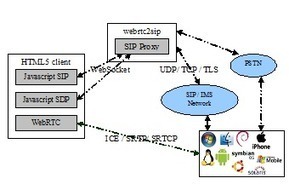
Lately there has been a lot of buzz around HTML5 Web Sockets, which defines a full-duplex communication channel that operates through a single socket over the Web. HTML5 Web Sockets is not just another incremental enhancement to conventional HTTP communications; it represents a colossal advance, especially for real-time, event-driven web applications.
HTML5 Web Sockets provides such a dramatic improvement from the old, convoluted "hacks" that are used to simulate a full-duplex connection in a browser that it prompted Google's Ian Hickson—the HTML5 specification lead—to say:
"Reducing kilobytes of data to 2 bytes…and reducing latency from 150ms to 50ms is far more than marginal. In fact, these two factors alone are enough to make Web Sockets seriously interesting to Google."
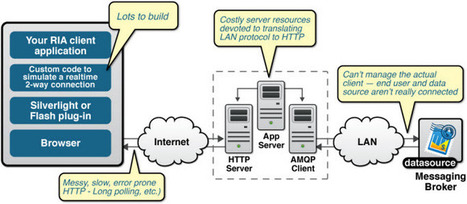
Let's take a look at how HTML5 Web Sockets can offer such an incredibly dramatic reduction of unnecessary network traffic and latency by comparing it to conventional solutions.
Via
Nicolas Weil


 Your new post is loading...


 Scoop.it!