21st Century Learning and Teaching
792.5K views | +17 today
21st Century Learning and Teaching
Related articles to 21st Century Learning and Teaching as also tools...
Curated by Gust MEES
Your new post is loading...

Popular Tags

Current selected tag: 'Education-Evolution'. Clear
Scooped by Gust MEES
March 1, 2018 12:50 PM
Scoop.it!

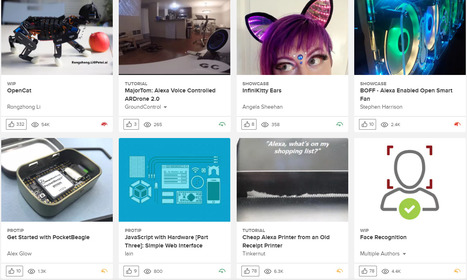
Hackster.io - The community dedicated to learning hardware | #Maker #MakerED #MakerSpaces #PracTICE #LEARNingByDoing #Creativity

Hackster.io - The community dedicated to learning hardware | #Maker #MakerED #MakerSpaces #PracTICE #LEARNingByDoing #Creativity | 21st Century Learning and Teaching | Scoop.it

Learn to design, create, and program electronics
11,116 open-source project tutorials shared by 408,637 developers


Learn more / En savoir plus / Mehr erfahren:


https://gustmees.wordpress.com/?s=maker


https://www.scoop.it/t/21st-century-learning-and-teaching/?&tag=makerspace


Gust MEES's insight:

Learn to design, create, and program electronics
11,116 open-source project tutorials shared by 408,637 developers


Learn more / En savoir plus / Mehr erfahren:


https://gustmees.wordpress.com/?s=maker


https://www.scoop.it/t/21st-century-learning-and-teaching/?&tag=makerspace


No comment yet.
Scooped by Gust MEES
March 1, 2018 11:03 AM
Scoop.it!

La litéracie en curation de données | #SocialMedia #IntelligenceCollective

La litéracie en curation de données | #SocialMedia #IntelligenceCollective | 21st Century Learning and Teaching | Scoop.it

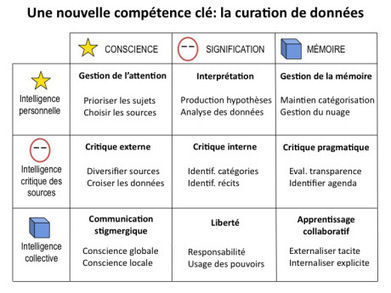
FIGURE 1 J'ai montré dans un post précédent, l'importance contemporaine de la curation collaborative de données.  Les compétences dans ce domaine sont au coeur de la nouvelle litéracie algorithmique.


La figure 1 présente ces compétences de manière systématique et, ce faisant, elle met en ordre les savoir-faire intellectuels et pratiques tout comme les « savoir-être » éthiques…


Learn more / En savoir plus / Mehr erfahren:


https://www.scoop.it/t/21st-century-learning-and-teaching/?&tag=Curation


https://www.scoop.it/t/21st-century-learning-and-teaching/?&tag=Intelligence+collective


Gust MEES's insight:

FIGURE 1 J'ai montré dans un post précédent, l'importance contemporaine de la curation collaborative de données.  Les compétences dans ce domaine sont au coeur de la nouvelle litéracie algorithmique.


La figure 1 présente ces compétences de manière systématique et, ce faisant, elle met en ordre les savoir-faire intellectuels et pratiques tout comme les « savoir-être » éthiques…


Learn more / En savoir plus / Mehr erfahren:


https://www.scoop.it/t/21st-century-learning-and-teaching/?&tag=Curation


https://www.scoop.it/t/21st-century-learning-and-teaching/?&tag=Intelligence+collective


No comment yet.
Scooped by Gust MEES
March 1, 2018 10:03 AM
Scoop.it!

Exploring Curation as a core competency in digital and media literacy education | #SocialMedia #PLN #PKM #LEARNing2LEARN

Exploring Curation as a core competency in digital and media literacy education | #SocialMedia #PLN #PKM #LEARNing2LEARN | 21st Century Learning and Teaching | Scoop.it

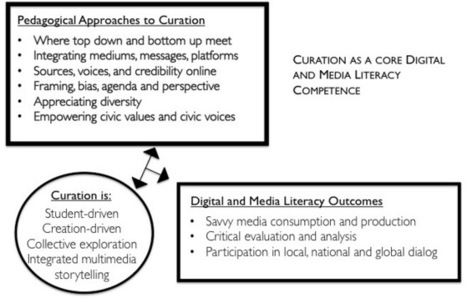
In today’s hypermedia landscape, youth and young adults are increasingly using social media platforms, online aggregators and mobile applications for daily information use. Communication educators, armed with a host of free, easy-to-use online tools, have the ability to create dynamic approaches to teaching and learning about information and communication flow online. In this paper we explore the concept of curation as a student- and creation-driven pedagogical tool to enhance digital and media literacy education.


We present a theoretical justification for curation and present six key ways that curation can be used to teach about critical thinking, analysis and expression online. We utilize a case study of the digital curation platform Storify to explore how curation works in the classroom, and present a framework that integrates curation pedagogy into core media literacy education learning outcomes.


Learn more / En savoir plus / Mehr erfahren:


https://gustmees.wordpress.com/?s=curation


https://globaleducationandsocialmedia.wordpress.com/2014/01/19/pkm-personal-professional-knowledge-management/


Gust MEES's insight:

In today’s hypermedia landscape, youth and young adults are increasingly using social media platforms, online aggregators and mobile applications for daily information use. Communication educators, armed with a host of free, easy-to-use online tools, have the ability to create dynamic approaches to teaching and learning about information and communication flow online. In this paper we explore the concept of curation as a student- and creation-driven pedagogical tool to enhance digital and media literacy education.


We present a theoretical justification for curation and present six key ways that curation can be used to teach about critical thinking, analysis and expression online. We utilize a case study of the digital curation platform Storify to explore how curation works in the classroom, and present a framework that integrates curation pedagogy into core media literacy education learning outcomes.


Learn more / En savoir plus / Mehr erfahren:


https://gustmees.wordpress.com/?s=curation


https://globaleducationandsocialmedia.wordpress.com/2014/01/19/pkm-personal-professional-knowledge-management/


No comment yet.
Scooped by Gust MEES
February 26, 2018 10:20 AM
Scoop.it!

The 5th ‘C’ of 21st Century Skills? Try Computational Thinking (Not Coding) | #ModernEDU #ModernLEARNing #ModernSociety #STEM

The 5th ‘C’ of 21st Century Skills? Try Computational Thinking (Not Coding) | #ModernEDU #ModernLEARNing #ModernSociety #STEM | 21st Century Learning and Teaching | Scoop.it
There is growing recognition in the education systems around the globe that being able to problem-solve computationally—that is, to think logically and algorithmically, and use computational tools for creating artifacts including models and data visualizations—is rapidly becoming a prerequisite competency for all fields.

In 2012, the U.K. national curriculum began introducing computer science (CS) to all students. Singapore, as part of its “Smart Nation” initiative, has labeled developing CT as a “national capability.” Other countries, from Finland to South Korea, China to Australia and New Zealand, have launched large-scale efforts to introduce CT in schools, as either a part of new CS curricula or integrated into existing subjects. Here in the U.S., former President Barack Obama called on all K-12 students to be equipped with CT skills as part of an “Computer Science for All” initiative in 2016. Most emergent efforts in the US involving CT are currently part of CS curricula, although CT is increasingly seeing integration into STEM (especially science) learning.


Learn more / En savoir plus / Mehr erfahren:


https://www.scoop.it/t/21st-century-learning-and-teaching/?&tag=Computational+Thinking


Sharon Berman's curator insight, February 26, 2018 4:01 PM
Interesting perspective - great to see that CT can be associated with learning areas other than STEM.
Vivalist's curator insight, March 1, 2018 10:21 AM
Computational Thinking (CT) is "the thought processes involved in understanding a problem and expressing its solutions in such a way that a computer can potentially carry out the solution."

Toys such as the recently Kickstarted Turing Tumble do just this: introduce kids to the notion of algorithms.

It's a very powerful field of studies for kids and grown-ups alike, because it helps understanding what's behind the curtains when it comes to computation.

It teaches how to divide a big problem into bunch of smaller ones that are easier to solve - and this is a solid skill to own.
Angela's curator insight, July 12, 2019 10:20 AM
Multiple representations of computational thinking may encourage those with math anxiety to make  connections between the processes to how they see and solve the world. Not one right way to see and solve  even though there may be one right answer. 
Scooped by Gust MEES
February 23, 2018 12:25 PM
Scoop.it!

Arduino Tutorial - Touch Screen TFT LCD Tutorial | #Coding #Maker #MakerED #MakerSpaces #LEARNingByDoing #PracTICE

Arduino Tutorial - Touch Screen TFT LCD Tutorial | #Coding #Maker #MakerED #MakerSpaces #LEARNingByDoing #PracTICE | 21st Century Learning and Teaching | Scoop.it

In this tutorial we will learn how to programming the TFT LCD Touch Screen. I used 2.8" TFT Touch Display ILI9325 Module and Arduino Uno for this tutorial.


The topics we will view in this tutorial, Required Libraries, Add Text, Text Color, Font Size, Print Text, Create Button, Button Click, Add Frame, Draw Rectangle and Background Color. 


Learn more / En savoir plus / Mehr erfahren:


https://www.scoop.it/t/21st-century-learning-and-teaching/?&tag=ARDUINO


https://www.scoop.it/t/21st-century-learning-and-teaching/?&tag=TFT+Display+with+buttons


Gust MEES's insight:

In this tutorial we will learn how to programming the TFT LCD Touch Screen. I used 2.8" TFT Touch Display ILI9325 Module and Arduino Uno for this tutorial.


The topics we will view in this tutorial, Required Libraries, Add Text, Text Color, Font Size, Print Text, Create Button, Button Click, Add Frame, Draw Rectangle and Background Color. 


Learn more / En savoir plus / Mehr erfahren:


https://www.scoop.it/t/21st-century-learning-and-teaching/?&tag=ARDUINO


https://www.scoop.it/t/21st-century-learning-and-teaching/?&tag=TFT+Display+with+buttons


No comment yet.
Scooped by Gust MEES
February 22, 2018 8:25 AM
Scoop.it!

javl/image2cpp | image2cpp is a simple tool to change images into byte arrays to use with (monochrome) displays suchs as OLEDs | #Coding #Arduino #Maker #MakerED #MakerSpaces

javl/image2cpp | image2cpp is a simple tool to change images into byte arrays to use with (monochrome) displays suchs as OLEDs | #Coding #Arduino #Maker #MakerED #MakerSpaces | 21st Century Learning and Teaching | Scoop.it

image2cpp is a simple tool to change images into byte arrays to use with (monochrome) displays suchs as OLEDs, like those from Adafruit or Sparkfun.


While searching for a way to generate these arrays, I mostly found links to a piece of Windows software. Both the flakey results and the hassle of having to boot a virtual machine just to convert an image lead to me writing this pure html + javascript solution.

Alternatively you can also enter a byte array as input to turn it back into an image. This might be useful for debugging, or when you want to write the byte array yourself. I don't know.

Running the tool

You don't need any special dependencies / internet connection; all the necessary parts sit in a single .html file. So just open this index.html page in a (recent) browser to run the tool.


Or you can use the online version at:  


http://javl.github.io/image2cpp/


Learn more / En savoir plus / Mehr erfahren:


https://www.scoop.it/t/21st-century-learning-and-teaching/?&tag=ARDUINO


BTW: Above shown image is my "MAUSI", which was the "Mascot" for my Cyber-Security courses in Luxembourg EDUcation in 2003-2007. Those courses were mandatory for students up from 12 years old (7èmes).


Learn more about Cyber-Security in Luxembourg (Europe):


https://gustmees.wordpress.com/2017/11/22/luxembourg-and-cyber-security-how-did-it-start/


Gust MEES's insight:

image2cpp is a simple tool to change images into byte arrays to use with (monochrome) displays suchs as OLEDs, like those from Adafruit or Sparkfun.


While searching for a way to generate these arrays, I mostly found links to a piece of Windows software. Both the flakey results and the hassle of having to boot a virtual machine just to convert an image lead to me writing this pure html + javascript solution.

Alternatively you can also enter a byte array as input to turn it back into an image. This might be useful for debugging, or when you want to write the byte array yourself. I don't know.

Running the tool

You don't need any special dependencies / internet connection; all the necessary parts sit in a single .html file. So just open this index.html page in a (recent) browser to run the tool.


Or you can use the online version at:  


http://javl.github.io/image2cpp/


Learn more / En savoir plus / Mehr erfahren:


https://www.scoop.it/t/21st-century-learning-and-teaching/?&tag=ARDUINO


BTW: Above shown image is my "MAUSI", which was the "Mascot" for my Cyber-Security courses in Luxembourg EDUcation in 2003-2007. Those courses were mandatory for students up from 12 years old (7èmes).


Learn more about Cyber-Security in Luxembourg (Europe):


https://gustmees.wordpress.com/2017/11/22/luxembourg-and-cyber-security-how-did-it-start/


No comment yet.
Scooped by Gust MEES
February 20, 2018 7:07 PM
Scoop.it!

What's the difference between adaptive and responsive web design? | #MobileDesign #Desktopdesign #ContentMarketing #ContentStrategy #ContentManagement #Press #Journalism 

What's the difference between adaptive and responsive web design? | #MobileDesign #Desktopdesign #ContentMarketing #ContentStrategy #ContentManagement #Press #Journalism  | 21st Century Learning and Teaching | Scoop.it

Many people use the terms Responsive Design and Adaptive Design interchangeably, but creating a distinction between them does help clarify two different approaches to the modern challenge of designing web pages that work on small and large screens.

In the world of web design, the only thing harder than keeping up with the ever-evolving standards in HTML, CSS, and other technologies, is keeping up with the vocabulary. This article is about helping you understand what responsive and adaptive design mean, and how these approaches differ.


Learn more / En savoir plus / Mehr erfahren:


https://www.scoop.it/t/21st-century-learning-and-teaching/?&tag=Web-Design


https://www.scoop.it/t/21st-century-learning-and-teaching/?&tag=press


Gust MEES's insight:

Many people use the terms Responsive Design and Adaptive Design interchangeably, but creating a distinction between them does help clarify two different approaches to the modern challenge of designing web pages that work on small and large screens.

In the world of web design, the only thing harder than keeping up with the ever-evolving standards in HTML, CSS, and other technologies, is keeping up with the vocabulary. This article is about helping you understand what responsive and adaptive design mean, and how these approaches differ.


Learn more / En savoir plus / Mehr erfahren:


https://www.scoop.it/t/21st-century-learning-and-teaching/?&tag=Web-Design


https://www.scoop.it/t/21st-century-learning-and-teaching/?&tag=press


Graphics Design's curator insight, February 21, 2018 1:24 AM

Kool Design Maker is Best Graphic Designing and Printing Company in the USA Now KDM Provides you Custom Door Hanger Design & Printing in the USA You not just get the plan of Custom Door Hanger yet additionally you can Print your most loved outline at Kool design maker.

Scooped by Gust MEES
February 19, 2018 9:21 AM
Scoop.it!

These AI bots are solving customer problems - Video | #ArtificialIntelligence #CustomerCare 

These AI bots are solving customer problems - Video | #ArtificialIntelligence #CustomerCare  | 21st Century Learning and Teaching | Scoop.it

Robert Locascio, founder and CEO of LivePerson, talks about how artificial intelligence is improving the customer experience.


Learn more / En savoir plus / Mehr erfahren:


https://www.scoop.it/t/21st-century-learning-and-teaching/?&tag=AI


https://www.scoop.it/t/21st-century-innovative-technologies-and-developments/?&tag=AI


Gust MEES's insight:

Robert Locascio, founder and CEO of LivePerson, talks about how artificial intelligence is improving the customer experience.


Learn more / En savoir plus / Mehr erfahren:


https://www.scoop.it/t/21st-century-learning-and-teaching/?&tag=AI


https://www.scoop.it/t/21st-century-innovative-technologies-and-developments/?&tag=AI


No comment yet.
Scooped by Gust MEES
February 19, 2018 8:49 AM
Scoop.it!

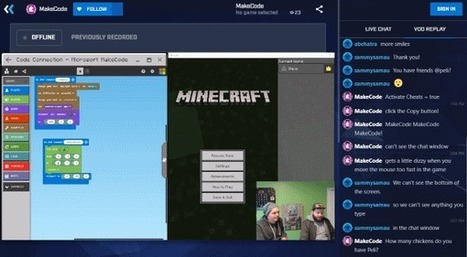
Microsoft MakeCode is a free, open-source Block and JavaScript learn-to-code editor | #Coding #Maker #MakerED #MakerSpaces 

Microsoft MakeCode is a free, open-source Block and JavaScript learn-to-code editor | #Coding #Maker #MakerED #MakerSpaces  | 21st Century Learning and Teaching | Scoop.it
Microsoft MakeCode is a free, open-source Block and JavaScript learn-to-code editor that promotes a more inclusive approach to computing education.


Learn more / En savoir plus / Mehr erfahren:


https://www.scoop.it/t/21st-century-learning-and-teaching/?&tag=Coding


https://www.scoop.it/t/21st-century-learning-and-teaching/?&tag=makerspace


Gust MEES's insight:
Microsoft MakeCode is a free, open-source Block and JavaScript learn-to-code editor that promotes a more inclusive approach to computing education.


Learn more / En savoir plus / Mehr erfahren:


https://www.scoop.it/t/21st-century-learning-and-teaching/?&tag=Coding


https://www.scoop.it/t/21st-century-learning-and-teaching/?&tag=makerspace


Graphics Design's curator insight, February 20, 2018 2:27 AM

Just Kool Design Maker can give your custom letterhead Design a little promoting and publicizing touch, so you can get a decent presentation and consideration from your business clients.

Graphics Design's curator insight, February 20, 2018 2:36 AM

Just Kool Design Maker can give your custom letterhead Design a little promoting and publicizing touch, so you can get a decent presentation and consideration from your business clients.

Scooped by Gust MEES
February 18, 2018 11:53 AM
Scoop.it!

RegTech 2.0 | Report in PDF format

RegTech 2.0


During the first phase of RegTech, startups focussed more on the technology to drive compliance use cases and were less conversant with the nuances of the regulations in a holistic manner. This lack of understanding of regulatory complexities by
RegTech startups proved a significant challenge for banks wishing to work with them. RegTech firms in RegTech 2.0 are expected to collaborate more, with banks, regulators and domain experts, to
demonstrate their offerings’ success far more quickly. 


Also, as offerings in the next phase evolve from niche propositions to broader compliance propositions, they are in far more need of active support from regulators and industry consultants.
The market of regulators and central banks around the world are also struggling with the data deluge and supervision of new entrants in the banking industry.


The entire lifecycle of policy making, enforcement and supervision is ripe for disruption with the use of advanced technology. Startups would need to be patient in handling the bureaucracy of state-run organizations and even longer sales cycles. Startups
would also need to improve their knowledge of regulators’ underlying objectives and demonstrate unambiguously how their solutions can help the regulators do a better job than the status quo.


Equipped with past learnings and strong support from regulators and governments across the world, RegTech 2.0 is at an inflexion point for a new era of efficient and effective compliance powered by technology.


Learn more / En savoir plus / Mehr erfahren:


https://www.scoop.it/t/21st-century-learning-and-teaching/?&tag=blockchain


https://www.scoop.it/t/21st-century-learning-and-teaching/?&tag=AI


https://www.scoop.it/t/luxembourg-europe/?&tag=FinTech


https://www.scoop.it/t/luxembourg-europe/?&tag=LHoFT


Gust MEES's insight:

RegTech 2.0


During the first phase of RegTech, startups focussed more on the technology to drive compliance use cases and were less conversant with the nuances of the regulations in a holistic manner. This lack of understanding of regulatory complexities by
RegTech startups proved a significant challenge for banks wishing to work with them. RegTech firms in RegTech 2.0 are expected to collaborate more, with banks, regulators and domain experts, to
demonstrate their offerings’ success far more quickly. 


Also, as offerings in the next phase evolve from niche propositions to broader compliance propositions, they are in far more need of active support from regulators and industry consultants.
The market of regulators and central banks around the world are also struggling with the data deluge and supervision of new entrants in the banking industry.


The entire lifecycle of policy making, enforcement and supervision is ripe for disruption with the use of advanced technology. Startups would need to be patient in handling the bureaucracy of state-run organizations and even longer sales cycles. Startups
would also need to improve their knowledge of regulators’ underlying objectives and demonstrate unambiguously how their solutions can help the regulators do a better job than the status quo.


Equipped with past learnings and strong support from regulators and governments across the world, RegTech 2.0 is at an inflexion point for a new era of efficient and effective compliance powered by technology.


Learn more / En savoir plus / Mehr erfahren:


https://www.scoop.it/t/21st-century-learning-and-teaching/?&tag=blockchain


https://www.scoop.it/t/21st-century-learning-and-teaching/?&tag=AI


https://www.scoop.it/t/luxembourg-europe/?&tag=FinTech


https://www.scoop.it/t/luxembourg-europe/?&tag=LHoFT


No comment yet.
Scooped by Gust MEES
February 18, 2018 6:51 AM
Scoop.it!

Big Data 2017: Top 100 Influencers and Brands | #Analytics 

Big Data 2017: Top 100 Influencers and Brands | #Analytics  | 21st Century Learning and Teaching | Scoop.it

Big data analytics is the process of examining large and varied data sets to uncover hidden patterns, unknown correlations, market trends, customer preferences and other useful information that can help organizations make more-informed business decisions.


Big data can be analysed for insights that lead to better decisions and strategic business moves. The Big Data market is expected to grow to $66.79 Billion by 2021, with investment in analytics hardware, software, services and data scientists pouring in.

WHAT ARE THE INFLUENCERS SAYING?


Learn more / En savoir plus / Mehr erfahren:


https://www.scoop.it/t/21st-century-learning-and-teaching/?&tag=Big+Data...


Gust MEES's insight:

Big data analytics is the process of examining large and varied data sets to uncover hidden patterns, unknown correlations, market trends, customer preferences and other useful information that can help organizations make more-informed business decisions.


Big data can be analysed for insights that lead to better decisions and strategic business moves. The Big Data market is expected to grow to $66.79 Billion by 2021, with investment in analytics hardware, software, services and data scientists pouring in.

WHAT ARE THE INFLUENCERS SAYING?


Learn more / En savoir plus / Mehr erfahren:


https://www.scoop.it/t/21st-century-learning-and-teaching/?&tag=Big+Data...


No comment yet.
Scooped by Gust MEES
February 17, 2018 11:52 AM
Scoop.it!

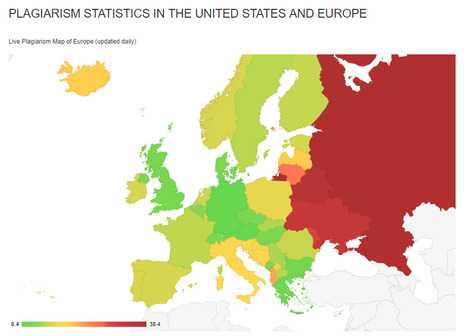
Plagiarism Statistics In The United States And Europe | #Copyright 

Plagiarism Statistics In The United States And Europe | #Copyright  | 21st Century Learning and Teaching | Scoop.it

Plagramme.com is the only plagiarism related statistical data provider for both European and American institutions. We also provide plagiarism statistics.


Learn more / En savoir plus / Mehr erfahren:


https://gustmees.wordpress.com/2013/02/22/what-you-should-know-about-copyright/


Gust MEES's insight:

Plagramme.com is the only plagiarism related statistical data provider for both European and American institutions. We also provide plagiarism statistics.


Learn more / En savoir plus / Mehr erfahren:


https://gustmees.wordpress.com/2013/02/22/what-you-should-know-about-copyright/


Aleksej Vasyliev's curator insight, February 19, 2018 3:13 AM
#plagiarism in #europe
Jorge Tuesta Figueroa's curator insight, February 20, 2018 5:43 PM

En el artículo adjunto, se dan a conocer las estadísticas de plagio en los Estados unidos y Europa. El plagio constituye un vicio que atenta contra los derechos de autor, específicamente contra la creatividad y originalidad que plasma el individuo a quien le corresponde gozar de los beneficios y utilidades como recompensa a su esfuerzo personal. En el campo de la investigación académica, existe mayor exigencia de ser estrictos con la originalidad de la investigación resultante. De esta manera, será mas relevante el aporte que se brinda a la disciplina correspondiente. Estamos de acuerdo con que esta exigencia se dé al nivel de la investigación universitaria, hoy las universidades peruanas están siendo exigentes con este requisito, precisamente para evitar el plagio. Esto se condice con las aptitudes que debe tener todo estudiante graduado en una Universidad, cuyo trabajo de investigación debe reflejar no solo lo aprendido durante toda la carrera universitaria, sino la aplicación  de estos conocimientos con un carácter innovador.

Scooped by Gust MEES
February 17, 2018 11:24 AM
Scoop.it!

The Top 25 Content Marketing Influencers For 2018 | #ContentCuration #ContentStrategy #Curation 

In 2018, content marketing will continue to influence marketing and business in a bigger, and more impactful way. 2017 saw us become remarkably more sophisticated in the types of content being offered and the level of depth and strategy being used.

As we move into 2018, factors such as more widespread adoption of marketing automation, the massive shift to video marketing, and the precipice of AI and real personalization in content marketing being behind us, the pace of change certainly isn’t going to slow down.

Which means the challenge for all of us is to keep up.

The push behind making content better – more engaging, richer content that resonates with the content consumer like it was made for them – is being driven by dozens of content marketing influencers who are sharing their insights, experience and knowledge of how to do content well – really well.

If you want to make your content marketing better in 2018, tap into the minds who have been cultivating this area of marketing for years.

Onalytica recently shared their list of the leading content marketing influencers (with me exclusively) for 2018.

Their data reveals what’s being discussed more than any other area of content and it also identifies the most influential voices, based on how much engagement they are driving, how much they are talking, number of followers, and how much they are referenced.

Yours truly is happy to be named on this list, and I have to say I’m excited to keep the conversations going with all of these great minds. Can’t wait to see what we’re doing by the end of this 12-month ride around the sun!


Learn more / En savoir plus / Mehr erfahren:


https://www.scoop.it/t/21st-century-learning-and-teaching/?&tag=press


https://gustmees.wordpress.com/2014/02/26/curation-the-21st-century-way-to-learn-on-its-own-pace-and-to-organize-the-learning/


Gust MEES's insight:

In 2018, content marketing will continue to influence marketing and business in a bigger, and more impactful way. 2017 saw us become remarkably more sophisticated in the types of content being offered and the level of depth and strategy being used.

As we move into 2018, factors such as more widespread adoption of marketing automation, the massive shift to video marketing, and the precipice of AI and real personalization in content marketing being behind us, the pace of change certainly isn’t going to slow down.

Which means the challenge for all of us is to keep up.

The push behind making content better – more engaging, richer content that resonates with the content consumer like it was made for them – is being driven by dozens of content marketing influencers who are sharing their insights, experience and knowledge of how to do content well – really well.

If you want to make your content marketing better in 2018, tap into the minds who have been cultivating this area of marketing for years.

Onalytica recently shared their list of the leading content marketing influencers (with me exclusively) for 2018.

Their data reveals what’s being discussed more than any other area of content and it also identifies the most influential voices, based on how much engagement they are driving, how much they are talking, number of followers, and how much they are referenced.

Yours truly is happy to be named on this list, and I have to say I’m excited to keep the conversations going with all of these great minds. Can’t wait to see what we’re doing by the end of this 12-month ride around the sun!


Learn more / En savoir plus / Mehr erfahren:


https://www.scoop.it/t/21st-century-learning-and-teaching/?&tag=press


https://gustmees.wordpress.com/2014/02/26/curation-the-21st-century-way-to-learn-on-its-own-pace-and-to-organize-the-learning/


No comment yet.
Scooped by Gust MEES
March 1, 2018 11:25 AM
Scoop.it!

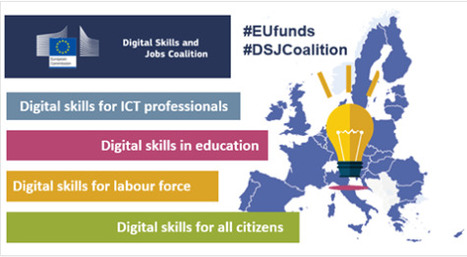
European Social Fund - European Commission | #DigitalSkills #DQ #ModernSociety 

European Social Fund - European Commission | #DigitalSkills #DQ #ModernSociety  | 21st Century Learning and Teaching | Scoop.it

European Commission 


The European Social Fund

Each year the ESF helps millions of Europeans improve their lives by learning new skills and finding better jobs. Learn about the ESF: what it does, how it helps and who benefits.


Learn more / En savoir plus / Mehr erfahren:


https://www.scoop.it/t/21st-century-learning-and-teaching/?&tag=EU


Gust MEES's insight:

European Commission 


The European Social Fund

Each year the ESF helps millions of Europeans improve their lives by learning new skills and finding better jobs. Learn about the ESF: what it does, how it helps and who benefits.


Learn more / En savoir plus / Mehr erfahren:


https://www.scoop.it/t/21st-century-learning-and-teaching/?&tag=EU


Pablo Peñalver's curator insight, March 1, 2018 6:39 PM

European Commission 


The European Social Fund

Each year the ESF helps millions of Europeans improve their lives by learning new skills and finding better jobs. Learn about the ESF: what it does, how it helps and who benefits.


Learn more / En savoir plus / Mehr erfahren:


https://www.scoop.it/t/21st-century-learning-and-teaching/?&tag=EU


Scooped by Gust MEES
March 1, 2018 10:40 AM
Scoop.it!

Content intelligence: a new step in the Scoop.it journey | #Curation #ContentCuration #ContentStrategy #ContentMarketing #BigData #AI

Content intelligence: a new step in the Scoop.it journey | #Curation #ContentCuration #ContentStrategy #ContentMarketing #BigData #AI | 21st Century Learning and Teaching | Scoop.it

Everyday, there are 4 million blog posts, 100,000 news articles and 500,000 hours of video published on the Internet. A wealth of information and knowledge. A wealth of information and knowledge that is lost for most companies, at least for the most part.

Lost?

Step 1: content curation
Not entirely. Thanks to content curation technology, the Web can now be filtered. With content curation tools and platforms such as Scoop.it (among others of course), we can use more or less sophisticated ways to filter this huge amount of content that is published daily to zoom in on what matters to us. Good content curation technology is essential. It saves people a huge amount of time looking for content to share for marketing purposes or information that helps their organization make better decisions. And perhaps as importantly, without these filters, we would just be able to search – not discover. We would still find answers to what we don’t know but we wouldn’t know what we don’t know.

But until recently, all the solutions we’ve offered to deal with information overload – ours included – have revolved around the same basic idea: more – or more sophisticated – filters.


Learn more / En savoir plus / Mehr erfahren:


https://www.scoop.it/t/21st-century-learning-and-teaching/?&tag=Curation


Gust MEES's insight:

Everyday, there are 4 million blog posts, 100,000 news articles and 500,000 hours of video published on the Internet. A wealth of information and knowledge. A wealth of information and knowledge that is lost for most companies, at least for the most part.

Lost?

Step 1: content curation
Not entirely. Thanks to content curation technology, the Web can now be filtered. With content curation tools and platforms such as Scoop.it (among others of course), we can use more or less sophisticated ways to filter this huge amount of content that is published daily to zoom in on what matters to us. Good content curation technology is essential. It saves people a huge amount of time looking for content to share for marketing purposes or information that helps their organization make better decisions. And perhaps as importantly, without these filters, we would just be able to search – not discover. We would still find answers to what we don’t know but we wouldn’t know what we don’t know.

But until recently, all the solutions we’ve offered to deal with information overload – ours included – have revolved around the same basic idea: more – or more sophisticated – filters.


Learn more / En savoir plus / Mehr erfahren:


https://www.scoop.it/t/21st-century-learning-and-teaching/?&tag=Curation


No comment yet.
Scooped by Gust MEES
March 1, 2018 9:19 AM
Scoop.it!

Considering Community: Communities of practice as vital tools for knowledge management | #PKM #LEARNing2LEARN

Considering Community: Communities of practice as vital tools for knowledge management | #PKM #LEARNing2LEARN | 21st Century Learning and Teaching | Scoop.it

Considering Community: Communities of practice as vital tools for knowledge management


Social in silico includes a series of occasional posts focused on community management tips and related information. I’m tagging these Considering Community and you can find all the posts in the series here. 

Previously on this blog, I’ve reflected on the different types of community that I’ve observed within science and specifically in the first cohort of the community engagement fellowship program that I run at AAAS. I identified four initial broad types of scientific communities – from professional associations to communities of practice. I’m currently delving deeper into communities of practice and am enjoying reading “Cultivating communities of practice” by Etienne Wenger, Richard McDermott and William M. Snyder.

Communities of practice and coffee – breaking down those silos one latte at a time…

What’s a community of practice – and what does it have to do with knowledge management?
A community of practice is a group of people who gather to learn more about a topic together and in doing so deepen their knowledge and expertise. The group may not have a specifically defined goal, but rather meet regularly to continually refine what they know about a subject. As such, communities of practice are key to knowledge management.

Wenger et al list 5 ways in which communities of practice are key to how we manage knowledge...


Learn more / En savoir plus / Mehr erfahren:


https://globaleducationandsocialmedia.wordpress.com/2014/01/19/pkm-personal-professional-knowledge-management/


Gust MEES's insight:

Considering Community: Communities of practice as vital tools for knowledge management


Social in silico includes a series of occasional posts focused on community management tips and related information. I’m tagging these Considering Community and you can find all the posts in the series here. 

Previously on this blog, I’ve reflected on the different types of community that I’ve observed within science and specifically in the first cohort of the community engagement fellowship program that I run at AAAS. I identified four initial broad types of scientific communities – from professional associations to communities of practice. I’m currently delving deeper into communities of practice and am enjoying reading “Cultivating communities of practice” by Etienne Wenger, Richard McDermott and William M. Snyder.

Communities of practice and coffee – breaking down those silos one latte at a time…

What’s a community of practice – and what does it have to do with knowledge management?
A community of practice is a group of people who gather to learn more about a topic together and in doing so deepen their knowledge and expertise. The group may not have a specifically defined goal, but rather meet regularly to continually refine what they know about a subject. As such, communities of practice are key to knowledge management.

Wenger et al list 5 ways in which communities of practice are key to how we manage knowledge...


Learn more / En savoir plus / Mehr erfahren:


https://globaleducationandsocialmedia.wordpress.com/2014/01/19/pkm-personal-professional-knowledge-management/


No comment yet.
Scooped by Gust MEES
February 24, 2018 8:27 AM
Scoop.it!

7 skills your child needs to survive the changing world of work | #ModernEDU #ModernLEARNing

7 skills your child needs to survive the changing world of work | #ModernEDU #ModernLEARNing | 21st Century Learning and Teaching | Scoop.it

Education may be the passport to the future, but for all the good teaching out there, it would seem that schools are failing to impart some of the most important life skills, according to one educational expert.

Dr. Tony Wagner, co-director of Harvard's Change Leadership Group, argues that today’s school children are facing a “global achievement gap”, which is the gap between what even the best schools are teaching and the skills young people need to learn.

This has been exacerbated by two colliding trends: firstly, the global shift from an industrial economy to a knowledge economy, and secondly, the way in which today’s school children – brought up with the internet – are motivated to learn.

In his book The Global Achievement Gap, Wagner identifies seven core competencies every child needs in order to survive in the coming world of work.

1. Critical thinking and problem-solving


2. Collaboration across networks and leading by influence


3. Agility and adaptability


4. Initiative and entrepreneurialism


5. Effective oral and written communication


6. Accessing and analysing information


7. Curiosity and imagination


Learn more / En savoir plus / Mehr erfahren:


https://gustmees.wordpress.com


Gust MEES's insight:

Education may be the passport to the future, but for all the good teaching out there, it would seem that schools are failing to impart some of the most important life skills, according to one educational expert.

Dr. Tony Wagner, co-director of Harvard's Change Leadership Group, argues that today’s school children are facing a “global achievement gap”, which is the gap between what even the best schools are teaching and the skills young people need to learn.

This has been exacerbated by two colliding trends: firstly, the global shift from an industrial economy to a knowledge economy, and secondly, the way in which today’s school children – brought up with the internet – are motivated to learn.

In his book The Global Achievement Gap, Wagner identifies seven core competencies every child needs in order to survive in the coming world of work.

1. Critical thinking and problem-solving


2. Collaboration across networks and leading by influence


3. Agility and adaptability


4. Initiative and entrepreneurialism


5. Effective oral and written communication


6. Accessing and analysing information


7. Curiosity and imagination


Learn more / En savoir plus / Mehr erfahren:


https://gustmees.wordpress.com


Kim Flintoff's curator insight, February 24, 2018 9:02 PM
In his book The Global Achievement Gap, Wagner identifies seven core competencies every child needs in order to survive in the coming world of work. 1. Critical thinking and problem-solving 2. Collaboration across networks and leading by influence 3. Agility and adaptability 4. Initiative and entrepreneurialism 5. Effective oral and written communication 6. Accessing and analysing information 7. Curiosity and imagination
Koen Mattheeuws's curator insight, February 25, 2018 5:07 AM
Share your insight
Pablo Peñalver's curator insight, March 2, 2018 1:17 AM

Education may be the passport to the future, but for all the good teaching out there, it would seem that schools are failing to impart some of the most important life skills, according to one educational expert.

Dr. Tony Wagner, co-director of Harvard's Change Leadership Group, argues that today’s school children are facing a “global achievement gap”, which is the gap between what even the best schools are teaching and the skills young people need to learn.

This has been exacerbated by two colliding trends: firstly, the global shift from an industrial economy to a knowledge economy, and secondly, the way in which today’s school children – brought up with the internet – are motivated to learn.

In his book The Global Achievement Gap, Wagner identifies seven core competencies every child needs in order to survive in the coming world of work.

1. Critical thinking and problem-solving


2. Collaboration across networks and leading by influence


3. Agility and adaptability


4. Initiative and entrepreneurialism


5. Effective oral and written communication


6. Accessing and analysing information


7. Curiosity and imagination


Learn more / En savoir plus / Mehr erfahren:


https://gustmees.wordpress.com


Scooped by Gust MEES
February 22, 2018 7:42 PM
Scoop.it!

Drawing a Bitmap in #Coding with #Arduino for OLED and LCD Displays| userreference · olikraus/u8glib Wiki 

Drawing a Bitmap in #Coding with #Arduino for OLED and LCD Displays| userreference · olikraus/u8glib Wiki  | 21st Century Learning and Teaching | Scoop.it

u8glib - Arduino Monochrom Graphics Library for LCDs and OLEDs


Learn more / En savoir plus / Mehr erfahren:


https://www.scoop.it/t/21st-century-learning-and-teaching/?&tag=ARDUINO


Gust MEES's insight:

u8glib - Arduino Monochrom Graphics Library for LCDs and OLEDs


Learn more / En savoir plus / Mehr erfahren:


https://www.scoop.it/t/21st-century-learning-and-teaching/?&tag=ARDUINO


No comment yet.
Rescooped by Gust MEES from Advanced news
February 22, 2018 1:27 PM
Scoop.it!

The dangerous downsides of perfectionism

The dangerous downsides of perfectionism | 21st Century Learning and Teaching | Scoop.it
Many of us believe perfectionism is a positive. But researchers are finding that it could be dangerous, leading to a long list of health problems – and that it’s on the rise.


In fact, many researchers say that factors often dubbed ‘healthy’ perfectionism, like striving for excellence, aren’t actually perfectionism at all.


They’re just conscientiousness – which explains why people with those tendencies often have different outcomes in studies. Perfectionism, they argue, isn’t defined by working hard or setting high goals. It’s that critical inner voice.


Take the student who works hard and gets a poor mark. If she tells herself: “I’m disappointed, but it’s okay; I’m still a good person overall,” that’s healthy. If the message is: “I’m a failure. I’m not good enough,” that’s perfectionism.


Learn more / En savoir plus / Mehr erfahren.


https://www.scoop.it/t/21st-century-learning-and-teaching/?&tag=Perfectionism


Via eoi valverde
Gust MEES's insight:
Many of us believe perfectionism is a positive. But researchers are finding that it could be dangerous, leading to a long list of health problems – and that it’s on the rise.


In fact, many researchers say that factors often dubbed ‘healthy’ perfectionism, like striving for excellence, aren’t actually perfectionism at all.


They’re just conscientiousness – which explains why people with those tendencies often have different outcomes in studies. Perfectionism, they argue, isn’t defined by working hard or setting high goals. It’s that critical inner voice.


Take the student who works hard and gets a poor mark. If she tells herself: “I’m disappointed, but it’s okay; I’m still a good person overall,” that’s healthy. If the message is: “I’m a failure. I’m not good enough,” that’s perfectionism.


Learn more / En savoir plus / Mehr erfahren.


https://www.scoop.it/t/21st-century-learning-and-teaching/?&tag=Perfectionism


Lavanya Jeyaratnam's curator insight, February 23, 2018 7:23 AM
A fascinating and accessible summary of a meta-analysis of psychological studies on perfectionism. The implications of findings are particularly useful for providing feedback to students.
Scooped by Gust MEES
February 20, 2018 6:08 PM
Scoop.it!

The Biggest Content Trends in 2018, According to 11 Experts | #Curation #ContentCuration #ContentMarketing #ContentStrategy 

The Biggest Content Trends in 2018, According to 11 Experts | #Curation #ContentCuration #ContentMarketing #ContentStrategy  | 21st Century Learning and Teaching | Scoop.it

The Biggest Content Trends in 2018, According to 11 Experts
Reaching the members of your audience through a content-cluttered landscape -- and their ad blockers -- will be harder than ever in 2018. Fortunately, there are new technologies and techniques that can help.

Marketing moves fast, and working in this industry means you've got to get comfortable with change. At the drop of a hat, new marketing tools can change how we create and distribute our messaging, emerging technologies change how we track ROI, and trends can impact our decision-making processes.

Earlier this year, I made my own predictions for some of the biggest social media trends and content marketing trends brands should prepare for in 2018. To help us all get a more thorough understanding of what the future holds for content marketing, my team and I reached out to 11 marketing leaders for their predictions about the biggest trends in content in 2018:


1. Audience experience will become more important than ever.

2. High-quality content clusters are the future of search.

3. Content strategies will expand.

4. Channel experimentation will be critical to reaching your audience.

5. Brands will need to think like media companies.

6. Dynamic content will continue rising.

...


Read more in the article!


Learn more / En savoir plus / Mehr erfahren:


https://www.scoop.it/t/21st-century-learning-and-teaching/?&tag=Content+curation


Gust MEES's insight:

The Biggest Content Trends in 2018, According to 11 Experts
Reaching the members of your audience through a content-cluttered landscape -- and their ad blockers -- will be harder than ever in 2018. Fortunately, there are new technologies and techniques that can help.

Marketing moves fast, and working in this industry means you've got to get comfortable with change. At the drop of a hat, new marketing tools can change how we create and distribute our messaging, emerging technologies change how we track ROI, and trends can impact our decision-making processes.

Earlier this year, I made my own predictions for some of the biggest social media trends and content marketing trends brands should prepare for in 2018. To help us all get a more thorough understanding of what the future holds for content marketing, my team and I reached out to 11 marketing leaders for their predictions about the biggest trends in content in 2018:


1. Audience experience will become more important than ever.

2. High-quality content clusters are the future of search.

3. Content strategies will expand.

4. Channel experimentation will be critical to reaching your audience.

5. Brands will need to think like media companies.

6. Dynamic content will continue rising.

...


Read more in the article!


Learn more / En savoir plus / Mehr erfahren:


https://www.scoop.it/t/21st-century-learning-and-teaching/?&tag=Content+curation


Chuck Bartok's curator insight, February 22, 2018 10:44 AM
We are experiencing a continued increase in Traffic from delivering quality content to people who WANT it. Posted a chapter on one site two days ago and enjoyed 7,760-page reads organically.
 
Scooped by Gust MEES
February 19, 2018 9:04 AM
Scoop.it!

An IoT-driven economy requires technology-empowered firstline workers | #InternetOfThings

An IoT-driven economy requires technology-empowered firstline workers | #InternetOfThings | 21st Century Learning and Teaching | Scoop.it

We continue to bask in the glory of the information technology revolution, now a three-decade-long event, which has reshaping the jobs of professionals and corporate staffs across the globe. However, it seems most workers have actually been left out of the equation -- the so-called firstline workforce, consisting of field technicians, healthcare providers, retail clerks, drivers, and so on.


They're called "firstline" for a reason -- they're the people with whom your customers are most likely to have first and only contact. If they can't deliver the goods or services because they are missing out on technology, then your company is seen as unable to deliver, simple as that.


With the rise of the Internet of Things and associated artificial intelligence, it's more important than ever that firstline workers receive the training, support and technology tools they need to deliver on meeting their customers' needs. Manufacturers, in particular, are seeing a dramatic shift in their business models, with more revenue coming from aftermarket service and support, especially as they develop the ability to monitor products and run analytics for predictive maintenance.

More than 80 percent of executives in a recent survey from Forbes Insights and Microsoft agree that empowering firstline workers with the tools and platforms they need has a direct impact on customer satisfaction, growth and worker job satisfaction,. In this survey, which I helped design and analyze, we found that this important component of the workforce continues to be overlooked.


Learn more / En savoir plus / Mehr erfahren:


http://www.scoop.it/t/21st-century-learning-and-teaching/?&tag=IoT


http://www.scoop.it/t/securite-pc-et-internet/?&tag=iot


https://www.scoop.it/t/21st-century-learning-and-teaching/?&tag=blockchain


Gust MEES's insight:

We continue to bask in the glory of the information technology revolution, now a three-decade-long event, which has reshaping the jobs of professionals and corporate staffs across the globe. However, it seems most workers have actually been left out of the equation -- the so-called firstline workforce, consisting of field technicians, healthcare providers, retail clerks, drivers, and so on.


They're called "firstline" for a reason -- they're the people with whom your customers are most likely to have first and only contact. If they can't deliver the goods or services because they are missing out on technology, then your company is seen as unable to deliver, simple as that.


With the rise of the Internet of Things and associated artificial intelligence, it's more important than ever that firstline workers receive the training, support and technology tools they need to deliver on meeting their customers' needs. Manufacturers, in particular, are seeing a dramatic shift in their business models, with more revenue coming from aftermarket service and support, especially as they develop the ability to monitor products and run analytics for predictive maintenance.

More than 80 percent of executives in a recent survey from Forbes Insights and Microsoft agree that empowering firstline workers with the tools and platforms they need has a direct impact on customer satisfaction, growth and worker job satisfaction,. In this survey, which I helped design and analyze, we found that this important component of the workforce continues to be overlooked.


Learn more / En savoir plus / Mehr erfahren:


http://www.scoop.it/t/21st-century-learning-and-teaching/?&tag=IoT


http://www.scoop.it/t/securite-pc-et-internet/?&tag=iot


https://www.scoop.it/t/21st-century-learning-and-teaching/?&tag=blockchain


Ian Berry's curator insight, February 19, 2018 7:16 PM
I think many people are leaving out or paying little attention to humans/humanity and being human. Any technological or digital advance is wasted unless in enhances the human experience
Scooped by Gust MEES
February 19, 2018 8:15 AM
Scoop.it!

Touchscreen Function Generator | #Electronics #Arduino #Coding #Maker #MakerED #MakerSpaces #LEARNingByDoing 

Touchscreen Function Generator | #Electronics #Arduino #Coding #Maker #MakerED #MakerSpaces #LEARNingByDoing  | 21st Century Learning and Teaching | Scoop.it

Create a useful function generator using a 4D Systems touchscreen display and an Arduino.


Learn more / En savoir plus / Mehr erfahren:


https://www.scoop.it/t/21st-century-learning-and-teaching/?&tag=ARDUINO


https://www.scoop.it/t/21st-century-learning-and-teaching/?&tag=4D+Systems


https://www.scoop.it/t/21st-century-learning-and-teaching/?&tag=makerspace


Gust MEES's insight:

Create a useful function generator using a 4D Systems touchscreen display and an Arduino.


Learn more / En savoir plus / Mehr erfahren:


https://www.scoop.it/t/21st-century-learning-and-teaching/?&tag=ARDUINO


https://www.scoop.it/t/21st-century-learning-and-teaching/?&tag=4D+Systems


https://www.scoop.it/t/21st-century-learning-and-teaching/?&tag=makerspace


No comment yet.
Scooped by Gust MEES
February 18, 2018 7:44 AM
Scoop.it!

Regtech will reduce wealth management compliance budgets | #Fintech

Regtech will reduce wealth management compliance budgets | #Fintech | 21st Century Learning and Teaching | Scoop.it

Wealth managers will again find themselves dedicating much of 2018 to adopting new compliance requirements. With this comes associated increases in operating costs. However, regtech will make the process more cost-efficient, according to GlobalData Financial Services

In 2018 the wealth management sector will face another wave of regulatory changes that aim to make the industry more transparent and restore consumer confidence. #

In Europe, MiFID II entered into force in January 2018 and the General Data Protection Regulation will be effective from May.


On the other side of the ocean, the US financial services industry is getting ready for the Fiduciary Rule, which is due to enter into force in 2019.

Across the board, as of January 2018 all countries that signed the OECD’s agreement on automatic exchange of information must now be fully compliant with the Common Reporting Standard and report on accounts held by their residents.

Regulation has weighed heavily on wealth managers’ operating costs in the past few years.


Learn more / En savoir plus / Mehr erfahren:


https://www.scoop.it/t/21st-century-learning-and-teaching/?&tag=blockchain


https://www.scoop.it/t/21st-century-learning-and-teaching/?&tag=AI


https://www.scoop.it/t/luxembourg-europe/?&tag=FinTech


https://www.scoop.it/t/luxembourg-europe/?&tag=LHoFT


Gust MEES's insight:

Wealth managers will again find themselves dedicating much of 2018 to adopting new compliance requirements. With this comes associated increases in operating costs. However, regtech will make the process more cost-efficient, according to GlobalData Financial Services

In 2018 the wealth management sector will face another wave of regulatory changes that aim to make the industry more transparent and restore consumer confidence. #

In Europe, MiFID II entered into force in January 2018 and the General Data Protection Regulation will be effective from May.


On the other side of the ocean, the US financial services industry is getting ready for the Fiduciary Rule, which is due to enter into force in 2019.

Across the board, as of January 2018 all countries that signed the OECD’s agreement on automatic exchange of information must now be fully compliant with the Common Reporting Standard and report on accounts held by their residents.

Regulation has weighed heavily on wealth managers’ operating costs in the past few years.


Learn more / En savoir plus / Mehr erfahren:


https://www.scoop.it/t/21st-century-learning-and-teaching/?&tag=blockchain


https://www.scoop.it/t/21st-century-learning-and-teaching/?&tag=AI


https://www.scoop.it/t/luxembourg-europe/?&tag=FinTech


https://www.scoop.it/t/luxembourg-europe/?&tag=LHoFT


No comment yet.
Scooped by Gust MEES
February 17, 2018 7:39 PM
Scoop.it!

Internet of Things (IoT) Network Architecture, Connectivity and Technology Solutions | Do you know what’s connecting? | #ModernSociety #Benefits | #CyberSecurity #Dangers | #Blockchain

Internet of Things (IoT) Network Architecture, Connectivity and Technology Solutions | Do you know what’s connecting? | #ModernSociety #Benefits | #CyberSecurity #Dangers | #Blockchain | 21st Century Learning and Teaching | Scoop.it

Do you know what’s connecting?


Learn more / En savoir plus / Mehr erfahren:


http://www.scoop.it/t/21st-century-learning-and-teaching/?&tag=IoT


http://www.scoop.it/t/securite-pc-et-internet/?&tag=iot


https://www.scoop.it/t/21st-century-learning-and-teaching/?&tag=blockchain


Gust MEES's insight:

Do you know what’s connecting?


Learn more / En savoir plus / Mehr erfahren:


http://www.scoop.it/t/21st-century-learning-and-teaching/?&tag=IoT


http://www.scoop.it/t/securite-pc-et-internet/?&tag=iot


https://www.scoop.it/t/21st-century-learning-and-teaching/?&tag=blockchain


No comment yet.
Scooped by Gust MEES
February 17, 2018 11:45 AM
Scoop.it!

Visual programming language - Wikipedia | #Coding #Maker #MakerED #MakerSpaces #Creativity #LEARNingByDoing 

Visual programming language - Wikipedia

In computing, a visual programming language ( VPL) is any programming language that lets users create programs by manipulating program elements graphically rather than by specifying them textually. A VPL allows programming with visual expressions, spatial arrangements of text and graphic symbols, used either as elements of syntax or secondary notation.

Learn more / En savoir plus / Mehr erfahren:


https://www.scoop.it/t/21st-century-learning-and-teaching/?&tag=Visual+programming


https://www.scoop.it/t/21st-century-learning-and-teaching/?&tag=Visuino


Gust MEES's insight:

Learn more / En savoir plus / Mehr erfahren:


https://www.scoop.it/t/21st-century-learning-and-teaching/?&tag=Visual+programming


https://www.scoop.it/t/21st-century-learning-and-teaching/?&tag=Visuino


No comment yet.