21st Century Learning and Teaching
792.5K views | +17 today
21st Century Learning and Teaching
Related articles to 21st Century Learning and Teaching as also tools...
Curated by Gust MEES
Your new post is loading...

Popular Tags

Current selected tag: 'Education-Evolution'. Clear
Scooped by Gust MEES
March 21, 2018 10:52 AM
Scoop.it!

Exporters for 3D software

Exporters for 3D software | 21st Century Learning and Teaching | Scoop.it

What are Exporters?
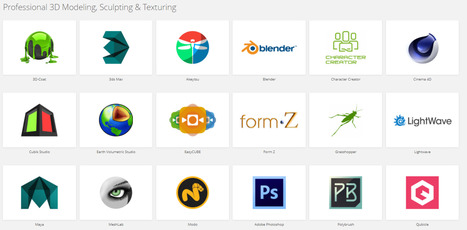
Exporters are native software features or external plug-ins that implement the Sketchfab API. They allow you to publish models directly to your Sketchfab account without leaving the 3D application. You can edit model metadata (name, description, tags) and Privacy options. In some exporters, you can also access advanced settings like lighting, texture baking, and decimation.

Professional 3D Modeling, Sculpting & Texturing


Learn more / En savoir plus / Mehr erfahren:


https://www.scoop.it/t/21st-century-learning-and-teaching/?&tag=3D


Gust MEES's insight:

What are Exporters?
Exporters are native software features or external plug-ins that implement the Sketchfab API. They allow you to publish models directly to your Sketchfab account without leaving the 3D application. You can edit model metadata (name, description, tags) and Privacy options. In some exporters, you can also access advanced settings like lighting, texture baking, and decimation.

Professional 3D Modeling, Sculpting & Texturing


Learn more / En savoir plus / Mehr erfahren:


https://www.scoop.it/t/21st-century-learning-and-teaching/?&tag=3D


Pablo Peñalver's curator insight, March 23, 2018 4:43 PM

What are Exporters?
Exporters are native software features or external plug-ins that implement the Sketchfab API. They allow you to publish models directly to your Sketchfab account without leaving the 3D application. You can edit model metadata (name, description, tags) and Privacy options. In some exporters, you can also access advanced settings like lighting, texture baking, and decimation.

Professional 3D Modeling, Sculpting & Texturing


Learn more / En savoir plus / Mehr erfahren:


https://www.scoop.it/t/21st-century-learning-and-teaching/?&tag=3D


Scooped by Gust MEES
March 20, 2018 7:25 AM
Scoop.it!

Teaching for the Future | OECD READ edition | #ModernEDUcation #ModernLEARNing (#PDF)

Teaching for the Future | OECD READ edition | #ModernEDUcation #ModernLEARNing (#PDF) | 21st Century Learning and Teaching | Scoop.it

Teachers are the most important school-related factor influencing student learning. Teachers can help level the playing field and provide opportunities...


Learn more / En savoir plus / Mehr erfahren:


https://www.scoop.it/t/21st-century-learning-and-teaching/?&tag=OECD


Gust MEES's insight:

Teachers are the most important school-related factor influencing student learning. Teachers can help level the playing field and provide opportunities...


Learn more / En savoir plus / Mehr erfahren:


https://www.scoop.it/t/21st-century-learning-and-teaching/?&tag=OECD


Oskar Almazan's curator insight, March 26, 2018 9:09 AM
Teachers are the most important school-related factor influencing student learning. Teachers can help level the playing field and provide opportunities for success to all their students. They can inspire students to innovate; to think and reflect and to work in collaboration with others.
Félix Santamaria's curator insight, March 27, 2018 11:19 AM
Share your insight
Geemik Maria Açucena Da Silva's curator insight, April 7, 2018 8:23 AM
"Teachers are the most important school-related factor influencing student learning. Teachers can help level the playing field and provide opportunities for success to all their students. They can inspire students to innovate; to think and reflect and to work in collaboration with others."
Scooped by Gust MEES
March 18, 2018 11:40 AM
Scoop.it!

Processing.org | #Coding #Maker #MakerED #MakerSpaces #VisualArts #Software #OpenSource

Processing.org | #Coding #Maker #MakerED #MakerSpaces #VisualArts #Software #OpenSource | 21st Century Learning and Teaching | Scoop.it

Processing is a flexible software sketchbook and a language for learning how to code within the context of the visual arts. Since 2001, Processing has promoted software literacy within the visual arts and visual literacy within technology.


[Gust MEES] It gets used in following projects, to understand what it is about:


https://www.youtube.com/watch?v=P6Obm7sodhg


https://www.youtube.com/watch?v=oZsawlu-U3o


Gust MEES's insight:

Processing is a flexible software sketchbook and a language for learning how to code within the context of the visual arts. Since 2001, Processing has promoted software literacy within the visual arts and visual literacy within technology.


[Gust MEES] It gets used in following projects, to understand what it is about:


https://www.youtube.com/watch?v=P6Obm7sodhg


https://www.youtube.com/watch?v=oZsawlu-U3o


No comment yet.
Scooped by Gust MEES
March 15, 2018 6:43 PM
Scoop.it!

Repl.it lets you program in your browser | #Programming #Maker #MakerED #MakerSpaces 

Repl.it lets you program in your browser | #Programming #Maker #MakerED #MakerSpaces  | 21st Century Learning and Teaching | Scoop.it

No matter whether you are a seasoned programmer or you simply want to take your first steps in writing code, Repl.it wants to help you get from idea to result as fast as possible — without complicated installs and setup procedures getting in your way.

The Y Combinator-funded project, which released version 1.0 of its service this week, gives you an easy to use programming environment in the browser, which slowly reveals its complexity as you write your code.


The acronym REPL stands for read-eval-print loop and basically provides a programmer with an interactive programming environment. Unsurprisingly, that’s exactly what Repl.it gives you, too, and with 200,000 weekly active developers on the platform already, there is clearly a demand for this service.


Repl.it  already supports virtually every programming language you can think of, no matter whether that’s JavaScript, Python, PHP or QBasic, as well as popular frameworks like Django, Ruby on Rails and Sinatra. And if you want to hurt yourself and write in Brainfuck, you can do that, too.


Learn more / En savoir plus / Mehr erfahren:


https://www.scoop.it/t/21st-century-learning-and-teaching/?&tag=Programming...


Gust MEES's insight:

No matter whether you are a seasoned programmer or you simply want to take your first steps in writing code, Repl.it wants to help you get from idea to result as fast as possible — without complicated installs and setup procedures getting in your way.

The Y Combinator-funded project, which released version 1.0 of its service this week, gives you an easy to use programming environment in the browser, which slowly reveals its complexity as you write your code.


The acronym REPL stands for read-eval-print loop and basically provides a programmer with an interactive programming environment. Unsurprisingly, that’s exactly what Repl.it gives you, too, and with 200,000 weekly active developers on the platform already, there is clearly a demand for this service.


Repl.it  already supports virtually every programming language you can think of, no matter whether that’s JavaScript, Python, PHP or QBasic, as well as popular frameworks like Django, Ruby on Rails and Sinatra. And if you want to hurt yourself and write in Brainfuck, you can do that, too.


Learn more / En savoir plus / Mehr erfahren:


https://www.scoop.it/t/21st-century-learning-and-teaching/?&tag=Programming...


No comment yet.
Scooped by Gust MEES
March 15, 2018 1:04 PM
Scoop.it!

Raspberry Pi powered by Arduino: Now you can program the Pi using Arduino Sketches

Raspberry Pi powered by Arduino: Now you can program the Pi using Arduino Sketches | 21st Century Learning and Teaching | Scoop.it

The new feature will allow Pi owners to write Arduino Sketches to interact with sensors, motors, electronic boards and other hardware attached to the Pi's GPIO pins.

Arduino Sketches can now be used to program the Raspberry Pi, marking a moving together of two of the biggest maker platforms.
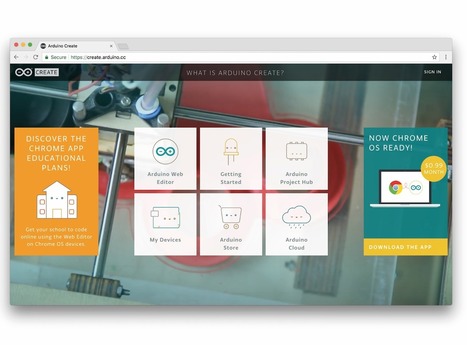
The cloud-based Arduino Create platform is designed to simplify the creation of Internet of Things applications.
Want to use the $35 Raspberry Pi computer to build your own hardware but only ever used Arduino boards? Well you're in luck.

If you know how to write programs to control hardware using Arduino boards you can now use the same language to control hardware attached to the Pi, the co-founder of the Arduino Project Massimo Banzi announced yesterday.

Banzi revealed a new feature in the cloud-based Arduino Create service that will compile Arduino Sketches — programs typically used to interact with Arduino boards and attached hardware — into a form that can be run on a Raspberry Pi.

The feature will allow Pi owners to write Arduino Sketches to interact with sensors, motors, electronic boards and other hardware attached to the Pi's GPIO pins.

"The idea is there's a tonne of people that know how to use Arduino and they can take their knowledge and apply it to this," Banzi told the Embedded Linux Conference 2018 in Portland in the US.


Learn more / En savoir plus / Mehr erfahren:


https://www.scoop.it/t/21st-century-learning-and-teaching/?&tag=Raspberry+Pi


https://www.scoop.it/t/21st-century-learning-and-teaching/?&tag=ARDUINO


Gust MEES's insight:

The new feature will allow Pi owners to write Arduino Sketches to interact with sensors, motors, electronic boards and other hardware attached to the Pi's GPIO pins.

Arduino Sketches can now be used to program the Raspberry Pi, marking a moving together of two of the biggest maker platforms.
The cloud-based Arduino Create platform is designed to simplify the creation of Internet of Things applications.
Want to use the $35 Raspberry Pi computer to build your own hardware but only ever used Arduino boards? Well you're in luck.

If you know how to write programs to control hardware using Arduino boards you can now use the same language to control hardware attached to the Pi, the co-founder of the Arduino Project Massimo Banzi announced yesterday.

Banzi revealed a new feature in the cloud-based Arduino Create service that will compile Arduino Sketches — programs typically used to interact with Arduino boards and attached hardware — into a form that can be run on a Raspberry Pi.

The feature will allow Pi owners to write Arduino Sketches to interact with sensors, motors, electronic boards and other hardware attached to the Pi's GPIO pins.

"The idea is there's a tonne of people that know how to use Arduino and they can take their knowledge and apply it to this," Banzi told the Embedded Linux Conference 2018 in Portland in the US.


Learn more / En savoir plus / Mehr erfahren:


https://www.scoop.it/t/21st-century-learning-and-teaching/?&tag=Raspberry+Pi


https://www.scoop.it/t/21st-century-learning-and-teaching/?&tag=ARDUINO


No comment yet.
Scooped by Gust MEES
March 14, 2018 5:47 PM
Scoop.it!

Raspberry Pi 3B+: Bastelplatine ist flotter und hat GBit-LAN | #Maker #MakerED #MakerSpaces #Coding #RaspBerryPI 

Raspberry Pi 3B+: Bastelplatine ist flotter und hat GBit-LAN | #Maker #MakerED #MakerSpaces #Coding #RaspBerryPI  | 21st Century Learning and Teaching | Scoop.it

Bastelplatine ist flotter und hat GBit-LAN
Der Raspberry Pi 3B+ hat schnellere ARM-Prozessorkerne, es gibt ac-WLAN für das 5-GHz-Frequenzband und Gigabit-Ethernet. Der Preis der Bastelplatine beträgt 40 US-Dollar.

Pünktlich zum Pi-Tag erscheint der Raspberry Pi 3B+ der Rasperry Pi Foundation. Die Bastelplatine folgt auf den Raspberry Pi 3B und hat trotz der vermeintlich kleinen Namensänderung mehr Neuerungen integriert, als die Bezeichnung Raspberry Pi 3B+ impliziert.


Learn more / En savoir plus / Mehr erfahren:


https://www.scoop.it/t/21st-century-learning-and-teaching/?&tag=Raspberry+Pi


Gust MEES's insight:

Bastelplatine ist flotter und hat GBit-LAN
Der Raspberry Pi 3B+ hat schnellere ARM-Prozessorkerne, es gibt ac-WLAN für das 5-GHz-Frequenzband und Gigabit-Ethernet. Der Preis der Bastelplatine beträgt 40 US-Dollar.

Pünktlich zum Pi-Tag erscheint der Raspberry Pi 3B+ der Rasperry Pi Foundation. Die Bastelplatine folgt auf den Raspberry Pi 3B und hat trotz der vermeintlich kleinen Namensänderung mehr Neuerungen integriert, als die Bezeichnung Raspberry Pi 3B+ impliziert.


Learn more / En savoir plus / Mehr erfahren:


https://www.scoop.it/t/21st-century-learning-and-teaching/?&tag=Raspberry+Pi


No comment yet.
Scooped by Gust MEES
March 13, 2018 1:42 PM
Scoop.it!

Arduino Blog » You can now use Arduino to program Linux IoT devices | #Coding #Maker #MakerED #MakerSpaces #PracTICE #LEARNingByDoing 

Arduino Blog » You can now use Arduino to program Linux IoT devices | #Coding #Maker #MakerED #MakerSpaces #PracTICE #LEARNingByDoing  | 21st Century Learning and Teaching | Scoop.it

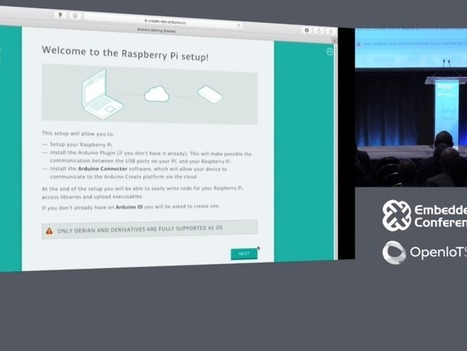
Today, at Embedded Linux Conference 2018, Arduino announced the expansion of the number of architectures supported by its Arduino Create platform for the development of IoT applications. With this new release, Arduino Create users can manage and program a wide range of popular Linux® single-board computers like the AAEON® UP² board, Raspberry Pi® and BeagleBone® as if they were regular Arduino boards. Multiple Arduino programs can run simultaneously on a Linux-based board and interact and communicate with each other, leveraging the capabilities provided by the new Arduino Connector. Moreover, IoT devices can be managed and updated remotely, independently from where they are located.

To further simplify the user journey, Arduino has also developed a novel out-of-the-box experience for Raspberry Pi and BeagleBone boards, in addition to Intel®  SBCs, which enables anyone to set up a new device from scratch via the cloud without any previous knowledge by following an intuitive web-based wizard. Arduino plans to continue enriching and expanding the set of features of Arduino Create in the coming months.


Learn more / En savoir plus / Mehr erfahren:


https://www.scoop.it/t/21st-century-learning-and-teaching/?&tag=ARDUINO


Gust MEES's insight:

Today, at Embedded Linux Conference 2018, Arduino announced the expansion of the number of architectures supported by its Arduino Create platform for the development of IoT applications. With this new release, Arduino Create users can manage and program a wide range of popular Linux® single-board computers like the AAEON® UP² board, Raspberry Pi® and BeagleBone® as if they were regular Arduino boards. Multiple Arduino programs can run simultaneously on a Linux-based board and interact and communicate with each other, leveraging the capabilities provided by the new Arduino Connector. Moreover, IoT devices can be managed and updated remotely, independently from where they are located.

To further simplify the user journey, Arduino has also developed a novel out-of-the-box experience for Raspberry Pi and BeagleBone boards, in addition to Intel®  SBCs, which enables anyone to set up a new device from scratch via the cloud without any previous knowledge by following an intuitive web-based wizard. Arduino plans to continue enriching and expanding the set of features of Arduino Create in the coming months.


Learn more / En savoir plus / Mehr erfahren:


https://www.scoop.it/t/21st-century-learning-and-teaching/?&tag=ARDUINO


No comment yet.
Scooped by Gust MEES
March 12, 2018 4:09 PM
Scoop.it!

Magnet Levitation with Arduino | #Maker #MakerED #MakerSpaces #Coding #LEARNingByDoing 

Magnet Levitation with Arduino | #Maker #MakerED #MakerSpaces #Coding #LEARNingByDoing  | 21st Century Learning and Teaching | Scoop.it

Magnet levitation toy using Arduino. Cheap and easy to make!.


Learn more / En savoir plus / Mehr erfahren:


https://www.scoop.it/t/21st-century-learning-and-teaching/?&tag=ARDUINO


Gust MEES's insight:

Magnet levitation toy using Arduino. Cheap and easy to make!.


Learn more / En savoir plus / Mehr erfahren:


https://www.scoop.it/t/21st-century-learning-and-teaching/?&tag=ARDUINO


No comment yet.
Scooped by Gust MEES
March 11, 2018 1:49 PM
Scoop.it!

The classroom of the future, according to the world’s best teachers | #ModernEDUcation #ModernLEARNing

The classroom of the future, according to the world’s best teachers | #ModernEDUcation #ModernLEARNing | 21st Century Learning and Teaching | Scoop.it

The classroom of the future, according to the world’s best teachers

By Global Teacher Prize | March 2nd 2018

In many parts of the world, today’s classrooms are almost unrecognisable compared to those of a decade ago.

Technology is changing the way students learn and teachers teach. From interactive white boards replacing chalk boards to tablets replacing desktop computers, schools are becoming increasingly digital.

Looking ahead to 2030, greater internet connectivity and smarter technologies promise to radically reshape the classroom of the future.

We asked the Global Teacher Prize 2018 Finalists to share their views on how they feel the classroom will change in the coming decade, and what this means for the role of the teacher.

What do you think will be the biggest difference between the classroom of 2030 and the classroom of today?

Many of our Finalists predict that the trend of young people effectively teaching themselves will continue.


Learn more / En savoir plus / Mehr erfahren:


https://www.scoop.it/t/21st-century-learning-and-teaching/


Gust MEES's insight:

The classroom of the future, according to the world’s best teachers

By Global Teacher Prize | March 2nd 2018

In many parts of the world, today’s classrooms are almost unrecognisable compared to those of a decade ago.

Technology is changing the way students learn and teachers teach. From interactive white boards replacing chalk boards to tablets replacing desktop computers, schools are becoming increasingly digital.

Looking ahead to 2030, greater internet connectivity and smarter technologies promise to radically reshape the classroom of the future.

We asked the Global Teacher Prize 2018 Finalists to share their views on how they feel the classroom will change in the coming decade, and what this means for the role of the teacher.

What do you think will be the biggest difference between the classroom of 2030 and the classroom of today?

Many of our Finalists predict that the trend of young people effectively teaching themselves will continue.


Learn more / En savoir plus / Mehr erfahren:


https://www.scoop.it/t/21st-century-learning-and-teaching/


Pablo Peñalver's curator insight, March 13, 2018 4:20 AM

The classroom of the future, according to the world’s best teachers

By Global Teacher Prize | March 2nd 2018

In many parts of the world, today’s classrooms are almost unrecognisable compared to those of a decade ago.

Technology is changing the way students learn and teachers teach. From interactive white boards replacing chalk boards to tablets replacing desktop computers, schools are becoming increasingly digital.

Looking ahead to 2030, greater internet connectivity and smarter technologies promise to radically reshape the classroom of the future.

We asked the Global Teacher Prize 2018 Finalists to share their views on how they feel the classroom will change in the coming decade, and what this means for the role of the teacher.

What do you think will be the biggest difference between the classroom of 2030 and the classroom of today?

Many of our Finalists predict that the trend of young people effectively teaching themselves will continue.


Learn more / En savoir plus / Mehr erfahren:


https://www.scoop.it/t/21st-century-learning-and-teaching/


Scooped by Gust MEES
March 7, 2018 9:07 AM
Scoop.it!

We Need to Modernize Education. The Clock Is Ticking | #ModernEDU #ModernLEARNing #LEARNing2LEARN

We Need to Modernize Education. The Clock Is Ticking | #ModernEDU #ModernLEARNing #LEARNing2LEARN | 21st Century Learning and Teaching | Scoop.it

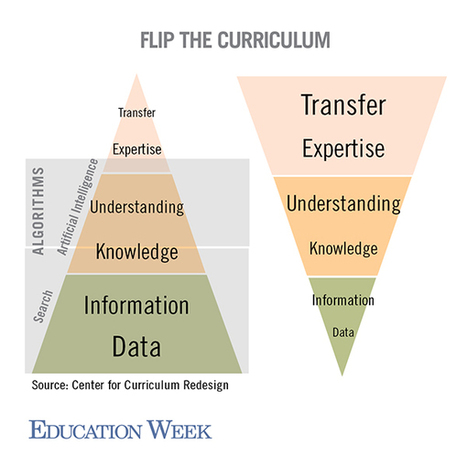
Flipping the curriculum could help us meet the demands of the artificial-intelligence era

Technologies such as artificial intelligence, robotics, and biotech are redefining what it means to be human—and employable.

Jobs are disappearing as automation replaces the need for people. New occupations are emerging that demand competencies that can transfer across the multiple assignments workers will experience in their lives. The disappearance of global boundaries presents opportunities—and risks—for all workers.

These changes demand a significant, ambitious evolution in how we prepare students for their future in a world that's increasingly volatile, uncertain, complex, and ambiguous. We need a relevant and modernized education.


Learn more / En savoir plus / Mehr erfahren:


https://www.scoop.it/t/21st-century-learning-and-teaching/?&tag=modern-education


Gust MEES's insight:

Flipping the curriculum could help us meet the demands of the artificial-intelligence era

Technologies such as artificial intelligence, robotics, and biotech are redefining what it means to be human—and employable.

Jobs are disappearing as automation replaces the need for people. New occupations are emerging that demand competencies that can transfer across the multiple assignments workers will experience in their lives. The disappearance of global boundaries presents opportunities—and risks—for all workers.

These changes demand a significant, ambitious evolution in how we prepare students for their future in a world that's increasingly volatile, uncertain, complex, and ambiguous. We need a relevant and modernized education.


Learn more / En savoir plus / Mehr erfahren:


https://www.scoop.it/t/21st-century-learning-and-teaching/?&tag=modern-education


laustenreed's curator insight, March 8, 2018 3:48 PM

Looking into the future Of Distance Education. Is this reality?

Chong Jiaxuan's comment, March 9, 2018 9:58 AM
According to the article, education now focusses more on information and data, followed by understanding and knowledge, and in last place, transfer of expertise. However, in the future, when artificial intelligence becomes common, education needs to focus on transfer of expertise before everything else. I feel that this is rather true. Knowledge of events and subjects might give you a boost in your career, but what is more important is the skills to learn, which is the transfer of expertise. Education needs to shift in order to meet this demand of skills needed in the future.
Julián David Cano's curator insight, March 20, 2018 7:14 PM
It can be evidenced that a lot of aspects of education continue being as traditional as always. Nevertheless, I must highlight that nowadays people are becoming aware about the importance of incorporating technology into the classrooms. Although people are becoming aware, taking advantage of technology to improve the learning process is still a challenge.

This article is really interesting due to the fact that it provides specific examples of skills needed in this century, and that can be achieved through the use of technological devices. Also, this article made me think about my role as a future teacher and the responsibility to start making little changes into the classrooms in order to improve education and contribute positive aspects to it. it is clear that the article makes a direct relationship about technology and education, and how to prepare students to deal with the 21st century skills.
Scooped by Gust MEES
March 5, 2018 4:39 AM
Scoop.it!

Content curation: your best bet if you're looking to save time and money | #Curation #Socialmedia

Content curation: your best bet if you're looking to save time and money | #Curation #Socialmedia | 21st Century Learning and Teaching | Scoop.it

Content curation builds trust and credibility for your brand because it keeps customers informed. Your curation efforts educate and engage customers, providing them with a valuable service—which they will appreciate because it relieves them of the need to source content on their own.


Learn more / En savoir plus / Mehr erfahren:


https://gustmees.wordpress.com/?s=curation


https://www.scoop.it/t/21st-century-learning-and-teaching/?&tag=Curation


Gust MEES's insight:

Content curation builds trust and credibility for your brand because it keeps customers informed. Your curation efforts educate and engage customers, providing them with a valuable service—which they will appreciate because it relieves them of the need to source content on their own.


Learn more / En savoir plus / Mehr erfahren:


https://gustmees.wordpress.com/?s=curation


https://www.scoop.it/t/21st-century-learning-and-teaching/?&tag=Curation


No comment yet.
Scooped by Gust MEES
March 4, 2018 7:06 AM
Scoop.it!

The one crucial skill our education system is missing | #Empathy #EmotionalIntelligence

The one crucial skill our education system is missing | #Empathy #EmotionalIntelligence | 21st Century Learning and Teaching | Scoop.it

From Blade Runner to I, Robot, the big screens of Hollywood have predicted the rise of the machine. Automated intelligences will wait our tables and drive our cabs. They will serve us by performing menial tasks. But fact is now surpassing fiction. Automation has moved beyond the factory assembly line as computers are diagnosing illnesses, providing legal counsel, and make financial and political decisions. And if artificial intelligence really is faster, smarter and more reliable, what are we left with?

The answer is precisely that element which makes us less efficient and slower. Our humanity. But rather than being seen as a weakness, this is actually our strongest suit. It’s one we need to empower, because studies show that as the world becomes increasingly automated, computerised and digitalised, we are losing the very skills that define us as human. Just when we need them the most.

Our empathy is something that computers will always struggle to emulate. We need to celebrate what makes us different from even the smartest of the machines. While the future belongs to those who are able to navigate this increasingly digitalised world of ours, the choicest spoils will fall to those who can combine technological fluency with emotional intelligence.


Learn more / En savoir plus / Mehr erfahren:


https://www.scoop.it/t/21st-century-learning-and-teaching/?&tag=Empathy


https://www.scoop.it/t/21st-century-learning-and-teaching/?&tag=Emotional+intelligence


Gust MEES's insight:

From Blade Runner to I, Robot, the big screens of Hollywood have predicted the rise of the machine. Automated intelligences will wait our tables and drive our cabs. They will serve us by performing menial tasks. But fact is now surpassing fiction. Automation has moved beyond the factory assembly line as computers are diagnosing illnesses, providing legal counsel, and make financial and political decisions. And if artificial intelligence really is faster, smarter and more reliable, what are we left with?

The answer is precisely that element which makes us less efficient and slower. Our humanity. But rather than being seen as a weakness, this is actually our strongest suit. It’s one we need to empower, because studies show that as the world becomes increasingly automated, computerised and digitalised, we are losing the very skills that define us as human. Just when we need them the most.

Our empathy is something that computers will always struggle to emulate. We need to celebrate what makes us different from even the smartest of the machines. While the future belongs to those who are able to navigate this increasingly digitalised world of ours, the choicest spoils will fall to those who can combine technological fluency with emotional intelligence.


Learn more / En savoir plus / Mehr erfahren:


https://www.scoop.it/t/21st-century-learning-and-teaching/?&tag=Empathy


https://www.scoop.it/t/21st-century-learning-and-teaching/?&tag=Emotional+intelligence


Sirpa Vellonen-Myllylä's curator insight, March 11, 2018 9:37 AM

Finally I can see this topic emerge in public discussion about education - something I've been privately preaching about. 

Felipe Rincon's curator insight, March 14, 2018 8:22 PM
It is very interesting the way in which this article emphasizes the importance of empathy and the other characteristics belonging to the human being in our society, also how that characteristics distance us from machines. I think that the implementation of methodologies that take into consideration this aspects in education in general will contribute to the comprehensive citizens education. The appropriate combination of technological fluency with emotional intelligence should be one of the goals in modern education
Patrice McDonough's curator insight, March 15, 2018 11:49 AM
Who knew our humanity would be buried under the weight of automated intelligences.  Overtaking #EmotionalIntelligence!!
Scooped by Gust MEES
March 2, 2018 4:42 AM
Scoop.it!

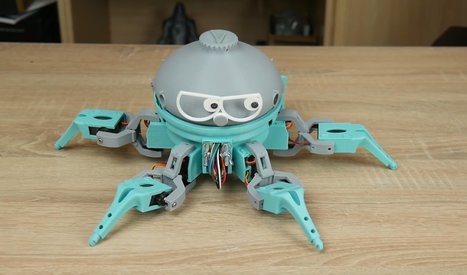
This 3D Printed Arduino-Based Hexapod Robot Can Bust a Move! | #3DPrinting #Maker #MakerED #MakerSpaces #Coding #Vorpal #Creativity #3DPrinting

This 3D Printed Arduino-Based Hexapod Robot Can Bust a Move! | #3DPrinting #Maker #MakerED #MakerSpaces #Coding #Vorpal #Creativity #3DPrinting | 21st Century Learning and Teaching | Scoop.it

I have often mentioned the wisdom of robot maker and Make: contributor I-Wei Huang who says that you can get away with a lot in a robot creation if you make it cute, characterful, and funny. This comes across in spades with Vorpal, a 3D-printable hexapod with real character and presence. You’ll laugh, you’ll cry, you’ll fall in love.


Learn more / En savoir plus / Mehr erfahren:


https://www.scoop.it/t/21st-century-learning-and-teaching/?&tag=makerspace


https://www.scoop.it/t/21st-century-learning-and-teaching/?&tag=ARDUINO


Gust MEES's insight:

I have often mentioned the wisdom of robot maker and Make: contributor I-Wei Huang who says that you can get away with a lot in a robot creation if you make it cute, characterful, and funny. This comes across in spades with Vorpal, a 3D-printable hexapod with real character and presence. You’ll laugh, you’ll cry, you’ll fall in love.


Learn more / En savoir plus / Mehr erfahren:


https://www.scoop.it/t/21st-century-learning-and-teaching/?&tag=makerspace


https://www.scoop.it/t/21st-century-learning-and-teaching/?&tag=ARDUINO


No comment yet.
Scooped by Gust MEES
March 21, 2018 10:28 AM
Scoop.it!

Big Data Driven Smart Transportation: the Underlying Story of IoT Transformed Mobility 

Big Data Driven Smart Transportation: the Underlying Story of IoT Transformed Mobility  | 21st Century Learning and Teaching | Scoop.it

Growing of smart IoT has generated many major impacts on transportation development, of which one underlying big story is the thriving of big data driven smart transportation nowadays. We are moving from IT to data technology (DT) time, and we are entering a “results driven” era in transportation. As the front and center of the smart IoT transformed mobility, transportation data sets grow rapidly while they are increasingly gathered from more connected sensors, devices, actuators in real-world applications. In 2016, over 823.0 million air trip passengers were reported by U.S. airlines and over 25 million public transit trips was generated daily.  


The data traffic associated with mobility and transportation is estimated to be roughly 0.6 exabytes every month by 2020 (about 9 percent of total US wireless data traffic), and will grow to 9.4 exabytes every month by 2030. Although the quantity of the data available is indeed large, that is not the most striking characteristic of “big data” in the smart IoT era concerning transportation. The challenge in big data driven transportation rarely refers to the large volume or size of data; rather, it often refers to extracting value from data with certain innovative methods, i.e. how to analyze the data and to gather meaningful insights that can be used to inform decisions makers.

Many concurrent novel technologies and employments have emerged within the big data driven smart mobility ecosystem, emanating from the transportation needs of different stakeholders for better safety, reliability, sustainability, and automation.

For public transportation, big data analytics have transformed both the plan and operations phases on planning and demand modeling, predictive maintenance, and event response. New big data tech-savvy has brought more personalized services to public transportation users, such as offering ancillary services to providing recommendations about additional destinations to visit as part of an upgrade to the passenger’s journey, etc.


The big data driven smart public transportation influences both automated and human decision-making, which has clearly played a big part in re-energizing public transport network, and has offered plenty of opportunities to improve the public transportation experience with improved reliability and safety.


Learn more / En savoir plus / Mehr erfahren:


https://www.scoop.it/t/21st-century-learning-and-teaching/?&tag=Big+Data..


Gust MEES's insight:

Growing of smart IoT has generated many major impacts on transportation development, of which one underlying big story is the thriving of big data driven smart transportation nowadays. We are moving from IT to data technology (DT) time, and we are entering a “results driven” era in transportation. As the front and center of the smart IoT transformed mobility, transportation data sets grow rapidly while they are increasingly gathered from more connected sensors, devices, actuators in real-world applications. In 2016, over 823.0 million air trip passengers were reported by U.S. airlines and over 25 million public transit trips was generated daily.  


The data traffic associated with mobility and transportation is estimated to be roughly 0.6 exabytes every month by 2020 (about 9 percent of total US wireless data traffic), and will grow to 9.4 exabytes every month by 2030. Although the quantity of the data available is indeed large, that is not the most striking characteristic of “big data” in the smart IoT era concerning transportation. The challenge in big data driven transportation rarely refers to the large volume or size of data; rather, it often refers to extracting value from data with certain innovative methods, i.e. how to analyze the data and to gather meaningful insights that can be used to inform decisions makers.

Many concurrent novel technologies and employments have emerged within the big data driven smart mobility ecosystem, emanating from the transportation needs of different stakeholders for better safety, reliability, sustainability, and automation.

For public transportation, big data analytics have transformed both the plan and operations phases on planning and demand modeling, predictive maintenance, and event response. New big data tech-savvy has brought more personalized services to public transportation users, such as offering ancillary services to providing recommendations about additional destinations to visit as part of an upgrade to the passenger’s journey, etc.


The big data driven smart public transportation influences both automated and human decision-making, which has clearly played a big part in re-energizing public transport network, and has offered plenty of opportunities to improve the public transportation experience with improved reliability and safety.


Learn more / En savoir plus / Mehr erfahren:


https://www.scoop.it/t/21st-century-learning-and-teaching/?&tag=Big+Data..


No comment yet.
Scooped by Gust MEES
March 18, 2018 11:56 AM
Scoop.it!

Plugin Blockly@rduino for Arduino IDE | #Coding #Blockly #Maker #MakerED #MakerSpaces #VisualProgramming #Arduino

Plugin Blockly@rduino for Arduino IDE | #Coding #Blockly #Maker #MakerED #MakerSpaces #VisualProgramming #Arduino | 21st Century Learning and Teaching | Scoop.it

ABOUT THIS PROJECT
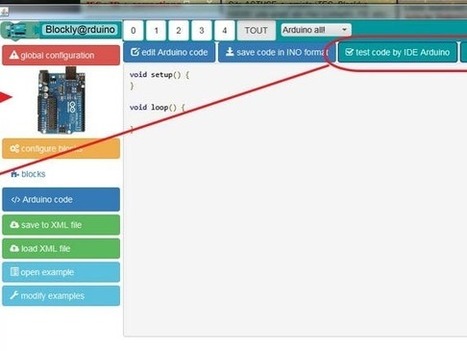
Blockly@rduino is a visual 'Scratch block program' like, based upon Google Blockly (https://developers.google.com/blockly/) and BlocklyDuino (https://github.com/BlocklyDuino/BlocklyDuino).

The aim is to create the more easy way to program Arduino card with this graphical programmation, for newbies or children.

All details: https://github.com/technologiescollege/Blockly-at-rduino

Use normally Blockly@rduino, then inside 'Arduino code' tab you can launch upload :


Learn more / En savoir plus / Mehr erfahren:


https://www.scoop.it/t/21st-century-learning-and-teaching/?&tag=Blockly


https://www.scoop.it/t/21st-century-learning-and-teaching/?&tag=Visual+programming


https://www.scoop.it/t/21st-century-learning-and-teaching/?&tag=ARDUINO


Gust MEES's insight:

ABOUT THIS PROJECT
Blockly@rduino is a visual 'Scratch block program' like, based upon Google Blockly (https://developers.google.com/blockly/) and BlocklyDuino (https://github.com/BlocklyDuino/BlocklyDuino).

The aim is to create the more easy way to program Arduino card with this graphical programmation, for newbies or children.

All details: https://github.com/technologiescollege/Blockly-at-rduino

Use normally Blockly@rduino, then inside 'Arduino code' tab you can launch upload :


Learn more / En savoir plus / Mehr erfahren:


https://www.scoop.it/t/21st-century-learning-and-teaching/?&tag=Blockly


https://www.scoop.it/t/21st-century-learning-and-teaching/?&tag=Visual+programming


https://www.scoop.it/t/21st-century-learning-and-teaching/?&tag=ARDUINO


No comment yet.
Scooped by Gust MEES
March 18, 2018 11:10 AM
Scoop.it!

Ontology, Meaning and Knowledge Management

Formal knowledge representation (KR) is about building models of the world, of a particular domain or a problem, which allow for automatic reasoning and interpretation. Such formal models are called ontologies and can be used to provide formal semantics (i.e., machine-interpretable meaning) to any sort of information: databases, catalogs, documents, web pages, etc. The association of information with such formal models makes the information much amenable to machine processing and interpretation.

Cit. Atanas Kiryakov. In Semantic Web Technologies: Trends and Research in Ontology-based Systems; John Davies (Editor), Rudi Studer (Co-Editor), Paul Warren (Co-Editor). pp. 115-138 John Wiley & Sons, Europe.


Learn more / En savoir plus / Mehr erfahren:


https://www.scoop.it/t/21st-century-learning-and-teaching/?&tag=Ontology


Gust MEES's insight:

Formal knowledge representation (KR) is about building models of the world, of a particular domain or a problem, which allow for automatic reasoning and interpretation. Such formal models are called ontologies and can be used to provide formal semantics (i.e., machine-interpretable meaning) to any sort of information: databases, catalogs, documents, web pages, etc. The association of information with such formal models makes the information much amenable to machine processing and interpretation.

Cit. Atanas Kiryakov. In Semantic Web Technologies: Trends and Research in Ontology-based Systems; John Davies (Editor), Rudi Studer (Co-Editor), Paul Warren (Co-Editor). pp. 115-138 John Wiley & Sons, Europe.


Learn more / En savoir plus / Mehr erfahren:


https://www.scoop.it/t/21st-century-learning-and-teaching/?&tag=Ontology


No comment yet.
Scooped by Gust MEES
March 15, 2018 1:19 PM
Scoop.it!

Good to know when using different Arduino boards | Arduino - Wire | #Coding #Maker #MakerED #MakerSpaces #LEARNingByDoing

Wire Library

This library allows you to communicate with I2C / TWI devices. On the Arduino boards with the R3 layout (1.0 pinout), the SDA (data line) and SCL (clock line) are on the pin headers close to the AREF pin. The Arduino Due has two I2C / TWI interfaces SDA1 and SCL1 are near to the AREF pin and the additional one is on pins 20 and 21.

As a reference the table below shows where TWI pins are located on various Arduino boards.


BoardI2C / TWI pinsUno, EthernetA4 (SDA), A5 (SCL)Mega256020 (SDA), 21 (SCL)Leonardo2 (SDA), 3 (SCL)Due20 (SDA), 21 (SCL), SDA1, SCL1


As of Arduino 1.0, the library inherits from the Stream functions, making it consistent with other read/write libraries. Because of this, send() and receive() have been replaced with read() and write().


Gust MEES's insight:

This library allows you to communicate with I2C / TWI devices. On the Arduino boards with the R3 layout (1.0 pinout), the SDA (data line) and SCL (clock line) are on the pin headers close to the AREF pin. The Arduino Due has two I2C / TWI interfaces SDA1 and SCL1 are near to the AREF pin and the additional one is on pins 20 and 21.

As a reference the table below shows where TWI pins are located on various Arduino boards.


BoardI2C / TWI pinsUno, EthernetA4 (SDA), A5 (SCL)Mega256020 (SDA), 21 (SCL)Leonardo2 (SDA), 3 (SCL)Due20 (SDA), 21 (SCL), SDA1, SCL1


As of Arduino 1.0, the library inherits from the Stream functions, making it consistent with other read/write libraries. Because of this, send() and receive() have been replaced with read() and write().


No comment yet.
Scooped by Gust MEES
March 15, 2018 7:04 AM
Scoop.it!

Raspberry Pi 3 Model B+ arrives: Faster CPU, Wi-Fi, 300Mbps Ethernet | #Maker #MakerED #MakerSpaces #Coding #LEARNingByDoing

Raspberry Pi 3 Model B+ arrives: Faster CPU, Wi-Fi, 300Mbps Ethernet | #Maker #MakerED #MakerSpaces #Coding #LEARNingByDoing | 21st Century Learning and Teaching | Scoop.it

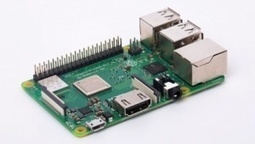
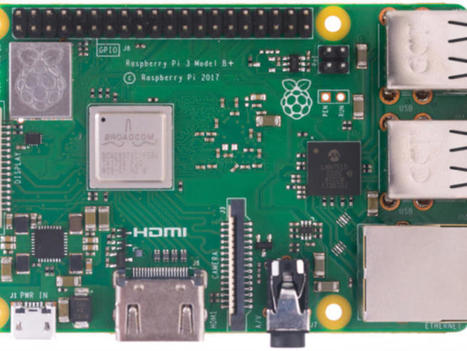
The Raspberry Pi Foundation has launched the Raspberry Pi 3 Model B+, offering a faster CPU and faster wireless throughput than its predecessor, the Raspberry Pi 3 Model B.

Raspberry Pi 3 Model B+ comes exactly two years after the launch of the Raspberry Pi 3 Model B and is in line with Raspberry Pi Foundation's two-year B+ 'evolution' upgrade.

In other words, the changes don't warrant calling it a Raspberry Pi 4, but there are noticeable improvements, including a faster processor, higher Wi-Fi speeds, and faster Ethernet.


Learn more / En savoir plus / Mehr erfahren:


https://www.scoop.it/t/21st-century-learning-and-teaching/?&tag=Raspberry+Pi


Gust MEES's insight:

The Raspberry Pi Foundation has launched the Raspberry Pi 3 Model B+, offering a faster CPU and faster wireless throughput than its predecessor, the Raspberry Pi 3 Model B.

Raspberry Pi 3 Model B+ comes exactly two years after the launch of the Raspberry Pi 3 Model B and is in line with Raspberry Pi Foundation's two-year B+ 'evolution' upgrade.

In other words, the changes don't warrant calling it a Raspberry Pi 4, but there are noticeable improvements, including a faster processor, higher Wi-Fi speeds, and faster Ethernet.


Learn more / En savoir plus / Mehr erfahren:


https://www.scoop.it/t/21st-century-learning-and-teaching/?&tag=Raspberry+Pi


No comment yet.
Scooped by Gust MEES
March 13, 2018 4:38 PM
Scoop.it!

RandA, Combining Raspberry Pi & Arduino | #Coding #Maker #MakerED #MakerSpaces #PracTICE #LEARNingByDoing

RandA, Combining Raspberry Pi & Arduino | #Coding #Maker #MakerED #MakerSpaces #PracTICE #LEARNingByDoing | 21st Century Learning and Teaching | Scoop.it

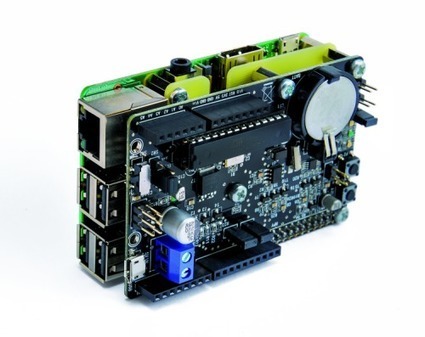
Two years ago, open electronics had produced “RandA“, an Atmega328-based board for Raspberry Pi to deliver the advantages of both, Raspberry Pi and Arduino. Earlier this month, an updated version of RandA has been released to be compatible with Raspberry Pi 3.

RandA is a development board that leverages the hardware equipment and the computing power of Arduino with its shields, and the enormous potential of the Raspberry Pi. It features Atmega328 microcontroller, has RTC (Real Time Clock) module, power button and sleep timer, connectors for 5 volts and connectors for mounting Arduino shield.


Learn more / En savoir plus / Mehr erfahren:


https://www.scoop.it/t/21st-century-learning-and-teaching/?&tag=ARDUINO


https://www.scoop.it/t/21st-century-learning-and-teaching/?&tag=Raspberry+Pi


Gust MEES's insight:

Two years ago, open electronics had produced “RandA“, an Atmega328-based board for Raspberry Pi to deliver the advantages of both, Raspberry Pi and Arduino. Earlier this month, an updated version of RandA has been released to be compatible with Raspberry Pi 3.

RandA is a development board that leverages the hardware equipment and the computing power of Arduino with its shields, and the enormous potential of the Raspberry Pi. It features Atmega328 microcontroller, has RTC (Real Time Clock) module, power button and sleep timer, connectors for 5 volts and connectors for mounting Arduino shield.


Learn more / En savoir plus / Mehr erfahren:


https://www.scoop.it/t/21st-century-learning-and-teaching/?&tag=ARDUINO


https://www.scoop.it/t/21st-century-learning-and-teaching/?&tag=Raspberry+Pi


No comment yet.
Scooped by Gust MEES
March 13, 2018 11:35 AM
Scoop.it!

Lego train level crossing 7835 fully automated by Arduino - YouTube | #Maker #MakerED #MakerSpaces #Coding #PracTICE #LEARNingByDoing #Creativity

Lego train level crossing automated by Arduino. Another lego train crash at the lego train level crossing! It turns out that the guy working there just wants to relax all day long. Only one solution: automating the thing!


Learn more / En savoir plus / Mehr erfahren:


https://www.scoop.it/t/21st-century-learning-and-teaching/?&tag=ARDUINO


Gust MEES's insight:

Lego train level crossing automated by Arduino. Another lego train crash at the lego train level crossing! It turns out that the guy working there just wants to relax all day long. Only one solution: automating the thing!


Learn more / En savoir plus / Mehr erfahren:


https://www.scoop.it/t/21st-century-learning-and-teaching/?&tag=ARDUINO


No comment yet.
Scooped by Gust MEES
March 12, 2018 10:41 AM
Scoop.it!

Making an Arduino Touch Sensitive LED Sign | #Maker #MakerED #MakerSpaces #Coding #PracTICE #LEARNingByDoing

Making an Arduino Touch Sensitive LED Sign | #Maker #MakerED #MakerSpaces #Coding #PracTICE #LEARNingByDoing | 21st Century Learning and Teaching | Scoop.it

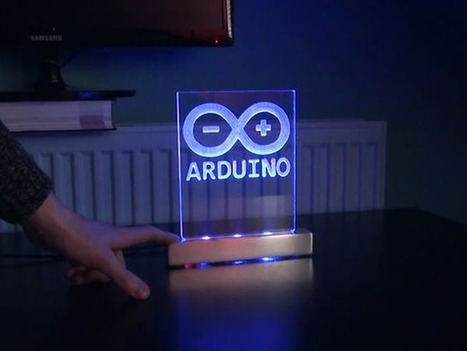
An Arduino logo engraved in acrylic with a touch sensitive aluminum LED stand.


Learn more / En savoir plus / Mehr erfahren:


https://www.scoop.it/t/21st-century-learning-and-teaching/?&tag=ARDUINO


Gust MEES's insight:

An Arduino logo engraved in acrylic with a touch sensitive aluminum LED stand.


Learn more / En savoir plus / Mehr erfahren:


https://www.scoop.it/t/21st-century-learning-and-teaching/?&tag=ARDUINO


No comment yet.
Scooped by Gust MEES
March 16, 2018 12:08 PM
Scoop.it!

How Blockchain Will Transform Credentialing (and Education)

How Blockchain Will Transform Credentialing (and Education) | 21st Century Learning and Teaching | Scoop.it

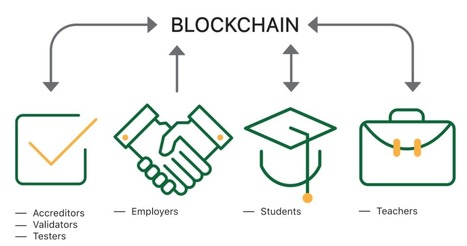
According to a new report by the Joint Research Centre (JRC), the European Commission’s science and knowledge service, Blockchain will end paper based certificates, automate the award, recognition and transfer of credits, increase learner ownership and control over their own data, reduce institutional data costs and risk–but only if open standards are adopted.


Learn more / En savoir plus / Mehr erfahren:


https://www.scoop.it/t/21st-century-learning-and-teaching/?&tag=blockchain


Gust MEES's insight:

According to a new report by the Joint Research Centre (JRC), the European Commission’s science and knowledge service, Blockchain will end paper based certificates, automate the award, recognition and transfer of credits, increase learner ownership and control over their own data, reduce institutional data costs and risk–but only if open standards are adopted.


Learn more / En savoir plus / Mehr erfahren:


https://www.scoop.it/t/21st-century-learning-and-teaching/?&tag=blockchain


davidconover's curator insight, March 20, 2018 1:32 PM
Here is an excellent report on How Blockchain Will Transform Credentialing (and Education). This hyperledger will change your district. Who will create and grant these certifications? #ibm, #blockchain, #IBMchampion, #weteachcs. #IBMcode, #edtech
 
Joann David's curator insight, March 23, 2018 10:23 AM
The evolution of eportfolios and career management
Scooped by Gust MEES
March 7, 2018 8:42 AM
Scoop.it!

The 5 Big Problems With Blockchain Everyone Should Be Aware Of | #ICT

The 5 Big Problems With Blockchain Everyone Should Be Aware Of | #ICT | 21st Century Learning and Teaching | Scoop.it

Blockchain is often touted as a world-changing technology and in many ways, it is. However, it isn’t necessarily the cure-all panacea for the world’s problems that many evangelists would have you believe.

Here’s a breakdown of some of the issues with blockchain that anyone thinking of using it should understand. Starting with perhaps the biggest…

Blockchain has an environmental cost


At least, the way it is being used today, it does. Blockchain relies on encryption to provide its security as well as establish consensus over a distributed network. This essentially means that, in order to “prove” that a user has permission to write to the chain, complex algorithms must be run, which in turn require large amounts of computing power. Of course, this comes at a cost. Taking the most widely known and used blockchain as an example – Bitcoin – last year it was claimed that the computing power required to keep the network running consumes as much energy as was used by 159 of the world’s nations.

Yes, Bitcoin’s blockchain is a hugely valuable network – with a current market capacity at the time of writing of over $170 billion – so sophisticated and computationally intense security is essential. Smaller scale blockchains – such as those that an organization may deploy internally to securely monitor and record business activity – would consume a fraction of that. Nevertheless, it’s an important consideration and the environmental implications as well as the energy costs can’t be ignored.

Lack of regulation creates a risky environment


Read more in the article...

 

Learn more / En savoir plus / Mehr erfahren:


https://www.scoop.it/t/21st-century-learning-and-teaching/?&tag=blockchain


Gust MEES's insight:

Blockchain is often touted as a world-changing technology and in many ways, it is. However, it isn’t necessarily the cure-all panacea for the world’s problems that many evangelists would have you believe.

Here’s a breakdown of some of the issues with blockchain that anyone thinking of using it should understand. Starting with perhaps the biggest…

Blockchain has an environmental cost


At least, the way it is being used today, it does. Blockchain relies on encryption to provide its security as well as establish consensus over a distributed network. This essentially means that, in order to “prove” that a user has permission to write to the chain, complex algorithms must be run, which in turn require large amounts of computing power. Of course, this comes at a cost. Taking the most widely known and used blockchain as an example – Bitcoin – last year it was claimed that the computing power required to keep the network running consumes as much energy as was used by 159 of the world’s nations.

Yes, Bitcoin’s blockchain is a hugely valuable network – with a current market capacity at the time of writing of over $170 billion – so sophisticated and computationally intense security is essential. Smaller scale blockchains – such as those that an organization may deploy internally to securely monitor and record business activity – would consume a fraction of that. Nevertheless, it’s an important consideration and the environmental implications as well as the energy costs can’t be ignored.

Lack of regulation creates a risky environment


Read more in the article...
 

Learn more / En savoir plus / Mehr erfahren:


https://www.scoop.it/t/21st-century-learning-and-teaching/?&tag=blockchain


No comment yet.

Scooped by Gust MEES
March 4, 2018 11:01 AM
Scoop.it!

Content curation: the complete guide to leverage third-party content | #Curation #SocialMedia #LEARNing2LEARN

Content curation: the complete guide to leverage third-party content | #Curation #SocialMedia #LEARNing2LEARN | 21st Century Learning and Teaching | Scoop.it

Content curation. Most marketers are familiar with the practice of sharing other people’s content on social networks. There are other curated content formats.


Learn more / En savoir plus / Mehr erfahren:


https://gustmees.wordpress.com/?s=curation


https://www.scoop.it/t/21st-century-learning-and-teaching/?&tag=Curation


Gust MEES's insight:

Content curation. Most marketers are familiar with the practice of sharing other people’s content on social networks. There are other curated content formats.


Learn more / En savoir plus / Mehr erfahren:


https://gustmees.wordpress.com/?s=curation


https://www.scoop.it/t/21st-century-learning-and-teaching/?&tag=Curation


No comment yet.
Scooped by Gust MEES
March 3, 2018 4:25 AM
Scoop.it!

Arduino Projects with DIY Step by Step Tutorials

Arduino Projects with DIY Step by Step Tutorials | 21st Century Learning and Teaching | Scoop.it

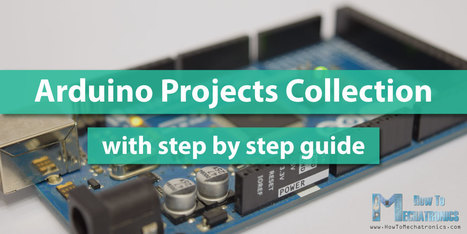
Each of the following DIY Arduino projects is covered with detailed step by step tutorial on how to do it yourself and includes circuit schematics, source codes and videos.

This collection of Arduino Projects features:

Wireless control
Automation
Motors control
Robotics
LEDs
and more.


Learn more / En savoir plus / Mehr erfahren:


https://www.scoop.it/t/21st-century-learning-and-teaching/?&tag=makerspace


https://www.scoop.it/t/21st-century-learning-and-teaching/?&tag=ARDUINO


Gust MEES's insight:

Each of the following DIY Arduino projects is covered with detailed step by step tutorial on how to do it yourself and includes circuit schematics, source codes and videos.

This collection of Arduino Projects features:

Wireless control
Automation
Motors control
Robotics
LEDs
and more.


Learn more / En savoir plus / Mehr erfahren:


https://www.scoop.it/t/21st-century-learning-and-teaching/?&tag=makerspace


https://www.scoop.it/t/21st-century-learning-and-teaching/?&tag=ARDUINO


No comment yet.